
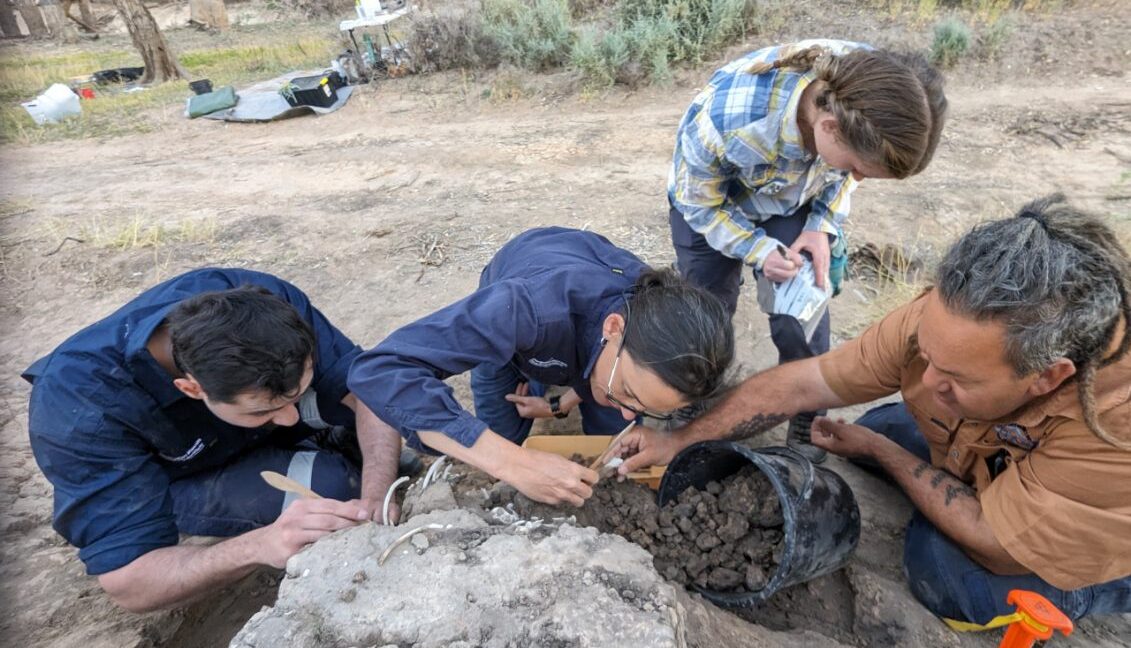
From a 1,000-year burial to the future of AI-assisted archaeology
A new interpretation of a 1,000-year-old burial in Australia underscores a striking detail: dingoes were not simply hunting partners or companions, but were integrated into family life in at least some Aboriginal communities. The Ars Technica report frames the finding as evidence that dingoes could be part of daily kinship networks, deserving care and recognition within burial contexts. While the specifics of the grave and its layout are described in the source, the broader takeaway is clear: relationships between people and dogs—ancient and enduring—could be woven into social and spiritual life in ways that leave tangible traces across centuries.
This finding contributes to a growing body of work in zooarchaeology and cultural anthropology that treats animals as social actors with meanings beyond utility. The close association between humans and dingoes, demonstrated in burial contexts, points to a long-standing ethical and emotional bond rather than a purely practical alliance. Such bonds are not easily captured by bones alone; rather, they emerge from context—the placement of remains, accompanying artifacts, and the spatial relationships within an interred space. In that sense, the study invites a more nuanced look at what counts as kinship in ancient worlds.
For AI-news readers, the story serves as a reminder of how technology intersects with archaeology to illuminate complex social worlds. Even when a discovery centers on one community and one animal, the implications ripple outward to how we study the past. The combination of archaeological methods—zooarchaeology, osteology, and careful contextual analysis—with modern data practices offers a template for uncovering subtle social bonds that might otherwise be missed. While the Ars Technica piece centers on a single burial, the implications extend to how researchers approach similar contexts across sites and time periods.
- Kinship as data, not only narrative: When researchers interpret burials, they are reading a form of social data. AI and machine-assisted pattern analysis can help compare multiple sites for recurring cues that indicate animal-human kinship, from grave placement to associated fauna remains.
- Context matters: The meaning of a find rests on its broader context. For AI-enabled archaeology, correlating grave structure, artifact assemblages, and faunal remains across regions can reveal broader cultural norms about animal kinship beyond a single site.
- Ethics and interpretation: The cultural significance of animals in Indigenous communities highlights the importance of respectful interpretation and collaboration with descendant communities when applying advanced technologies in archaeology.
Ultimately, the article’s core message is that the bonds between people and dingoes in ancient Australia were intimate enough to leave discernible social footprints. In an era where AI-assisted analysis is increasingly part of archaeological workflows, such findings illuminate not just what people did with animals, but how those relationships shaped daily life, ritual practice, and memory over generations. The case invites both historians and data scientists to consider how similar bonds might be recognized in other regions and eras, using a blend of traditional expertise and modern analytics.
As researchers continue to piece together the past, stories like this remind us that the line between human and animal kinship can be a line that history tries to redraw—and that technology can help redraw it with greater care and clarity.