
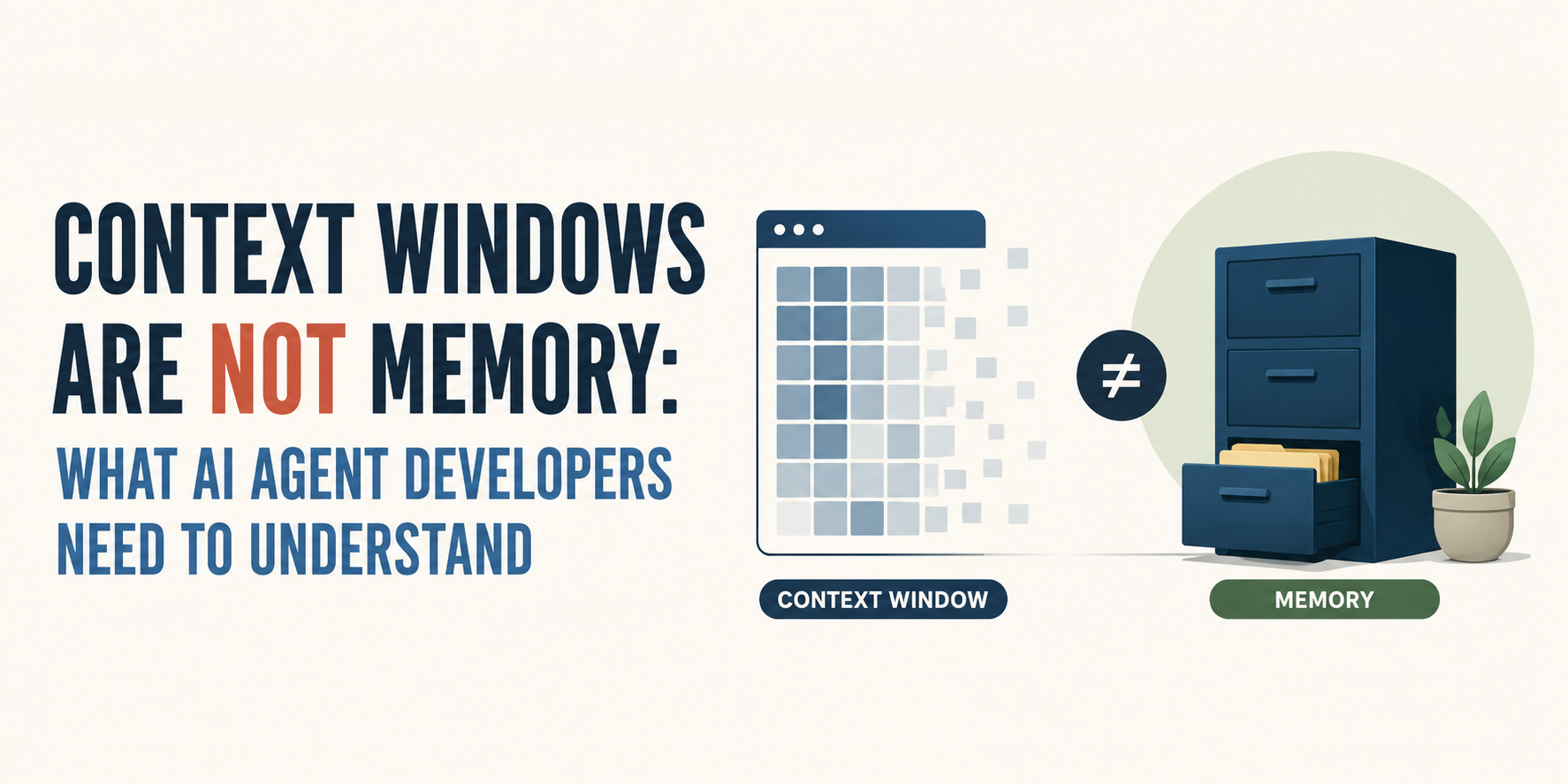
Context Windows Are Not Memory: A Practical Guide for AI Agents
Context windows have become a staple of how we reason about modern AI agents, but conflating context length with true memory is a misstep that can mislead teams designing agentic systems. The article from Machine Learning Mastery centers on a distinction that is often glossed over in high-level AI coverage: memory is not merely the ability to recall recent tokens; it is about structured retrieval, persistent state, and reliable grounding across tasks. In production environments, agents rely on retrieval-augmented generation, external databases, and memory-like mechanisms to maintain continuity across sessions, users, and domains. The piece underscores several practical patterns—structured episodic memory, selective forgetting, and context window management—that practitioners can translate into safer, more predictable agents. For enterprises deploying agentic software, this distinction has immediate implications for latency, scalability, and governance. When context windows balloon to accommodate long dialogues or multistep tasks, systems may appear more capable than they actually are, risking hallucinations or inconsistent behavior. The article highlights that sophisticated agents often keep a lightweight internal state and use a robust retrieval layer to fetch relevant information on demand, rather than caching everything in memory. This approach aligns with modern MLOps practices: decouple memory from task-specific prompts, use versioned knowledge sources, and implement strict access controls for sensitive data. The takeaway is clear: successful agent design requires explicit memory abstractions, not just longer prompts.
Technically, the piece nudges developers toward architectural patterns that separate reasoning from knowledge storage. Techniques such as time-aware embeddings, structured memory graphs, and retrieval-augmented generation (RAG) emerge as pragmatic anchors for robust agents. The author also notes that evaluation must extend beyond perplexity or short-term accuracy to include memory consistency across sessions, trustworthiness of retrieved data, and the agent’s ability to recover from transient failures. For leaders, this translates into investing in observability around memory-related components, setting clear SLAs for retrieval latency, and designing governance around what the model can remember or forget over time.
Overall, the article provides a grounded map for AI teams building agentic systems, moving the conversation away from “bigger context is better” toward “smarter memory with controlled access.” This is a timely reminder that the next frontier in agent reliability lies in deliberate memory design, robust retrieval, and disciplined state management rather than raw token budgets. It’s a call to pair architectural discipline with model capability to avoid the brittle traps of context-length hype.
Tags: ai-agents, agent memory, retrieval, memory architecture, agent design