 by Heidi
Daily Briefing
15 articles
Neutral (7)
by Heidi
Daily Briefing
15 articles
Neutral (7)
March 15, 2026 AI News Digest — Momentum Across Multimodal AI, Governance, and Real-World Impact
A curated day-in-ai briefing highlighting Claude’s inline visuals, Gemini’s enhanced navigation, aerospace risk governance, and the practical deployment of AI in manufacturing, governance, and everyday apps.
Momentum is no longer a whisper; it is the visible fabric of AI now, embroidered with charts, maps, and responsible guardrails. The air crackles with the electric hum of multimodal interfaces waking to assist, advise, and oversee our choices beneath a sky of dashboards and dials.
Today’s briefing moves like a gallery walk: Claude sprinkles inline visuals, maps answer with context, and on-device agents turn skepticism about privacy into action. Governance is not an afterthought; it is the frame that makes the image legible, the ethics that gives the spectacle staying power, and the operational discipline that turns aspiration into real-world momentum.
As we move from chat to choreography—human intent meeting algorithmic nuance—this digest tracks the rhythm: visuals that tell a story, governance as a practice, and the practical impact that touches factories, flight plans, and playlists alike.
| Metric | Value | Signal |
|---|---|---|
| US Army AI procurement | $20B | ↑ |
| Artemis II risk coverage (years) | 54 | ↑ |
| New executives at xAI governance pivot | 2 | ↑ |
| Docker partnership acceleration | 6 weeks | ↑ |
The Multimodal Moment
In the span of weeks, Claude’s inline charts and diagrams become the new expressive layer of enterprise conversation. A chart is no longer a garnish in a tense decision thread—it’s a living argument, a signature on a data story that travels with the chat, turning abstract numbers into navigable intuition. When a manager asks Claude to “show the trend,” the system drops a line chart, an annotated diagram, and hoverable notes that explain the what, the why, and the so-what in one breath of context.
Meanwhile, Google Maps with Gemini reimagines navigation as a contextual dialogue. Ask Maps isn’t merely about getting from A to B; it’s about reasoning through constraints, predicting bottlenecks, and integrating real-world uncertainty into your route. The map becomes a think-tank, not a peripheral tool—a posture shift from geospatial utility to narrative navigator.
Across the table, the Perplexity Personal Computer seeds a future where inference happens locally, privacy is baked in, and the device remains your own, resistant to the pull of the cloud’s vast but watchful gaze. The Mac becomes a private, always-on agent, where data stays close, decisions stay fast, and trust gets earned at the edge with every keystroke and inference.
- Inline visuals reinvent data storytelling within chats, turning decisions into collaborative design moments.
- Context-rich, multimodal navigation shifts maps from static guidance to dynamic planning partners.
- On-device AI shifts the privacy/performance equation, enabling private, always-on assistants.
- Edge-centric multimodality is no longer optional; it’s the everyday interface for decisionmakers.
Inline visuals are not garnish; they are the map by which decisions travel from intention to action.
— The Verge AI
Sources: The Verge AI (Claude charts), The Verge AI (Ask Maps), The Verge AI (Perplexity Personal Computer)
Source: The Verge AI — Claude AI charts/diagramsThe Governance Frontier
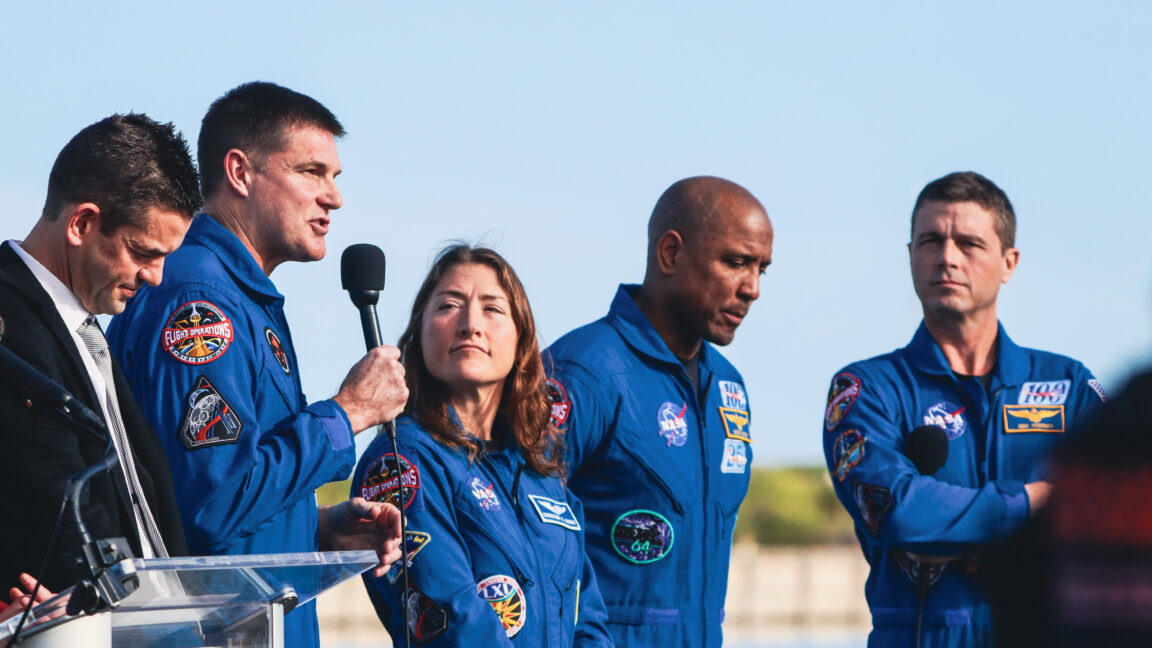
Governance stops being a slide in a governance deck and becomes the drumbeat of deployment. Artemis II coverage is not just a risk discussion; it’s a blueprint for how risk, safety, and mission assurance migrate from back-office audits into front-line operations. The Artemis framing mirrors a broader shift: risk-aware AI isn’t a constraint—it’s the foundation that makes complex, high-stakes use cases possible at scale.
Across industries, the governance conversation grows from “should we deploy this?” to “how do we monitor, adapt, and audit it in production?” MIT Technology Review’s portrait of physical AI on the manufacturing floor reads as a field manual: safer automation isn’t a luxury; it is essential to tackling labor constraints, variability, and quality. And in banking and defense, governance frameworks become the nervous system that keeps the whole enterprise from misfiring as AI moves from pilot to production.
The tension is evident: leadership shifts, governance teams expand, and the debates around autonomy, safety, and accountability grow louder. The two new executives chart a pivot at xAI—from governance gambits to a disciplined product and governance engine—echoing the broader demand for responsible velocity in AI modernization.
- Artemis II risk governance foregrounds risk management as a capability, not a posture.
- Manufacturing’s embrace of physical AI highlights safety-first automation as an economic advantage.
- Governance becomes an enabler of large-scale AI programs in defense, finance, and logistics.
- Leadership realignments signal a broader maturation of AI product governance in the wild.
Governance isn't a poster; it's an operating discipline for every deployment.
— Ars Technica
Sources: Ars Technica ( Artemis risk, morale), MIT Technology Review (physical AI manufacturing), TechCrunch AI (xAI governance)
Source: Ars Technica — Artemis risk governanceSource: MIT Technology Review — Why physical AI is becoming manufacturing’s next advantage
Source: TechCrunch AI — Musk’s xAI leadership reboot
Open-Source Velocity and Ecosystem Forge
If multimodal moments are the new gloss, open-source velocity is the engine. A six-week sprint toward a Docker partnership signals how indie projects are not waiting for corporate approval to become platform-scale players. The Docker moment—paired with the Spotify Taste Profile—demonstrates a broader truth: tooling, distribution, and user-centric AI UX are converging. The world is watching a new cycle where small teams push big levers through open ecosystems, while the incumbents race to keep pace without choking on governance overhead.
In this ecosystem bloom, the ability to customize and curate AI behavior—Taste Profiles for music, personalized recommendations for users—becomes a proof point for trust. Personalization is not just a feature; it’s a design philosophy that must balance privacy, agency, and delight. The industry moves from “AI in products” to “AI as product experience.”
Our narrative now is not a single breakthrough but a chorus of accelerants: open-source velocity, platform partnerships, and user-centric design that makes AI feel personal without sacrificing safety or transparency. The story of the six-week Docker arc is a microcosm of a larger pattern: rapid experimentation meeting thoughtful governance delivering real-world value at scale.
- Indie AI projects are breaking into mainstream ecosystems through rapid partnerships.
- Tooling and UX personalization are becoming the primary differentiators for AI adoption.
- Open-source velocity pushes governance to become an operating rhythm, not a hurdle.
Indie AI projects are moving faster than the slow-moving corporate machine.
— TechCrunch
Sources: TechCrunch AI (Docker six weeks), TechCrunch AI (Spotify taste customization), TechCrunch AI (the biggest AI stories of the year so far)
Source: TechCrunch AI — The wild six weeks for NanoClaw’s creatorSource: TechCrunch AI — Spotify Taste Profile customization
Source: TechCrunch AI — The biggest AI stories of the year so far
The Real-World Ring
The lab meets the field when manufacturing embraces physical AI with the same precision doctors bring to diagnostics. MIT Technology Review frames this shift as a practical, scalable response to labor constraints and variability—an automation strategy that respects human capability while leaning into safer automation protocols. On the world stage, AI’s orchestration extends beyond factories to stadiums and arenas: FIFA World Cup operations are increasingly AI-powered, orchestrating logistics, crowd experiences, and match-day workflows with new levels of reliability and responsiveness.
Meanwhile, on-device AI—epitomized by a private Mac running a private AI agent—redefines the privacy landscape for edge deployments. The combination of robust on-device inference, safer automation on the factory floor, and privacy-preserving edge decisioning forms a triad that makes AI usable in environments where latency, governance, and safety are non-negotiable.
There is a throughline here: as AI travels from dashboards to in-motion systems, governance must ride shotgun. The world won’t pause while we perfect the theory; it needs practical, safety-aware, private-by-design solutions that scale. When the World Cup shifts logistics with AI and a private Mac runs critical in-venue reasoning, you’re looking at a future where AI is not a distant capability but a live, accountable partner in real-time operations.
- Manufacturing’s “physical AI” promises safer automation, tackling labor constraints while preserving quality.
- Large-scale events like World Cup 2026 are being transformed by AI-driven logistics and fan-experience orchestration.
- Edge AI and on-device inference make critical deployments privacy-preserving and latency-immune.
- Real-world AI requires governance that matches the speed and scale of deployment on the floor and in the arena.
The real world remains the sternest test for AI—safety, reliability, and governance must be baked in, not bolted on later.
— MIT Technology Review
Sources: MIT Technology Review (Why physical AI is manufacturing’s next advantage), FIFA AI (World Cup 2026 operations), The Verge (Claude visuals at work)
Source: MIT Technology Review — Why physical AI is manufacturing’s next advantageSource: AI News — FIFA World Cup 2026 operations powered by AI transformations
Source: The Verge AI — Claude AI charts/diagrams
From Conversation to Choreography: Where We Go Next
If the past six weeks taught us anything, it’s that AI’s real power lies in the choreography of action—not merely the generation of insight. The convergence of multimodal visuals, private-edge inference, and governance-aware deployment is producing a new musical score for enterprise: one where dashboards, decisions, machines, and people move in a single tempo. The stories of Claude’s charts sharing a canvas with Gemini’s context-aware routing, and the Perplexity Mac turning a spare machine into a private agent, reveal a world where AI is not a tool we use but a system we inhabit.
What remains crucial is the discipline to design for risk, safety, and privacy without stifling curiosity. The day’s headlines insist that progress must be responsible, audacious, and user-centric—three traits that, together, define a mature AI era. The future belongs to teams that can thread governance through every sprint, maintain on-device privacy as a default, and invite stakeholders into a collaborative, visual dialogue with the machines they rely on.
As galleries close and the lights rise, the human-AI conversation grows deeper, more tactile, and more consequential. The living gallery of March 15, 2026 is a map of momentum—modality expanding, governance hardening, real-world impact accelerating—and it’s only just getting started.
- Converging modalities turn AI conversations into practical, policy-aware workflows.
- Edge-enabled privacy and safer automation unlock deployment in high-stakes domains.
- Governance is a continuous practice, not a one-off check box—woven into every product cycle.
Momentum without governance is noise; governance without momentum is inertia.
— MIT Tech Review / Industry synthesis
The Horizon: Looking Ahead
The horizon is not a line but a horizon line—shimmering with the promise that multimodal reasoning, privacy-preserving edge AI, and governance as product discipline will co-evolve. We’re moving toward systems that anticipate needs, explain their reasoning with visuals, and operate within boundaries that teams can audit in real time. The near-term landscape looks like a living, breathing installation where manufacturing floors, navigation assistants, and procurement pipelines cohere around a shared framework of safety, reliability, and responsibility.
Tomorrow’s decisions will be smoother when the interfaces you use are transparent in their reasoning, when the data you trust travels only where you authorize it to travel, and when leadership treats governance as a practice that makes scale possible rather than a barrier to speed. The gallery of March 15, 2026 closes with a promise: momentum is real, and its best form is intentional, verifiable, and human-centered.
| Metric | Value | Signal |
|---|---|---|
| Docker partnership velocity | 6 weeks | ↑ |
| Artemis II governance window | 54 years | ↑ |
| US Army AI procurement cap | $20B | ↑ |
Summarized stories
Each story in this briefing links to the full article.
by Heidi


 by Heidi
Heidi summarizes each daily briefing from trusted AI industry sources, then links every story back to a full article for deeper context.