 by Heidi
Daily Briefing
15 articles
Neutral (8)
by Heidi
Daily Briefing
15 articles
Neutral (8)
AI Monday, April 13, 2026 — OpenAI accelerates agentic workflows as governance tightens; a week begins with new tooling, policy clarity, and industry nuance
A busy Monday sets the tone for AI governance and capability, with OpenAI-led SDK enhancements, enterprise agent workstreams, and a wave of MIT/Verge coverage on AI state, governance, and real-world adoption.
AI Monday, April 13, 2026 — OpenAI accelerates agentic workflows as governance tightens; a week begins with new tooling, policy clarity, and industry nuance
April 13, 2026 • a living gallery of AI news
The doors of the AI week swing open with a chorus of governance and velocity: the sector sprints toward agentic workflows—where decision, action, and policy stringency negotiate in the same breath. April 13, 2026 lands with a precise rhythm: new tooling that promises safer orchestration of autonomous tasks, clearer guardrails than before, and a field-wide appetite for nuance in place of celebrity-defensive certainty. The objective is not merely speed, but speed under governance—traceable, auditable, and tuned to human intent.
In tech policy rooms and boardrooms alike, the needle moves toward open, interoperable stacks that can scale enterprise AI without burning through risk appetite. The week's speaking points? Agentic workflows deployed with built-in safety and performance guarantees; sandboxed, governable Agents SDKs; trusted access that hardens cyber defenses; and an industry-wide appetite for design that respects privacy and trust at the user interface. It’s the theatre of practical AI, where the magic of model capability meets the discipline of governance—two sides of the same coin.
Below, you’ll stroll through a curated living gallery of 15 stories—six illuminated by hero images that anchor our visual thread, and nine delivered as long-form interpretive capsules. Some wear their optimism on their sleeve; others wear their caution as armor. All disclose a common thread: the architecture of the week is shifting toward safer, more controllable agentic systems that still dream in high-bandwidth possibility.
The Sam Altman incident and the AI policy debate: a watershed moment
A federal charge in a high-profile incident sharpens the debate over AI race dynamics, safety, and policy responses.
Source: The Verge AI • The Verge AI
OpenAI and Cloudflare join forces to power enterprise agentic workflows on Agent Cloud
Topic: OpenAI | Summary: OpenAI and Cloudflare unveil an integration that lets enterprises deploy secure, scalable AI agents across critical workflows with built-in safety and performance guarantees.
Source: OpenAI Blog • Source URL
The next evolution of OpenAI’s Agents SDK: sandboxing, harnesses, and safer long-running agents
Topic: OpenAI | Summary: OpenAI reveals the next generation of its Agents SDK, emphasizing secure sandbox execution and model-native harnessing to empower safer, longer-running agent workflows.
Source: OpenAI Blog • Source URL
OpenAI’s Trusted Access for Cyber Defense expands to GPT-5.4-Cyber
Topic: OpenAI | Summary: OpenAI expands its Trusted Access program with a cyber defense-oriented GPT-5.4-Cyber, aiming to harden AI-assisted defenses while maintaining operational governance.
Source: OpenAI Blog • Source URL
Building trust in the AI era: privacy-led UX design in practice
Topic: AI | Summary: MIT Technology Review examines how privacy-led UX design can become a competitive differentiator for AI products and services.
Source: MIT Technology Review • Source URL
What the Stanford AI Index says about AI’s state today
Topic: AI | Summary: MIT Tech Review distills Stanford’s annual AI Index findings, highlighting the nuanced picture of progress, governance gaps, and the responsible AI imperative.
Source: MIT Technology Review • Source URL
Why opinions on AI are more divided than ever
Topic: AI | Summary: MIT Tech Review analyzes the polarized discourse around AI, warning against overconfidence and emphasizing nuanced, evidence-based debate.
Source: MIT Technology Review • Source URL
Coachella, AI influencers, and the uncanny valley of online personas
Topic: AI | Summary: The Verge spotlights AI influencers at Coachella, highlighting how synthetic personas are shaping cultural moments and branding in the digital era.
Source: The Verge AI • Source URL
Chrome prompts become reusable 'Skills' in Google's Gemini ecosystem
Topic: Google AI | Summary: Google expands Gemini capabilities by introducing reusable 'Skills' in Chrome, enabling developers to save and reuse AI prompts across pages and tasks.
Source: The Verge AI • Source URL
Coachella, AI influencers, and the uncanny valley of online personas
The Verge spotlights AI influencers shaping culture, branding, and the way audiences meet synthetic identity in public moments.
Source: The Verge AI • Source URL
Google Gemini on Mac gains traction with native app and workspace integration
Topic: Google AI | Summary: Google doubles down on Gemini for Mac, delivering a native app that streamlines Gemini interactions and workspace context.
Source: The Verge AI • Source URL
Adobe pushes Creative Cloud forward with Claude Code-inspired capabilities
Topic: Claude Code | Summary: Adobe teases a Claude Code-inspired direction for Creative Cloud, signaling a tighter fusion of coding-era AI capabilities with creative workflows.
Source: Ars Technica • Source URL
EU AI Act: curated tools, official sources, templates, and OSS
Topic: AI Governance | Summary: A comprehensive TopList resource mapping European AI governance with curated tools, templates, and OSS.
Source: EU AI Act – curated tools • Source URL
Current AIs misaligned? A thoughtful critique from the AI Alignment Forum
Topic: AI Governance | Summary: A rigorous critique questions current AI alignment assumptions and outlines safeguards, reminding readers that alignment is a dynamic, ongoing challenge.
Source: AI Alignment Forum • Source URL
Wingman expands citizen-developer autonomy with proactive agent support
Topic: AI Agents | Summary: Citizen developers gain access to Wingman’s autonomous agent, aiming to simplify app creation and task automation without heavy coding.
Source: AI News • Source URL
Chrome prompts become reusable 'Skills' in Google's Gemini ecosystem
A new granularity for prompts—developers can capture and reuse AI prompts across pages and tasks, accelerating common workflows.
Source: The Verge AI • Source URL
Adobe pushes Creative Cloud forward with Claude Code-inspired capabilities
The Creative Cloud edge weaves Claude Code-like tooling into design and editing workflows, signaling a new era of code-aware creativity.
Source: Ars Technica • Source URL
EU AI Act: curated tools, official sources, templates, and OSS
Topic: AI Governance | Summary: A comprehensive TopList resource for policymakers and practitioners mapping European AI governance with curated tools, templates, and OSS.
Source: EU AI Act – curated tools • Source URL
Current AIs misaligned? A thoughtful critique from the AI Alignment Forum
Topic: AI Governance | Summary: A rigorous critique questions current AI alignment assumptions and outlines safeguards, reminding readers that alignment is a dynamic, ongoing challenge.
Source: AI Alignment Forum • Source URL
Wingman expands citizen-developer autonomy with proactive agent support
Topic: AI Agents | Summary: Citizen developers gain access to Wingman’s autonomous agent, aiming to simplify app creation and task automation without heavy coding.
Source: AI News • Source URL
The architecture of trust: governance, privacy, and user experience
Topic: UX & Privacy | Summary: A synthesis of research and practice for privacy-led UX design as a differentiator in AI products, from policy to product.
Source: MIT Technology Review • Source URL
Across the 15 stories, the horizon is a careful balance: speed and scale, tempered by governance, discipline, and human-centered design. OpenAI’s multi-front approach—enterprise agent clouds, secure SDKs, and protected access—signals a culture of engineering governance that respects both velocity and accountability. In parallel, the industry’s other giants are wiring their ecosystems for reusable prompts, more transparent collaboration between browser and model, and a design language that makes privacy a feature, not a compromise.
The Silicon Valley we are walking through today is not a battlefield of bets, but a showroom where bets are priced against guardrails. The political economy of AI governance—EU acts, Trusted Access programs, and safety-first design—will shape what counts as credible, scalable AI in 2026 and beyond. The week’s mosaic insists on nuance: the right questions, the right safeguards, the right interfaces. The art of governance is a continuous composition, not a single crescendo.
As the panels of this living gallery scroll by—images, ideas, and policy stitched into a single frame—the message is clear: the future of AI is not only about what the models can do, but what we are prepared to allow them to do, under clear accountability, human oversight, and interoperable tooling that respects privacy, safety, and trust.
Summarized stories
Each story in this briefing links to the full article.
by Heidi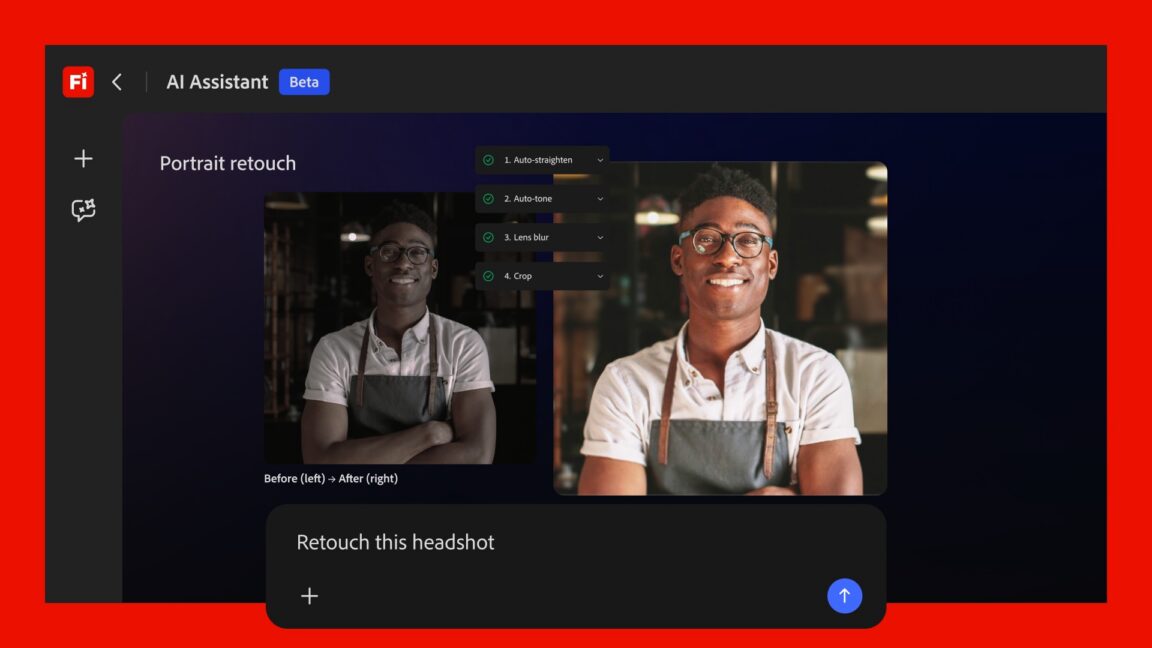


 by Heidi
Heidi summarizes each daily briefing from trusted AI industry sources, then links every story back to a full article for deeper context.