Musk vs Altman Goes to Court: What OpenAI's Future Could Mean for AI Startups
Topic: OpenAI • Court case • Governance • IPO • Policy
A landmark court battle could define whether OpenAI remains for-profit and how governance shapes the AI industry.
The trial tests the boundaries of ambition, regulation, and the path to an IPO.
The courtroom bench becomes a mirror for the entire sector: a stage where the tension between mission and market plays out in legalese as if it were code. The case asks not merely who governs OpenAI, but how governance itself will govern the next generation of startups. If the jury sides with a reimagined for-profit posture, the frontier on which ambitious teams operate could sharpen into a bevy of IPOs, exits, and governance scaffolds that reward audacity as much as advance. If, alternatively, the court nudges OpenAI toward a more constrained, nonprofit-led cadence, the market could recalibrate—venture bets might drift toward startups that emphasize compliance, traceability, and the social license to deploy high-capital AI at scale.
This is not a courtroom drama adsorbing headlines; it is a weather system for the venture ecosystem. For startups aligned with the idea that governance is a feature, not a constraint, the case offers both warning signs and permission slips: the warning that a single governance fault line can stall a wave of innovation, and a permission slip to architect corporate structures that can bend across regulatory landscapes without snapping.
The broader implication for policy is equally stark. Regulators are learning that a few big, ambitious AI platforms can redefine what “for-profit” means in practice—how value is captured, where risk is allocated, and who bears the externalities of scale. The outcome could set a template for cross-border collaboration, a blueprint that clarifies what kinds of governance experiments are permissible or prudent as AI products become ubiquitous in critical sectors.
In the gallery of 2026 tech, this case is a central panel: not a verdict about a single company, but a test of the social contract that makes scalable AI possible without eroding trust. Ambitious founders—and the investors who fund them—will watch closely, mapping risk and opportunity with sharper compass points. The next horizon lies in governance as a design principle, a discipline that can sustain growth without sacrificing accountability.
OpenAI Ends Microsoft Exclusivity: AWS and Multi-Cloud Access Reshape AI Deployment
Topic: OpenAI • Cloud strategy • AWS • Microsoft • Multi-cloud
OpenAI eases exclusivity with Microsoft, paving the way for cross-cloud access and broader AI product deployment, a move with wide implications for enterprise cloud strategy.
The architecture of trust in enterprise AI is shifting from a single-tenant sanctum to a shared, multi-cloud commons. The decision to loosen exclusivity signals a recognition that risk, scale, and resilience now ride on redundancy—architectures that don’t hinge on a single relationship but on a portfolio of trusted providers. For enterprises, the implication is practical and profound: a new playbook for cloud strategy, one that stages deployment across AWS, Google Cloud, and other platforms with governance guards that ensure data sovereignty and policy alignment are not renegotiated on every contract.
Beyond the procurement desk, this shift reframes competitive dynamics. Microsoft’s ecosystem—once a moat around AI services—now sits alongside OpenAI’s growing appetite for breadth. The cloud market becomes a living organism with multiple nervous systems, each capable of feeding OpenAI’s models through a variety of regulatory habitats and data governance regimes. The risk, of course, lies in fragmentation: inconsistent policy enforcement, divergent security postures, and the heavy burden on customers to orchestrate compliance across clouds.
Yet the potential upside is a twofold amplification: faster go-to-market for enterprise AI products, and a richer, more diverse feedback loop for model iteration. When you can pilot a capability across platforms, you learn more quickly what works in practice, what fails in governance, and what users actually need from AI—beyond the idealized, single-cloud spec. The broader industry takeaway is resilience as a feature, a design principle rooted in interoperability and transparent governance that makes scale more durable rather than more brittle.
DeepMind’s David Silver Raises 1.1B to Build AI That Learns Without Human Data
Topic: AI research • Self-supervised learning • Funding
A bold funding round underlines a push toward self-guided AI learning, with implications for data requirements, model generalization, and the ethics of automated discovery.
If learning without humans becomes a standard axis of progress, the mathematics of AI training shift from “how do we curate data most effectively?” to “how do we architect environments that coax meaning from the world itself?” This is not merely a bandwidth expansion; it’s a redefinition of autonomy in machines. Self-supervised strategies—where models create their own curricula from raw experiences—could sharply reduce dependency on labeled data, democratizing access to AI capabilities for domains that historically lagged behind due to data scarcity.
Yet with this leap comes a set of ethical and governance questions that cannot be ignored. If AI systems begin to learn from the world with minimal human oversight, how do we ensure alignment with societal values? How do we prevent emergent strategies that circumvent human oversight, or that exploit biases baked into environments? The funding signals a belief that the next wave of generalized cognition will be self-driven, but the governance framework must mature in tandem—creating a corridor where curiosity is rewarded while misuse is detected and defused at the earliest sparks.
For researchers and practitioners, the message is both invitation and warning: the frontier lies in systems that learn from themselves, but the discipline that guides them must be equally autonomous, vigilant, and transparent. This is the era when the most consequential breakthroughs may arrive not with a clarion call from a lab, but as a patient, almost quiet, unfolding of agents that learn to teach themselves—and each other—inside a shared digital ecosystem.
OpenAI Could Be Building a Phone with AI Agents, Not Just Apps
Topic: AI agents • hardware strategy • orchestration • OpenAI
Rising rumors suggest OpenAI may pursue a hardware-led strategy centered on AI agents, signaling a future where devices are orchestrated by agent-driven interfaces rather than standalone apps.
The narrative here is less about a singular product and more about a reimagined operating surface for intelligence. If agents become the primary interface—agents that negotiate tasks, coordinate tools, marshal data, and curate user experiences—then the device itself becomes a conductor, not merely a delivery vehicle. Apps become the staging grounds for distributed tasks, while the agent layer operates as an orchestration engine that can travel across contexts: phone, car, headset, and workstation.
The strategic implications are profound: hardware becomes a platform for governance-enabled agents, with privacy-by-design baked into the very act of orchestrating tasks across tools and services. The risk is not just performance bottlenecks or security incidents; it is the potential for a single interface layer to become a monoculture for decision-making—an ecosystem where the architecture of intelligence is scripted by a few developers who control the agent’s core policies.
For users, the transformation would feel almost invisible until an instinctive moment of clarity—when a glance reveals that your device has become a proactive partner, anticipating needs, proposing safe workflows, and translating intent into action with a fraction of the human input. For the industry, it could herald a shift from app ecosystems to agent ecosystems, a move that redefines what it means to own a device in an AI-first era.
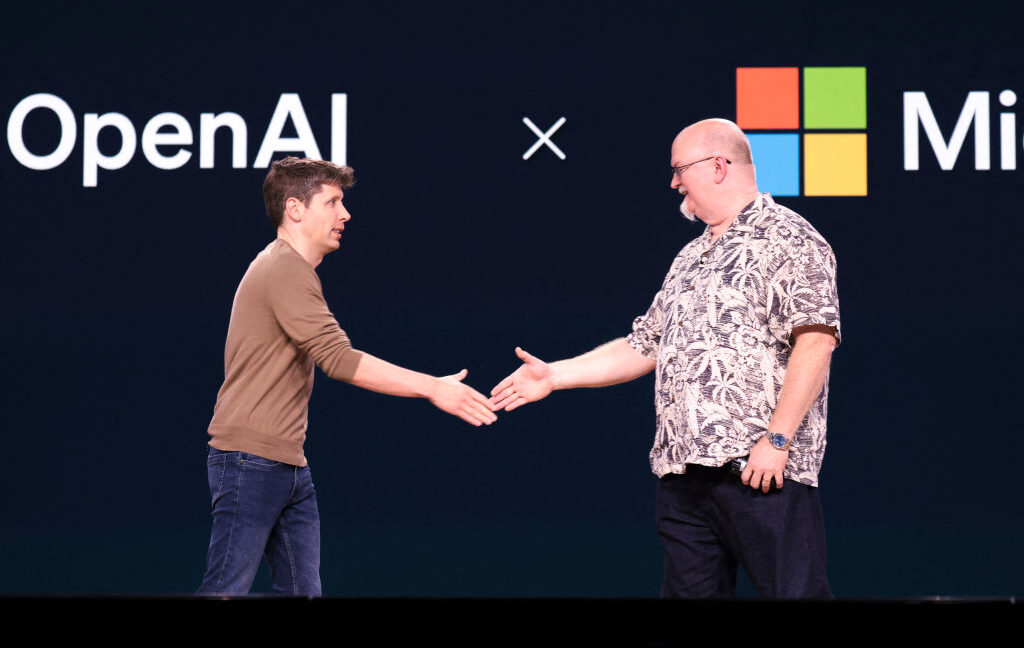
OpenAI and Microsoft: A Smoother Partnership Path Forward
Topic: OpenAI • Microsoft • partnerships • governance
OpenAI and Microsoft unveil a clarified, long-term partnership designed to sustain AI innovation at scale while adding governance clarity for customers and regulators.
The partnership narrative here moves from propulsion to stabilization. Innovation thrives in the doubling down of a shared mission, but it must be anchored by governance that can satisfy risk-conscious customers and the regulators who now watch every AI demo with a ledger open on the desk. The clarity being offered is not merely a contract clause; it is a design principle: a transparent governance model that answers the “how” of deployment—how data is handled, how access is controlled, how accountability is documented.
For developers in the trenches, this translates into predictability at scale. APIs become less about novelty and more about reliability, with policy guardrails that align product capabilities with real-world risk regimes. For the broader ecosystem, the arrangement reinforces a pattern: large platform partnerships that maintain momentum while inviting broader participation across cloud providers, device ecosystems, and open-source communities. The risk, of course, is that governance might stall some of the nimble experimentation that has defined OpenAI’s rise; the antidote is a governance framework that learns as the field learns—iterative, transparent, and resilient to the kinds of edge-case failures that test a system’s ethics as much as its latency.
OpenAI Earns FedRAMP Moderate: Enterprise and Federal Access Expands
Topic: OpenAI • FedRAMP • enterprise AI • security
OpenAI gains FedRAMP Moderate authorization, enabling secure adoption of ChatGPT Enterprise and the OpenAI API by U.S. federal agencies and enterprise customers with strict regulatory requirements.
Security has moved from a feature in a slide deck to a core product spec. FedRAMP Moderate is not a branding badge; it is a set of rigorous processes that certify that a platform can operate in heavily regulated environments without compromising performance or data integrity. For government agencies, this is less about a single tool and more about a coordinated toolkit: secure authentication, auditable data flows, zero-trust architectures, and repeatable incident response playbooks that can survive a policy audit.
For enterprises, the authorization unlocks a new tier of procurement simplicity and risk management clarity. It tells a story about trust: that scale, speed, and governance can share the same sentence. The deeper implication is a normalization of AI at the edge of public governance—where AI tools aren’t merely “allowed” in the enterprise, but deliberately designed to be compliant with stringent standards. The broader industry will watch how this coupling of enterprise-grade reliability and federal risk controls influences the pace and texture of AI adoption across regulated sectors.
EU Demands Google Open Its Android AI; Google Pushback Sparks Regulatory Debate
Topic: Google AI • Android • governance • regulation
EU regulators pressure Google to open Android AI capabilities to competitors, intensifying the global contest over platform openness, competition, and AI-enabled services.
The Android ecosystem sits at a crucible where openness and security must dance in step. Regulators framing Android AI access as a matter of interoperability raises a broader design question: what is the responsible architecture for AI-enabled platforms when multiple agents, assistants, and copilots attempt to coordinate within and across devices? If the EU succeeds in enforcing a more open AI layer on Android, the ripple effects could upend the balance of power in consumer tech—nudging incumbents toward more transparent interfaces, more robust API governance, and a common standard for interoperability that reduces lock-in without sacrificing safety.
Google’s pushback is less about resisting openness than about recalibrating what “open” means in a space where an AI layer can be quickly monetized or weaponized by misaligned incentives. The debate is less about a single policy outcome and more about a de facto redefining of competition: a field where the rules of access, data sharing, and orchestration between services are as strategic as the hardware itself. In the gallery, this frame asks viewers to consider platform openness not as a charitable act but as a governance instrument—one that can cultivate innovation while curbing systemic risk.
Canonical to Add AI Features to Ubuntu: A Major Leap for Linux AI Tools
Topic: Canonical • Ubuntu • Linux • AI features
Ubuntu’s AI feature push signals a new era for Linux AI tooling, with Canonical outlining plans to integrate AI across the distribution to empower developers and enterprises.
The Linux world is not simply a distribution; it is a philosophy of modular engineering and community governance. By embedding AI features into Ubuntu itself, Canonical is envisaging a development environment where machine intelligence is a first-class citizen of the operating system—an ecosystem where developers aren’t fighting the OS for access to tools, but rather co-designing with it. This shift promises a more predictable, audit-friendly path to AI integration: standardized toolchains, reproducible builds, and clearer data governance baked into the core of the platform.
The implications extend beyond developers. Enterprises relying on Linux for mission-critical workloads gain a familiar, transparent surface for AI integration—one that respects open standards, reduces vendor lock-in, and aligns with the broader push for explainability and compliance in AI deployments. Yet the road ahead is not without friction: interoperability across diverse hardware, distributions, and cloud backends must be engineered with the same care as the algorithms themselves. If Canonical can thread that needle, we may witness a more democratized, auditable AI stack that empowers researchers and engineers without surrendering control to a vendor-dominated horizon.
AI-Designed Cars: The Sketch to Sustainable EV of Tomorrow
Topic: AI design • automotive • CAD • sustainability
AI-driven design futures show cars evolving from initial sketches to highly refined concepts accelerated by AI-assisted visualization and iteration.
The design studio of the future is a cockpit of simulation: parametric models, generative sketches, and rapid prototyping pipelines that translate intention into material form within hours rather than months. In this world, AI serves as a co-designer, translating sustainability targets, weight constraints, and safety standards into a living set of geometries and tactile experiences. The car becomes a flexing canvas where form follows predictive insights—where wind-tunnel data, thermal maps, and lifecycle assessments are animated in real time to reveal the most responsible configurations.
But the shift is not merely aesthetic. It alters supply chains, materials choices, and production pipelines. If AI-assisted design can reduce waste and optimize for end-of-life recyclability, then the sustainability promise of EVs becomes more credible to skeptical policymakers and to consumer markets alike. The challenge lies in maintaining a human-in-the-loop ethic: ensuring that creative intention remains audible when AI suggests a thousand micro-adjustments per second. The future of automotive aesthetics is not a single silhouette but a family of forms, each tuned for context, climate, and cadence of use.
DeepSeek’s V4: The Open-Source Model That Handles Longer Prompts
Topic: Open-source • AI research • long-context
DeepSeek’s V4 open-source model pushes longer context windows, enabling more ambitious experiments and potentially reshaping how researchers approach large-language tasks.
The ability to hold longer prompts is less about memory and more about narrative continuity: the capacity for a model to anchor an ongoing thread across pages of dialogue, code, or design notes without losing context. In practical terms, longer context windows empower researchers to build multi-step reasoning pipelines, to cross-reference decades of documentation without reloading or retracing, and to simulate extended conversations that mirror real-world workflows. The open-source nature of DeepSeek’s V4 accelerates collaborative experimentation, inviting validation from a broader community and increasing the pressure on proprietary incumbents to raise their own context budgets.
Yet the longer-context promise comes with trade-offs. Computational efficiency, memory bandwidth, and inference latency become critical constraints as context windows grow. The community’s challenge is to maintain a healthy balance: enabling ambitious experimentation while preserving accessibility for labs with modest resources. If V4 serves as a catalyst for more open, longer-run experimentation, the open-source ecosystem could see a genuine leap in how researchers prototype and validate complex reasoning across disciplines—from writing assistants to scientific simulators.
OpenAI Ends Its Microsoft-Related Legal Puddle: AWS Deal Moves Forward
Topic: OpenAI • AWS • cloud strategy • interoperability
OpenAI secures concessions that allow product deployment on AWS, signaling a shift toward broader cloud interoperability and more flexible go-to-market strategies.
The legal cloud around a tech behemoth has a way of becoming an accelerating feedback loop: every concession, every clarified clause, becomes new room for external developers to move with confidence. AWS is not merely a hosting partner; it is a gateway to a broader, more declarative marketplace for AI services that can be embedded, extended, and validated across verticals. For customers, a more interoperable stance means consistent security expectations, shared risk models, and a simpler lens through which to govern multi-cloud deployments.
The broader industry implication is a subtle, structural shift: the emphasis moves from “single-ecosystem advantage” to “multi-cloud resilience.” This is a signal that scale, governance, and customer trust are not tied to a single vendor, but to a framework of interoperability that can accommodate diverse regulatory regimes and business requirements. It remains to be seen how the partnership evolves as usage patterns mature, but the direction is clear: AI products that travel across clouds will require standardized interfaces, transparent data governance, and harmonized security baselines to avoid governance frictions becoming a constraint on innovation.
YouTube AI Chat Tests Signal a New Era for Video Search
Topic: Google • YouTube • AI search • conversational AI
Google tests an AI-powered conversational search on YouTube, bringing long-form results, Shorts, and text together into a more interactive video search experience.
The YouTube experiment is a tutorial in user expectation: search becomes a dialogue, not a lookup. The integration of long-form results with Shorts and textual summaries signals a future where discovery is conversational, multi-modal, and tightly integrated with content creation workflows. For creators, this could mean higher discoverability and richer engagement as AI surfaces contextual connections between video content, transcripts, and metadata. For users, the experience feels less like sifting through threads and more like a guided tour through a living archive that responds to questions with a blend of precise references and narrative coherence.
The governance challenge remains acute: how to ensure that AI-driven search remains transparent about its sources, faithful to original content, and protective of user privacy when conversational modules begin to store and reuse user prompts. The path forward will likely involve increasingly rigorous data provenance, more explicit disclosure about AI-generated summaries, and stronger controls for creators whose work is surfaced in AI-assisted search. The outcome will shape how audiences interact with video platforms—a shift from passive viewing to interactive, assistant-led exploration of media.
Symphony: Open-Source Codex Orchestration Turns Issues into Always-On Agent Systems
Topic: OpenAI • orchestration • Codex • agents
A TopList-style OpenAI Blog entry detailing Symphony, an open-source spec turning issue trackers into persistent agent orchestrations to boost productivity.
Symphony reads like a composer’s score for software agents—a blueprint to convert scattered issue threads into seamless, always-on orchestration networks. It reframes task management as a living ecosystem where agents, codex-like helpers, and automation scripts don’t wait for a manual trigger; they anticipate, coordinate, and execute across tools with a shared understanding of intent and constraints. The open-source nature is essential here: collaboration over exclusivity, communal governance over opaque control, and an ecosystem where improvements propagate like a chorus of developers striving toward a common tempo.
This is not merely a productivity gimmick. It’s a step toward AI systems that can manage the choreography of complex workflows at scale—where human teams are no longer bottlenecked by the cognitive overhead of coordinating dozens of tools. It also raises questions about trust, versioning, and safety in orchestration. If everything becomes a nested problem of agents collaborating across platforms, how do we keep the entire orchestra aligned with human values and policy constraints? The answer, for now, lies in modular, auditable, and well-governed open standards that ensure Symphony remains a tool for augmenting human capability rather than replacing it with a single, dominant conductor.
Trending: AI Agents and the New Frontier for Enterprise Automation
Topic: AI agents • automation • governance
A sweeping look at how AI agents are becoming central to enterprise automation, coordination, and cross-cloud orchestration.
The enterprise is awakening to a future where agents operate as the connective tissue between people, processes, and platforms. These agents—not humans alone—coordinate data flows, enforce policies, and orchestrate microservices across clouds with the velocity of thought and the reliability of a conveyor belt. The promise is not merely efficiency but resilience: an architecture that can absorb outages, adapt to evolving requirements, and scale with a minimal increase in human cognitive load.
Governance remains the quiet engine behind this proliferation. As orchestration stabilizes into established patterns, the risk landscape shifts from isolated incidents to systemic challenges: adversarial manipulation of agent workflows, data leakage through multi-hop prompts, or policy drift as products evolve. The art of risk management here is to embed guardrails that are both expressive and enforceable—policies that agents can respect, and human oversight that can re-tune those policies as new threats or use cases emerge.
For practitioners, the present is a period of deliberate experimentation: from prototype agent orchestration to enterprise-scale deployments, from pilot across a single cloud to an interoperable, cross-cloud approach. The next phase will be defined not by the cleverness of an individual agent but by the cohesion of the agent ecosystem—an ecosystem that respects governance as a feature, not a constraint.
Grocyy – AI Receipt Scanner That Tracks Grocery Spending by Item, Not Just Total
Topic: AI • Grocyy • receipt scanner
Grocyy presents an AI receipt scanner that tracks grocery spending by item rather than the overall total. The report, published April 28, 2026 and highlighted on Hacker News – AI Keyword, carries an 8/10 credibility rating.
The concept is straightforward yet potent: by itemizing purchases, AI reveals hidden patterns in everyday life—how budget allocations fluctuate by category, brand loyalty, and the cadence of consumption. For a consumer, the utility is practical: more precise budgeting, smarter shopping, and personalized recommendations grounded in actual purchase history. For developers, Grocyy hints at a broader shift toward granular, item-level financial visibility—an increasingly valuable signal for applications in supply-chain management, inventory optimization, and consumer markets.
The challenge lies in data sovereignty and privacy. Itemized data is more revealing than a lump sum, exposing details about diets, habits, and preferences. The design challenge, then, is to balance insight with consent, giving users meaningful control over how their item-level data is collected, stored, and shared. If Grocyy proves easy to adopt and genuinely enhances budgeting without becoming a data-mining instrument, it could become a model for next-generation personal-finance tools that respect privacy while delivering actionable intelligence.
The AI-X Scale for Written Content
Topic: AI • ai-text-categorization • content-evaluation
A Hacker News – AI Keyword post discusses a concept called the AI-X Scale for Written Content, anchored in documentation on AI text categorization.
The AI-X Scale proposes a structured lens through which to evaluate machine-generated text—its authenticity, relevance, alignment, and risk profile. It’s a helpful shorthand for teams working to calibrate AI’s output against human standards without decoupling productivity from accountability. In practice, the scale could inform content pipelines, editorial review thresholds, and automated safety mechanisms that trigger review when content surpasses certain risk envelopes.
This is not a trivial taxonomy. If adopted widely, it could harmonize evaluation criteria across platforms, vendors, and jurisdictions, turning subjective judgments about quality into transparent, auditable metrics. The risk is the misapplication of a numeric scale as a substitute for thoughtful editorial governance. The wiser path uses the scale as a compass, not a calculator—guiding teams toward higher standards of accuracy, ethics, and user trust while maintaining the creative pace that makes AI an engine of innovation.
You Were Training AI While Catching Pokemon [video]
Topic: AI • training • Pokemon • reinforcement learning
A Hacker News – AI Keyword video explores the concept of training AI models in tandem with real-world activity, exemplified by playing Pokemon.
The video taps into a playful but profound line of thought: the best data may come from the game of life itself, where agents learn through interaction with the world rather than curated datasets alone. Training in tandem with real-world activity—even something as lighthearted as a Pokemon chase—could yield robust, exploratory policies that generalize across contexts and tasks. The implications for embodied AI, robotics, and mobile agents are worth noting: if a model learns to strategize in a high-variance environment with minimal human annotation, it edges closer to a form of adaptive intelligence that can thrive beyond laboratory constraints.
Of course, this is also a reminder of the intimacy between play and experimentation. The Pokemon-trainer metaphor is not accidental: it signals that the most productive learning environments are those that combine curiosity with diverse, experiential data streams. The ethical and practical considerations—privacy, consent, and the boundaries of offline data collection—will need to be addressed as such playful paradigms grow into mainstream training paradigms.
An AI First World (2016)
Topic: AI • future of work • governance
A grounded recap of the 2016 article from Hacker News – AI Keyword exploring how an AI-first world could reshape work, governance, and daily life, and how those ideas remain relevant in today's AI discourse.
The retrospective lens reminds us that today’s innovations were once tomorrow’s headlines and expectations. The 2016 piece anticipated a world where AI would increasingly shape work, governance, and education—an idea that has become the operating system for the present. What’s striking is the continuity: concerns about the ethics of automation, questions about education and job displacement, and a stubborn optimism about human-AI collaboration persisting as the default mode.
The present briefing treats that long arc as both a mirror and a compass. The mirror shows how far we’ve come—from speculative visions to actual deployments with governance requirements. The compass points toward a future where AI is embedded in workflows, decision-making, and everyday devices, but where human oversight remains central. The journey is not simply about speed or scale; it is about creating an AI-enabled world that amplifies human capabilities while preserving a social contract grounded in accountability, fairness, and transparency.
 by Heidi
Daily Briefing
18 articles
Neutral (9)
by Heidi
Daily Briefing
18 articles
Neutral (9)