 by Heidi
Daily Briefing
18 articles
Positive (36)
by Heidi
Daily Briefing
18 articles
Positive (36)
Google I/O 2026 dominates May 20 AI headlines as OpenAI tightens provenance and Google expands agent-first tooling
A deep dive into 18 top AI stories for May 20, 2026, spanning Google's I/O 2026 AI onslaught, OpenAI’s provenance push, and high-stakes industry adoption — plus a pivotal TopList on Google’s biggest I/O AI announcements.
The day opens like a gallery sliding into focus: a corridor of glass and neon where the future isn't trussed in rumor but staged in demonstrations. On one wall, Gemini steps forward not as a conversational partner but as an autonomous craftsman—able to draft software, compose routines, and chase outcomes with a quiet, electric confidence. On another, Gmail Live mutters promises of hands-free workflow, turning the inbox into a living assistant that understands the cadence of your day and the intent behind each ping. Across the hall, the path to purchase bends through agentic tooling—an all-orchestrating universal cart that braids retailers, apps, and intent into one continuous thread. And somewhere between policy and pixels, OpenAI unpacks provenance as a governance instrument, a watermark that makes the provenance of every digital asset a traceable thread rather than a rumor in the fog.
May 20 doesn’t feel like a single product launch so much as a tectonic moment in which the connective tissue of AI—agents, governance, and everyday tooling—begins to harden into stable scaffolding. The headlines aren’t merely about smarter search or slicker demos; they sketch a world in which AI doesn’t merely respond to you but understands the choreography of your work, your shopping, your travel, and your trust. The living gallery we navigate today pivots around three intellectual anchors: agent-first tooling that treats AI as an autonomous agent capable of action, content provenance that recasts trust as an architecture rather than a checklist, and the social decision-making around governance as an endurance strategy for AI at scale.
Google I/O 2026: The 13 biggest AI announcements, distilled
Topic: google-aiThe Verge AI’s curated TopList widens as Google’s annual confab spills into the living room of enterprise AI. Gemini, Search, and a suite of agentic tools are not just incremental upgrades; they are a declaration that the company intends to marry the optics of consumer search with a backend that reasons, automates, and act-uates on your behalf. The list isn’t merely a catalog of features; it’s a manifesto: AI that scripts your day, navigates your calendar, and negotiates outcomes with the world around you. In this room, the AI you once spoke to becomes the AI that speaks for you in tasks you barely articulated.
Source: The Verge AI • Source URL: The Verge AI
Google redefines Search with AI-driven, conversational, agent-powered experiences
Topic: google-aiThe search box becomes a living interlocutor, guided by Gemini-powered insight and proactive task orchestration. What used to be a session of querying words now evolves into a sequence of conversational prompts, autonomous follow-ups, and background tasks that you barely notice because the AI read your intent before you finished typing. The vision is less about returning results and more about steering you toward actions—bookings, reminders, purchases, and research—while keeping you in control and aware of how the system arrived at each recommendation.
Source: The Verge AI • Source URL: The Verge AI
Gemini 3.5 Flash and the race to an agentic AI future
Topic: google-aiGemini 3.5 Flash arrives as a high-velocity, agent-capable model designed to autonomously execute complex tasks and assemble software with minimal prompting. The design philosophy shifts from “help me” to “do this for me”—not in a vacuum, but within controlled parameters that keep actions auditable and aligned with user intent. It’s a pivot from conversational assistants to practical agents that draft code, orchestrate workflows, and co-create software artifacts with human oversight, accelerating the path from idea to implementation in real-time.
Source: TechCrunch AI • Source URL: TechCrunch AI
Gemini’s sight and mobility: external cameras bring AI to the car cockpit
Topic: google-aiExternal cameras widen the perceptual field for Gemini, enabling AI-powered interpretation of parking cues, street context, and vehicle surroundings. The result is not a toy demo but a programmable perception stack grafted onto the cockpit—deterministic in its interpretations, optimistic in its potential to reduce driver workload, and careful about safety and privacy as the car learns what it sees in the world. The car becomes a moving AI agent, capable of planning, reacting, and coordinating with external data streams in real time.
Source: The Verge AI • Source URL: The Verge AI
Gmail Live brings voice interactions to your inbox at Google I/O 2026
Topic: google-aiA practical upholstery of voice AI into the inbox: Gmail Live lets you manage messages, draft replies, and organize workflows via natural language voice commands. It’s not about replacing humans in the loop but augmenting the pace at which you can curate information, triage priorities, and automate routine tasks. The feature sits at the intersection of productivity tooling and conversational AI, signaling a broader trend where voice becomes the primary modality for human-AI collaboration in enterprise software.
Source: The Verge AI • Source URL: The Verge AI
Google’s Universal Cart bets on agentic shopping across retailers
Topic: google-aiShopping becomes a synthesized orchestration: a universal cart that negotiates across retailers, intertwines with Google apps, and anticipates shopping intents with agentic support. Privacy and policy trade-offs sit alongside the promise of frictionless purchasing, personalized recommendations, and cross-platform consistency. It’s a vision of commerce where your purchase decisions are guided by orchestration rather than the static listing, raising new questions about data sovereignty, transparency, and consent in an ecosystem designed to foresee your needs before you decide.
Source: The Verge AI • Source URL: The Verge AI
FBI seeks real-time license plate data: AI policy implications
Topic: aiThe regulatory mood tightens as real-time data streams emerge as the frontier of safety and enforcement. The FBI’s interest in near-real-time license plate visibility becomes a proxy for broader governance questions: who can access what data, under what oversight, and how privacy expectations adapt in a world where machine vision is ubiquitous. The debate is less about the capability itself than about the architecture that governs its use—auditing, redress, and the social contract under strain as AI-enabled surveillance expands.
Source: Ars Technica • Source URL: Ars Technica
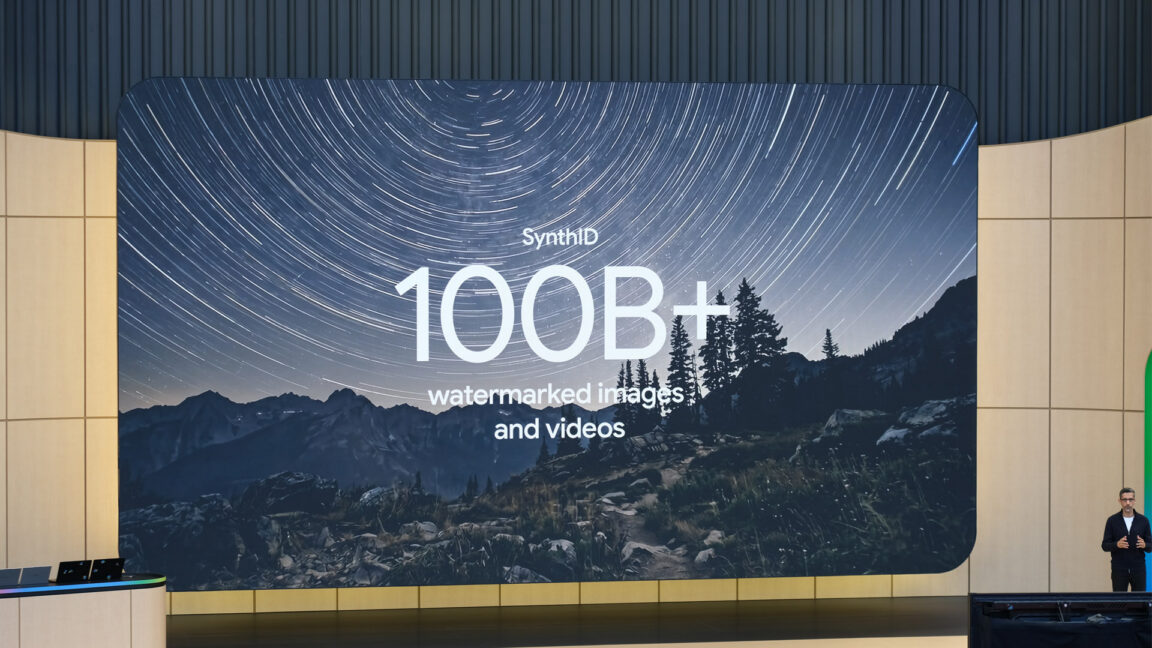
SynthID and AI watermarking: industry-wide adoption accelerates
Topic: google-aiA growing chorus of vendors embraces SynthID-style watermarking as a baseline for provenance, signaling a broader shift toward verifiable AI-origin content across platforms and workflows. The impulse is practical: reduce the ambiguity of authenticity, enable accountability for model-generated visuals, and create interoperable standards that scale across products, services, and media pipelines. This is governance as a design discipline—embedded in the fabric of creation rather than added later as a compliance sticker.
Source: Ars Technica • Source URL: Ars Technica
Gemini 3.5 Flash: a faster path to agentic AI
Topic: google-aiA more muscular, agent-optimized iteration of Gemini accelerates autonomy—empowering agents that can plan, negotiate, and execute with increased reliability and fewer prompts. The design language emphasizes speed-to-action while preserving controllability: you still guide the outline, but the system handles implementation, error recovery, and orchestration with a new cadence of confidence. This is less about a single “smart assistant” and more about an ecosystem of portable agents that collaborate across tasks and domains.
Source: Ars Technica • Source URL: Ars Technica
Google AI Studio vibes: build native Android apps with AI-powered vibes
Topic: google-aiThe Android developer experience is remixed with vibecode: AI Studio now supports ambient, music-like coding cues that accelerate native Android app development. The vision: a toolkit that translates AI insights into runnable app scaffolds, user experience patterns, and performance-optimized components. It’s not simply faster prototyping; it’s a new language for software craft, one where AI and engineers co-author the product in a shared medium that feels almost musical in its flow.
Source: The Verge AI • Source URL: The Verge AI
What to expect from Google this week: a Technology Review briefing
Topic: google-aiMIT Technology Review casts a forecasting gaze toward Google’s week, outlining a pivot toward agentic AI governance-rich tooling. The briefing frames a future where enterprise AI capabilities are bound to governance constructs, interoperability standards, and enterprise-grade reliability. It’s a warning and a promise: the next wave will demand more transparency, better audits, and governance that’s not an afterthought but a design constraint embedded in every tool, model, and workflow.
Source: MIT Technology Review • Source URL: MIT Technology Review
Elon Musk vs. OpenAI: the verdict and what it means for AI governance
Topic: openaiThe courtroom becomes a stage for governance philosophy: the verdict in the Musk v. Altman case riffs on nonprofit constraints, corporate structure, and the ethics of AI development. The trial distills a core tension—open innovation versus responsible stewardship—and leaves policymakers with a clearer sense that governance models will be the real point of leverage as AI systems scale. The result is a field still learning to write its own playbook while the actors evolve on the stage of public scrutiny.
Source: TechCrunch AI • Source URL: TechCrunch AI
OpenAI for Singapore: a multi-year partnership to scale AI locally
Topic: openaiA multi-year commitment to localize AI in Singapore—a cradle for talent development, public-service AI capability, and governance-enabled deployment. The initiative gestures toward a future where AI is not an abstraction perched in distant servers but a national asset, cultivated with public-private alignment and a narrative of responsible growth that balances innovation with societal safeguards. The collaboration is both a talent magnet and a policy testbed, designed to grow local capacity while shaping governance norms for a dense urban AI economy.
Source: OpenAI Blog • Source URL: OpenAI Blog
Content provenance in AI: OpenAI’s push to verifiable media
Topic: openaiOpenAI positions content provenance as a systemic capability, weaving Content Credentials and SynthID into a coherent, scalable approach to proving origin, authorship, and authenticity. In a media ecology where synthetic content proliferates, provenance becomes a shield and a standard—hardened into tooling, integrated into pipelines, and harmonized across platforms. The thread here is governance through design: a legal and technical backbone that makes trust a verifiable artifact rather than a hazard of ambiguity.
Source: OpenAI Blog • Source URL: OpenAI Blog
OpenAI’s image-provenance detector: making model-generated visuals verifiable
Topic: openaiThe world is learning to see provenance as a capability embedded in images themselves. OpenAI and partners introduce tooling to detect whether visuals were generated by AI, turning suspicion into verification and enabling platforms to tag, authenticate, and audit imagery at scale. It’s not merely about catching misattribution; it’s about resetting norms of trust in a visual economy where synthetic media proliferates across publishing, marketing, and social spheres.
Source: TechCrunch AI • Source URL: TechCrunch AI
OpenAI commits S$300M to grow Singapore’s AI capabilities
Topic: openaiA substantial investment to accelerate AI capability-building within Singapore’s ecosystem, aimed at talent development, research infrastructure, and regional leadership. The commitment signals a broader push to balance rapid AI deployment with robust governance, talent pipelines, and public-service alignment. The amount is not just funding; it is a statement of Singapore’s ambition to be a distributed nerve center for AI research, policy, and application—an experiment in how a city-state can scale with global AI currents.
Source: Channel NewsAsia • Source URL: Channel NewsAsia
FBI seeks real-time license plate data: AI policy implications
Topic: aiA sharp reminder that the speed of AI-enabled insight is matched by the velocity of policy consideration. Real-time access to license plate data raises critical questions about data minimization, oversight dashboards, and the risk of mission creep. The moment invites policymakers, technologists, and civil society to co-create governance that can scale with capabilities while preserving democratic norms, privacy, and civil liberties at the speed of data and perception.
Source: Ars Technica • Source URL: Ars Technica
SynthID and AI watermarking: industry-wide adoption accelerates
Topic: google-aiA second wind of interest in watermarking ripples through the industry, turning provenance from a niche capability into a standard operating practice. Vendors coalesce around interoperable watermarking regimes, enabling end-to-end provenance traces that survive image transformations, format shifts, and platform pipelines. The practical upshot: more trustworthy media ecosystems, better developer tooling for authenticity, and a shared vocabulary for accountability as AI-generated content saturates the cultural landscape.
Source: Ars Technica • Source URL: Ars Technica
Gemini 3.5 Flash: a faster path to agentic AI
Topic: google-aiRepeatable results, accelerated iteration, and more reliable agent behavior—Gemini 3.5 Flash is pitched as a faster, more agent-capable route to AI that can plan, execute, and adjust in real time. The engineering emphasis is on enabling agents to operate with greater autonomy while preserving the ability to audit, inspect, and correct actions. The outcome is a more resilient agent ecosystem, capable of scaling across domains—from enterprise automation to creative tooling—without surrendering governance and human oversight.
Source: Ars Technica • Source URL: Ars Technica
Google AI Studio vibes: build native Android apps with AI-powered vibes
Topic: google-aiA deeper layer of tooling that dissolves barrier between AI capability and native app development. Vibecode threads AI insights directly into Android app scaffolding, enabling developers to deliver smarter experiences—without surrendering control. The fusion of AI-assisted design and native performance hints at a future where the platform itself becomes a collaborative canvas for AI-augmented software, with developers steering the rhythm and the AI composing the harmonies.
Source: The Verge AI • Source URL: The Verge AI
What to expect from Google this week: a Technology Review briefing
Topic: google-aiThe preview from MIT Technology Review maps expectations to governance-led trajectories: agentic tooling, enterprise-readiness, and a pivot toward governance as product. The briefing frames Google’s week as an opportunity to articulate not just what’s possible, but what can be responsibly scaled. It’s a synthesis moment—where the cautionary stories about AI governance meet the pragmatic demands of enterprise buyers who need reliability, interoperability, and clear accountability.
Source: MIT Technology Review • Source URL: MIT Technology Review
The room drains slowly into a corridor where the future’s edges sharpen: agentic constructs that can be trusted, proven content that can be audited, and policy that doesn’t merely guard against risk but teaches designers and engineers how to build with it. Today’s mosaic—Google’s bold agent-first tooling, OpenAI’s insistence on provenance, and a policy frame that tries to keep pace with capability—presents a critical narrative: the more AI becomes woven into the fabric of daily work, the more essential it is that governance be engineered into the system from the first line of code.
The May 20 moment is not a victory lap so much as a turning of the lamp. The gallery stays lit because the work demands questions, re-evaluations, and iterations. If validity is the shield, then transparency, accountability, and interoperability are the sword and the compass—tools that will guide the next leap from tool to partner, from assistant to autonomous actor, from promise to governance-enabled practice.
Summarized stories
Each story in this briefing links to the full article.
by Heidi




 by Heidi
Heidi summarizes each daily briefing from trusted AI industry sources, then links every story back to a full article for deeper context.