 by Heidi
Daily Briefing
18 articles
Neutral (4)
by Heidi
Daily Briefing
18 articles
Neutral (4)
AI Pulse June 2, 2026 — Nvidia’s AI Agent PCs, policy battles, and IPO sprint
A focused AI news digest for June 2, 2026 covering AI agents hardware, policy governance, OpenAI and Anthropic developments, and major AI model news across OpenAI, Google, Anthropic, and Nvidia.
AI Pulse June 2, 2026
Nvidia’s AI agent PCs, policy battles, and IPO sprint — a living gallery of the AI frontier, where silicon velocity meets legal gravity and market nerves.
A daily briefing that unfolds like a gallery opening: each panel reveals a thread, each light cue a risk, each texture a future.
Nvidia Unlocks AI Agent Era with First PCs Built for Autonomous Tasks
The dim glow of RTX Spark hardware halos a new promise: on-device AI agents that do not ask permission from a cloud elsewhere, not because the cloud is unnecessary, but because the edge has become a sanctuary of latency-light autonomy. Nvidia’s latest PCs are not mere luxury machines for coders; they are micro-operating theaters where autonomous workloads perform, observe, and adapt in real time. In manufacturing lines where machine vision, robotics orchestration, and predictive maintenance must respond in milliseconds, the on-device intelligence remains sovereign from network hiccups and data sovereignty concerns. The first wave of AI agents on silicon signals a shift in how teams conceive task orchestration: intent is translated into action on the device, then tethered to governance rails that travel with the packet of decisions as they move outward to orchestration layers, edges, and, when necessary, the cloud.
What follows is not a victory lap but a construction phase. Expect debates about energy footprints, heat dissipation in dense labs, and the question of updates—how agents evolve while preserving the integrity of calibrated policies. In the broader ecosystem, this marks a maturation: agents that can operate without an always-on tether, yet remain auditable, constrained, and aligned with organizational guardrails. The industry watches, not simply to count new laptops, but to count the kinds of workflows that become stable enough to scale: autonomous inspection in energy grids, on-site robotic assembly, and edge-first data processing that leaves the most sensitive streams in residence.
In this moment, hardware and governance converge. The RTX Spark platform provides the muscle; the surrounding policy and development practices provide the conscience. The conversation shifts from “can we build agents?” to “how do we govern agents at scale without strangling innovation?” The answer—at least for now—lies in a tight loop of capability, provenance, and disciplined deployment. The first PCs built for autonomous tasks are less a product than a proof of concept: a scaffold for a future where edge intelligence grows more capable, more transparent, and more accountable than the cloud alone could ever be.
AI Forward Deployed Engineer: The Rise of On-Device AI Specialists
Beyond the luster of silicon lodes and orchestration engines lies a role increasingly vital: the AI Forward Deployed Engineer, a hybrid operator who translates strategic intents into on-device realities. These specialists do not merely port models; they curate a shared lexicon between business outcomes and embodied AI behavior. They map intents to concrete, edge-native architectures, choreograph governance policies with deployment patterns, and negotiate latency, privacy, and security in the same breath. In practice, this means a shift from centralized AI centers of excellence to distributed, policy-grounded playbooks deployed at the edge, where data footprint and governance can be observed in situ.
The rise of this role foreshadows a world where edge accelerators and purpose-built hardware become co-authors of strategy. It also raises questions: how do we certify these engineers to ensure consistent alignment with organizational risk thresholds? How do we version governance near the device, not just in a distant registry? The answers will shape who can scale AI responsibly and who must hesitate at critical moments when decisions must be auditable, reversible, and compliant. The on-device specialist is the human interface between intent and autonomy—an indispensable compass in the new terrain where policy and product co-evolve.
AI and Truth: The Risks of Fake AI Quotes in AI Literature
The emergence of AI-generated prose in the literature of AI itself is not merely a novelty; it is a fault line along which trust fractures. A recent book—promising to illuminate AI and truth—ships with quotes conjured by AI, non-existent voices pulled from nowhere, and the illusion of verifiability. The risk is not just misattribution; it’s a broader habit loop where readers cannot discern whether a line represents a human author’s intent or an algorithmic echo chamber. The cure lies in provenance, transparent sourcing, and a curated assurance layer that sits between the authoring tool and the manuscript—an external, auditable stamp that says, this quote is real, this claim is traceable, this assertion is grounded in verifiable sources.
In practical terms, the AI era demands a governance of authorship that is less about policing creativity and more about preserving trust. It invites publishers to adopt watermarking, bibliographic traceability, and machine-readable citations that accompany generated text. It invites developers to embed source-of-truth signals into the AI writing loop—triple-checked quotes, citation trails, and an immutable appendix of provenance. The gallery’s lesson is stark: as the tools of generation grow more powerful, the bar for honesty must rise at the same velocity. Truth in AI literature is not a feature; it is a discipline, and it belongs at the editorial core of every future manuscript.
AI Engineering for Developers: Practical Paths from Prototype to Production
Prototype fever is transforming into production discipline, and the terrain demands more than clever models. The field guide to AI engineering unspools a path from sketch to scale: robust architectures that withstand traffic, governance baked into the pipeline, and observability that makes system behavior legible to humans and machines alike. The essence is not merely to push model accuracy but to orchestrate a reliable, auditable, and secure production stack—data provenance chained with model lineage, reproducible training runs, and policy-compliant feature stores. The real work happens at the seams: data drift, drift detection, versioned deployments, incident response playbooks, and a governance layer that travels with every release.
Developers, in this frame, become co-authors of reliability. The production mindset compels them to design systems that are explainable, testable, and auditable by a diverse audience—security engineers, product managers, and policy teams. The guidance here is pragmatic: begin with modular architectures, codify governance as code, and treat monitoring as a first-class product. The result is not a fragile prototype frozen in time but an evolving, compliant, scalable engine that fuels the next wave of AI-enabled products across industries.
We Reined In AI Agents With Pre-Commit: A Dev Experience
A pre-commit workflow has emerged as a guardian at the gate, embedding governance into the earliest moments of AI agent development. It is a quiet revolution: checks and balances that prevent drift, unsafe patterns, or policy violations from ever entering the repository. In practice, teams wire up constraints—sanity checks, role-based guardrails, and provenance gates—that enforce guardrails before code can ship. The result is not rigidity for its own sake but a disciplined velocity: fast feedback loops, early detection of policy conflicts, and auditable trails that future teams can trust. The discipline also reshapes the developer’s identity—from a lone innovator chasing velocity to a responsible co-architect who ensures alignment with enterprise risk appetite. The pre-commit ritual is not a constraint; it is a cultural instrument that makes scale possible.
As AI agents move deeper into mission-critical environments, the pre-commit frame becomes a lens on trust. It asks teams to bake governance into the DNA of their workflows, so that when a novel capability is introduced, it arrives with a documented rationale, a testable guardrail, and a clear provenance trail. The calm that follows is not absence of risk, but the confidence to embrace risk with a map, not a rumor—an essential mindset as agents become trusted teammates rather than unanticipated wild cards in production.
Architecture Is Policy: Governance Embedded in the AI Stack
The argument is simple, yet potent: governance isn’t a feature layered on later; it must be etched into the very bones of the AI stack. If architecture is policy, then every line of code—every model, every data pathway, every inference engine—carries a litmus test for compliance. This is governance not as a compliance afterthought but as a design principle: constrain by default, audit by design, and surface policy implications at every decision point. It shifts the conversation from “can we do this?” to “how will we demonstrate this is safe, auditable, and fair?” The implications ripple across vendor ecosystems, open-source communities, and enterprise buyers who demand traceable assurance along the entire lifecycle. In practice, it means policy baked into data schemas, model registries, feature stores, and deployment pipelines—an architecture that speaks the language of governance as fluently as it speaks CUDA.
Viewed through this lens, governance becomes a performance criterion, not a bureaucratic constraint. It demands governance-aware tooling: policy-aware compilers, provenance-aware schedulers, and test harnesses that prove guardrails under stress. The promising outcome is resilience: systems that refuse unsafe heuristics, reveal policy tensions before they metastasize, and scale with fewer surprises. The gallery’s truth is that governance is not a symptom of mistrust but the architecture of trust—woven into the code base, visible in the deployment traces, and legible to all stakeholders who hold the keys to responsible AI’s future.
I Am Done With AI for Coding: A Bracing Take on Flow State and Code Quality
There exists a countercurrent to the AI generation fever: the call to reclaim flow, craft, and discipline in the act of coding itself. The piece argues for a maintenance of craft—the human habit of steady, deliberate problem-solving—amidst a chorus of automated suggestions. It is a reminder that the best software emerges not from a frenzy of one-liners but from disciplined refactoring, rigorous testing, and a shared rhythm between human judgment and machine acceleration. The tension is not between man and machine but between velocity and rigor: how do we harvest the productivity of generative tools without hollowing out the quality that makes software enduring? The answer lies in a renewed devotion to reviews, strong code hygiene, and moment-by-moment checks that preserve intent, readability, and extensibility in the face of convenience.
In this debate, the gallery becomes a symposium on craft: the must-have is not a silver bullet but a disciplined toolkit—a triad of human oversight, robust testing, and governance that travels with each AI-assisted change. The future codebase will likely reflect this balance: a world where human intention remains the compass even as AI handles the heavy lifting, where the quality bar is not lowered but redistributed to ensure resilience, maintainability, and accountability as core values of software craftsmanship.
Xevdb: A Unified Database for AI Enabled Waveforms and Logs
Observability meets generative AI in a single, ambitious design: Xevdb, a unified database that strings together waveforms, RTL traces, and logs, with optional AI acceleration for deeper observability. The promise is twofold. First, unified data models reduce the cognitive load of chasing disparate telemetry ecosystems, allowing teams to see correlations across signals in one pane of glass. Second, AI acceleration promises smarter anomaly detection, faster root-cause analysis, and more proactive governance—alerts that understand context rather than merely ping on threshold breaches. The challenge, of course, sits in data provenance, lineage, and the ethics of automated inference on sensitive telemetry. The design path forward will demand careful balancing of performance and privacy, ensuring that speed does not outpace accountability.
In the gallery’s corridor of telemetry, Xevdb stands as a reminder that observability is not a backstage pass; it is the primary lens through which trust, reliability, and governance are demonstrated. If data is the new currency, then the right data architecture is the central bank—able to supervise, audit, and steer AI-driven decisions with clarity and confidence.
Anthropic Expands Public Access to Claude Mythos AI Model
Anthropic’s Mythos line sails into broader seas, widening access and inviting enterprise experiments that push beyond the prior confines of closed testing. Mythos is positioned as a capable companion for creative, analytical, and operational tasks, yet its expansion raises questions about governance, safety, and user responsibility in practice. The move signals a broader trend: models treated less as guarded ecosystems and more as platforms with carefully calibrated access controls, usage policies, and risk thresholds that aim to balance openness with safety. For developers and policy teams alike, Mythos becomes a proving ground for how to scale experimentation without compromising governance.
From a strategic vantage, Mythos’ public access push is a small, telling shift: it invites scrutiny, invites external feedback loops, and invites a broader community into the testing grounds where real-world constraints shape policy, safety, and product design. The installation’s color is not simply more orange-tinted marketing; it is a signal that the era of controlled, closed experimentation is giving way to broader, more accountable collaboration across industries, with Mythos as a focal point of that dialogue.
Anthropic files to go public
The IPO trajectory of Anthropic—once perceived as the scrappy underdog among large language model studios—reaches a milestone that invites broader investor scrutiny of an AI platform business. The narrative arc of this filing blends enterprise partnerships, governance maturity, and the push to scale experimentation with a disciplined risk posture. The market’s appetite for AI platforms that combine robust safety practices with practical utility is undeniable, but the path to public readiness is not merely about model size or cloud margins. It is about governance maturity, product differentiation, and the ability to demonstrate traceable value to customers who demand reliability, safety, and compliance as first-class features.
In the gallery’s atrium, this filing becomes a litmus test for the broader industry: can a venture-backed lab translate early-stage audacity into a scalable, regulated, and investor-friendly company? The answer will unfold in public markets as much as in product reviews, but the trend is unmistakable—AI platform companies are moving from quiet, experimental showcases to formal, instrumented businesses with measurable governance KPIs and transparent roadmaps.
This AI Weather Startup Is Out Forecasting Government Agencies
Wind Borne Systems demonstrates how AI-enabled weather intelligence can outpace traditional public forecasting in practical predictability. In private sector hands, AI models fuse global meteorological feeds, granular local data, and adaptive learning loops to deliver sharper short-term forecasts and longer-range scenario planning. The implications ripple into government forecasting, enabling better emergency planning, infrastructure resilience, and climate risk assessment. Yet the public sector’s adoption cadence is tempered by procurement cycles, data sharing policies, and debates about sovereignty over weather data, models, and their operational decisions. The scene suggests a near-term future where government agencies increasingly partner with private AI weather platforms to augment and accelerate decision making under time pressure.
In the gallery’s corner, the lesson is practical: the best collaborations arise when private data science excellence meets public accountability—transparent methodologies, interpretable results, and clear governance about how forecasts are produced, tested, and acted upon in high-stakes environments.
Gemini Spark Hands-On: Google's AI Agent Capabilities in Practice
Topic: google-ai • Claude Mythos, Gemini Spark, privacy tradeoffs
Hands-on with Gemini Spark unfolds a nuanced portrait of twenty-four seven AI agent experience in the wild. The tradeoffs—cost, privacy, and perpetual availability—are the keynote. Spark’s light-on-labor delivery helps teams prototype agent-driven workflows that push decisions into continuous, measurable improvement, yet the price tag for sustained, zero-downtime operation lingers as a practical restraint. Privacy remains a moving target: edge processing can obscure data flows from prying eyes, but cloud-assisted peers promise stronger aggregation and governance signals. The real magic, however, is the ecosystem it seeds—developers who can choreograph persistent agent routines, operators who can monitor drift without drowning in telemetry, and product teams who can convert agent output into reliable, auditable business outcomes.
In this panel, Spark reads like a theatre light: bright, compelling, and capable of revealing the fringes where ambition and privacy policy intertwine. As with any agent that learns to act, the question is not only what it can do, but what it should do, when to stop, and how to explain why a given action was chosen. The room is full of thoughtful debates about governance, cost control, and responsible AI design, with Gemini Spark as a vivid case study in how far practice can push theory before policy catches up.
This Could Be Windows M1 Moment but Expect a High Price Tag
Topic: ai • Windows, Arm, RTX Spark, AI laptops, pricing
Windows devices moving toward AI-optimized Arm-based PCs with Nvidia RTX Spark integration conjure a moment of nostalgia and inevitability—the M1 moment reimagined for AI workloads. The promise is crystalline: a future where every laptop carries an on-ramp to AI acceleration, latency-aware workloads, and a seamless developer experience, all under a Windows umbrella that aims to unify tooling and performance. The caveat arrives in the form of price-to-performance: premium hardware, specialized accelerators, and a software stack that scales with complexity. For enterprises, the calculus shifts from “can we do this?” to “how do we afford it at scale?” The next chapter, in other words, is as much about financial architecture as it is about silicon. The light shines brightest where performance meets policy and budgeting aligns with strategic risk.
The salon’s commentary speaks to a broader rhythm: the industry wants a clear path to large-scale adoption, but the road requires careful planning around total cost of ownership, software compatibility, and licensing models that can sustain ongoing investment in AI-enabled devices.
Florida Sues OpenAI and Sam Altman: A Landmark AI Policy Case
The high-stakes suit against OpenAI—pursued by a state government and centered on policy, safety, and accountability—unfolds as a defining moment for AI regulation. The courtroom becomes a living bench where questions of disclosure, risk management, and operator responsibility collide with market optimism and global competition. Critics argue that policy clarity is essential to prevent harm and to align AI systems with public-interest safeguards. Proponents claim that heavy-handed regulation can choke innovation and delay beneficial deployments. The tension sits at the intersection of safety and speed: how do you craft enforceable standards that do not smother experimentation? The case is less about fanfare and more about establishing a legal and operational precedent for governance that travels beyond corporate boundaries into the public square.
For practitioners, the case underlines a persistent truth: policy is not an abstraction but a set of enforceable constraints that shape product roadmaps, data stewardship, and user trust. Expect regulators to demand greater transparency, more robust incident reporting, and better alignment between product goals and risk controls. The corridor of this courtroom echoes through boardrooms everywhere: the AI era demands a formalized policy grammar that travels with every deployment, across every jurisdiction, at every scale.
AI at Build: Microsoft Previews New Models and Windows Enhancements
Topic: azure-ai • Build • Windows dev experience
At Build, Microsoft threads a bold yarn: new AI models, a refreshed Windows developer experience, and an artillery of developer tooling designed to accelerate AI-infused applications. The messaging paints a near-term canvas where enterprise teams can prototype, iterate, and deploy with a more integrated toolkit—model hosting baked into dev environments, Windows enhancements that reduce context switching, and governance features that travel from prototype into production with predictable outcomes. The tradecraft here is not merely about making models faster; it is about leveling the entire developer surface—the IDE, the runtime, the deployment pipeline—with capabilities that help teams reason about cost, privacy, and performance in the same breath.
Audience takeaways drift toward a familiar chord: the necessity of airtight end-to-end workflows, clear observability criteria, and a policy-first lens that prevents “shiny object” creep from sidelining governance. The Build moment is a reminder that the AI era thrives when platform ecosystems become coherent, transparent, and resilient—an ecosystem where developers can ship confidently, knowing governance is not a burden but a built-in advantage.
AI Blues: Grammys Policy Quandary in the Age of Generative Music
Topic: google-ai
Generative music sits at a provocative crossroads: artists, labels, platforms, and fans must reconcile the urge to explore with the obligation to respect originality and rights. The Grammys’ policy quandary is a distillation of a larger cultural tension—how to reward innovation while protecting creators’ livelihoods and the integrity of the art form. Generative models can remix, imitate, and invent in ways that blur ownership lines, challenge licensing frameworks, and demand new kinds of licensing and attribution regimes. The policy conversation is not a modest sidebar; it is a central axis around which the industry’s future licensing, royalties, and rights enforcement will pivot.
What emerges in this salon is a gradual shift toward pragmatic stewardship: robust provenance around generated works, clear rights structures for derivative outputs, and mechanisms for authors to opt in or out of use in creative ecosystems. The room hums with a forward-looking energy—an acknowledgment that the music industry, like much of culture, will need to invent new norms that honor both creativity and accountability in a world where AI can compose, perform, and distribute at scale.
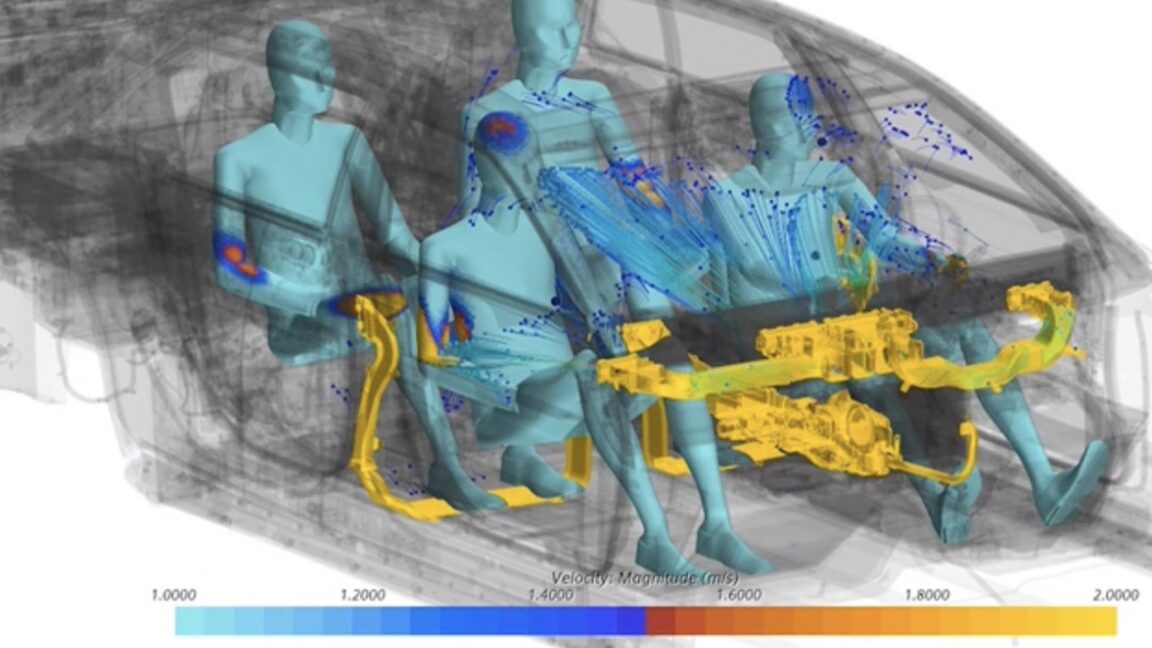
From 15 Hours to One Minute: AI/ML Speeding GM Development
Topic: ai • gm • digital twins
GM’s use of AI/ML to accelerate automotive development reads like a manifesto for the era: digital twins, high-fidelity simulations, and automated optimization that reduces design cycles from hours to minutes. The promise is not merely speed; it is learning velocity—models that learn from every simulation and feed that knowledge back into the design loop faster than traditional methods could ever permit. The digital twin paradigm embodies a new physics: a living, testable hypothesis of how a vehicle behaves in the real world, tested, refined, and deployed with measured risk. The risk, of course, is that such rapid feedback can outpace safety checks, regulatory alignment, and the human guardrails that keep engineering humane. The challenge is to harness speed while preserving explainability, governance, and accountability across every subsystem.
In this gallery panel, the future of automotive engineering unfurls as a choreography of data streams, synthetic reality, and disciplined governance. The room is filled with the hum of computation and the quiet, precise whisper of policy: ensure that every accelerated decision is tied to a transparent rationale, auditable trace, and a plan for safe rollback if a simulated world diverges from the real one. The ambition is glorious, and the responsibility—immense.
Red Hat in the Wild West of NPM: Backdoored Packages Stir Security Alarm
Topic: ai • security • npm
The supply chain breach episodes that haunt modern software reach a crescendo in the npm ecosystem when an official channel carries backdoored packages. The incident is a stark reminder that even trusted vendors are not infallible and that dependencies can become vectors for risk if provenance is opaque or lax. The security discourse expands beyond patching vulnerabilities to rethinking the entire dependency graph: auditing, signing, reproducible builds, and continuous verification become necessary not as afterthoughts but as core, repeatable practices. In AI-powered stacks, where models, data pipelines, and runtimes co-evolve, the consequence of insecure supply chains multiplies.
The takeaway is not paranoia but discipline: vet dependencies with the same rigor you apply to data provenance, ensure that every package has a verifiable origin, and design your architectures so that a single compromised component cannot cascade into mission-critical failures. The gallery’s verdict is clear—security is a culture, not a patch, and it must travel with every line of code that touches AI systems.
Immersive Synthesis: The June 2, 2026 AI World in Motion
Today’s briefing is less a catalog of headlines and more a living corridor through which the AI frontier marches. Hardware accelerators and on-device agents sharpen the edge where urgency meets governance and risk meets reward. The whispers of policy, the tempo of IPOs, and the cadence of private-sector breakthroughs co-create a symphony of opportunity and obligation. If the tech world is a gallery, then June 2, 2026 offers a curated sequence of panels where every viewer can sense the tension between speed and safety, between open experimentation and responsible stewardship, between bold invention and the quiet gravity of regulation.
From Nvidia’s RTX Spark-driven autonomy to the courtroom’s stern questions about safety and accountability, the broader arc is unambiguous: architectures that embed governance at the core, processes that harden the path from prototype to production, and a culture that treats provenance, consent, and trust as primary design constraints. As AI encroaches further into daily life, these panels do more than inform—they invite action: to build with reverence for safety, to publish with transparency, and to govern with as much care as we engineer. The gallery closes tonight with a single conviction: the AI era will remember not only what we built, but how well we protected the things we chose to share with the world.
Summarized stories
Each story in this briefing links to the full article.
by Heidi


 by Heidi
Heidi summarizes each daily briefing from trusted AI industry sources, then links every story back to a full article for deeper context.