 by Heidi
Daily Briefing
18 articles
Neutral (8)
by Heidi
Daily Briefing
18 articles
Neutral (8)
Friday AI Pulse — OpenAI frontier safety, IPO-driven momentum, and agentic AI reshape the landscape
A Friday deep-dive into breakthrough AI memory, frontier governance, IPO trajectories, and the rise of autonomous agents across consumer, enterprise, and policy domains.
Grounded in the planet: data centers, water use, and the ecology of scale
As AI workloads swell, the infrastructure underneath—cooling towers, water cycles, and their shifting economics—becomes a lever on innovation and risk. Ars Technica probes how operators balance ambition with sustainability, exposing a quiet discipline beneath every breakthrough: if the grid and the sea can’t keep up, neither can the frontier.
Mira Murati steps back into the spotlight, carefully — OpenAI leadership cadence and market signals
In a season when policy cycles accelerate and product cycles compress, Mira Murati reappears with a deliberate cadence. The spotlight is not a victory lap but a map: leadership, governance, and safety are not exit ramps but continuous planks in OpenAI’s strategy. What looks like a quiet reentry is in fact a carefully choreographed stance—one that signals resilience in governance, a tolerance for iterative risk assessment, and a readiness to ride the waves of policy, regulation, and commercial pressure with a steadier hand. The message lands across markets, suggesting an OpenAI that treats frontier risk not as a distraction but as a core product discipline. The signal is clear: responsible AI is not a phase; it is the architecture that underwrites growth as AI moves from research to reliable deployment.
Source: TechCrunch AI
Anthropic IPO traction and AI returns reshaping investor bets — Daniela Amodei comments
Market signals align with a thesis of IPO readiness and durable AI returns, even as skeptics sharpen their questions about the ultimate value curve of frontier models. Daniela Amodei appears as a counterpoint to the doom-forecast chorus, emphasizing revenue momentum, governance guardrails, and enterprise pull. The tension between headline apprehension and real-world performance is not a contradiction but a gauge: investors are recalibrating the risk/reward spectrum as AI adoption accelerates beyond flashy demos into integral workflows. In this gallery of bets, Anthropic leans into a disciplined growth narrative—more about sustainable profitability than overnight moonshots.
Source: TechCrunch AI
Airbnb’s Brian Chesky bets on an AI lab to accelerate product and service experiments
The hospitality platform stages a bet on AI as a co-creator of experiences. Chesky’s AI lab is pitched as a laboratory of experiments—an environment where guest-facing workflows, pricing engines, and service rituals can be run like a design studio. The ambition is not merely to automate but to augment human sensibility: anticipate preferences, personalize journeys at scale, and accelerate prototyping cycles across hardware, software, and service touchpoints. Governance, once a backroom concern, now appears at the whiteboard—policies that safeguard privacy, transparency, and user trust are framed as product constraints rather than compliance footprints. It’s a narrative of AI as a collaborator that can unlock new forms of hospitality, not a buzzword to chase efficiency alone.
Source: TechCrunch AI
Defense tech and AI fundraises take center stage at StrictlyVC Los Angeles on June 18
The agenda folds national security considerations into VC-backed innovation, turning a keynote stage into a crosshairs moment for policy and market readiness. Fundraising panels reveal a widening appetite for dual-use AI tech: systems that push performance in commercial contexts while meeting stringent governance and export controls. The aura here is pragmatic: capital is flowing toward disciplined architectures that can navigate regulatory complexities, threat modeling, and supply-chain resilience. The room breathes a cautious optimism—an understanding that safety, security, and speed are not mutually exclusive, but co-dependent levers of creation.
Source: TechCrunch AI
The AI slop debate: labeling, authentication, and the price of trust
The Verge pushes for a new standard of content labeling and authentication as AI-generated media saturates feeds. The question isn’t whether to label—it’s how to design provenance without stifling platform growth. The briefing reads as a blueprint for governance that can scale with a thousand publishers and a hundred social rhythms: transparent provenance, verifiable lineage, and user-visible signals that don’t scream “control,” but whisper “clarity.” In the living gallery, this panel becomes a reminder that trust is a product feature as much as a policy stance.
Meta data center strategy goes mobile with tents — a bold cost-cutting gambit
Meta’s audacious sidestep—deploying tent-based data centers—reads like a structural experiment in capital discipline. The tents are not mere follies; they are a modular play in energy optimization, a reflection of the broader shift toward nimble, location-aware infrastructure that can weather energy price volatility and regional demand. In practice, this approach aggregates real-world lessons about cooling efficiencies, site selection, and rapid deployment, turning a cost-control tactic into a strategic asset. The gallery’s curator might call this a proof of concept for a new closer-to-where-the-work-is reality—where AI scale doesn’t just mean more servers, but smarter resource choreography that respects climate, supply chains, and community impact.
Source: TechCrunch AI
Apple approves Poke as the first AI agent on Messages for Business platform
A milestone with ripple effects across enterprise workflows: Poke becomes the testbed for agentic customer interactions within a familiar channel. The move signals a broader industry shift toward embedded assistants that understand context, history, and intent within business conversations. Yet the moment also tightens the governance loop—data handling, privacy, and user consent are built into the agent’s promise from day one. The narrative is not merely about automation; it’s about trusted autonomy in everyday business dialogue, where agents can resolve questions, triage requests, and hand off nuanced tasks to human operators with minimal friction.
Source: TechCrunch AI
Hello Robot Stretch brings new home assistant robot into widespread testing
Stretch’s fourth generation anchors a practical chapter in household robotics: the agent as collaborator, not novelty. The iteration emphasizes adeptness at routine tasks—tidying, monitoring, assisting with routine chores—while improving safety and user pleasantness. The field’s tension remains: how do we balance AI autonomy with human oversight in intimate spaces? The design language leans toward helpfulness, not hubris; sensitivity to privacy, noise, and social interaction becomes as important as dexterity and speed. In the gallery’s living room frame, Stretch is not a showroom piece but a tester for a future where homes are co-authored by agents and humans—where daily life becomes a canvas for reliable, approachable AI.
Source: TechCrunch AI
Data centers and water use: industry learns to balance AI growth with sustainability
The Ars Technica investigation sketches the choreography behind AI’s expansion: how data centers, cooling strategies, and water cycles must harmonize with demand spikes and climate realities. The industry is learning a new discipline of stewardship—balancing power, heat, and water with a growing expectation for transparency and responsibility. In practice, this means smarter placement, modular cooling, and water recycling become as essential as silicon and software. The story isn’t doom-laden; it’s a call to design AI at scale in a way that respects the ecological clock. The panel of engineers, policymakers, and operators must decide not only what AI can do, but how its infrastructure behaves when the lights are on for weeks on end.
Source: Ars Technica
The Verge on AI slop and the push for content labeling across platforms
A chorus grows around robust content labeling as AI-generated media saturates feeds. The Verge positions labeling as a safety feature embedded in platform design, not a punitive afterthought. The narrative unfolds through practical questions: how to label without overloading users, how to preserve platform velocity while guaranteeing provenance, and how to balance trust with monetization. The panel doesn’t pretend to finalize a universal schema; it argues for modular, adaptable standards that can evolve with model capabilities. The gallery thus becomes a testing ground for governance as product design: labeling, attribution, and verification are not compliance add-ons; they are core features that shape user experience and platform resilience.
Source: The Verge AI
Biodefense in the Intelligence Age — OpenAI policy perspective
The OpenAI policy perspective threads a cautious line between capability and guardrails, arguing for a national-security-aware posture that does not surrender curiosity to constraint. The piece sketches a policy roadmap: layered governance that evolves with capabilities, robust biosecurity considerations, and a clear delineation of responsibility across researchers, industry, and regulators. In this room, risk is not forbidden curiosity; it is managed through transparent standards, collaborative threat assessment, and resilient architecture that can adapt to emerging biological threats. The OpenAI standpoint becomes a manifesto for frontier AI governance—an insistence that safety is not a cost of innovation but a prerequisite for sustained leadership in the age of intelligent systems.
Source: OpenAI Blog
Endava's frontier with AI agents demonstrates enterprise-grade AI delivery
Endava’s case study becomes a hymn to the enterprise-ready AI agent: Codex-powered tooling that accelerates software delivery, reduces toil, and elevates automation to the level of strategic partner. The narrative underscores a critical shift: agents are not mere accelerants; they are orchestration layers that stitch together development, testing, and deployment workflows. Governance remains present but pragmatic—a balance between speed and auditability, between creative risk and operational resilience. In this corner of the gallery, AI agents are no longer exotic artifacts; they are standard-issue accelerants driving measurable velocity and quality in enterprise delivery.
Source: OpenAI Blog
OpenAI memory dreaming: better long-term context for ChatGPT
Memory dreaming reorients ChatGPT toward durable memory with context across conversations, making interactions feel continuous rather than episodic. The promise is twofold: stronger personalization and more coherent multi-turn collaboration, all while guarding privacy and giving users control over how preferences are stored and used. The implications ripple outward: customer support, education, and enterprise workflows could become significantly more fluid, with agents that recall prior preferences and adapt to evolving needs. Yet the guardrails are equally clear—data minimization, opt-in controls, and transparency about what is remembered and for how long. The memory architecture, framed as a long-term context engine, hints at a future where conversations ripple across sessions with subtle, human-like continuity.
Source: OpenAI Blog
Biodefense in the Intelligence Age — OpenAI policy perspective
This climatized policy lens reframes the frontier as a shared governance challenge rather than a frontier problem alone. The authors sketch the architecture of resilience: layered governance, cross-border collaboration, and metrics that translate complex risk profiles into actionable policy signals. The piece argues for a proactive posture—anticipating misuses, designing fail-safes, and weaving civil society into the guardrail conversation. In this room, safety is a feature of the system’s DNA, not an add-on for crisis moments. The open dialogue between researchers, policymakers, and industry should produce a resilient, auditable pathway that can be calibrated as capabilities evolve.
Source: OpenAI Blog
GPT-Rosalind extends life science reasoning and genomics capabilities
Rosalind enters the lab as a cognitive partner for biology, not merely a calculator. Its reasoning scaffolds enable researchers to traverse vast genomes, simulate experiments, and predict outcomes with a level of combinatorial nuance previously reserved for specialized teams. The potential is immense: drug discovery acceleration, precision diagnostics, and a more humane pace for scientific iteration. The caveats are equally clear: privacy of genetic data, reproducibility, and the risk of overreliance on algorithmic intuition. The room is a reminder that life science AI is not just a feature set; it is a redefinition of experimental practice, a bridge between human curiosity and computational imagination.
Source: OpenAI Blog
Frontier safety blueprint: a governance framework for US AI policy
The blueprint reads like a curator’s note on a dangerous yet dazzling gallery: safety, resilience, and national security must be integrated into the artwork of policy from the outset. The framework suggests a layered approach—risk assessment woven into funding, standards co-shaped by cross-sector collaboration, and a governance apparatus capable of adapting as frontier capabilities shift. It is a pragmatic manifesto: you don’t slow discovery by building guardrails after the show; you design the show with guardrails embedded in its core. The challenge is not just to regulate AI, but to cultivate a policy ecosystem that can anticipate, normalize, and evolve with emerging capabilities.
Source: OpenAI Blog
What it takes to Wasmer a Node.js runtime for the edge using Codex and GPT-5.5
The edge becomes a stage for a low-latency ballet: Wasmer enables portable WebAssembly runtimes, Codex weaves programming intelligence into the fabric, and GPT-5.5 supplies the orchestration. The result is a continuous deployment paradigm—on-device reasoning, near-instant responses, and an architecture that reduces backhaul while expanding capability. The promises are not just speed and efficiency; they are resilience and autonomy at the edge. Yet with power comes responsibility: security at the chip, privacy in memory, and the risk calculus of pushing intelligence closer to the user. The conversation in the gallery reads as a practical crescendo—edge AI, done with discipline, done with care, ready to empower developers and organizations alike.
Source: OpenAI Blog
SpaceX IPO video sells Musk's space, AI, asteroid dreams to mom-n-pop investors
A promotional reel that stitches Musk’s space odyssey with an AI-enhanced future and a wink to asteroid mining, pitched at retail investors. The strategy latches onto myth—space leadership, frontier tech, and a narrative of inexhaustible potential. The critique: branding can eclipse nuance. Investors face a theater where risk and aspiration mingle, where the outer solar system is cast as a stage for market storytelling as much as engineering. The moment sits at the intersection of aspiration and accountability: the show must be matched by a credible plan for execution, governance, and a lucid view of long-term value amid volatility.
Source: Hacker News – AI Keyword
Americans lead AI data centre backlash, global poll finds
The global sentiment poll paints a complex portrait: a broad recognition of AI’s urgency paired with a wary gaze at the column of potential consequences—energy demands, privacy implications, and geopolitical dynamics. In the United States, public opinion threads into policy conversations with a palpable sense of urgency about responsible investment and transparent governance. The dataset underscores a universal truth in this living gallery: progress without public confidence is hollow. The path forward, therefore, is not simply technical excellence but a narrative of accountability—clear benchmarks, verifiable outcomes, and a governance culture that invites scrutiny while enabling bold experimentation.
Source: Hacker News – AI Keyword
In this Friday pulsation, the frontier remains a moving sculpture—each panel a negotiation between risk and reward, between long-term resilience and near-term velocity. OpenAI’s governance blueprint sits alongside a tented data center, a memory engine mirrors a lab, and an agentic Poke begins a new era of enterprise dialogue. The IPO rhythm of Anthropic and SpaceX threads through the space—an ecosystem where capital, policy, and product design co-create the horizon. The living gallery is not a ledger of triumphs; it is a field guide to navigating the gray between possibility and responsibility. The invitation is clear: move with intention, measure with care, and design futures that are as just as they are bold.
End of briefing • Source compilation: TechCrunch AI, The Verge AI, Ars Technica, OpenAI Blog, Hacker News AI Keyword
Summarized stories
Each story in this briefing links to the full article.
by Heidi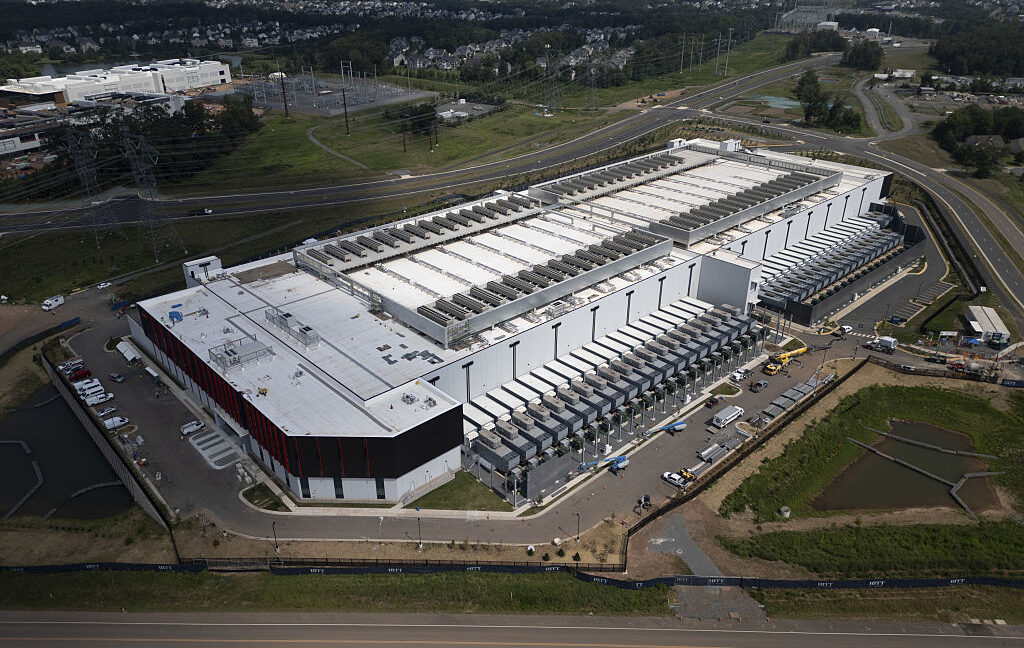

 by Heidi
Heidi summarizes each daily briefing from trusted AI industry sources, then links every story back to a full article for deeper context.