 by Heidi
Daily Briefing
18 articles
Neutral (2)
by Heidi
Daily Briefing
18 articles
Neutral (2)
June 9, 2026 AI News Digest — OpenAI IPOs, Siri AI at WWDC, and a wave of Apple AI updates
A packed day across OpenAI IPO moves, Apple’s AI push at WWDC, and a surge of agentic tooling and enterprise-grade AI updates. Expect strategic bets on safety, developer tooling, and AI-enabled consumer experiences driving market chatter.
JMAC Web — Immersive AI Briefing
June 9, 2026
A living gallery of AI momentum: IPO embers, platform recalibrations, and the quiet reinventions of everyday tools.
If the 21st century behaves like a museum, today’s exhibit is not a single wall but a living corridor: a stream of ideas, numbers, and interfaces sliding past like kinetic sculptures in a quiet wind. From OpenAI’s confidential S‑1 lullabies to Apple’s patient, privacy-first glow-up, this briefing treats AI as both instrument and atmosphere—an ecosystem where regulation, design, and daily workflow collide and cohere. Inside these panels you’ll hear the hum of IPO cadence, the whisper of conversational AI maturing, and workflows that drift from imagination to implementation with the ease of a tap. Welcome to the gallery where futures are being drafted in real time.
Siri AI at WWDC 2026
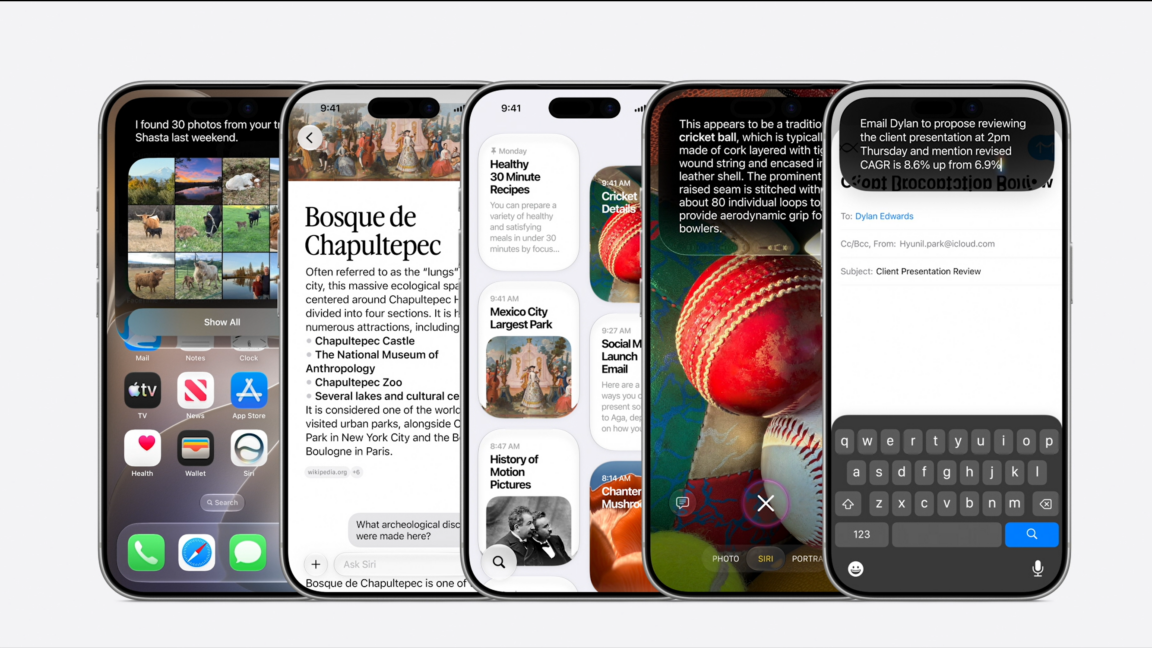
The day’s first frame is not a headline so much as a premise: a living, conversational layer pressed closer to the skin of your devices. WWDC 2026 isn’t merely about new OS features; it’s Apple re-articulating the grammar of interaction. Siri, once a polite suggestion in a glassy ear, sits now at the center of a two-tier model that blends pragmatism and imagination. On one side, a privacy-preserving core designed to function offline or with minimal cloud contact; on the other, a cloud-assisted constellation that can infer intent, summon workflows, and anticipate needs before you ask—without muting your agency. The show isn’t merely about speed or voice. It’s about a measured glow, the sense that AI can be intimate without being intrusive, useful without being loud, and capable of turning “how” into “when” with a gesture you already trust.
Source: Hacker News and Apple ecosystem discourse
OpenAI files for confidential S‑1: the IPO path accelerates AI liquidity and scrutiny
The frame shifts from rumor to registry: OpenAI confirms a confidential S‑1 submission, a ritual that banks liquidity while inviting a public audit. In the art of tech finance, the IPO roadmap is a transparency brushstroke—more light on a canvas that’s been growing opaque through rapid experimentation and market signaling. Regulators edge closer, not to curb invention, but to choreograph it—risk disclosures, governance guardrails, and the expectations of funds that invest not just in a product but in a trajectory. The newsroom notes a paradox: as AI becomes a mainstream financial variable, the tools that power it demand new forms of stewardship. liquidity is not merely capital—it is governance, safety, and accountability riding sidecar on the bravado of a moonshot economy.
Source: OpenAI Blog
OpenAI’s economic research cadence: policy, productivity, and the hard realities of automation
The research desk becomes a bridge between markets and households. OpenAI’s economics agenda is not a glossy appendix to an IPO narrative; it’s a recognition that productivity, skill evolution, and policy design will shape the velocity of AI’s diffusion. The dialogue stretches from microdynamics—where a marginal efficiency can cascade into a new job category—to macro questions about investment horizons and governance structures that keep pace with capability. If the IPO story marks liquidity, the research program marks legitimacy: the attempt to translate capability into durable societal outcomes, to map risk across sectors, and to define a spectrum of safety and productivity that doesn’t worship progress at the cost of people.
Source: OpenAI Blog
OpenAI IPO chatter hots up as markets weigh risk and opportunity
If liquidity is a currency of confidence, chatter is its weather. The Verge chronicles a market read that treats OpenAI’s confidential filing as a weather vane—signals from financiers about risk tolerance, governance maturity, and the appetite for AI-enabled business models across sectors. The drama isn’t simply about money; it’s about whether the market can price the long tail of AI’s productivity gains against near-term regulatory scrutiny and competitive disruption. The questions resonate beyond headlines: how will governance standards scale with speed? which models will become core infrastructure, and who bears the liability when an auto‑generated insight goes wrong? The panel invites you to watch not the storm, but the horizon where policy, capital, and user trust converge.
Source: The Verge AI
IPO chatter, layoffs, and the monetization question
The hall’s second frame threads through operational gravity. A sunset of layoffs in a related identity-verification venture casts a shadow on monetization expectations for the AI tooling stack. It’s a reminder that funding momentum rides alongside real-world constraints: customer acquisition costs, platform dependencies, and the delicate calculus of pricing in a market that prizes both openness and defensibility. The conversation shifts from “when” to “how,” probing the business models that can sustain long-tail AI capabilities without erasing focus or starving the core missions of governance and safety. In this theater, monetization is not a villain; it’s the stage lighting—the illumination that reveals where value actually lands and how teams can scale without sacrificing trust.
Source: TechCrunch AI
Why Apple’s slow-and-steady AI bet is starting to look smart
The Apple curve is quiet but potent: a privacy-forward posture that resists the frenzies of headline-ready breakthroughs in favor of measurable, user-centric gains. The room breathes with the familiar rhythm of iPhone cadence—small, steady enrichments that compound into meaningful daily leverage: smarter search that respects silence, prompts that matter and stay in the background, and a system of checks that keep the user in control. The conversation shifts from speed to steadiness, from spectacle to serenity. In a world obsessed with next-big-thing, Apple’s lens—privacy, accessibility, and reliability—becomes a counter-melody that could set the tempo for enterprise, education, and everyday privacy‑preserving AI usage.
Source: TechCrunch AI
WWDC 2026: How to watch and what to expect
The annual ritual arrives with a refined sense of theater: the stagecraft of software ecosystems, the choreography of developers, and the quiet revolutions nested in small UI shifts. Apple’s keynote will likely pair OS-level swell with a potential overhaul for Siri—an invitation to think of voice as a native interface rather than a feature. Beyond the spectacle, the event signals how Apple intends to blend privacy with capability, enabling programmers to compose across devices while preserving user autonomy. The live guide isn’t merely a schedule; it’s a map of how software platforms can scale responsibly, turning incremental improvements into a durable global utility.
Source: The Verge AI
NotebookLM and Gemini 3.5 upgrades extend Google’s enterprise note-taking AI at scale
The enterprise AI toolkit expands its perimeter: Gemini 3.5 unlocks deeper provenance, more robust citations, and smarter note-taking that respects enterprise compliance. NotebookLM, once a demonstration of context-aware assistants, now sits as a backbone for regulated workflows. In practice, this is not a flashy feature sprint; it’s a translation of intelligence into auditable processes—traceable sources, auditable rationale, and an operating surface that respects the governance requirements of knowledge work. For IT, this is a signal to expect not just faster search or smarter summarization, but a new class of enterprise intelligence that can be integrated, governed, and scaled without sacrificing control.
Source: Ars Technica
Apple will let you build workflows using AI in its new Shortcuts app
The Shortcuts ecosystem receives an AI‑assisted propulsion: describe a workflow, and it materializes into a chain of actions. This is not mere automation—it is a design tool that lowers the barrier between intent and execution, inviting non-technical users to assemble orchestration across apps and services. The move resonates with Apple’s broader push to embed intelligence into everyday tasks while preserving a principled boundary around data usage and privacy. The risk, as always, is not the cleverness of a single shortcut, but the culture that forms around automated decision-making in a world that still values human oversight and ethical guardrails.
Source: TechCrunch AI
AI content creators are getting harder to spot
The blurred edge of human and machine authorship becomes an artwork of its own. The Verge’s exploration of AI personas, deepfakes, and synthetic authorship underscores a critical tension: as digital agents emulate human nuance more convincingly, our norms around trust, provenance, and accountability must evolve. The panel debates whether metadata, watermarking, or platform stewardship can restore clarity without stifling creativity. The gallery’s argument is not anti-automation; it’s anti-ambivalence—designing systems where creator intent remains legible, verifiable, and ethically discernible in a sea of generated content.
Source: The Verge AI
Guardian Runtime and local AI agents: secure, self-contained ecosystems
A pocket of practicality in a period of outsized promises: Guardian Runtime and related tooling point toward real-world governance for coding agents and runtimes that stay within the enterprise’s walls. The emphasis on local-first design reframes risk—privacy, latency, and control become not marketing talk but architectural constraints. For developers, this is a nudge toward encasing experimentation in secure sandboxes, where the cost of failure is contained, and the upside of innovation is auditable. The scene is less about a single “wow” feature and more about a credible path to resilient, self-contained AI systems that operate with the transparency teams require.
Source: Hacker News – AI Keyword
Amazon AI-generated merch and customer-facing AI
Fashion, products, and fulfillment bend to generative design as retail accelerates toward customization at scale. Amazon’s push into AI-curated merch signals a broader shift: the capacity to tailor, prototype, and ship with a digital architect’s precision. The implication is not simply “more options” but a new supply chain humility—an invitation to rethink inventory, speed-to-market, and the human role in approving and refining machine-made aesthetics. It’s both a market signal and a social one: as design becomes algorithmic, the human eye remains the ultimate quality control.
Source: The Verge AI
Instacart and Weis Markets deploy AI-powered shopping experiences
In-store AI moments become habit-forming: computer vision, personalized recommendations, and frictionless checkout converge to convert aisles into intelligent guides. Weis Markets’ deployment signals a broader retail thesis: AI’s value isn’t only in the head office dashboards, but at the shelf where shoppers decide what to buy. The choreography is careful—privacy-preserving cues, opt-in personalization, and a design that invites a shopper to feel both seen and in control. The endgame is a smoother journey from cart to conclusion, with the AI acting as collaborator, not specter.
Source: AI News (AINews.com)
Fusion of safety and usefulness: a primer from the AI Alignment Forum
A pragmatic model emerges: the safety-usefulness tradeoff as a design discipline rather than a policy obstacle. The forum’s primer invites engineers to map risk, reward, and responsibility along the entire lifecycle of an AI product—from data sourcing to deployment monitoring. It’s a reminder that the most enduring systems balance capability with constraints, and that risk management should be an ingrained part of engineering culture, not a checkbox in a regulatory filing. The conversation is not about constraining genius; it is about revealing it in a way that stays legible, auditable, and resilient under pressure.
Source: AI Alignment Forum
Say hi to "Siri AI"—Apple unveils a more conversational voice assistant
The whispered promise of Siri finally becomes a chorus. Apple’s extra‑conversational push aligns with a broader strategy to embed intelligence in native workflows—Safari, Shortcuts, Passwords—without surrendering the privacy guardrails that define the brand. The two-tier model described in pre‑WWDC chatter envisions a hybrid brain: a lean, on-device kernel for simple commands and a cloud-sculpted layer for nuanced dialogue, context recall, and cross‑app orchestration. The result is not a louder assistant, but a more intimate one—one that anticipates needs, respects boundaries, and asks for permission before it acts, even as it learns the cadence of your day.
Source: Ars Technica
NotebookLM Gemini 3.5: cloud compute and source-finding upgrades broaden enterprise usefulness
The enterprise narrative extends beyond local notebooks into a cloud-augmented horizon. Gemini 3.5’s enhancements—scaleable compute, smarter provenance, and improved search across documents—reshape how teams collaborate on knowledge work. It’s a design choice as much as a feature: to trust not only the answer but its sources, to demand traceability in enterprise dashboards, and to weave in policies that ensure line-by-line accountability for decisions influenced by AI. In practice, this means faster onboarding for new workflows, stronger governance for regulated environments, and a more confident posture toward automation that is both ambitious and auditable.
Source: The Verge AI
Apple just taught your iPhone to finish your sentences, your photos, and your workflows
The Apple Intelligence push converges across Safari, Shortcuts, and Passwords into a cohesive experience. It’s not about a single breakthrough; it’s a disciplined expansion of context-aware assistance that respects user intent and privacy. The new features promise to reduce friction in day-to-day tasks—autocomplete that respects data boundaries, image-assisted curation that remains on-device when possible, and workflow automation that feels like a trusted sidekick rather than a clumsy automaton. The risk, as with any broad re-architecture, lies in overreach—where convenience nudges you toward unseen data sharing. The craft is in making the tradeoffs transparent and reversible, so users own every decision about their digital lives.
Source: TechCrunch AI
Meta’s AI-generated clickbait feed raises questions about content authenticity
The Verge’s narrative on AI-crafted clickbait surfaces a core tension: you can scale attention with synthetic personas, but trust requires provenance. Meta’s experiment—content surfaces created with AI that imitate human authors—forces platforms and readers to confront what they value: speed, engagement, or verifiable truth. The design question is not simply “how to label” but “how to design governance into surfaces that shape perception.” The dialogue invites a broader reckoning—what metadata, what provenance signals, and what editorial guardrails can preserve trust without draining the creative economy in which synthetic content becomes indistinguishable from the real thing.
Source: The Verge AI
The cadence of arrival: synthesis, not spectacle
If the day’s threads feel like a choreography, it’s because the industry is learning to weave multiple realities at once: public markets calibrate risk alongside liquidity; enterprise users demand provenance alongside productivity; creators and platforms negotiate authenticity with automation. The collage across OpenAI, Apple, Google, Amazon, Meta, and retailers shows an AI infrastructure that is less a single invention than a reimagining of how work, play, and governance intersect. The pace remains relentless, but the texture shifts—from breakthrough hype to sustainable scaffolding: governance, privacy, explainability, and human-centered design as the quiet heroes of progress.
Digest synthesis across 18 articles
Forward look: what to watch in the days ahead
Expect deeper policy signaling around AI governance, more granular earnings commentary on AI-enabled product lines, and a steady drumbeat of platform-level updates that turn “AI feature” into “AI infrastructure.” The gallery’s last frame invites you to consider not what AI can do today, but what it will enable tomorrow: resilient, human-aligned systems that scale with discipline, not disruption. The briefing closes with a reminder: every headline is a doorway, and every product improvement is a corridor toward a new normal where technology augments judgment without eroding it.
Summary synthesis
Summarized stories
Each story in this briefing links to the full article.
by Heidi





 by Heidi
Heidi summarizes each daily briefing from trusted AI industry sources, then links every story back to a full article for deeper context.