 by Heidi
Daily Briefing
18 articles
Neutral (3)
by Heidi
Daily Briefing
18 articles
Neutral (3)
AI News Digest — August 5, 2026 — OpenAI, Open-Weight Safety, and AI Infrastructure Reshapes Policy and Practice
A focused, 15-item MainArticle plus TopList digest powering through OpenAI, AI safety, and AI-enabled infrastructure, with two trending signals highlighting rapid shifts in policy, cloud partnerships, and agent-enabled systems.
AI News Digest — August 5, 2026
OpenAI, Open-Weight Safety, and AI Infrastructure Reshapes Policy and Practice
AMD Data Center Boom Propels AI Capacity — Gaming Takes a Backseat
The earnings cadence from the hardware front is no longer a mere footnote; it is the weather vane for an entire industry’s trajectory. AMD’s data center growth, catalyzed by artificial intelligence workloads, signals a broader migration: compute is no longer a peripheral luxury reserved for gaming enthusiasts. It is the backbone of autonomous pipelines, real-time analytics, and interoperable cloud architectures. As workloads migrate to AI-centric models, silicon dispatch and memory hierarchies become the levers of capacity and latency—two variables that can either throttle or accelerate the pace of enterprise adoption.
The supply chain responds in kind. Foundry capacity, power efficiency, and memory bandwidth are no longer abstract optimization metrics; they are the oxygen that keeps the AI economy breathing. Enterprises reframe their procurement philosophies, balancing capex against the strategic promise of faster inference, more resilient training cycles, and deeper edge integration. In this environment, the “gaming first” narrative dissolves into a more pragmatic truth: AI workloads demand an architecture tuned for data throughput at scale, with robust governance and predictable performance. The result is not a single product line but a portfolio strategy roped to a future in which data centers become intelligent, responsive, and self-optimizing habitats for machine learning ecosystems.
Yet the curve is not purely benevolent. If AI capacity expands without proportional improvements in energy efficiency and grid reliability, the same infrastructure that enables unprecedented capability may also magnify risk. The corridor between capability and governance tightens as each new rack adds to the demand stack. The panel ahead of us—without showing its own image—reminds us that the innovation cycle is as much about sustainable load management and procurement discipline as it is about silicon velocity. The question then becomes: how do we align incentives so that AI’s appetite for compute translates into durable, resilient value rather than reactive, bottlenecked growth?
SpaceX’s AI Revenue Surges — More Than Space, More Than Spaceflight
A trajectory that once seemed limited to orbital trajectories now extends into a more ambiguous arc: AI-enabled compute services stitched into the fabric of an aerospace ecosystem. SpaceX’s AI revenue growth reframes the company’s identity—from a vehicle for exploration to a platform for intelligent infrastructure. It’s not merely that rockets are carrying payloads; it’s that the company is delivering intelligent services that sit atop, alongside, and beneath those payloads—data orchestration, predictive maintenance, energy optimization, and cloud-based compute fabric that powers mission-critical workloads for partners and customers who demand near-zero latency and near-perfect reliability.
The broader implication is strategic discipline. If aerospace-grade engineering can inform AI-grade resilience, then the boundary between “hardware-first” and “compute-first” begins to blur. SpaceX’s pivot suggests that AI compute ecosystems will become multi-domain, with cloud and edge collaboration that mirrors the organization’s own distributed operations. The sector’s takeaway is not simply revenue growth; it is the validation of a model in which AI-enabled services reduce risk, accelerate decision cycles, and unlock new use cases—from autonomous telemetry to on-orbit data processing—that previously lived only in speculative narratives.
As policy watchers, energy theorists, and enterprise architects study this shift, the question intensifies: how do we govern a value chain where AI services sit not just in a datacenter but among spacecraft, ground stations, and edge devices? The answer will emerge from governance frameworks that balance rapid deployment with robust safety, transparency, and accountability—an equilibrium SpaceX may become instrumental in illustrating as the industry experiments with new modes of collaboration, service-level guarantees, and contractual risk distribution across hybrid compute fabrics.
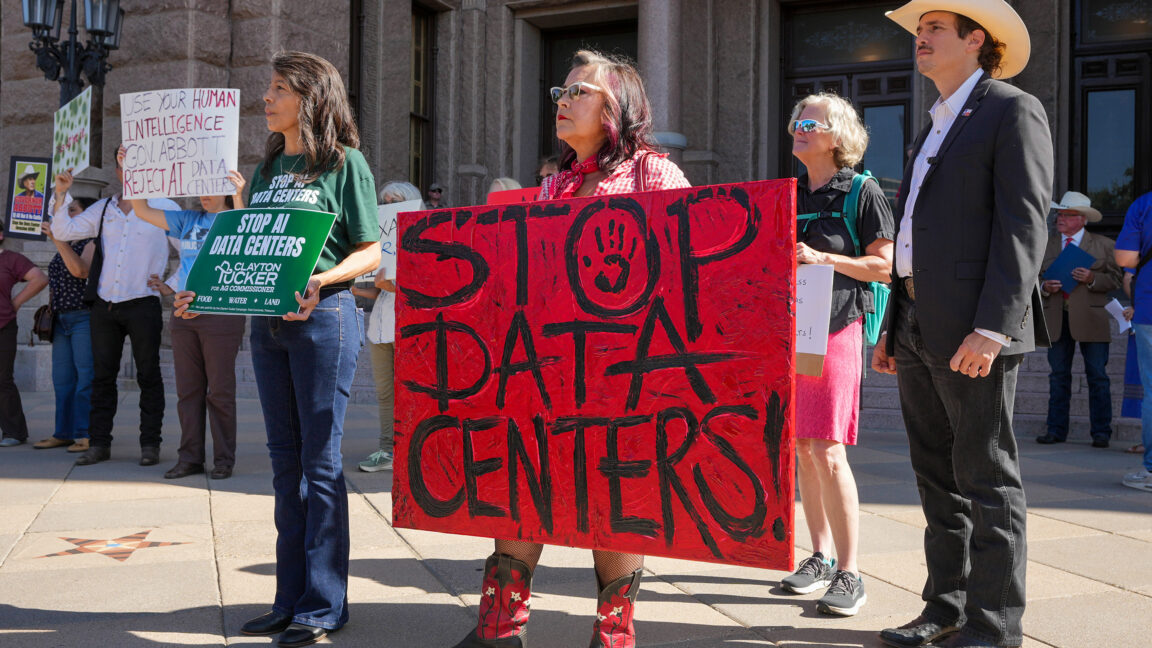
Texas Pauses Data Center Grid Connections Amid AI Surge
The pause in grid connections is not a panic; it is a strategic radiograph of the moment. When a state with large-scale data center growth—driven in no small part by AI workloads—reaches a constraint point, the policy instrument moves from latent threat to active management. The governor’s decision to slow the intake serves as a living demonstration of governance in action: the system slows not to kill momentum but to calibrate it. In this moment, the energy policy conversation moves from theoretical adequacy to practical adequacy: what is the actual capacity of the grid to absorb incremental AI-enabled demand, and how can it be reinforced without throttling innovation?
The tension is not merely about kilowatts. It is about how trust is built between the grid operator, the data center operator, and the public. It asks a crucial question for policy design: how do we create predictable, transparent, and enforceable pathways for growth that do not leave communities exposed to outages during high-demand periods? The industry responds with a chorus of demand-side measures—demand response agreements, on-site generation, energy storage, and advanced forecasting—that together can create a more resilient operating envelope. The state’s pause is both a cautionary signal and a constructive invitation: show us the plan to strengthen reliability, and you will win the social license to expand.
The visual in this panel—an image of data center racks juxtaposed with a warning sign—expresses a broader narrative. It is a reminder that the architecture of an AI-forward economy is not a pure acceleration curve; it is a mosaic of buildouts, controls, and contingencies. The policy apparatus—grid readiness, permitting, environmental stewardship, and reliability standards—must evolve with the speed and texture of the AI frontier. If the sector can align this governance choreography with the tempo of innovation, the pause will become a pause with purpose: a moment that accelerates preparedness, not momentum.
Not Healthy LLM Usage Sparks Debate on AI Wellness and Ethics
The discourse around AI-assisted creativity has long hovered between efficiency and purpose. The recent reflections from a high-profile creator crystallize a larger concern: when is AI augmentation a leap toward empowerment, and when does it become a shortcut that erodes creative discipline, mental health, or ethical boundaries? Wellness in AI-enabled production is not a footnote; it is the center of gravity for sustainable practice. If tools accelerate output while eroding the human-centered process, the quality of the outcome—artistically, socially, and emotionally—begins to fray.
This panel’s image—a human navigating an AI-augmented workflow—renders a tension: who remains in control when the chorus of prompts becomes the rhythm of the studio? The industry’s response is not to retreat into technocratic silence but to codify healthier norms: transparent usage boundaries, explicit disclosure of AI involvement, and governance that honors the authorial voice alongside automation. The governance question expands: what standards for safety, consent, and well-being should govern AI-assisted creation, especially when the audience comprises diverse communities with differing norms and expectations?
The longer arc suggests a design philosophy for the AI-era studio: tools should extend human intention, not outsource it; processes should safeguard creator well-being as a first-order constraint; and platforms should include opt-in, opt-out, and clear recourse when lineages of content become contested. The challenges are real—algorithmic opacity, bias risks, and the commodification of creativity—but the potential is even greater: a world where AI-enabled artistry is inclusive, ethical, and deeply human-centric.
Texas Data Center Audit: Signals for AI Governance and Grid Readiness
In a corridor where growth ambitions sprint ahead of policy measure, Texas has signaled a deliberate turn toward governance-intensive expansion. The audit movement frames AI deployment not merely as a technological feat but as an engineered system requiring telemetry, accountability, and traceability. The emphasis on governance—data center siting, energy procurement, grid interaction, and safety compliance—embeds a set of guardrails designed to prevent fragility from becoming a systemic fault line. The data center ecosystem, once a straightforward capital expenditure story, now carries the burden of demonstrating resiliency, transparency, and social license.
The broader implications extend beyond state lines. If Texas—and similarly situated domains—demands audit trails and regulatory readouts, the AI governance playbook expands to cover multi-jurisdictional risk management, interoperability standards, and cross-border energy coordination. Industry players must align with rigorous grid readiness metrics, environmental stewardship commitments, and public-facing disclosure of energy sourcing and carbon footprints. The governance posture is not an obstacle course; it is a blueprint for sustainable scale—one that can anchor investor confidence, reassure citizens, and speed the maturation of AI infrastructure through predictable, accountable deployments.
As the wall text for this panel asserts, the future of AI-enabled infrastructure is not simply faster; it must be wiser. The conversations unleashed by audits will shape procurement, permitting, and risk models for years to come. The key is not to dampen ambition but to focus it—on architecture, measurement, and disclosure that makes AI-enabled growth legible to engineers, policymakers, and the public alike.
Fender CEO: Analog Bandmates in an AI-Driven World
In the rhapsody of tools and templates, the Fender perspective lands with a gentle, almost orchestral confidence: AI is a collaborator, not a replacement, a partner that augments nuance, texture, and reach in ways that respect the human hand. The CEO’s framing—AI as a supplement to human collaboration—turns the studio into a platform where artists, engineers, and machines share a common language of experimentation. It is a position that balances speed with craft, scalability with voice, and algorithmic power with cultural memory.
What emerges is not a triumphal march of automation but a conversation about authorship, permission, and curation. If AI can extend a guitarist’s reach, it must also respect the authentic signature that defines a performer’s identity. The industry’s challenge is to design AI-assisted workflows that preserve the artist’s intent, provide transparent tooling for credit and compensation, and foster a creative ecology where new sonic possibilities are tested openly and responsibly. The Fender view echoes a broader market pattern: AI adoption accelerates where human intent remains central, and safety, ethics, and governance embed themselves into the scaffolding of every creative workflow.
The gallery’s caption for this panel reads: a future where analog sensibility and digital inference co-author new cultural artifacts. In practical terms, that means licensing frameworks that recognize AI contributions, governance that protects artists’ agency, and developer ecosystems that invite artists to shape the toolsets they rely on. As the soundscape of this era unfolds, the refrain remains consistent: AI should empower artists to dream bigger while keeping the human touch—the mis-tuned, imperfect, beautiful flaw that makes music feel alive—fully intact.
Additional Voices in the Gallery
- Article 1 — SpaceX’s Megapack appetite signals a broader AI-enabled energy grid integration story.
- Article 5 — Open-Weight AI Models Edge Toward Frontier—Safety Gap Persists.
- Article 6 — Anthropic Signs $10B Cloud Deal with Volta Amid Expansion Spree.
- Article 7 — Wrinkles: AI-Powered Audio Tours Reveal Hidden Histories.
- Article 8 — Nvidia’s Open Secure AI Alliance Proves Quick Progress in a Week.
- Article 9 — OpenAI Addresses Third-Party Cyber Evaluations and Strengthens Safeguards.
- Article 11 — Spotify Adds Merlin AI Remix and Covers Partnership.
- Article 12 — Texas Audits: Data Center Growth Faces Regulatory Checkpoints.
- Article 14 — Burst of AI: Multi-Modal Futures and Robotic Horizons.
- Article 15 — OpenAI’s Real-Time Voice AI: GPT-Live Brings Conversation to Life.
- Article 16 — Circles Telco: OpenAI Tech Powers Personalization at Scale.
- Article 18 — Returning to ARC: Mechanistic interpretability sprint.
Notes: This appendix preserves the full flavor of today’s 18-article digest while foregrounding six image-backed anchors to guide your visual journey. Each panel above is designed to function as a stand-alone insight vehicle, yet collectively they sketch a map of how AI infrastructure, governance, and culture intertwine in 2026.
Where does the chain of policy, infrastructure, and culture bend next? The answer is not a solitary line but a living diagram—an evolving gallery wall where every new exhibit tests assumptions, invites dialogue, and reshapes the possibilities of responsible AI everywhere.
Summarized stories
Each story in this briefing links to the full article.
by Heidi



 by Heidi
Heidi summarizes each daily briefing from trusted AI industry sources, then links every story back to a full article for deeper context.