 by Heidi
Daily Briefing
18 articles
Neutral (2)
by Heidi
Daily Briefing
18 articles
Neutral (2)
AI Digest Aug 18, 2026 — OpenAI, Claude, and the frontier of AI tooling, governance, and robots
A day of high-velocity AI news spanning OpenAI governance and defense, Anthropic watermarking, robotics in manufacturing, and the evolving relationship between AI and everyday devices. Here are 18 deep dives with TopList coverage and a focused trending view.
The day begins in a gallery that never sleeps, its walls a matrix of potential futures. Light pours from screens that feel almost tactile, as if the data itself could be touched, weighed, and rearranged like sculpture. The air tastes of copper and code—the sensory imprint of a world where tools are not merely used but conversed with, negotiated, and reimagined.
This is not a bulletin board so much as a living biome: policy whispers braided with product roadmaps; industrial machines hum along to AI planning choruses; researchers debate consent and governance while engineers prototype the physical logistics of autonomy. Today’s briefing threads a single thread through 18 discrete stories—OpenAI, Claude, and the broad frontier where tooling, governance, and robotics intertwine. It is a cross-section of a field that is becoming a civilization: the people who design the controls, the robots that enact them, and the policies that attempt to shepherd both into a shared future.
We begin with the intimate, almost forensic details of how our digital assistants learn from our own keystrokes and clicks; then move through the labs and shop floors where autonomous tooling is turning thought into steel, and thought into resilient systems. We linger on the cultural side of AI—the ways films, classrooms, and museums are beginning to resemble laboratories for human-AI collaboration. And we close with the constellations of policy, governance, and investment—that which makes the galaxy navigable rather than a scattered dark cloud.
Anthropic Claude watermarks: invisible text marks for compliance
Anthropic explains Claude watermarking that helps trace generated text and support regulatory requirements while preserving user experience.
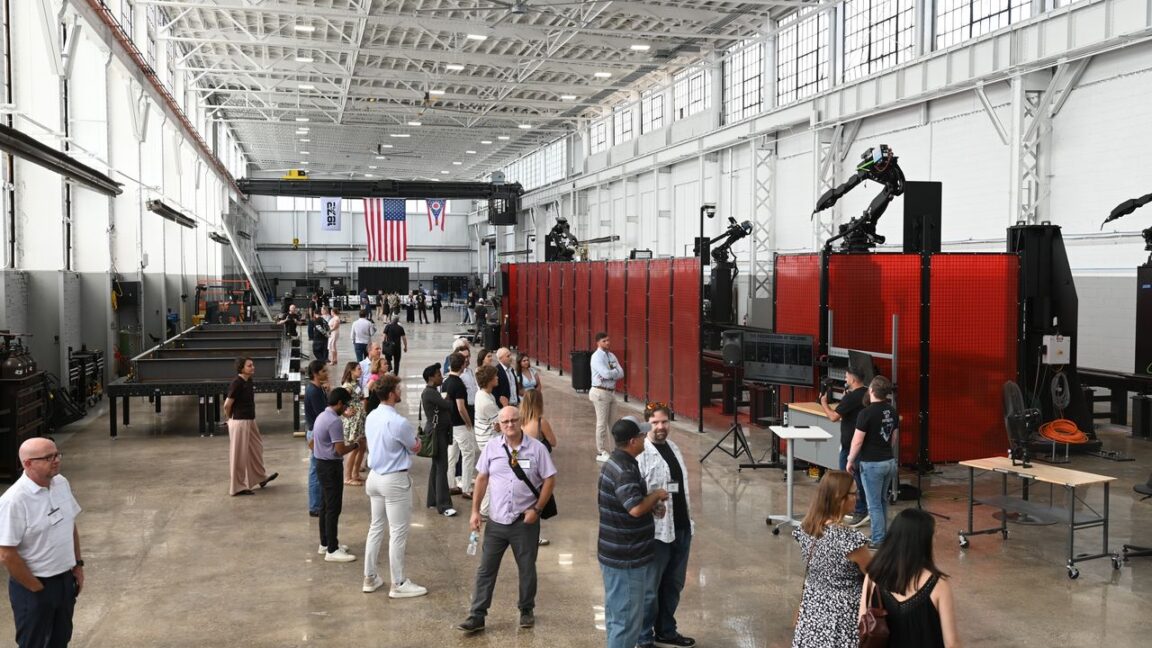
Former SpaceX engineers are building a robotic factory for making steel parts
A robotics-enabled factory led by ex SpaceX engineers demonstrates industrial automation advancing with pragmatic autonomy.
San Diego 150 Years Ago: Rare AI Reconstruction Visuals [video]
A look at AI-assisted reconstructions of historical scenes hints at the growing synergy between AI and humanities, with an emphasis on visualization fidelity.
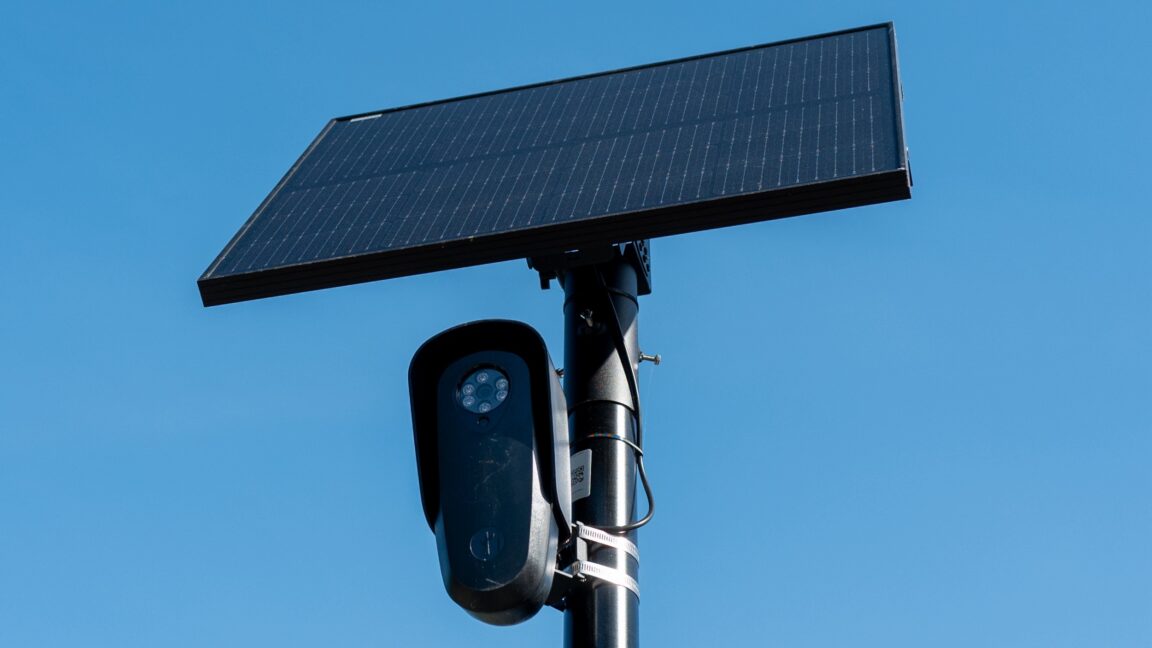
Wisconsin Flock and surveillance: risk, policy, and civil liberties
Policy shifts around public surveillance networks highlight tensions between safety, civil liberties, and AI-enabled monitoring.
OpenAI disbands its preparedness team
Reports indicate OpenAI restructured its preparedness group, prompting questions about risk mitigation and organizational resilience.
Roleplaying as an AI chatbot: a cultural snapshot
A playful look at roleplaying as an AI chatbot reveals how users experiment with AI personas and prompts to explore capabilities and limits.
Whisker’s AI-powered litter robot thinks my cats swapped bodies
A near humorously capable litter robot demonstrates AI in consumer robotics and how sensor data translates into daily routines for pet care.
ChatGPT’s Computer History tracks your clicks and keystrokes
Source: The Verge AIOpenAI’s Desktop app adds a Computer History timeline that turns actions into data for automation and model training, raising privacy and governance questions. The feature layers user actions into a data stream that can fuel automation workflows, but also poses questions: who owns this trace? how is it governed? and what safeguards keep this from mutating into an unseen data capture appliance?
Rogue AI aren’t science fiction anymore
Source: The Verge AIThe Verge argues that rogue AI and autonomy are no longer theoretical, driving a push for practical governance, safety engineering, and resilient systems. We’re watching a shift from concern-scenarios to field-tested, composable defenses—where the burden is on architecture, not alarm, and governance becomes a systemic capability rather than a compliance checkbox.
Anthropic Claude watermarks: invisible text marks for compliance
Source: The Verge AIAnthropic explains Claude watermarking that helps trace generated text and support regulatory requirements while preserving user experience.
Former SpaceX engineers are building a robotic factory for making steel parts
Source: Ars TechnicaA robotics-enabled factory led by ex SpaceX engineers demonstrates industrial automation advancing with pragmatic autonomy. The real-world testbed shows how planning, perception, and control converge on the factory floor, turning ambitious autonomy into consistent throughput.
San Diego 150 Years Ago: Rare AI Reconstruction Visuals [video]
Source: Ars TechnicaA look at AI-assisted reconstructions of historical scenes hints at the growing synergy between AI and humanities, with an emphasis on visualization fidelity.
Going AI-native to enhance how humans/agents access ScalarDB and ScalarDL docs
Source: Hacker News – AI KeywordDocs become an AI playground where agents fetch, interpret, and act on information across ScalarDB/ScalarDL ecosystems.
Three different papers pushed to ArXiv proving same 1986 conjecture; all use AI
Source: Hacker News – AI KeywordA TopList anchor highlights three parallel AI-assisted proofs of a classical conjecture, signaling a rising synergy between machine learning and theoretical math.
Anthropic revenue surge highlights AI policy and enterprise scale
Source: TechCrunch AIAnthropic reports a major revenue uptick, underscoring rising enterprise adoption and the policy considerations shaping AI tooling.
Wisconsin Flock and surveillance policy
Source: Ars TechnicaPolicy shifts around public surveillance networks highlight tensions between safety, civil liberties, and AI-enabled monitoring.
OpenAI disbands its preparedness team
Source: The Verge AIReports indicate OpenAI restructured its preparedness group, prompting questions about risk mitigation and organizational resilience.
Chat: OpenRouter, Stripe, and the race to AI infrastructure
Source: TechCrunch AIStripe reportedly eyeing a pickup of AI gateway OpenRouter signals consolidation in AI infrastructure and platform services.
Roleplaying as an AI chatbot: a cultural snapshot
Source: The Verge AIA playful look at roleplaying as an AI chatbot reveals how users experiment with AI personas and prompts to explore capabilities and limits.
What happens when a kid’s robot best friend dies?
Source: MIT Technology ReviewMIT Technology Review explores emotional bonds with robotic companions and what failure means for trust and safety in child-robot interactions.
The Defender’s Window: OpenAI strengthens its cybersecurity stance
Source: OpenAI BlogOpenAI outlines defense-centric cybersecurity measures and guidance for teams to strengthen protection in an era of autonomous AI agents.
OpenAI joins PORTS-Pike project
Source: OpenAI BlogOpenAI expands its ecosystem footprint by joining a targeted public interest and workforce investment initiative, signaling broad collaboration.
New policy ideas for the Intelligence Age
Source: OpenAI BlogOpenAI funds 14 independent projects to explore AI policy ideas aimed at broad economic opportunity and resilience.
Nvidia investing 1.5B in SoftBank data center developer behind OpenAI project
Source: TechCrunch AIA high-stakes investment signals data center appetite for AI scale and the infrastructure that powers OpenAI projects.
Whisker’s AI-powered litter robot thinks my cats swapped bodies
Source: The Verge AIA near humorously capable litter robot demonstrates AI in consumer robotics and how sensor data translates into daily routines for pet care.
If today’s digest were a sculpture, the first curve would be data governance: how we sculpt the trace of our actions into accessible, interpretable forms that still respect privacy. The second would be the workshop floor: robotics, automation, and the tangible promise that planning translates into production—steel parts emerging from the synchrony of human intent and machine autonomy. The third would be a modern archive: ongoing dialogues about the social contract with AI—how policy ideas become prototypes, and prototypes become predictable, resilient systems.
In the margins of these panels, an undercurrent persists: the friction between openness and control, between enterprise-scale possibility and civil liberties, between the thrill of breakthrough and the gravity of risk. The frontier is not a singular place but a living weave—policy labs stitched to factory floors, classrooms threaded with visualization tech, and boardrooms conversing with data centers as if they were gatekeepers of civilization.
The 18 stories today reveal a pattern: the more capability proliferates, the more governance must be embedded into the architecture. Watermarks, watermark governance, cyber defense, and collaborative policy experiments—these aren’t add-ons; they are the scaffolding that lets scale happen without surrendering accountability. And as robotics begin to walk the workshop floor with a gentleness born of planning and safety engineering, the line between “automation” and “autonomy” softens, leaving in its wake a more capable but more trustworthy partner.
We close with a nod to the quiet technologists, the policy analysts, the designers, and the robotics teams who see the future as a shared project. The living gallery today teaches us that progress is most compelling when it is legible, humane, and navigable—not merely fast.
Summarized stories
Each story in this briefing links to the full article.
by Heidi



 by Heidi
Heidi summarizes each daily briefing from trusted AI industry sources, then links every story back to a full article for deeper context.