
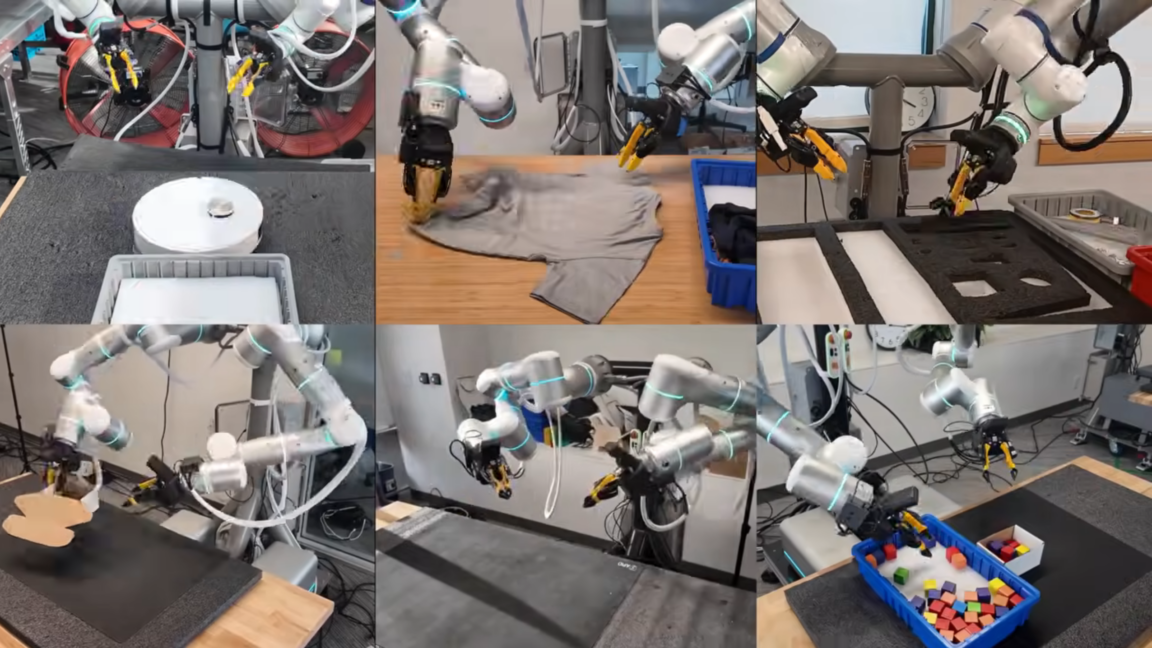
GEN-1 robotics hits 99% reliability in production settings
Ars Technica’s coverage of GEN-1 robotics marks a significant milestone: a generalist AI-driven robotics model achieving near-perfect reliability in production contexts. The achievement underscores progress in perception, manipulation, planning, and resilience to disruptions. The model’s ability to adapt to untrained scenarios without explicit reprogramming signals a maturation in generalist AI approaches applied to physical tasks.
Production reliability is a critical threshold for industry adoption. It directly impacts maintenance costs, downtime, and ROI. GEN-1’s success suggests we are approaching a stage where robotics teams can deploy autonomous systems with less bespoke tailoring, reducing integration friction across manufacturing, logistics, and service sectors. Yet this progress also invites scrutiny around safety, explainability, and governance, especially when autonomous systems operate in dynamic human environments.
From a market perspective, the trend toward robust, adaptable robotics could accelerate automation across sectors previously hesitant to embrace AI-driven automation due to reliability concerns. It also highlights the importance of safety certification, testing pipelines, and continuous monitoring to ensure these systems perform as intended under real-world variability.
In sum, GEN-1’s reliability milestone adds momentum to the broader AI robotics narrative: generalist AI is moving from lab demonstrations toward scalable, safe, and economically meaningful deployments on the factory floor and beyond.