
Overview
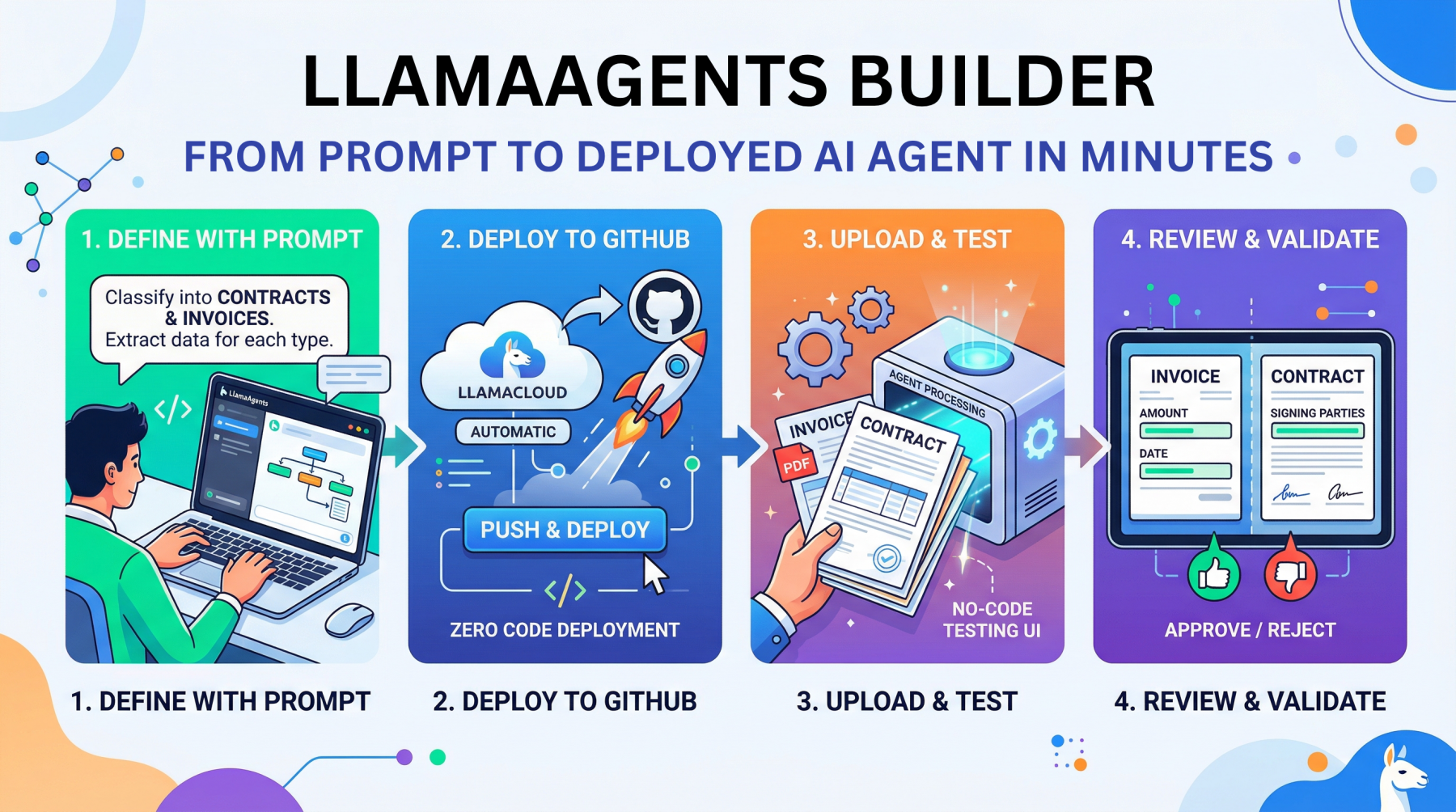
The LlamaAgents Builder article spotlights a practical path from prompt design to deployed AI agents, illustrating how teams can translate conversational prompts into autonomous workflows with minimal orchestration. The core value lies in reducing the friction of deployment, enabling knowledge workers to automate repetitive tasks, extract insights, and coordinate activities across apps and data stores.
From a workflow engineering perspective, agent frameworks like LlamaAgents are redefining what ‘automation’ means. The automation stack shifts from scripted sequences to agent-based orchestration where agents negotiate tasks, manage state, and trigger parallel actions. This can dramatically reduce time-to-value for projects ranging from document processing to research triage. Yet it also raises governance questions: how do we audit agent decisions, monitor for drift, and ensure secure data handling when agents operate across enterprise boundaries?
On the enterprise front, MCP (multi-contract prompt) strategies—where multiple prompts or components coordinate—are becoming a practical pattern. This approach leverages modular AI capabilities, allowing teams to swap models or plugins without rewiring whole pipelines. However, as agents scale, the need for robust observability, fail-safes, and human-in-the-loop controls becomes critical to prevent subtle missteps in decision logic and data routing.
Strategic Implications
- Agent-based automation lowers time-to-value for knowledge work and data processing tasks.
- Governance and auditing must evolve alongside agent autonomy to maintain compliance and security.
- Modular design and MCP patterns support more resilient, adaptable automation stacks.
As AI agents proliferate within organizations, leaders should invest in agent lifecycle management, from prompt design and testing to monitoring, logging, and auditing outcomes. The Builder story is an early indicator of a broader wave toward deployable, user-friendly agent tooling that can scale across departments while preserving oversight and control.