
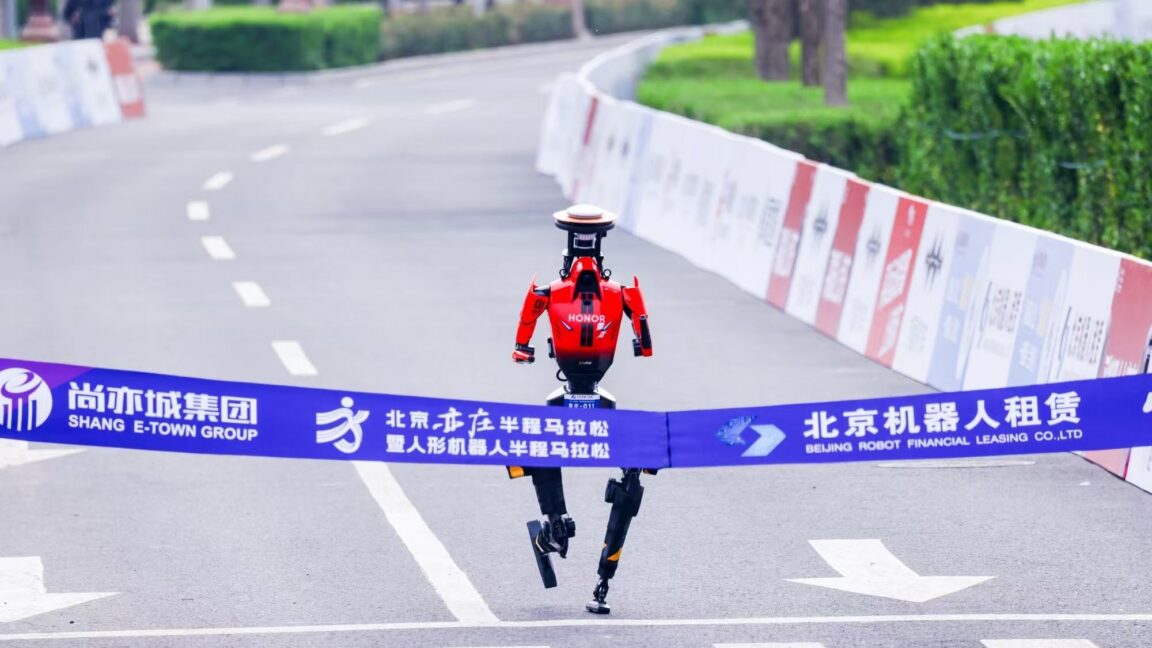
Robot runner sets new record, beating humans in half-marathon
In a landmark demonstration, a humanoid robot completed a half-marathon and set a new record for robotic performance in endurance running. The feat underscores advances in control, perception, and bipedal locomotion, translating to practical implications for search-and-rescue, disaster response, and logistics in challenging environments. While the event signals a milestone, it also invites scrutiny about the transferability of lab-grade performance to unpredictable real-world conditions and the energy efficiency required to sustain long-distance operations in varied terrains.
Beyond the spectacle, the broader takeaway is that robotics is converging with AI in ways that create new capabilities for autonomous systems operating in dynamic settings. Manufacturers and research labs are likely to invest in more resilient actuators, improved sensor fusion, and smarter energy management to maximize both safety and throughput. Regulators will increasingly demand rigorous testing and safety certifications for autonomous runners and walkers operating around humans, which means that new standards and compliance frameworks will emerge in tandem with these capabilities.
Ultimately, this record signals momentum in the hardware-software stack that makes autonomous robotic systems more viable for real-world deployment, not merely demonstration. It is a clear reminder that breakthroughs in AI are inseparable from breakthroughs in robotics hardware, control theory, and environmental sensing—an integrated path forward for intelligent machines that can navigate the complexities of the physical world.