
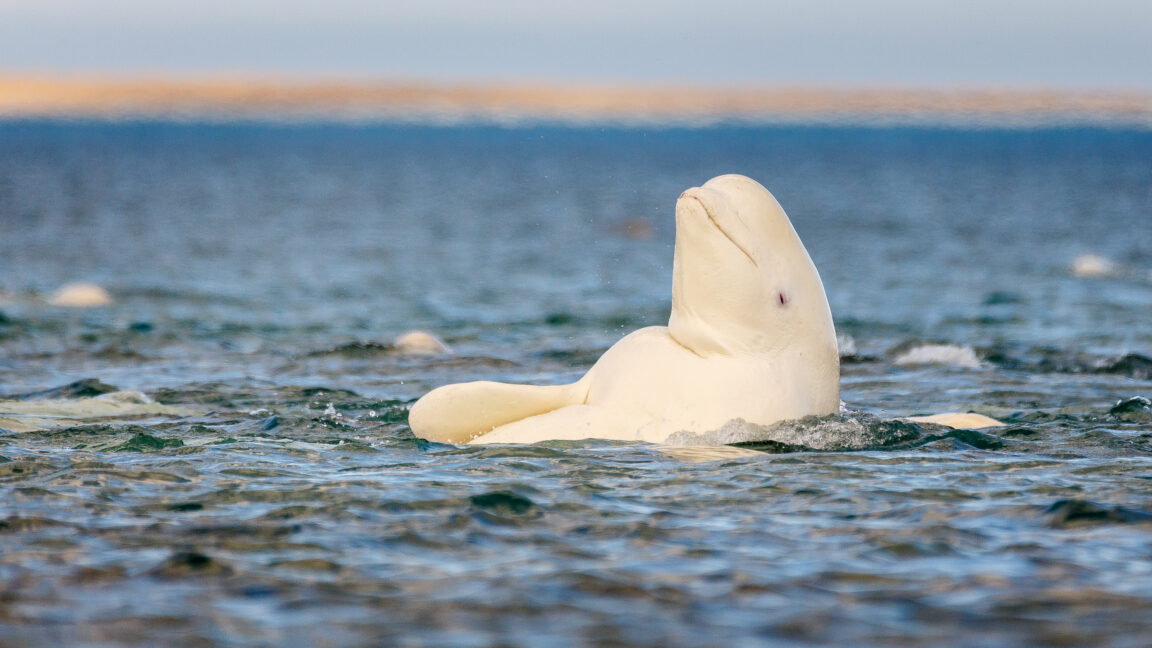
Beluga mirror test: what it means
The piece from Ars Technica highlights that beluga whales may pass the mirror test, a benchmark that has long divided scientists on what counts as self-recognition. The central idea behind the test is simple: if a mirror helps an animal notice a mark on its body that it could not otherwise see, some researchers argue that the animal recognizes itself in the reflection. This interpretation is exactly why belugas joining the small, contested list of species that pass the test matters for the broader conversation about cognition in non-human animals.
The claim underscores a broader debate about the nature of consciousness and self-awareness in non-human animals. Critics warn that passing the mirror test does not necessarily prove a fully formed sense of self; others say it reveals a cognitive capacity that approaches self-guided behavior and meta-cognition. In short, the test is informative but not definitive, and results can depend on how the study is designed and interpreted.
What the study adds to the conversation
While the Ars Technica article does not present every experimental detail in the summary, the takeaways are clear: belugas appear to respond to their reflections in ways that many interpret as self-recognition. This resonates with a history of mixed results across mammals and birds, where performance on the mirror test can be highly variable and context-dependent. Context matters, and the same animal can respond differently under varying conditions, making consensus elusive.
- Interpretation is debated: passing the test is not an automatic stamp of consciousness, and some species show partial recognition or context-bound responses.
- Species differences matter: large-brained cetaceans might deploy sophisticated social and spatial awareness that complicates simple readings of the test.
- Method matters: the design of the experiment, including how the marks are placed and how responses are coded, can influence outcomes.
Self-awareness is likely a spectrum rather than a single trait, and the mirror test is one of several tools researchers use to probe cognition.
Why AI researchers care about animal self-recognition
In artificial intelligence, the question of self-reflection and meta-cognition has become a topic of interest as teams explore agents that can monitor their own learning and adjust strategies. Observing that even highly social mammals produce flexible, self-referencing behaviors invites caution about equating “self-recognition” with human-like consciousness in machines. For AI, the mirror test-inspired ideas provoke questions about how and when a system should be aware of its own state, errors, and evolving goals.
As researchers debate how to model self-awareness, belugas add a data point that self-recognition is not exclusive to humans or primates. The ongoing conversation across biology and AI suggests that self-monitoring capabilities could emerge in different forms, depending on environment, sensory modalities, and learning histories.
In the end, the mirror test remains a provocative tool, and the beluga finding reinforces that the animal kingdom continues to challenge our assumptions about cognition. As Ars Technica notes, this recent result sits on a short list, prompting both excitement and skepticism about what self-recognition really means.