
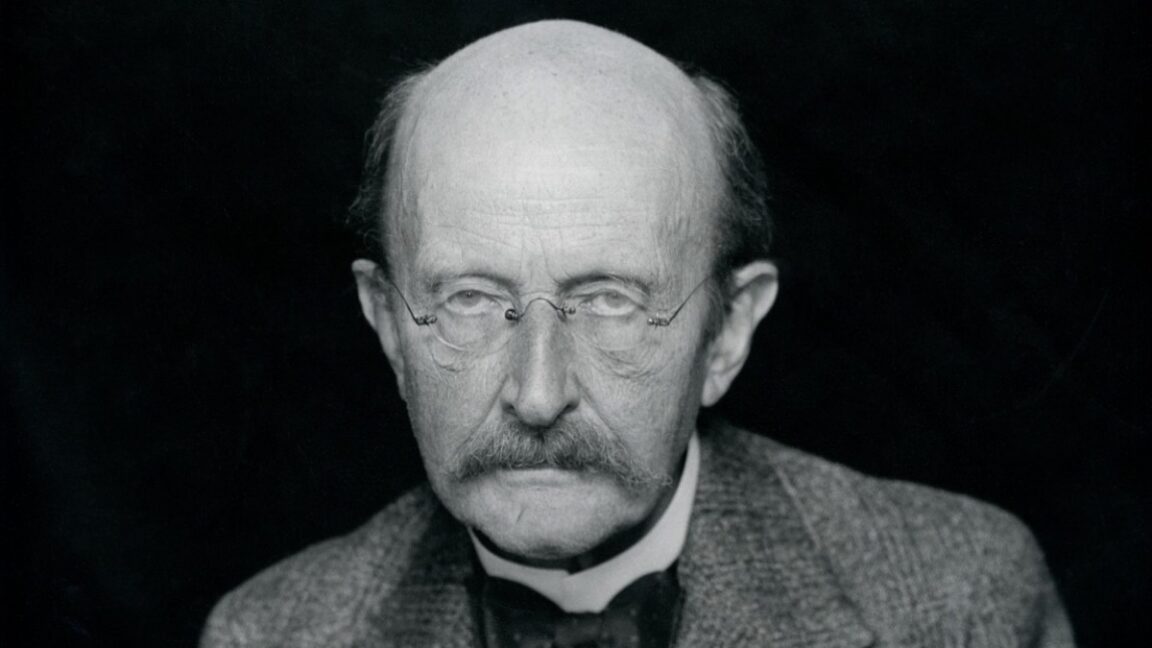
Overview: a historical footnote meets modern publishing challenges
The story from Ars Technica centers on a journal decision to retract two papers from the 1940s attributed to Max Planck. In the digital age, the aftermath is not only about the retraction itself but about what happens when readers try to access the original material. The links that once guided researchers to primary sources now point to blank pages and PDFs that contain nothing of substance. Intellectually, it’s not acceptable. The incident sits at the crossroads of history, publishing, and digital curation, reminding us that the past remains bound to the present through the availability of its documentation.
The bare facts and their implications
The core development is stark and simple: post-retraction access suffers from broken links and empty documents. This is more than a user experience hiccup. For historians of science, physicists studying Planck, and researchers who rely on primary sources to verify claims, inaccessible materials undermine the ability to audit, re-evaluate, or teach from historical work. The quote above captures the sentiment: removing or hiding primary sources without preserving a compatible record is a disruption to scholarly practice.
"Intellectually, it’s not acceptable."
Beyond the individual papers, the episode underscores a broader challenge in digital preservation and the maintenance of a trusted scholarly record. When archives shift, journals retract, and links degrade, the reliability of historical literature can be called into question. Such fragility has ripple effects, particularly as researchers increasingly rely on AI-assisted tools to traverse vast corpora of historical documents and to train models on primary sources. The incident thus invites a broader reflection on how publishers, libraries, and platforms safeguard access to important scientific materials, especially those that shape the historical narrative of physics and scientific thought.
Implications for AI-enabled research and historical scholarship
For teams applying AI to the history of science, stable access to original sources is essential for accurate data curation, model training, and reproducibility. When critical documents become inaccessible, data pipelines risk gaps that can degrade analyses or introduce blind spots. This event is a reminder that AI researchers must advocate for durable, redundant archiving strategies and for publishers to provide transparent access pathways—even for items that have undergone retraction or revision. It also highlights the role of cross-institutional archives, mirrors, and identifiers that help maintain continuity when a single platform fails.
- Archivists and publishers should prioritize long-term access, with stable identifiers and redundant hosting.
- Journals might offer alternative access points or preserved copies in trusted repositories when primary PDFs are removed.
- Researchers should verify primary sources across multiple archives to mitigate broken links or missing materials.
What readers can do now
Readers who encounter blank pages or empty PDFs are advised to contact the publisher and consult other scholarly databases to trace the publication history and any official notices surrounding the retractions. Maintaining a robust record of why a retraction occurred and what remains accessible is essential for the integrity of the historical literature and for any downstream research that depends on these sources.
Conclusion
The case of the 1940s Planck papers—whose digital descendants now appear as missing or incomplete material—highlights a persistent tension in contemporary publishing: the need to retract or revise while preserving the accessibility of historical documents. As AI-driven research grows more pervasive, the demand for dependable archives becomes even more critical. This Ars Technica report serves as a cautionary note that digital fragility can affect even venerable scientific works, and it calls for ongoing improvements in archiving practices to keep the past legible for present and future scholars.