
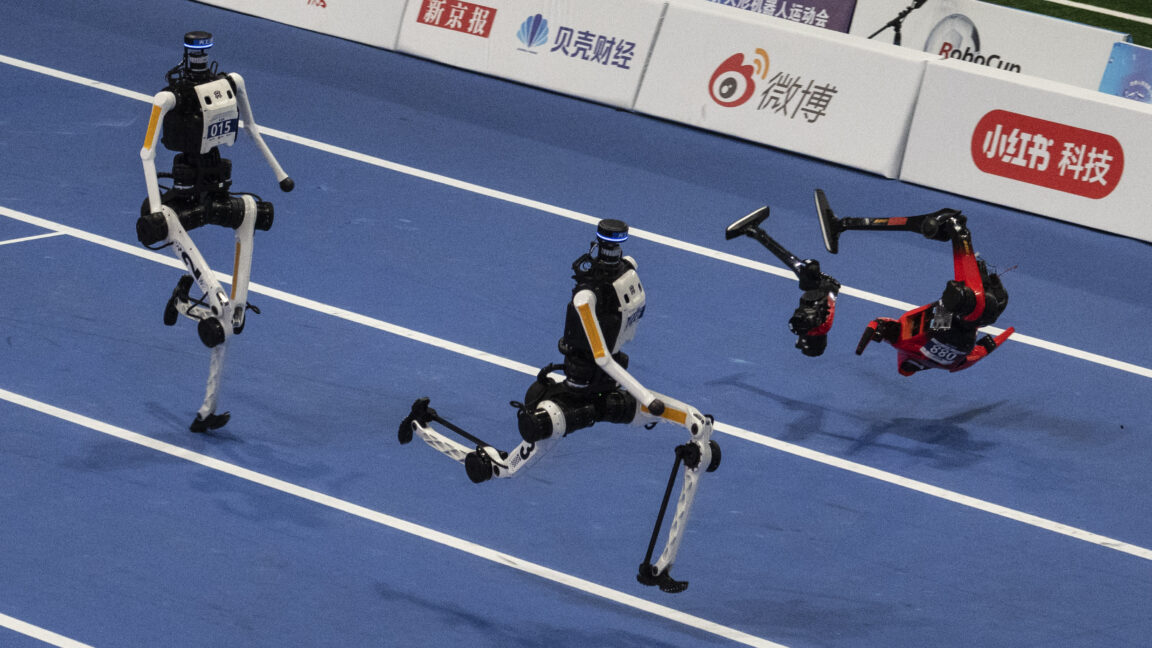
World humanoid robot games show runners breaking records, bursting into flames
Ars Technica reports on the latest chapter in the global world humanoid robot games, where humanlike runners push their machines to new limits in speed, balance, and dexterity. The coverage highlights a striking paradox: the same events that etch new records also expose the fragility and risk inherent in high-profile robot showcases.
Event organizers tout the spectacle as a demonstration of progress in robotics, with teams racing through obstacle courses and endurance drills. The emphasis on speed and resilience drives headlines and attention, but the article cautions that these performances can be less substantive than day-to-day robotic chores that households or facilities rely on.
Record-breaking robot races are less substantial than household chore challenges.
The piece notes that the successes are accompanied by cautionary notes about safety, reliability, and the real-world utility of humanoid systems. While a robot "breaks a record," observers are asked to consider whether such feats translate into more dependable assistance for people in everyday life. As with any high-energy demonstration, the focus tends to drift toward spectacle—the fastest performance, the smoothest recovery from a near-miss—rather than durable, maintenance-friendly designs.
The article frames the world humanoid robot games as a vivid, captivating mirror of robotics progress: thrilling but not always indicative of everyday usefulness. The tension between spectacle and substance drives ongoing conversations about where humanoid robotics should go next and how success should be measured.
- Record-breaking performances in speed, balance, and control push teams to refine how they approach competition and iteration.
- Safety and reliability concerns around high-energy demonstrations hint at the need for stronger safeguards and better risk management during events where flames or other hazards can arise.
- Real-world impact questions—critics argue that exceptional showings in a competitive setting may not directly translate to practical domestic or industrial robotics benefits.
- Research and funding dynamics—high-profile competitions attract interest and talent, even as researchers emphasize the importance of dependable, scalable designs for broad adoption.
In sum, the Ars Technica report presents the world humanoid robot games as a vivid snapshot of robotics progress: exciting and attention-grabbing, but not automatically a blueprint for everyday usefulness. The juxtaposition of record-setting feats with questions about genuine utility keeps the discourse centered on how best to steer humanoid robotics toward durable, meaningful impact.