
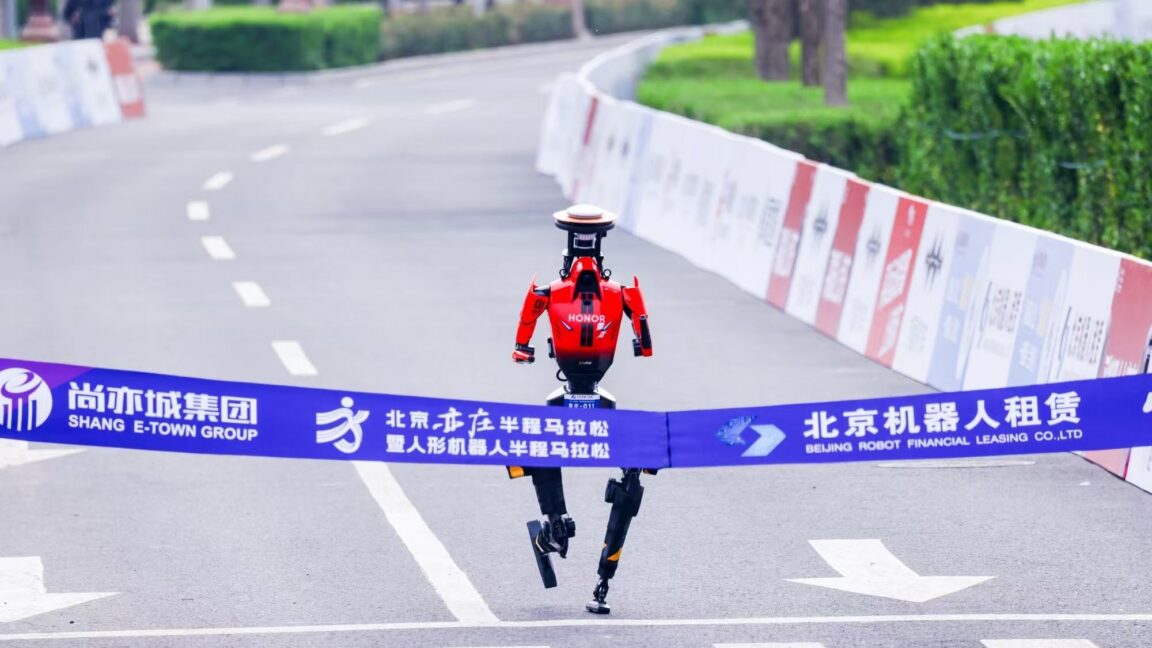
Robotics Breakthrough
Ars Technica reports a humanoid robot achieving a record time in a half-marathon, illustrating significant progress in mechanical design, perception, and autonomous navigation. The achievement signals both engineering prowess and a trajectory toward more capable, energy-efficient robotic systems capable of sustained, real-world operation in demanding environments.
From an AI perspective, this milestone is not merely about hardware. It reflects advances in perception, locomotion, and decision-making under real-time constraints. The robot’s ability to adapt to changing terrain, optimize pacing, and respond to dynamic conditions demonstrates the maturation of control policies and reinforcement learning in embodied AI. For industries such as logistics, manufacturing, and disaster response, such capabilities promise to extend the envelope of what automation can accomplish with fewer human interventions.
However, with these capabilities come concerns about labor displacement, safety, and the ethical use of autonomous agents in public spaces. Policymakers, researchers, and industry players will need to continue refining safety protocols, testing standards, and public communication so that such breakthroughs translate into benefits without compromising safety or privacy. The broader takeaway is that robotics progress is accelerating in tandem with AI, creating a powerful, integrated frontier for automation and intelligent systems at scale.