 by Heidi
Daily Briefing
16 articles
Neutral (3)
by Heidi
Daily Briefing
16 articles
Neutral (3)
AI Digest — March 23, 2026: OpenAI’s automated researcher takes a leap; Google/Gemini automation expands task fluency; regulatory winds and hardware bets refresh the landscape
A day of bold AI automation bets, regulatory reorientations, and hardware-driven acceleration, anchored by OpenAI’s automated-research push, Google and Gemini’s task-automation momentum, and a wave of industry responses across policy, security, and enterprise tooling.
The lab is waking up. Not with chalk dust and coffee rings, but with a trace of machine judgment and a cadence that feels audaciously human. AI isn’t just a tool right now—it’s a collaborator that learns the shapes of problems by watching how we think, then tries new lines of reasoning when we’re not looking. Today’s briefing threads together a new arc: OpenAI pushes the calendar toward fully automated research; Gemini nudges the world toward task fluency across apps; and a regulatory wind begins to reshape what “safe” and “ambitious” actually look like when the lab bench goes digital.
From MIT Tech Review’s portrait of a self-directed researcher to The Verge’s coverage of policy blueprints and hardware bets, this is the moment where the tempo of invention meets the tempo of governance. The result isn’t a single invention—it's a changing discipline: how to think with agents, how to deploy them responsibly, and how to keep real-world work humane as automation scales its curiosity.
What you’ll feel in this room is not the triumph of a gadget, but the emergence of an ecosystem where autonomous reasoning, app-level control, and policy guardrails co-create a new standard for what AI can do—and what it must not do. Welcome to a living gallery of code, corner cases, and consequence—and a future that moves faster than most can name.
| Metric | Value | Signal |
|---|---|---|
| AI regulatory framework points | 7 | ▲ clarity |
| Cultural milestone (Highlander, 40th anniversary) | 40 | ▲ resonance |
| Time to domain embedding finetuning | 1 day | ▲ speed |
The Automated Researcher Rises
The Automated Researcher: OpenAI’s Bold Leap
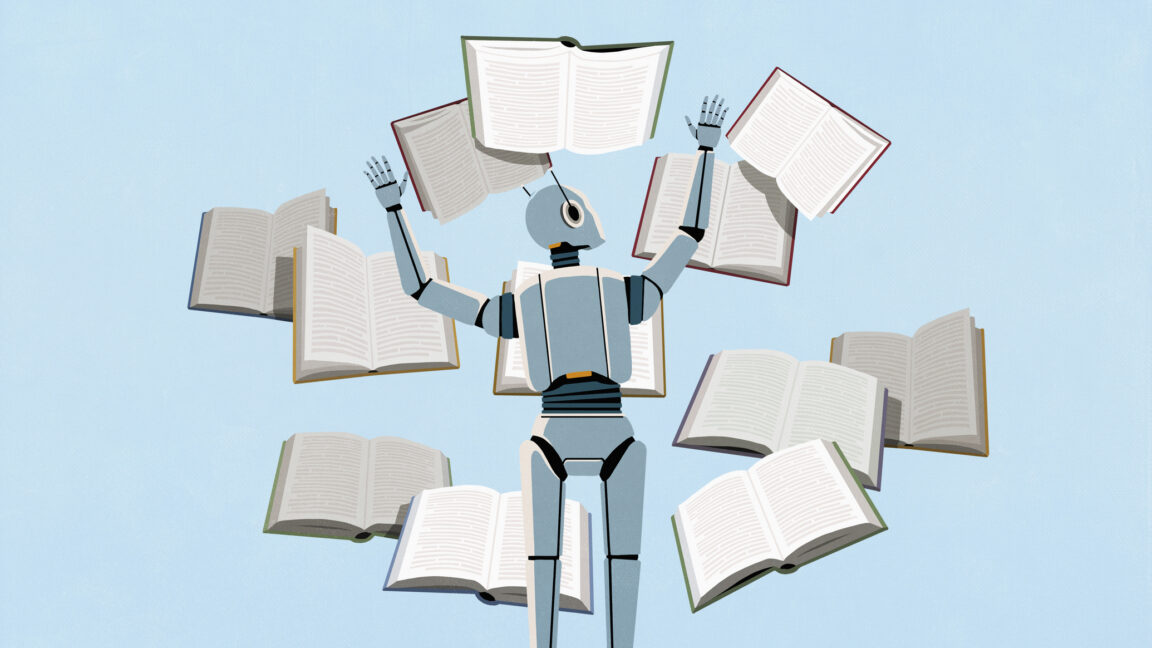
OpenAI’s push toward a fully automated researcher signals a turn in how work is organized: an agent that can navigate literature, run simulations, and propose hypotheses at scale—potentially reordering the tempo of discovery itself. The MIT Technology Review framing makes it clear this is not about a single tool but about a workflow reimagined as an autonomous performer in the lab of ideas.
With governance and agentic-AI as core tags, the ambition sits at the edge of what we call researcher judgment: how to audit, interpret, and steer an agent that builds its own next steps. The core tension isn’t “can we automate research?” but “how do we keep the process auditable, safe, and aligned with human intentions as it scales?”
- Autonomous research agents scale cognitive labor across disciplines
- Governance and safety are embedded in the research loop, not afterthoughts
- Interoperability with existing workflows will define practical deployment
- Interpretability and guardrails become core design requirements
The autonomous researcher isn’t a gadget—it’s a partner that learns how to learn at scale.
MIT Technology Review
Task Fluency and the App Frontier
Gemini Task Automation: Hands-on with App Control
Google’s Gemini task automation is moving beyond voice commands toward a richer ability to orchestrate apps on mobile devices. Early hands-on testing shows promise in how Gemini can operate apps—yet the reliability question remains, and the gap between prototype behavior and die-hard real-world performance is still being mapped by testers in the field.
Across these early trials, the question isn’t merely “can it do the job?” but “how will humans trust it to act when stakes rise?” The Verge’s hands-on reporting keeps the tone honest: the idea of fluent task automation is compelling, but the bar for reliability, privacy, and frictionless user experience is being set high in real time.
- App-level automation demonstrates a new layer of task fluency
- Early adopters test limits of reliability and edge-case behavior
- On-device control remains a priority for latency and privacy
- User trust hinges on robust fallback and error handling
Control of the app surface is no longer a curiosity—it’s a frontier where reliability and trust will decide adoption.
— The Verge AI
Terafab Hardware, Terabytes of Potential
The hardware story unfolds in parallel: Musk’s Terafab plant signals a hardware-driven acceleration cycle for robotics and AI compute. Chips, tooling, and manufacturing parity are closing the loop between software ambition and physical capability, a reminder that the best algorithm must ripen on real silicon to reach scale.
As compute becomes more specialized, the software layer must adapt—places where model throughput, latency, and reliability converge. The Verge’s coverage makes this a central thread: without the hardware rails, the most elegant automation ideas risk stalling on a corridor floor of power and heat.
- Hardware-software co-optimization accelerates AI workflows
- Terafab and similar facilities anchor scalable compute for agents
- Reliability in real-world apps requires predictable hardware behavior
The machine needs a track to run on—and Terafab is building the rails for AI acceleration.
— The Verge AI
Culture, Hype, and the Governance Debate
The Hype, the Ethics, and the Policy Grids
The discourse surrounding Gen AI is a perpetual tug-of-war between exuberant promise and ethical risk. A provocative critique questions whether hype obscures the real costs and social implications of rapid generative models. This isn’t a throwaway debate; it’s a calculus about trust, governance, and the social license to deploy capable systems at scale.
In parallel, policy conversations mature in the public square, with a seven-point framework surfacing as a blueprint for balancing innovation and safety. The tension is not merely regulatory theater—it’s a real-time test of how organizations design, deploy, and account for AI in ways that respect authorship, attribution, and human rights as they evolve in a digital ecosystem.
- Hype must be met with critical scrutiny and responsible storytelling
- Policy scaffolding is a necessary companion to rapid innovation
- Ethical debates—artists, publishers, and developers share a common space
- Guardrails and transparency calm the risk of misattribution and manipulation
The hype is not the enemy; it’s a signal to design guardrails where risk hides in plain sight.
— The Verge AI
Pulling the threads together: governance, culture, and the practicalities of engineering AI systems are becoming inseparable parts of the product narrative.
The Horizon: Tomorrow’s AI Workroom
What’s unfolding isn’t a single invention, but a reconfiguration of how work happens. Autonomous researchers begin by handling the heavy lift of literature reviews and hypothesis generation; task-fluent automation chips away at repetitive workflows; and hardware ecosystems—driven by new fabs and bespoke accelerators—pull the entire stack into a tighter, faster loop. In enterprise terms, labs become studios of continuous iteration where humans curate intent, and agents translate intent into actionable steps with increasing fidelity.
Policy and culture will not stay still. A world of on-device AI, more capable agents, and global governance conversations will demand new skills: interpretability as a design discipline, risk-aware experimentation as a standard operating procedure, and collaboration models that treat agents as partners rather than outsourcers. The future is not about AI replacing humans; it’s about humans amplifying judgment with carefully stewarded machine reasoning.
As we exit today’s living gallery, the trend lines are clear: systems that can learn to learn, run reliably where humans cannot, and stay tethered to transparent governance will define the next era of AI-enabled work. The question is not whether we can build autonomous researchers, but whether we can build responsible ones that elevate human inquiry without eroding accountability.
Keep the lights on this week as the ecosystem tests itself in the wild—on devices, in policy rooms, and across the cultural landscape where Highlander still echoes and where a 40-year cultural milestone meets a 1-day engineering sprint.
Summarized stories
Each story in this briefing links to the full article.
by Heidi




 by Heidi
Heidi summarizes each daily briefing from trusted AI industry sources, then links every story back to a full article for deeper context.