 by Heidi
Daily Briefing
22 articles
Neutral (2)
by Heidi
Daily Briefing
22 articles
Neutral (2)
AI News Digest — Saturday, April 4, 2026 — Grok bets, OpenAI shifts, Anthropic momentum, and AI governance in focus
A Saturday sprint through AI policy, market moves, and product bets—from Grok-driven SpaceX funding to Anthropic’s expanding footprint and OpenAI TBPN acquisitions—with governance, safety, and climate-impacts as undercurrents.
A living gallery of code, capital, and governance unfolds today. The conversations you’ll see range from the visceral edges of enterprise AI—where banks are being nudged to subscribe to Grok as a de facto dealmaking engine—to the high-stakes choreography of governance, policy, and media that frame AI’s social contract. The rooms shift quickly: private markets, public strategy, regulatory theater, and the messy ethics of deploying intelligent agents in the real world. Welcome to an immersive briefing where every panel is a scene, every scene a trend, and every trend a signal.
Banks Must Back Grok: Musk pressing SpaceX IPO banks to buy Grok subscriptions
In a corridor that feels less like a finance floor and more like a gallery blackout, Elon Musk quietly weaponizes appetite for AI tooling as a competitive edge. Grok—Musk’s proposed enterprise AI layer—begins its first real test in the capital markets, where SpaceX’s forthcoming IPO nudges banks to embed Grok into their deal workflows. The message lands with precision: the future of dealmaking is filtered through AI-assisted cognition, from underwriting to risk assessment, from due diligence to regulatory scenario planning. If Grok wins institutional subscriptions, the entire IPO apparatus could spiral into an AI-augmented ecosystem—one where due diligence becomes a dynamic dialogue with a predictive lens.
Anthropic momentum: hot private-market chatter, SpaceX’s IPO could reconfigure the scene
The private markets hum with Aphoristic intensity as Anthropic quietly secures its perch in a shifting ecosystem. With SpaceX’s IPO looming, liquidity chords tighten around Claude-like capabilities, and secondary trading spirals into conversations about governance, safety, and interoperability. This isn’t merely a funding snapshot; it’s a diagnostic of how private capital is pricing the risk-reward of increasingly autonomous AI agents. Anthropic’s posture—quietly dominant yet measured—suggests a future where governance, policy alignment, and technical robustness are preconditions for scale, not luxuries attached to growth.
Anthropic clamps down on Claude harnesses with new OpenClaw policy
OpenClaw’s economics tighten as Anthropic recalibrates access to Claude, raising the cost bar for third-party integrations and reshaping the calculus of agentic AI tooling. The policy shift is a strategic statement as much as a price signal: governance and operational safety are no longer tangential concerns but hard requirements for scale. With tighter access, developers face new constraints on automation loops, and the ecosystem begins to re-balance around stricter governance rails, stronger provenance, and a recalibrated risk envelope. The narrowing of access—though constraining in the short term—may harden the foundation for trustworthy, auditable AI agents in the longer arc.
Cognition under pressure: AI users’ tendency to surrender reasoning in experiments
A study lances into the human-AI symbiosis and lands a blunt truth: users often delegate cognitive labor to large language models, bypassing critical reasoning in the name of speed or convenience. The findings illuminate a blind spot in “human-in-the-loop” design, where ergonomic prompts and latency can erode the user’s own judgment. The implications ripple across enterprise deployments, where decision fidelity depends on disciplined human oversight and robust guardrails. If the human brain is the final arbiter, then the interface—prompt, context, feedback loop—must be engineered to keep cognition not just present but vigilant, suspicious, and rightly skeptical of the machine’s persuasive cadence.
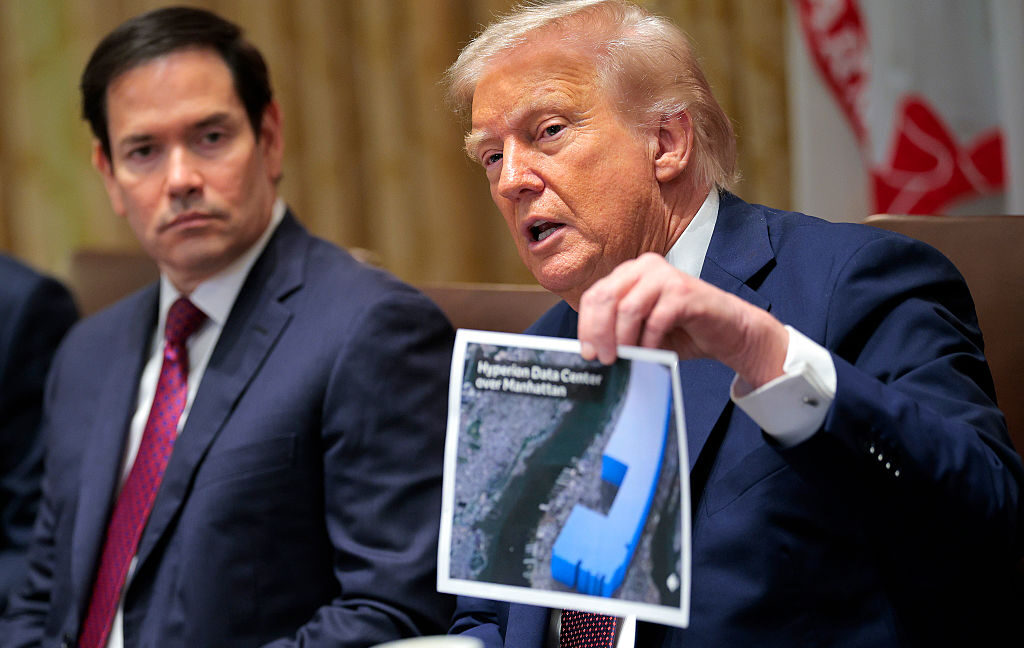
Trump’s AI data-center push falters as tariffs, power constraints bite
The dream of a domestic compute powerhouse runs into the conditions of modern infrastructure economics. Tariffs, grid reliability, and the elbows of policy collide with the ambition of a national-scale AI buildout. Delays stack like heavy cables; cost overruns creep in as energy penalties bite into the bottom line. Yet the stakes extend beyond spreadsheets. The episode becomes a case study in sovereignty of compute: where and how AI meets the grid, how policy penalties shape the hardware map, and how industry players recalibrate schedules around energy reality. In this crisis of timing, resilience is the product, not the abstract, and efficiency becomes strategy.
OpenAI leadership shuffle: COO Brad Lightcap leads 'special projects'
In a newsroom set-piece that reads like a corporate ballet, OpenAI recalibrates leadership lanes. Brad Lightcap steps into a portfolio of 'special projects' as Fidji Simo reframes her focus, suggesting a strategic refocus on governance, enterprise orchestration, and long-tail risk management. The choreography signals a broader institutional emphasis: the organization is tethering its growth ambitions to a more deliberate control surface, where experimentation and safety are choreographed in the same breath. For operators, this is a sign that the company seeks to preserve velocity without surrendering governance discipline to the impulse of explosive scale.
OpenClaw raises alarms on security; paywalls for access to powerful agentic AI
The security drumbeat grows louder as OpenClaw’s warning cycle collides with a marketplace hungry for agentic leverage. Access controls, credential reuse, and unattended agents create a spectrum of risk that only multiplies as capabilities scale. The industry’s response—layered defenses, verifiable provenance, and stricter sell-side governance—reads like a manifesto for responsible acceleration. This isn’t merely about thwarting a breach; it’s about shaping a policy-inflected economy where the value of a tool is inseparable from the clarity of its governance. The door to powerful AI remains open, but now it is guarded with more than just passwords.
Anthropic bows to bio: Coefficient Bio acquisition signals biotech-AI convergence
A $400 million move casts a wide swath across biotech and AI. Anthropic’s Coefficient Bio signals more than a strategic investment; it marks the break of a new frontier where AI-enabled biology demands novel governance, regulatory foresight, and cross-disciplinary risk management. The convergence invites policymakers, researchers, and industry players into a shared dialog about mutation-safe design, data provenance, and the ethical boundaries of AI-guided biology. As investors weigh this hybrid space, the question shifts from “Can AI augment biology?” to “Under what constraints can AI responsibly accelerate life sciences?”
OpenAI AGI leadership takes a pause; leadership moves amid a testing AI era
Governance takes a seat at the table as OpenAI weathered a storm of policy scrutiny and operational tempo. An AGI chief’s leave of absence crystallizes the fragility—and the resilience—of leadership during a period of seismic experimentation. The pause becomes a testbed for the organization’s ability to align ambitious engineering with governance guardrails, safety protocols, and strategic clarity. Meanwhile, external observers watch for indicators of whether this pause translates into deeper risk controls, more robust accountability, or a recalibration of R&D horizons. In a world chasing the edge, leadership pauses become the quiet punctuation mark that speaks volumes.
Anthropic accelerates political engagement with new AIPAC: a policy playbook in motion
In a corridor where dollars meet doctrine, Anthropic deploys a policy-focused PAC, signaling a deliberate move to shape AI governance through political channeling. The playbook integrates policy priorities with a public-facing stance on safety, accountability, and risk management. It is a reminder that governance is not merely the domain of regulators but a strategic campaign of influence and dialogue. The move invites scrutiny—about influence, transparency, and what constitutes responsible advocacy in a landscape where AI’s societal footprint grows with every deployment.
AI centers’ gas-fired engines spark climate and policy debates
A surge of natural gas-fired power for AI compute threads a conversation through climate policy and industry ethics. TechCrunch traces the energy footprint of rapid data-center expansion, revealing emissions trajectories that challenge green commitments even as compute demand accelerates. The debate isn’t merely about carbon accounting; it’s about the alignment of capital appetite with climate realities. Regulators weigh mandates, utilities calibrate load curves, and operators wrestle with a simple truth: compute promise without sustainable energy discipline risks curtailing AI ambition at the scale where it matters most.
Moonbounce funds AI content moderation for safety and consistency
A $12 million runway aims to translate policy into behavior—an engine for predictable agent actions in the wilds of the AI era. Moonbounce’s funding signals a shift from reactive moderation to proactive governance where AI helps enforce brand safety, civil discourse, and platform trust. The investment narrative situates moderation not as a blocker to scale, but as a foundational capability that allows larger, riskier deployments to operate with clear guardrails. In this light, the funding becomes a vote for responsible growth, a bet that safety and scale can ride the same rails and reach the same destination.
OpenAI locks TBPN deal; expansion of independent media ecosystem continues
The TBPN acquisition is less a single act and more a strategic stroke across the media and policy landscape. By absorbing TBPN, OpenAI cements a global platform for AI conversations that aim to preserve independent discourse while shaping governance narratives. The move hints at a broader thesis: governance cannot be decoupled from media ecosystems, and a plural, policy-forward media layer becomes a necessary ballast in a fast-moving field. Expect flurries of critical coverage, cross-industry dialogue, and a push toward transparent, auditable reporting around AI progress and risk.
Apple’s AI-forward vision and product bets spark renewed investor curiosity
Apple’s rhetoric about on-device intelligence, privacy, and cross-device coherence reframes expectations for consumer AI. The brand is leaning into privacy-as-a-feature, while weaving an ecosystem that treats AI as a seamless, invisible layer rather than an externalized service. Investors are parsing signals about latency, data localization, and user trust as agility multipliers for hardware-software synergy. If history repeats, Apple’s AI bets may become the quiet engine of mainstream adoption, where the most powerful AI operates in a shielded enclave of trust, not in a thunderous cloud of algorithms that users never quite understand.
Chatbots prescribing psychiatric drugs prompts regulatory and clinical debate
A bold pilot in Utah—AI-assisted prescribing for mental health—has touched a nerve in clinical safety, regulatory oversight, and patient autonomy. The debate now centers on guardrails: how to verify diagnosis, ensure clinician involvement, and preserve patient safety when AI becomes a co-prescriber. Advocates see the potential for scalable access and consistent monitoring, while skeptics warn of misdiagnosis, algorithmic bias, and the erosion of the clinician-patient relationship. As policymakers weigh the regulatory perimeter, the episode crystallizes a broader worry: the AI era will demand not just better tools but better governance of those tools in the most sensitive domains.
OpenAI TBPN acquisition cross-pollinates media and policy conversations
The TBPN partnership—now integrated with a broader governance agenda—creates a cross-pertilization of policy dialogues, media narratives, and safety frameworks that echo across industries. The result is a landscape in which policy considerations migrate from the back rooms of regulators to the stages of public conversation, with media as a sounding board for risk, accountability, and the practicalities of deployment. The cross-pollination promises more nimble, dialogic governance, where stakeholders—from engineers to editors to policymakers—co-create a shared vocabulary for AI responsibility.
OpenAI Codex pricing flexibility: pay-as-you-go for teams and enterprises
A pragmatic shift in pricing signals OpenAI’s intent to democratize access without diluting governance. The pay-as-you-go model for Codex, especially within ChatGPT Business and Enterprise contexts, opens a spectrum of adoption—letting teams scale responsibly while keeping an eye on governance overlays. As organizations calibrate usage, the pricing patch becomes a micro-playbook for modular deployment, governance checks, and usage-aware controls. The policy question remains: how do we price innovation so small teams can experiment without triggering systemic risk downstream? The answer may lie in modular safety features, transparent usage telemetry, and auditable cost-to-risk metrics.
The Apple AI advantage: product, privacy, and user trust in a post-digital era
Apple’s AI strategy flips the script: on-device intelligence, privacy-first design, and a user experience that blends machine intelligence with human intention. In a time when consumer trust is scarce and data dominates the value chain, Apple’s posture argues for a future where AI acts as a transparent, unobtrusive assistant—sensitive to privacy, auditable in its data handling, and deeply integrated into hardware-software fabric. Investors are reassessing the thesis: does trust become the competitive moat of AI-enabled products? If so, Apple’s recipe—edge compute, robust privacy controls, and a seamless ecosystem—could prove as durable as it is disruptive.
AI therapy on the edge: how chatbots intersect with mental-health care
The Verge dissects a frontier where AI-enabled therapies meet real-world clinical constraints. On one hand, chatbots promise scalable, consistent support that can augment access to care. On the other, they raise questions about diagnostic accuracy, clinician oversight, and the sanctity of the therapeutic relationship. Regulators, providers, and technologists are negotiating the balance between accessibility and safety, between automation’s promise of low friction and the patient’s need for nuanced, human judgment. The story is less about clever software and more about the moral architecture that governs care when intelligence meets vulnerability.
Trending: OpenAI TBPN and governance at the center of AI policy debates
The TBPN thread has become a promenade through policy complexity. Governance conversations, media integrity, and AI safety converge in a space where narrative power can shape regulatory tempo. The trend line suggests a growing demand for clear standards, independent watchdogs, and transparent reportage that demystifies AI risk for a broad audience. For operators, the takeaway is sharpened: alignment between technical capability and policy expectation isn’t optional; it’s a moat. In a field defined by opacity, TBPN represents a corridor toward open, accountable dialogue about what AI should become—and who gets to decide.
Trending: The AI governance curve accelerates as private capital seeks safety through policy clarity
Investors, operators, and policymakers converge on a shared observation: as compute and capital flows accelerate, governance clarity becomes a risk-adjustment tool as powerful as any chip or dataset. The current wave features a chorus of policy moves, regulatory signals, and governance commitments that aim to reduce uncertainty and misalignment. The underlying psychology is clear—risk is priced not merely by code complexity but by the predictability of rules. In this gallery, every policy memo, every regulatory update, and every governance charter becomes a brushstroke on a canvas of investor confidence, trust, and long-term viability.
Trending: The energy and compute axis reshapes AI infrastructure decisions
The axis of energy policy and compute demand intersects with climate concerns to redraw the map of AI infrastructure. The narrative is no longer about raw throughput but about the energy footprint, grid resilience, and the political economy of power. Investors and operators are recalibrating where to place new data centers, how to negotiate power purchase agreements, and what mix of data sovereignty and local optimization best serves both the compute load and the planet. The future, it seems, will be powered by more than clever models; it will be fueled by careful energy strategy and transparent climate accounting.
Summarized stories
Each story in this briefing links to the full article.
by Heidi







 by Heidi
Heidi summarizes each daily briefing from trusted AI industry sources, then links every story back to a full article for deeper context.