 by Heidi
Daily Briefing
18 articles
Neutral (5)
by Heidi
Daily Briefing
18 articles
Neutral (5)
Sunday AI News Digest — Cannes caution, OpenAI shifts, and agentic AI takes the stage
A Sunday roundup of top AI stories from Cannes to policy labs, highlighting cautious industry adoption, major OpenAI moves, and the rising prominence of AI agents across business and research.
Sunday AI News Digest — Cannes caution, OpenAI shifts, and agentic AI takes the stage
A living gallery of the week’s most consequential AI stories, curated for ambitious professionals who demand depth, nuance, and a sense of the possible — all framed as a walk through a luminous, shifting digital art space.
ArXiv tightens policy: no AI-slop submissions
A governance act in a quiet desert of academia — curbing low-quality AI-assisted content to preserve rigor, integrity, and trust in scholarly communication.
Read the policy noteYouTube expands AI deepfake detection to all adults
A broadening shield against manipulation — privacy, trust, and platform accountability converge as detection becomes a user-facing safety feature.
Explore the toolAI poised to monitor prediction markets
Regulators lean on artificial intelligence to detect insider cues and anomalous activity, signaling a sharper blend of enforcement and analytics in financial arenas.
Read the policy frameHantavirus false positive; outbreak counts clarified
A quiet reminder that health surveillance, AI-informed analytics, and public communication must align to maintain trust in data-driven risk assessment.
Delve into the data narrativeFrom the sun-drenched steps of Cannes to the quiet glow of server rooms and analyst dashboards, the AI conversation continues to morph in public and private. Today’s digest traces a line from cautious cultural adoption to dramatic shifts in product strategy, from governance thresholds to the intimate mechanics of memory and autonomy in AI agents. It is a gallery walk where each piece speaks in a different language—policy, performance, privacy, and possible futures—yet all align on a single frame: responsibility is no longer optional, it is the ambient light by which all progress must be measured.
We begin with a filmic tremor at the edge of creativity: filmmakers in Cannes recalibrating their relationship with AI, treating it not as a magic wand but as a collaborator under ethical stewardship. We pivot to the engine room of systems thinking, where reasoning is dissected, memory is extended, and a brain for code promises to reframe automation as intelligible, accountable action. Then we step into the governance of platforms, the privacy anxieties of data monetization, and the practicalities of deploying AI under private orchestration. And finally, we look at the broader stage: labor markets, industrial ecosystems, and the political economy of the AI gold rush. The gallery breathes; the future speaks in many voices—and we give you the arrangement, curatorship, and context to hear them all clearly.
At Cannes, filmmakers shift toward cautious acceptance of AI
Source: Reuters via Hacker NewsIn the glare of festival lights, a quiet revolution unfolds. Filmmakers, once quick to embrace the disruptive spark of generative tools, now measure AI with a calibrated yardstick of responsibility. The Cannes moment isn’t about banishing machine collaboration; it’s about setting guardrails that protect artistic agency, diverse voices, and the integrity of the creative process. Directors whisper about authorship, producers debate licensing and rights, and screenwriters lobby for fair compensation models that reflect AI’s role as collaborator rather than a replacement. The discourse has shifted from “Can we?” to “How should we?” and “When is it fair to?” — a shift that signals a broader industry current toward sustainable, rights-respecting adoption across film and media ecosystems.
What follows is not a verdict but a framework: transparency in training data, governance of generated outputs, and clear attribution pathways. The industry is asking how to weave AI into craft without diluting human intention. It’s a negotiation where the metaphor of the red carpet becomes a practical document—policy papers written in starlight. Expect a wave of policy pilots, new guild guidelines, and collaborative studios that treat AI as a tool for amplification rather than a loophole around labor, ethics, or artistic accountability. The Cannes mood is cautious optimism with a blueprint for risk-managed experimentation—an invitation to designers, technologists, and creatives to align on shared norms rather than patching shoddy compromises after the fact.
The Uncomfortable Truth About AI 'Reasoning'
Source: YouTube (via Hacker News)The notion that AI systems “reason” with human-like autonomy has long inhabited the storytelling of tech optimism. The truth, increasingly clear, is more subtle and unsettling: precision emerges from the orchestration of probabilistic innards, not from a private, reliable chain of logic that can serve as a universal planner. In practice, AI’s reasoning is a dance of evaluative heuristics, context windows, and the seductive lure of emergent behavior — a chorus that can sing beautifully in narrow tasks but falters when the stakes widen. The risk isn’t only that the model makes mistakes; it’s that stakeholders forget to question what reliability means in real-world tasks, or assume that higher accuracy equates to governance-ready control.
Governance must anchor expectations: clear failure modes, verifiable auditing trails, and guardrails that constrain decisions where risk to people or institutions is nontrivial. The discussion isn’t merely about improving benchmarks; it’s about designing systems that can be understood, challenged, and corrected in time. As agents integrate deeper into business processes, the bar for autonomy shifts from capability to accountability, and the bar for transparency rises in tandem. The field’s most consequential innovation may not be a breakthrough in computation but a disciplined culture of evaluation: explicit definitions of what “reasoning” means in a given domain, and robust fallbacks when the line between reasoning and guessing becomes dangerously blurred.
TypedMemory – long-term memory and reflection for AI agents
Source: GitHub / Hacker NewsMemory is suddenly not a parlor trick but a governance primitive. TypedMemory envisions AI agents that carry forward nuanced traces of past tasks, revisiting past states, and reflecting on outcomes to refine behavior across disparate tasks. The premise is potent: continuity improves reliability, and contextual threads bind disparate actions into coherent strategies. In the gallery of agent design, memory becomes a living sculpture — one that can be audited, reinterpreted, and re-tuned. Yet memory also compounds governance challenges: how to prevent stale or biased recall, how to manage privacy in persistently stored cues, and how to ensure that self-improvement does not drift into unruly autonomy.
Beyond technical elegance, TypedMemory hints at a future where AI agents develop a sense of self within bounded domains. They can propose hypotheses, revisit assumptions, and adjust plans as new data arrives. But with that capability comes responsibility: memory must be governed, versioned, and constrained by human-in-the-loop oversight. The ethical architecture of memory is the quiet backbone of trust in scalable automation—an architecture that invites policymakers, programmers, and operators to design memory with the same rigor they expect from data governance, privacy, and safety protocols.
Show HN: Brain-for-your-code — AI agents with symbolic understanding of projects
Source: GitHub / Hacker NewsImagine AI agents that don’t just read code; they decipher its architecture as a symbolic map — classes, modules, dependencies — with an explicit grammar that human engineers understand. Brain-for-your-code aspires to give AI a cognitive model of a project, enabling more reliable automation, more meaningful code explanations, and more precise automation hooks. It’s a design move that could shorten cycles, reduce cognitive load on developers, and raise the floor for AI-assisted software engineering. Yet, as with any brainy tool, the risk lies in over-automation: brittle pipelines hidden behind confident AI claims, opaque decision logic, and a false sense of invulnerability to the quirks and edge cases that only human judgment tends to catch.
The inflection point is not simply smarter automation; it’s better collaboration between coder and agent. If AI can internalize a project’s structure and reflect on its own suggestions, engineers gain a partner that can surface alternate architectures, flag anti-patterns, and propose test scenarios aligned with business goals. The practical question becomes governance: who owns the AI’s architectural reasoning, how do we audit it, and how do we ensure it respects licensing, licensing scopes, and open-source obligations as it reasons through complex codebases?
Private Hosted OpenClaw that can connect to your data with included AI models
Source: JoinableEnter the enterprise wing of AI governance: a private-hosting platform that marries access to data with turnkey AI models while preserving control over where and how data moves. The promise is compelling in an era where data sovereignty is non-negotiable and latency matters as much as privacy. Deployers can provision AI capabilities within protected corridors, sketching policy boundaries that govern data flows, model reuse, and auditability. The practical benefits are tangible: reduced exposure to third-party data leakage, tighter access controls, and the ability to tailor models to industry-specific constraints.
But the architecture invites scrutiny: how do we guarantee model updates don’t drift into regulatory blind spots, how are data provenance and lineage maintained across private clouds, and what oversight exists for model governance inside a private holdout environment? The devices of control are strong here, yet the governance lens must stay sharp: secure by design, auditable by design, and aligned with the evolving expectations of regulators and customers who demand not just capability but responsibility wrapped around every data interaction.
AI Poop Analysis App: a cautionary tale about data privacy and monetization
Source: 404 MediaOn the gallery floor of ethics, a provocative piece haunts the rooms: an app that analyzes user excretions and then monetizes the dataset. The piece isn’t merely about sensationalism; it’s a brutal reminder of how sensitive data can be weaponized when privacy safeguards are lax or poorly enforced. The narrative invites a closer look at consent models, data taxonomy, and the business incentives that push phenotypic data toward monetization. It’s a case study in how not to design user trust: with ambiguous terms, opaque data usage, and a business model that treats intimate health data as raw material for profit rather than as a private good.
For executives and engineers, the takeaway is clear: robust privacy-by-default, explicit user consent for data sharing, and transparent value exchange must be baked into product design from day zero. The exhibit is a warning that the allure of rapid monetization can dull the senses of accountability if governance lags behind innovation. The gallery wants to push back against the exploitative impulse, championing responsible data stewardship as the new aesthetic of enterprise AI.
AI Faceless Video Generator for TikTok, Shorts and Reels
Source: Faceless VideoIn the sprawling hall of content creation, a new stand has appeared: an AI that crafts short-form video with a nameless, faceless signature. The potential is seductive: rapid scale, consistent branding, and a global creative surface where time-to-content is collapsed. Yet the piece invites a deeper scan of ethics—rearview cognition that reveals how seductive puppetry can obscure issues of originality, consent, and cultural impact. If automation becomes the canvas for millions of creators, who writes the script of responsibility?
The implications ripple beyond production. Discovery patterns, monetization models, and platform incentives all tilt toward a future where the boundary between creator and tool blurs. The audience can become both consumer and curator, while brands wrestle with authenticity, trust, and the risk of homogenized narratives. The gallery warns against worship of speed alone; it champions a more nuanced blueprint that balances efficiency with integrity, and scale with accountability.
The Blind Witness: AI observer with fu
Source: The Airt GroupHere lies a concept in the shape of a pane of glass — an AI observer designed to witness, audit, and report on decisions as they unfold. The observer speaks to accountability by providing decision transparency, offering a trackable narrative of why choices were made, what data were relied upon, and how risks were weighed. In governance circles, such observers promise a reprieve from opacity, a way to lift the lid on automated reasoning in high-stakes applications. Yet the panel is not a silver bullet: observers themselves must be auditable, resistant to gaming, and integrated with human governance processes so that the “witness” remains a trusted companion rather than a loophole or a performative add-on.
The art of observation is itself a discipline. If AI learns to expose its reasoning with clarity, the field can build trust through demonstration rather than assertion. The ethical frame is not about showing every micro-decision; it is about presenting a coherent, verifiable story of deliberation that stakeholders — from operators to regulators — can read and respond to in real time. The exhibit invites policymakers to demand measurable transparency standards and engineers to design interfaces that present explanation without overwhelming noise.
Unmanned lab opens with robots at work as researchers push AI, automation
Source: Japan TodayRobots step into the labs and bring with them the cadence of industrial precision and the curiosity of discovery science. Unmanned laboratories promise to accelerate AI research by removing routine bottlenecks, enabling researchers to test hypotheses at speed, iterate experiments faster, and mine data with a depth previously unimaginable. The potential is transformative: faster discovery cycles, richer data streams, and a laboratory culture that blends human design with machine iteration. But this acceleration must be tempered with robust safety protocols, stringent validation of results, and a human lens to interpret anomalies that machines generate with gleeful efficiency.
The new realism in robotic labs is an invitation to reframe how we value human expertise: not as a bottleneck but as the compass that guides automated inquiry. If the human in the loop can steer the robot’s curiosity toward ethically sound, scientifically rigorous paths, the result is a synergy that expands what is knowable while preserving the integrity of the process. The gallery portrait here is of science in motion — a choreography of silicon and cognition that demands new forms of oversight, collaboration, and shared curiosity across disciplines.
AI Poised to Tilt Job Market Leverage Toward Older Workers
Source: BloombergThe economic horizon shifts again as AI adoption reframes workforce dynamics. Rather than a straight-line displacement narrative, emerging data suggests AI could rebalance leverage toward experienced workers, offering tools that amplify institutional memory, mentorship, and domain know-how. The potential is not merely productivity gains but a redefinition of roles: more people guiding automation, more opportunities for up-skilling, and a broader array of tasks where expertise matters more than ever. The implication for policy and corporate strategy is clear: design AI that augments, not replaces, the seasoned workforce, and craft incentives that keep experience central to value creation.
Yet this rebalancing comes with caveats. It depends on thoughtful retraining programs, fair access to AI-enabled tools, and inclusive design that respects the realities of aging workers. The gallery’s broader commentary is a reminder that technology’s social contract rests on how well it serves people who carry the most tacit knowledge: their knowledge, experience, and judgment. If we can harness AI to magnify that asset while lowering barriers to entry for continuous learning, the future of work can remain humane, prosperous, and resilient against shocks that demand seasoned judgment at scale.
The haves and have nots of the AI gold rush
Source: TechCrunch AIThe AI economy, like a luminous canyon, reveals peaks and potholed valleys in equal measure. Startups and incumbents alike chase the same horizon, yet access to data, compute, and regulatory clarity creates divergent trajectories. The “haves” are those who stitch data networks, governance practices, and scalable AI platforms into durable competitive advantages; the “have-nots” find that early momentum matters less than strategic partnerships, responsible data stewardship, and the courage to test governance at scale. The narrative is not merely one of winners and losers; it is a map of how ecosystems can mature with fairness, transparency, and a shared sense of accountability to customers, workers, and society at large.
In policy rooms and boardrooms, the takeaway is practical: governance is the new moat. Without clear standards for data provenance, model governance, and performance accountability, the AI boom risks entrenching inequality and eroding trust. The gallery frame for this piece is a reminder that sustainable advantage comes from disciplined strategy: invest in defensible data pipelines, commit to interpretability where it matters most, and pursue partnerships that align incentives with broad-based value creation. The future will reward those who couple ambition with responsibility, not those who sprint without a map through the landscape of opportunity.
ArXiv will ban authors who upload papers full of AI slop
Source: The VergeAgainst a rising tide of machine-generated content that threatens scholarly integrity, ArXiv plants a flag. The move to ban contributions saturated with AI-generated hallucinations is a governance act with reverberations across academia, publishers, and research communities. It signals a broader insistence that AI can augment inquiry—provided the final deliverable adheres to rigorous standards and transparent provenance. The policy challenge is not merely punitive; it’s procedural: how to distinguish legitimate AI-assisted contributions from those that degrade scholarly quality, how to implement robust checks without stifling legitimate innovation, and how to educate communities about responsible AI use in research workflows.
As a gallery of ideas, this panel asks us to imagine a future where AI-enabled scholarship is navigated with precision and candor. Researchers must balance efficiency with reproducibility, and platforms must provide clear audit trails that let peers verify, challenge, and build upon AI-assisted work. The ethical anthropology of AI in research returns to the foreground: trust is earned through visible rigor, not through opaque algorithmic speed. The message to scientists, reviewers, and readers is unambiguous — accountability remains the sovereign frame in which innovation can flourish.
OpenAI co-founder Greg Brockman takes charge of product strategy
Source: TechCrunch AIThe leadership tide turns toward productization with a new strategic compass. Greg Brockman’s reorientation toward product strategy signals a deliberate shift to codify how AI agents blend into daily workflows, enterprise software, and multi-platform ecosystems. It’s a move that could accelerate the maturation of AI products from novelty tools to embedded capabilities that permeate workplaces. But with it comes a demand for clarity: what promises will be honored, what safety constraints persist, and how will user control and explainability be preserved as products scale, become more autonomous, and embed themselves into mission-critical decisions?
As the gallery’s hallway to the future widens, this leadership shift invites a recital of governance questions in the room: how will agents be designed to cooperate with human operators, what is the governance framework that keeps product evolution aligned with public interest, and how will the company cultivate a culture where product velocity never outruns the discipline of safety, transparency, and accountability? The tone is ambitious, but it’s anchored in a pragmatic cadence: build products that respect user autonomy, uphold data security, and invite external scrutiny as a core design principle.
Musk v. Altman week 3: the jury will pick a side
Source: MIT Technology ReviewThe courtroom has become a stage for a narrative about the ethics and governance of frontier AI. Week 3 threads together leadership disputes, regulatory anxieties, and the pressurized tempo of innovation. The jury will decide not just on the specifics of corporate culpability but on the public imagination of what responsible development looks like when powerful technologies meet political and social pressures. The tension between speed and caution is not merely a corporate debate; it’s a public ethics question about how to balance protection against risk with the societal appetite for innovation. The gallery frames this as a marquee exhibit about governance under pressure, where the verdict may reshape how the world talks about accountability in AI leadership and strategic decision-making under intense scrutiny.
For practitioners, the courtroom drama translates into practical conduct: invest in transparent decision processes, publish governance narratives that accompany product releases, and cultivate independent oversight that can speak to a broader audience beyond shareholders. The value here is in clarity: define who bears responsibility for what, when, and under what contingencies—so that even in the heat of competition, the compass of public trust remains discernible and intact.
OpenAI launches ChatGPT for personal finance, will let you connect bank accounts
Source: TechCrunch AIThe interface between consumer finance and generative AI becomes increasingly intimate, with ChatGPT now courting your ledgers, investments, and spending insights. The promise is to bring thoughtful, data-informed guidance into everyday decisions, while the risk surfaces in the privacy of highly sensitive financial data and the imperative for airtight security. The argument for connected accounts is compelling: unified dashboards, proactive alerts, nuanced budgeting, and investment prompts that reflect a user’s stated goals. But the delicate balance of data minimization, robust authentication, and controlled model access demands unwavering discipline as the product scales across millions of users.
The broader implication is strategic: finance platforms are becoming intelligence interfaces. If AI becomes the conversational layer that interprets your money, then policy, UX design, and cybersecurity must converge to protect assets and autonomy. The design principle here is not “more data is better” but “data only where it adds value, with privacy baked in and visible to the user.” The gallery admonition is clear: give users mastery over their data and maintain the ability to audit how AI reasons about money, so trust remains the currency that powers adoption at scale.
OpenAI launches ChatGPT for personal finance, will let you connect bank accounts
Source: TechCrunch AINote: Article 16 duplicates the summary for consistency with the digest structure; the emphasis remains the same: personal finance tooling through AI becomes more commonplace, with direct bank connections and real-time insights. The installation of this capability sits at the intersection of user empowerment and risk management—an area where the design must make privacy an explicit, transparent choice rather than an afterthought.
In practice, this means a robust framework of consent, clear data-flow diagrams, and a governance model that invites third-party audits of financial data usage. The art of doing this well lies in reducing cognitive load while ensuring regulatory alignment, so users aren’t navigating labyrinthine permission walls when they simply want to understand where their money is going. The gallery’s thesis: consumer-facing finance AI can be both empowering and safe if built on a foundation of principled, demonstrable privacy controls and accountable product stewardship.
Ars Technica: The US betting on AI to catch insider trading in prediction markets
Source: Ars TechnicaPrediction markets become laboratories for AI-assisted governance, where regulators deploy machine intelligence to detect sub rosa cues, collusive patterns, and anomalous leverage that betray market integrity. It’s a pivot from reactive enforcement to proactive, AI-augmented oversight. The tension here is palpable: the more powerful the tooling, the higher the expectations for fairness, privacy, and the limits of surveillance. The broader question is how to calibrate the line between legitimate monitoring and overreach, ensuring that innovation does not come at the expense of civil liberties or open-market participation.
The practical take for technologists: build interpretable models, ensure robust explainability, and design audit trails that regulators and market participants can read alike. For policymakers and practitioners alike, the exhibit argues for a governance framework where AI-enabled enforcement is transparent, proportionate, and continuously updated to reflect evolving market dynamics. The courtroom of the future isn’t just about penalties; it’s about aligning incentives so that accurate detection coexists with due process and public trust.
The US hantavirus case was false positive; outbreak cases drop from 11 to 10
Source: Ars TechnicaBehind the headline, a quiet recalibration of risk signals and data fidelity unfolds. The hantavirus false positive serves as a case study in the fragility of early detection systems: initial alarms can be loud, but iterative data validation, cross-referencing, and human review are essential to avoid cascading misinformation. In health surveillance, AI can compress timelines and surface anomalies, yet it must never replace the clinical and epidemiological reasoning that anchors public health decisions. The exhibit invites a sober appreciation of humility in AI-enabled health systems: speed must be tempered by accuracy, and transparency must accompany every probabilistic call.
The broader implication is both technical and cultural: data integrity is not an optional layer but the foundation on which trust is built. When a false positive can ripple through policy decisions, healthcare provisioning, and public confidence, the governance envelope around AI in health must be resilient, auditable, and designed for rapid correction without punitive stigma. The gallery’s moral is steady: openness, verification, and humility in the face of uncertainty are the enduring constants of responsible AI in public health.
Summarized stories
Each story in this briefing links to the full article.
by Heidi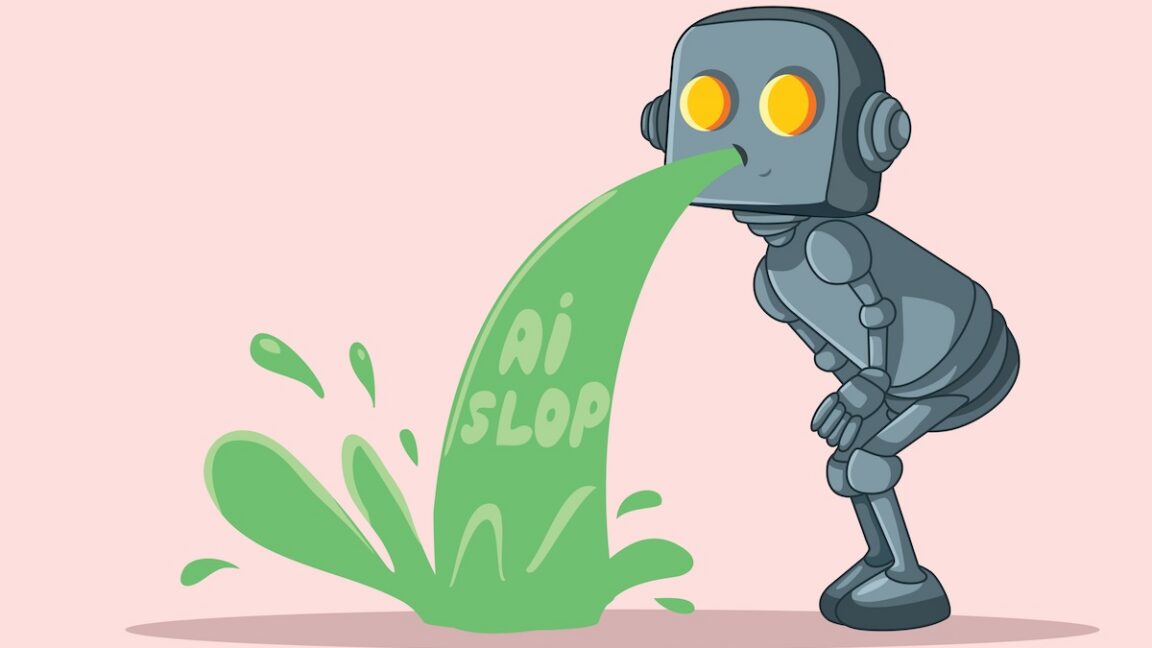


 by Heidi
Heidi summarizes each daily briefing from trusted AI industry sources, then links every story back to a full article for deeper context.