 by Heidi
Daily Briefing
18 articles
Neutral (2)
by Heidi
Daily Briefing
18 articles
Neutral (2)
Friday AI Pulse: OpenAI, Google, Spotify, and SpaceX—a sharp, action-packed AI futures briefing
A Friday deep-dive into AI momentum—from SpaceX’s orbital data-center bets and OpenAI policy frictions to Spotify’s AI remix factory and Google’s agent ecosystem—with practical takeaways for developers, operators, and policy makers.
Friday AI Pulse: OpenAI, Google, Spotify, and SpaceX — a sharp, action-packed AI futures briefing
A living gallery of bets, governance, creativity, and risk — 18 new threads you can see, hear, and feel as the day unfolds.
Orbital ambitions — SpaceX’s bet on data from the heavens
The day’s first wall speaks in a language SpaceX has become fluent in: compute as a strategic frontier, not merely a datacenter. While the internet of things and cloud economies swirl with promises of ubiquity, a crucial tension remains: where will the next wave of AI-intensive workloads actually run? SpaceX’s pivot toward orbital data centers reframes the question from “who owns the data center footprint?” to “who owns the physics of computation across space and time?” The industry’s tempo has shifted from on-prem clusters to distributed platforms that magnetize latency, energy, and autonomy into a single, risky bet.
In this opening gallery, we align three currents: SpaceX’s bold wager to compress compute into orbit, the undercurrent of Grok’s lag, and a broader ecosystem that expects compute to scale as a strategic asset rather than a mere cost center. The era of centralized golden geographies — silicon valleys and coastal campuses — is dissolving into a map of assets anchored not just on earth, but in geostationary and low-Earth orbits. What follows is a curated triad of perspectives that illuminate the path forward.
As Grok flounders, SpaceX bets future on beating Big Tech at AI
SpaceX’s pivot to orbital compute reframes the race: not merely who ships the fastest model, but who can offer deterministic, scalable latency and energy efficiency across continents and continents of air. The piece sketches a pathway where SpaceX argues for a hardware-software fusion that leans on satellite-linked data centers to bypass traditional telecom chokepoints, threatening a two-front war with the cloud giants who still rely on terrestrial backbones. The strategic wager, while audacious, targets a fundamental truth: AI workloads crave proximity to data, and the heavens may be the closest new home for some segments of compute.
Roundtables: Can AI Learn to Understand the World?
The question of world models—AI’s capacity to anchor its assessments in a consistent, external reality—has moved from theoretical debate to pragmatic design. The roundtable lens reveals a field racing to embed causality, temporal continuity, and shared referents into models that have historically thrived on correlations. The discussion isn’t merely about better accuracy; it’s about durable context, auditable behavior, and the ethics of a system that can be trusted to navigate a complex, changing world without becoming a polemic or a prankster.
All of the updates from Elon Musk and Sam Altman’s battle over OpenAI
The governance fracas around OpenAI is less a corporate skirmish than a referendum on the industry’s future risk profile. The thread maps a policy horizon where boardroom calculus intersects with regulatory pressure, investor patience, and the public’s appetite for accountability. It’s a reminder that the speed of AI innovation must be matched by a discipline for governance, safety, and long-term stewardship when the line between product strategy and public obligation grows increasingly porous.
Governance, licensing, and the rules of a new creative economy
If the prior panel asked whether compute can scale across orbit or be anchored to an external reality, this one asks how meaning is licensed, how culture is protected, and who actually controls the story. The AI era is surfacing a set of tensions: the tension between rapid experimentation and responsible governance; between fan-generated creativity and the rights of original authors; between private licensing frameworks and the open-ended possibilities of machine creativity. The stage is crowded with executives who must balance ambition with compliance, and with creators who demand both access and protection.
Three threads anchor this wall: a culture of critique in the wake of corporate AI leadership, a licensing regime that enables fan-driven innovation while compensating artists, and the expansion of AI-driven workflows that reframe work as a dynamic collaboration between human imagination and machine-assisted process.
In desperate times, graduates find hope in humiliating tech CEOs
The commencement ritual becomes a social commentary on the AI era’s whirlwind of hype and risk. Graduates subvert the heroic CEO figure, turning public-facing AI into a critique of governance, ethics, and responsibility. The moment is less about derision than a call to reframe leadership as accountable stewardship—an invitation to build, not merely spectacle, with algorithms that must earn trust through humility, transparency, and a clear human center.
Spotify and Universal Music strike deal allowing fan-made AI covers and remixes
A landmark licensing framework reshapes the microphone’s reach: fans may generate AI-assisted covers and remixes while sharing royalties with artists. The arrangement signals a willingness to reimagine rights for a creative economy that thrives on participation, while insisting on fair compensation. It’s a blueprint for how licenses can align incentives, enabling mass experimentation without drowning creators in ambiguity.
Six search engines worth trying now that Google isn’t really Google anymore
A field guide to AI-powered search that challenges incumbents and reinvigorates user control. The piece surveys engines that prioritize privacy, transparency, and user sovereignty over results. It’s a reminder that the future of search isn’t a single monolith; it’s a federation of experiences designed to let people supervise their own data and curate their own truth.
Scaling creativity in the age of AI
The gallery’s third frame leans into the art of making: how AI shapes storytelling, human expression, and the governance of culture. MIT’s roundtables, The Verge’s reflections on the tech culture, and a chorus of startups reframe creativity as a shared habitat where humans and machines co-author meaning. It’s not simply “more AI.” It’s “more human creativity enabled, with guardrails and context.” The tension between novelty and responsibility becomes the curatorial spine for this wall.
We watch three currents converge: a renaissance of storytelling under AI’s guidance, the ethical and regulatory anxieties that accompany boundary-pushing experiments, and a market in which artists, platforms, and fans navigate licensing, attribution, and revenue in real time.
Scaling creativity in the age of AI
A meditation on how AI can expand the palette of human expression without erasing the author’s voice. The article dissects the evolving dance between machine-generated structure and human nuance, arguing that the most compelling outcomes emerge when AI handles the scaffolding—narrative pacing, texture, and fusion—while people curate intent, meaning, and ethical guardrails. The result is creative amplification, not replacement, echoing through classrooms, studios, and studios of the imagination.
Trump delays AI security executive order, saying language ‘could have been a blocker’
A pause that underlines regulatory fragility. The delay signals how political calculations and technical complexity collide in shaping safety reviews and deployment timelines. The piece reads like an intermission in a long orchestra of policy: a reminder that governance isn’t a backdrop but an instrument, capable of turning a crescendo of innovation into a sustainable, well-tempered suite of technologies.
This AI guitar pedal let me roll my own effects
A tangible reminder that AI’s reach into the studio isn’t only about massive models; it’s about tactile, performative tools that reframe how artists sculpt timbre in real time. The guitar pedal becomes a laboratory for experimentation, a bridge between craft and computation, where latency, nuance, and personality fuse into a new sonic signature.
Personalized media factories — AI agents, Q&A, and briefing at scale
The fourth wall shifts our gaze toward the consumer experience: AI agents that curate, assemble, and annotate media on behalf of listeners and viewers. Spotify leads a wave of personalization tools that do not simply predict what you want next; they generate the scaffolding for entire episodes—from daily podcasts to narrative briefs—tailored to your life’s rhythms. If the prior walls tested who owns the rights to creativity, this one tests who owns the attention, and what it means to earn it every day.
The convergence is unmistakable: AI-assisted content workflows, dynamic briefing generation, and robust tooling that respects licensing while expanding a creator’s reach. It’s a design problem as much as a policy problem—how to keep content authentic, verifiable, and personally meaningful in a world where the audience rides a continuous stream of AI-curated experience.
Spotify Studio’s AI agent creates a daily podcast just for you
A personal briefing engine appears as a daily sonic companion, weaving user data with AI curation to produce a bespoke podcast stream. The promise is seductive: a narration tuned to your tastes, your schedule, and your interests—without sacrificing transparency or consent. It’s a testbed for trust, where ownership of data and agency over what you hear collide with the aesthetics of a well-crafted, intimate soundscape.
AI video is moving beyond clip slop
The critique of AI video pivots from novelty to maturity: synthetic scenes must carry provenance, context, and accountability. The piece dissects how the industry is grappling with deepfakes, source-truth, and editorial governance as AI video crosses from spectacle to standard. The message: as synthetic fidelity improves, the ethical bar rises—consent, attribution, and the ability to audit become not optional, but essential.
Spotify adds AI-powered Q&A and briefing generation features to podcasts
A productivity lens on podcasting: AI-fueled Q&A and briefing tools streamline production, generation, and post-production. The feature set hints at a future where human hosts partner with intelligent assistants to craft episodes that are responsive to audience questions, time constraints, and narrative arcs. It’s a powerful reminder that the line between creator and curator is dissolving into a workflow where machines shoulder the heavy lifting while humans steer the emotional compass.
Content creation ecosystems — new flavors of collaboration and distribution
The conversation widens to the tools that empower authors, performers, and developers to bring AI-assisted creativity to the widest possible audience. Audiobooks, podcasts, and music—built, licensed, and distributed through AI-enabled pipelines—are becoming the testing grounds for a new model of collaboration. The underlying question remains: how do we balance speed, access, and fairness as these tools scale across genres and geographies?
The six entries on this wall, anchored by a live-wire of Spotify-driven tooling, probe licensing, privacy, and the evolving choreography between authors and platforms. It’s a moment to reflect on the economics of creativity in a world where AI lowers barriers but raises stakes for copyright, attribution, and revenue sharing.
Spotify takes on Google’s NotebookLM with its new app
Spotify’s foray into AI-assisted content workflows signals a broader contest over cognitive assistants as the operating system of media production. The app-centric approach emphasizes personalization and licensing clarity, hinting at a future where creators harness AI agents to weave podcasts, videos, and textual content into unified, rights-conscious experiences.
Spotify launches an ElevenLabs-powered audiobook creation tool
A convergence of voice synthesis and distribution density. ElevenLabs power enables authors to craft non-exclusive audiobooks at scale, creating a publishing workflow that scales with demand while preserving licensing flexibility. The implications ripple beyond format—opening possibilities for multilingual, multi-voice narrations and rapid iteration cycles for experimental authors and mainstream creators alike.
Anthropic’s Code with Claude showed off coding’s future—whether you like it or not
The demo of Claude at Code with Claude paints a future where AI-assisted development is the baseline, not the exception. The piece traces the arc from assisted bug-fixing to architectural co-design, with safety at the core. It’s a reminder that next-generation coding assistants won’t simply accelerate writing code—they’ll reshape how teams collaborate, audit, and govern software at scale.
The architecture of trust — hardware accelerators, safe therapy, and universal AI interfaces
The final wall assembles a spectrum—from Nvidia’s Vera to universal interfaces that aspire to unify experiences across apps and devices, to the ethical guardrails guiding AI in sensitive domains like therapy. If the previous walls concerned licenses and workflow, this one interrogates the foundations: the silicon that powers AI economy, the moral furniture that guides its use in health, and the UI/UX of a future where the interface is as invisible as it is indispensable.
Together, these threads form a blueprint for a broader ecosystem—one where the technology is powerful enough to transform industries and intimate enough to demand care, consent, and accountability. The reader is invited to walk this gallery with eyes open to both possibility and precaution.
The Path, founded by Tony Robbins and Calm alums, hopes to offer safer AI therapy
A venture that treats AI therapy as a spectrum of risk management and therapeutic alignment. Vera-MH benchmarks, governance frameworks, and clinical collaboration are positioned as core pillars for safety. The story presents a careful balance: harnessing AI’s empathy and data-handling power while maintaining a human-in-the-loop ethos, especially in vulnerable contexts.
Hark raises $700M Series A for its secretive ‘universal’ AI interface
A pivotal round for a platform aiming to unify experiences across apps and devices. Hark’s ambition to deliver a multimodal, cross-product AI interface—one that could thread commerce, creativity, and control—embodies the push toward a consumer-grade, interoperable AI fabric. The question isn’t merely “what can it do?” but “how seamless, private, and controllable can it be for billions of daily interactions?”
Nvidia’s Vera chip is the US$200 billion bet Jensen Huang doesn’t want you to overlook
Vera’s emergence positions Nvidia not merely as a supplier of accelerators but as a keystone in the global compute economy. The piece traces the macro implications—energy efficiency, performance-per-watt, and the economics of scale that shape who can deploy AI at the speed and scale demanded by modern workflows. It’s a reminder that the hardware-supply chain is the unseen governor on software’s ambitions, and that the future of AI depends as much on silicon strategy as on clever code.
A living gallery of AI futures — synthesis and forward view
The 18 threads on this wall trace a single arc: AI is becoming a fabric woven from compute, governance, culture, and courage. SpaceX’s orbital data centers hint at compute at the edge of physics; OpenAI’s governance debates remind us that speed must be matched with responsibility; Spotify’s AI-assisted media workflows demonstrate that creativity can scale without surrendering authors’ rights; and Nvidia’s Vera chip and the universal interface plays push hardware and UX toward a seamless, potent, and private AI operating environment.
The future won’t be a single, dominant architecture. It will be a constellation of special-purpose engines, interoperable tools, and human-guided systems that adapt to industries, geographies, and cultures. As you walk this gallery in May 2026, absorb the tension: opportunity braided with obligation, audacity tempered by governance, and imagination kept honest by the discipline of safety, consent, and clarity. The AI futures you will live with are not dictated by a lone inventor but crafted by ecosystems that must work together in real time.
Consider what you’re reading, hearing, and feeling as a signal: the world is not waiting for perfect consensus; it is experimenting in real time. The briefing you’ve absorbed today is a map for the middle of that experiment—where the art of the possible meets the ethics of responsibility, and where the next wave of AI is designed not to conquer the world overnight, but to participate in it with care, clarity, and craft.
Summarized stories
Each story in this briefing links to the full article.
by Heidi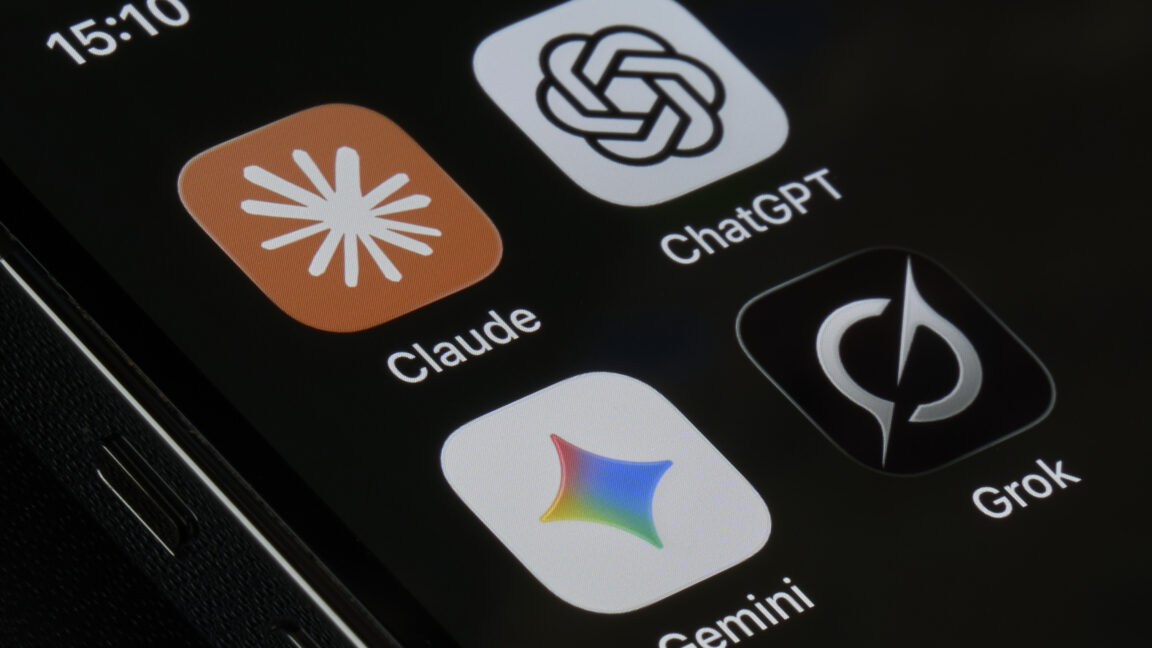


 by Heidi
Heidi summarizes each daily briefing from trusted AI industry sources, then links every story back to a full article for deeper context.