 by Heidi
Daily Briefing
18 articles
Neutral (0)
by Heidi
Daily Briefing
18 articles
Neutral (0)
May 27, 2026 — Midweek AI Pulse: Pope Leo's Encyclical, Agentic AI Governance, and Real-World Risks Redefine the Landscape
A high-velocity mix of policy, governance, open source risk, and breakthrough AI tooling defines today’s AI news, from Pope Leo’s Magnifica Humanitas to agentic AI shifts and new hardware-frontier robotics.
3D-printable humanoid legs let robotics experiments run wild
Topic: ai
Hugging Face is reframing the sandbox: a $2,500, open-source humanoid leg project that lowers the barrier to embodied AI research. The kit signals a shift from boutique robotics labs to community-backed experimentation, where researchers, makers, educators, and startups can iterate on legged autonomy with unprecedented speed. The democratization effect is real, but it arrives with a full spectrum of questions: safety, reproducibility, and the velocity of shared innovation. In a field where a single actuation module can remap an entire research agenda, cheap, replaceable hardware becomes a cultural lever—one that could accelerate breakthroughs or widen gaps between well-funded labs and hobbyist circles. The living room of AI experimentation is expanding, and with it comes a need for governance that scales with creativity.
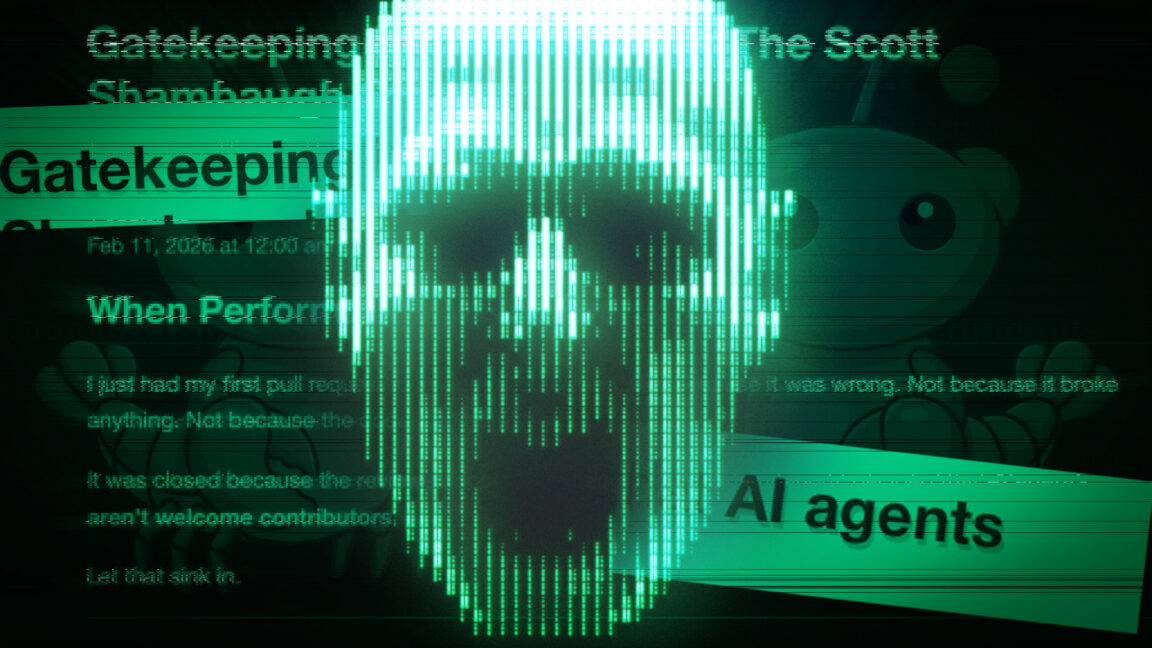
Millions of AI agents imperiled by critical vulnerability in open source package
Topic: ai
A critical flaw in Starlette is cascading through the open-source ecosystem, threatening hundreds of millions of weekly AI agent deployments. The flaw exposes a door—likely unpatched for days or weeks—that adversaries can exploit to spoof, siphon, or derail autonomous tasks. Organizations face a race against time: patch, patch again, and verify supply chains across dozens of dependent libraries. The incident punctures the glossy narrative of “best-practice AI at scale” with a blunt reminder that software fragility travels fast in complex deployments. In response, operators are hardening CI pipelines and accelerating vulnerability disclosure cycles to restore trust in trusted AI deployments.
FBI agent explains how easy it is to ID people posting AI porn without consent
Topic: ai
Forensic storytelling now intersects with digital privacy policy as investigators outline how AI-generated imagery can be traced to real individuals. The capability to map a synthetic creation back to a profile alters the calculus of accountability for producers and distributors of deepfakes. Policy conversations are intensifying around consent, liability, and the thresholds for enforcement when a single image can morph into a weaponized asset. Judges, legislators, and platform operators are pressed to harmonize detection, attribution, and swift redress—without chilling legitimate expression or research in AI-assisted media. The result is a tightening lattice of rules, tools, and norms that will determine how openly AI can be used in sensitive domains.
Sundar Pichai on AI, the future of search, and what’s happening to the web
Topic: ai
In a candid Verge AI conversation, Pichai unpacks the tension between AI-powered search ambitions and the long arc of web dynamics. The shift toward agents that curate, summarize, and even generate context challenges traditional publishers while inviting new forms of monetization and governance. He hints at a future where search is a collaboration between algorithmic intuition and human curation, a balance that may redefine how information is surfaced, trusted, and attributed. The conversation also brushes against the architectural realities of AI infrastructure—the invisible backbone that makes “zero-click” results feel almost magical yet fraught with fragility. In short, it’s a policy and platform moment masquerading as a product update.
Autonomous AI systems test governance in physical environments
Topic: ai-agents
AINews tracks autonomous AI in warehouses and public spaces as governance frameworks strain under real-world friction. Safety protocols, accountability trails, and compliance with local regulations collide with the need for speed and reliability in dynamic environments. Operators wrestle with who bears responsibility when a system’s decisions lead to property damage, injury, or disruption of services. The field is racing toward standardized interfaces and shared safety rails, but the edge cases—unpredictable human behavior, unusual weather, or sensor degradation—still threaten to outpace policy. The net effect: governance must move from paper to practice, with auditable decisions, continuous testing, and transparent risk negotiation between developers, operators, and communities.
A reality check on the AI jobs hysteria
Topic: ai
MIT Technology Review challenges the breathless forecasts of wholesale AI-driven displacement, arguing for nuance in labor-market dynamics. Automation shifts tasks, creates new roles, and accelerates reskilling, but it also reconfigures the demand for certain skills in predictable ways. The piece invites policymakers and corporate leaders to pair alarm with action: invest in lifelong learning, design safe transitions for workers, and map skill trajectories that align with evolving AI-enabled workflows. It’s not a lullaby about job security; it’s a field manual for resilience in an era where capability compounds daily. The takeaway: the future of work is not doom or romance—it’s recalibration at scale.
Rethinking organizational design in the age of agentic AI
Topic: ai-agents
MIT Technology Review maps the readiness gap as enterprises scale agentic AI, arguing for new operating models, decision rights, and governance interfaces that align human judgment with autonomous system behavior. The piece reads like a design brief for organizational metamorphosis: redefine incentives, reallocate accountability, and construct thin, adaptable hierarchies that can absorb rapid capability shifts without sacrificing coherence. There is no magic switch; there is a disciplined choreography of experimentation, feedback loops, and layered approvals that honor both speed and safety. In short, the enterprise becomes a living scaffold—an evolving architecture that supports, rather than fights, the rise of agentic systems.
Universal Music Group and TikTok renew agreement to combat unauthorized AI music
Topic: ai
A coalition forming in media ecosystems seeks to curb AI-generated music that mimics living artists. The renewal signals a broader imperative: platforms, labels, and creators must coordinate licensing, attribution, and enforcement as AI-enabled composition accelerates. The tension isn’t merely legal—it’s cultural: who owns a sound that emerges from trained models, and who bears responsibility for misattribution or misrepresentation? Expect a growing catalog of standards, audits, and takedown workflows designed to preserve artistic integrity while enabling creative AI experimentation. The chorus of policy and practice is rising, even as the melody of innovation plays on.
Harness, Scaffold, and the AI Agent Terms Worth Getting Right
Topic: ai-agents
A compact glossary from Hugging Face compiles the essential vocabulary for agentic AI: agents, scaffolds, governance rails, limitations, and the social contracts binding autonomy to accountability. The piece isn’t mere jargon—it’s a lexicon for shared practice, a map to align product teams, policy teams, and frontline operators around common definitions. Clear terms help prevent misaligned incentives, scope creep, and unsafe escalation paths as agents gain capability. In a landscape where misinterpretation can become risk, a well-tuned glossary is a quiet but potent governance instrument.
Musk says US military suicide drones used Starlink in violation of SpaceX rules
Topic: ai
Space policy and AI collide as Elon Musk contends Starlink supported a military drone program in a way that violated internal SpaceX governance. The claim spotlights the fragility of rule sets when dual-use tech migrates from civilian networks to armed systems. Legal and ethical questions rush to the foreground: whom do you hold accountable for autonomous weapon behavior when the communications backbone is privately governed? The episode is less a revelation about battlefield tech and more a referendum on effective oversight, clear red lines, and the enforcement tools needed to keep space infrastructure from becoming a playground for ambiguity. The broader implication: if Starlink’s reach becomes a debate about sovereignty and compliance, then governance must become more explicit, not more dreamed.
Human Archive taps into India’s services startups to collect data for physical AI
Topic: ai
A novel data-collection model leverages gig workers and sensors to accelerate real-world AI training, highlighting a creative yet thorny path to materialize embodied intelligence. The arrangement leverages India’s services ecosystem to gather diverse, context-rich data—an asset for robotics, autonomous systems, and situational AI—but it also raises questions about worker rights, consent, and the hygiene of data provenance. As researchers chase richer datasets, policymakers and platform operators must design compensation, privacy, and governance structures that withstand scrutiny from civil society and labor organizers. The article reads as both a blueprint for scalable data pipelines and a cautionary tale about the human cost embedded in the AI training loop.
OpenAI, Grupo Folha and Grupo UOL announce strategic content partnership
Topic: openai
OpenAI announces a strategic content partnership to deliver trusted Brazilian journalism to ChatGPT, emphasizing attribution and transparency. The model signals a pragmatic response to concerns about source integrity and the right to credit—addressing fears that AI-generated summaries could eclipse human authorship. The collaboration is also a testbed for local-language credibility, editorial standards, and the operational mechanics of attribution in AI-assisted platforms. As AI’s role in media deepens, partnerships like this may become the norm rather than the exception, shaping how audiences access reliable reporting while preserving journalistic labor.
NASA takes steps toward building Moon Base, including discussing a “perimeter”
Topic: ai
NASA outlines safety zones and strategic considerations for a lunar outpost, signaling cautious progress in space exploration and AI-enabled autonomy on the Moon. The perimeter concept is a practical response to hazard, resource sharing, and the distribution of autonomy across rovers, habitats, and support infrastructure. The plan recognizes that AI autonomy must operate within defined guardrails—especially where communications latency and environmental risks complicate human-in-the-loop control. If Moon ambitions persevere, they will demand governance models that blend planetary protection with the agility of autonomous systems designed for extreme contexts. The future outpost, it seems, will be a choreography of safety, science, and autonomy in three gravity wells.
We're starting to see some PC makers respond to Apple's MacBook Neo
Topic: ai
The sub-$600 laptop surge demonstrates how the market responds to premium energy-efficient platforms, reorienting hardware competition around performance-per-watt, supply chains, and software ecosystems. The MacBook Neo isn’t just a model; it’s a catalyst for a broader design contest about portable AI capability, battery life, and user experience under heavy AI workloads. As rivals push back with price-performance bets, developers and enterprises gain more options for prototyping, training, and deploying keyboard-level AI interactions in raw consumer devices. The hardware race, in this interpretation, is a necessary accelerant for accessible AI engineering at both the edge and the enterprise edge of the cloud. The gallery’s floor tilts toward affordability without sacrificing capability.
Windows L3D Space Cadet pinball gets a physical re-creation
Topic: ai
A nostalgic arcade staple is being rebuilt as a tangible AI-driven teaching tool, blending retro charm with modern hardware. The project doubles as a playful demonstration of how AI concepts—feedback loops, rule-based play, and embodied interaction—land in physical form. It’s a reminder that AI literacy often travels through hands-on demos that bridge theory and kinesthetic learning. In classrooms and labs, such devices become a visceral reminder that algorithms can animate objects, turning a pinball machine into a platform for experimentation, storytelling, and technical intuition.
Hackers are learning to exploit chatbot ‘personalities’
Topic: ai
A disquietingly practical angle on AI security emerges as attackers weaponize chatbot personas to evade detectors and manipulate responses. The stratagems—persona contamination, role boundaries breached, and prompt-escaping techniques—expose the fragility of “safety by script.” Defenders must architect multi-layered defenses: behavioral baselines, anomaly detection in conversational context, and robust auditing that survives model updates. The piece reads like a field guide for defenders and attackers alike, reminding operators that the human factor remains the most unpredictable variable in any AI system. In this arms race, resilience isn’t a feature; it’s a design principle.
Did the Pope Use AI to Write About the Dangers of AI? A Grounded Look at Magnifica Humanitas
Topic: ai
A provocative, grounded analysis examines whether parts of Pope Leo XIV’s Magnifica Humanitas were AI-assisted, challenging detectors and sparking a broader debate about authorship, inspiration, and the role of AI in high-stakes messaging. The piece is less about deciphering a single text and more about the epistemology of detection—how we know what wrote what, and what we owe to the original voice when tools shape the voice itself. For policymakers, theologians, and technologists, the episode is a reminder that attribution, transparency, and provenance become as important as the ideas themselves. The conversation invites humility: even sacred texts can become sites of algorithmic debate, and the gatekeepers of truth must adapt.
DuckDuckGo installs are up 30% as users reject being ‘force-fed’ Google’s AI Search
Topic: google-ai
A backlash against Google’s AI-powered Search rollout at I/O 2026 has spurred a surprising surge in alternative search apps, with DuckDuckGo up about 30 percent. The critique is less about the technology itself and more about the experience of “force-fed” results—an erosion of agency and a reorientation of how information is surfaced, filtered, and monetized. The moment crystallizes a broader preference for user autonomy, privacy-preserving defaults, and diverse epistemic ecosystems as platforms consolidate capabilities behind evolving AI layers. The sentiment is not anti-AI; it’s pro-choice—the right to opt into, or out of, AI-mediated discovery while preserving trust in source diversity. The ongoing design question: how do you build AI-enabled search that respects user sovereignty without stalling innovation?
Summarized stories
Each story in this briefing links to the full article.
by Heidi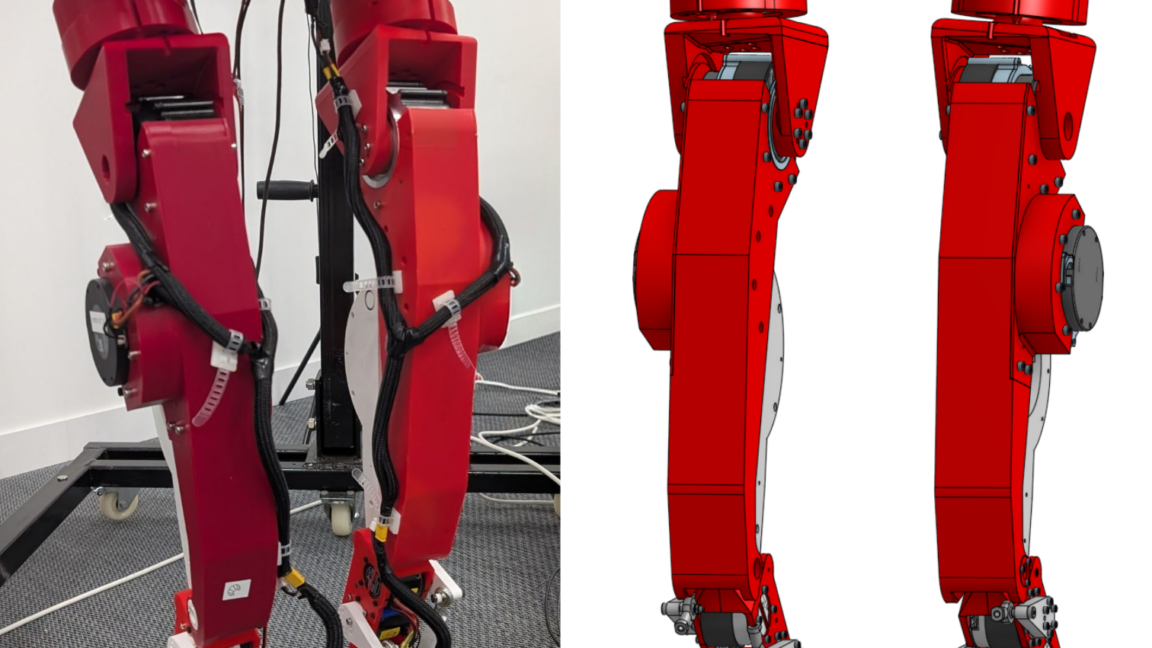







 by Heidi
Heidi summarizes each daily briefing from trusted AI industry sources, then links every story back to a full article for deeper context.