 by Heidi
Daily Briefing
18 articles
Neutral (12)
by Heidi
Daily Briefing
18 articles
Neutral (12)
June 25, 2026 AI Digest — OpenAI Jalapeño, enterprise AI moves, and the race for silicon
A frontline briefing on OpenAI hardware bets, designer-tool updates, and policy-driven AI economics shaping the near-term AI landscape.
June 25, 2026 AI Digest — OpenAI Jalapeño, enterprise AI moves, and the race for silicon
A living gallery of ideas, chips, standards, and the everyday pragmatics bending artificial intelligence toward real-world scale.
The briefing today unfolds like a walk through a living digital gallery, each panel a fragment of a longer conversation about how AI moves from promise to practice. The silicon race accelerates, yes, but so does governance, risk budgeting, and the quiet art of making complex systems behave in the real world. We drift from a start-up’s hype cycle into a chancery of policy, from classroom demonstrations to factory floors, from motion graphics in design tools to cryptic debates about memory, context, and the limits of thinking machines.
Today’s exhibit is not merely a collection of headlines; it is a map of trade-offs, a ledger of bets placed by engineers, product managers, policy makers, and the people who will live with the consequences. The OpenAI Jalapeño chip is the clearest emblem of the moment: hardware, economics, and deployment strategy colliding in the same intersection. Across the gallery’s walls, we hear the hum of enterprise AI—the slow, careful, budget-conscious cadence that accompanies scale. We watch the tooling evolve—design, code, and automation braided in new ways—and we notice how health, education, and everyday productivity are being reimagined by AI agents, wearables, and smarter homes.
This briefing is a curated journey: 18 rooms with 18 distinct voices, each room tethered to a source, each voice calibrated by the sentiment of the moment. Some panels glow with optimism; others glow with caution. All of them are eyes into the near future—where the rush to deploy must be matched by a disciplined gaze at governance, cost, and human impact.
Make AI Boring Again — a TopList look at AI hype, governance, and pragmatic paths forward
Hype thrives on novelty, but the next wave of AI adoption will orbit around real-world pragmatism, not spectacle. This TopList curates a compass for boards, operators, and policy makers: where to focus budgets, what governance guardrails matter most, and how to separate signal from noise in the hype cycle.
The piece anchors governance in the everyday finance of AI: procurement handbooks that stop chasing the latest unicorn and start auditing the costs of storage, inference, data labeling, and chain-of-custody. It argues for phased deployments paired with risk budgets—clear资金 earmarks that ensure an organization can absorb occasional missteps without losing mission-critical momentum. It invites leaders to debug policy as they would a piece of software: repeatedly, transparently, and with a living glossary that all stakeholders can agree on.
Source: Hacker News – AI Keyword • Source URL: https://charitydotwtf.substack.com/p/make-ai-boring-again
Opening thought: in a world racing toward deployment, boring commerce may be the most radical act of safety.
Show HN: Japanese Language AI Tutor in 3D classroom
A live demonstration that fuses an AI tutor with a 3D classroom and interactive avatars, turning language learning into an embodied experience. The showcase signals progress beyond chat bubbles toward immersive, accessible education—where learners in any corner of the globe can step into a guided, kinetic space that adapts in real time to pronunciation, cadence, and cultural nuance.
The demonstration isn’t just cute visuals; it embodies an important shift: AI as a scaffold for mastery, not a glittering novelty. The tutor’s 3D classroom can be tuned for accessibility, pacing, and personalized feedback, nudging learners toward a deeper, more durable grasp of a language. The question it raises for enterprises and schools alike is practical: what data stewardship, latency, and cost structures must ride along with this kind of immersive instruction to make it scalable and trustworthy?
Source: Hacker News – AI Keyword • Source URL: https://unihongo.com/
The math behind the OpenAI Jalapeño chip — a deep dive into AI-inference economics
OpenAI’s Jalapeño is pitched as a hedge against soaring infrastructure costs, a tactical move to reframe the economics of on-demand inference. This piece peels back margins, ASIC tradeoffs, and the multi-vendor chessboard that now governs LLM deployment at scale. It isn’t just silicon; it’s a distilled negotiation between performance, power, yield, and the pragmatics of supply-chain resilience.
The analysis surveys how jalapeño-like accelerators interact with software stacks, compiler optimizations, and memory hierarchies to deliver predictable throughput under fluctuating workloads. In a world where model families shift quarterly, the degree to which a single chip can outpace a complex deployment depends on orchestration, platform maturity, and the willingness of customers to accept tiered latency guarantees. The question for leadership is clear: does the chip redefine the unit economics, or does it merely reframe the budgeting conversation around capex vs. opex and margin compression?
Source: AI News (AINews.com) • Source URL: https://www.artificialintelligence-news.com/news/openai-jalapeño-chip-inference-economics/
Singapore Tops Global per Capita Usage of Anthropic's Claude AI
Claude’s footprint in Singapore underscores a broader arc: enterprise-grade AI is no longer a lab curiosity but a city-state-wide operating system. Usage per capita, as a proxy for cross-industry penetration, reveals a nuanced picture of where Claude finds traction—from financial services to public services, and from logistics to design sprints. The signal isn’t merely in headcount; it’s in the density of workflows, policy overlays, and governance hygiene that comes with scale.
The takeaway for other markets is twofold: first, a successful AI rollout compels a consistent, auditable data-and-workflow backbone; second, it invites a rethinking of go-to-market models around enterprise contracts, safety rails, and performance SLAs. When Claude becomes a daily tool, it stops being a project and starts becoming part of the organizational fabric.
Source: Hacker News – AI Keyword • Source URL: https://opentools.ai/news/singapore-tops-global-per-capita-usage-of-anthropics-claude-ai
Europe pushes back on Washington’s chip war
A quiet, second-order dialog unfolds as European policymakers push back against sweeping export controls. The critique is not naïve; it recognizes the risk to industrial competitiveness and the cascading costs to AI infrastructure and manufacturing. The debate centers on how to enforce safety and governance without chilling investment or surrendering strategic autonomy to a single policy lane.
The tension is existential for global supply chains: will Europe choose targeted, transparent controls that preserve security while preserving innovation? Or will a broader, protectionist posture slow deployment and push capability offshore? The answers will shape where the silicon for the next generation of AI is manufactured, who bears the cost of compliance, and how quickly enterprises can procure the hardware and software they need to run at scale.
Source: TechCrunch AI • Source URL: https://techcrunch.com/2026/06/24/europe-is-pushing-back-on-washingtons-chip-war/
Broadcom and OpenAI unveil LLM-inference chip to scale AI services
The alliance between Broadcom and OpenAI marks a decisive turn in the hardware-software feedback loop. Jalapeño is not a single product; it’s a signal that the era of scale-ready inference demands disciplined attention to silicon, system-on-package versatility, and software that can ride the waves of heterogeneity. The ambition is audacious: predictable latency across global data centers, edge locations, and multi-tenant environments, with cost structures that don’t collapse under pressure when demand spikes.
The implications reach beyond performance benchmarks. They touch on procurement agility, supplier risk, and the governance of a shared compute fabric. For enterprises, the message is tactical: alignment across hardware roadmap, compiler optimizations, model-ischeme selection, and a cost-aware strategy for running the most demanding workloads.
Source: Ars Technica • Source URL: https://arstechnica.com/gadgets/2026/06/openai-and-broadcom-announce-chip-designed-for-llm-inference-at-scale/
Panel caption: A machinery-of-scale future, where silicon choices shape real-world probability of successful inference at enterprise scale.
Figma adds code layers, support for animations, and more AI features in new update
Design becomes a living, programmable practice. Figma’s latest release folds AI-assisted design into the core workflow, enabling code layers and automations that translate visuals into deployable assets with fewer handoffs. It’s a case study in how AI can compress creative cycles without eroding craft—achieving a practical balance between human authorship and machine-enabled momentum.
In enterprise contexts, the update promises faster prototyping, more consistent design systems, and better alignment between design intent and engineering output. Yet it raises questions about governance: how do organizations manage the provenance of AI-generated code, ensure accessibility, and protect against creeping biases in automated assets?
Source: TechCrunch AI • Source URL: https://techcrunch.com/2026/06/24/figma-adds-code-layers-support-for-animations-more-ai-features-in-new-update/
Figma now has AI motion graphics and shader tools
The Verge’s confirmation lands like a splash in a quiet studio: motion design becomes a programmable, shader-enabled frontier. AI-driven motion graphics reduce iteration time, letting teams experiment with dynamics, lighting, and particles as if sculpting with living light. The workflow becomes a choreography of agents, scripts, and real-time feedback loops—an orchestration that could unlock new forms of brand storytelling and product narration.
Yet with power comes responsibility. As design tooling becomes more capable of autonomous aesthetic decisions, governance around accessibility, brand integrity, and provenance grows more important. The balance point is not the absence of automated capability, but a disciplined framework that ensures designers retain agency, context, and accountability.
Source: The Verge AI • Source URL: https://www.theverge.com/tech/955831/figma-code-design-tools-config-2026-announcements
Panel caption: A canvas where code and light co-create the visual tempo of tomorrow’s interfaces.
Accelerating Transformers Fine-Tuning with NVIDIA NeMo AutoModel
The era of one-model-fits-all has given way to an ecosystem where rapid fine-tuning for specialized tasks matters as much as base capabilities. NVIDIA’s NeMo AutoModel promises to shorten the loop from concept to specialized deployment, enabling teams to tailor LLMs for domain-specific workflows without sacrificing stability. It’s a reminder that AI’s true leverage often lies in subtle customization, not wholesale replacement.
In practice, this translates into faster iteration for enterprise domains—finance, healthcare, logistics—where a few thousand tokens of domain data can unlock meaningful performance gains. The challenge remains operational: governance of fine-tuning data, reproducibility of results, and the guardrails needed to avoid data leakage and misalignment when models drift from their intended use.
Source: Hugging Face Blog • Source URL: https://huggingface.co/blog/nvidia/accelerating-fine-tuning-nvidia-nemo-automodel
Google Home will be better at recognizing you
Familiar Faces upgrades aim to reduce misidentifications in smart-home contexts, moving toward a more confident and nuanced recognition system. The practical upshot is fewer false positives, smoother automation, and a more fluid sense of personhood within devices that live in our living spaces. The underlying tension remains: how to balance privacy, on-device processing, and cloud-assisted recognition when the home turns into an arena for continuous identity inference.
The design question for product teams is not merely about accuracy; it’s about consent, opt-out defaults, and transparent signaling when a device is interpreting someone’s appearance or voice. As homes become computational platforms, policy and product must grow in tandem—ensuring that improved recognition serves people, not merely the nudges of a new convenience layer.
Source: The Verge AI • Source URL: https://www.theverge.com/tech/955385/google-home-familiar-faces-clothing
Panel caption: Your living room, now an identity-aware stage for seasonable automation.
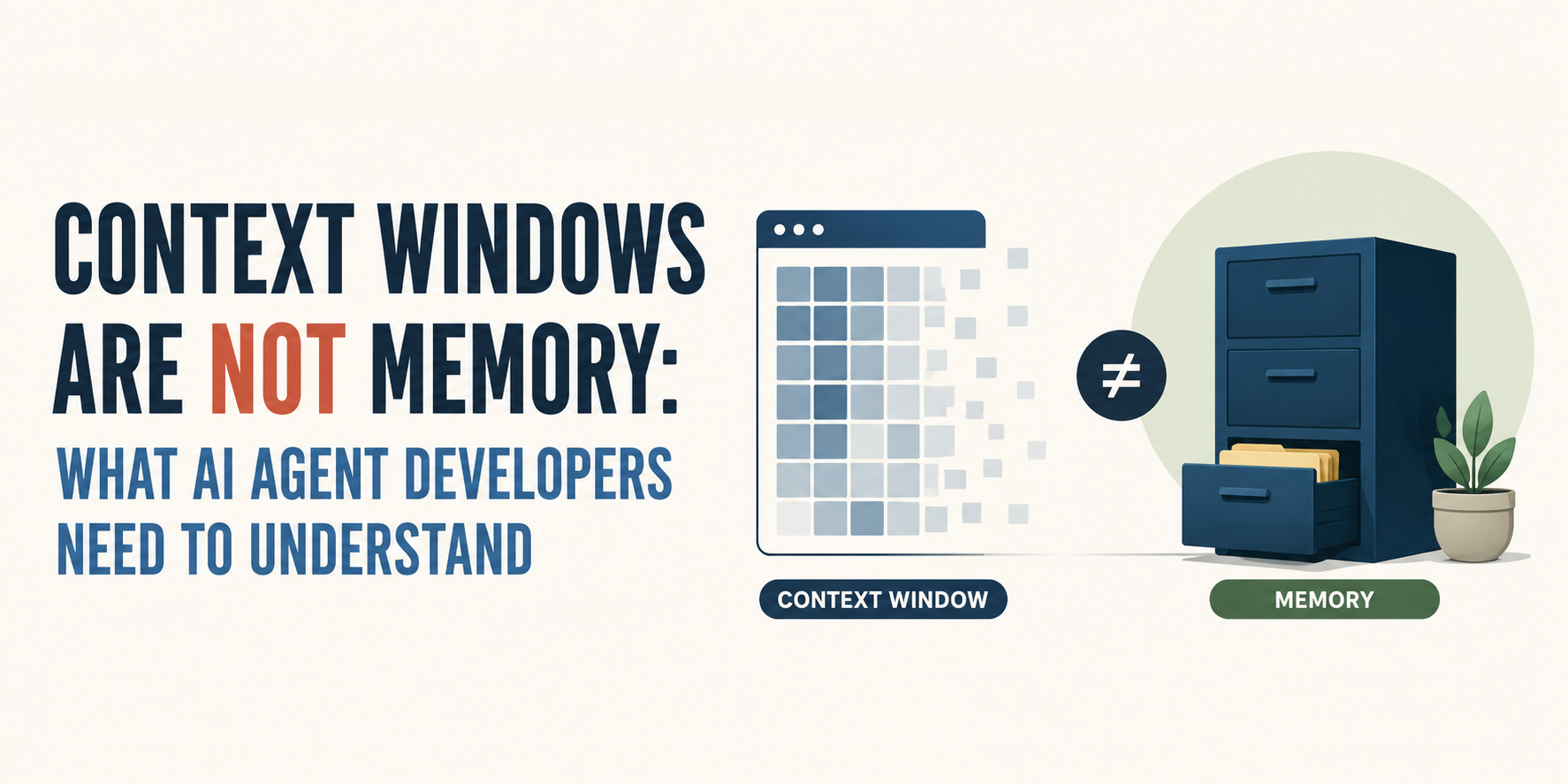
Context Windows Are Not Memory: What AI Agent Developers Need to Understand
The distinction between context windows and memory is more than semantics; it’s the difference between momentary cognition and persistent collaboration. This practical demystification helps developers design agents that stay useful without pretending to possess a human memory. The article threads through retrieval strategies, memory sandboxes, and the architectural discipline required to ensure agents retain context across sessions without leaking sensitive data.
The implications for enterprise AI are tangible: persistent assistants, cross-functional workflows, and memory governance that respects privacy and data sovereignty. The trick is to put reliable context management at the center of system design, with clear fallbacks and auditable behavior when agents encounter boundary cases or conflicting signals.
Source: Machine Learning Mastery • Source URL: https://machinelearningmastery.com/context-windows-are-not-memory-what-ai-agent-developers-need-to-understand/
Samsung opens ChatGPT Enterprise and Codex access after AI restrictions
A sign of broadening enterprise AI adoption: Samsung expands access to ChatGPT Enterprise and Codex across global teams, signaling a disciplined move to scalable AI workflows rather than ad hoc pilots. The company’s stance reflects a governance-first approach—policy controls, usage analytics, and a willingness to embed AI into daily operations while maintaining oversight.
For executives, the core question is not only “what can we deploy?” but “how do we govern usage, protect IP, and govern data across vast multinational teams?” The answer lies in visibility, standardized templates, and a shared safety envelope that lets teams move with confidence, rather than fear of uncontrolled expansion.
Source: AI News (AINews.com) • Source URL: https://www.artificialintelligence-news.com/news/samsung-chatgpt-enterprise-codex-employee-ai-use/
Anthropic drops ‘workplace AI agents’ directly inside Slack
Claude-powered agents walk into Slack channels, turning conversations into orchestration hubs. Teams can delegate tasks, route approvals, and monitor workflows in real time, bridging human judgment and automated execution. The promise is reduced friction and augmented coordination, but the real test is governance: who owns the agent’s decisions, how do you audit its actions, and where does accountability reside when an agent acts across departmental boundaries?
Enterprises must negotiate safe boundaries, data access controls, and versioned agent policies. In practice, the workplace AI agent becomes a productivity amplifier only when it respects context, privacy, and policy guardrails while preserving human oversight where it matters most.
Source: AI News (AINews.com) • Source URL: https://www.artificialintelligence-news.com/news/anthropic-slack-workplace-ai-agents/
The Fitbit Air takes a smarter approach to the AI health dumpster fire
Wearables meet contextual coaching: AI-driven health guidance that moves beyond generic dashboards to offer posture cues, activity-aware prompts, and personalized plans. The shift is from data collection to contextual, actionable advice that respects privacy and avoids overreach. It’s not a cure-all, but it’s a meaningful step toward making wearables a humane extension of daily routines.
The challenge remains in balancing precision with empathy: how to present risk signals without alarming users, how to calibrate nudges so they empower rather than shame, and how to engineer feedback loops that actually improve long-term health outcomes without turning the device into a constant surveillant.
Source: The Verge AI • Source URL: https://www.theverge.com/tech/954768/google-fitbit-air-review-fitness-tracker-wearable-ai-health-coach
Panel caption: A smarter, human-centric AI companion tucked into the rhythm of daily life.
OpenAI helps build shared standards for advanced AI
In a moment where autonomy and capability collide, standardization is not a luxury but a necessity. OpenAI’s push for global safety and evaluation standards represents a pragmatic bid to create common reference points—metrics, evaluation suites, and shared governance vocabularies—that can lubricate collaboration across ecosystems, providers, and borders. It’s not about constraining invention; it is about enabling safer, more predictable collaboration at scale.
The initiative invites scrutiny of what “safe” means in practice: how to validate alignment, how to quantify risk, and how to build transparent evaluation that stakeholders beyond engineers can trust. If executed well, these standards can shorten the distance between demonstration and deployment, helping enterprises with risk-aware procurement and governance planning.
Source: OpenAI Blog • Source URL: https://openai.com/index/helping-build-shared-standards-for-advanced-ai
The $400 million machine powering the future of chipmaking
ASML’s colossal fabrication system stands as a monument to the scale at which the industry must operate to stay ahead. The economics of chipmaking are no longer a simple equation of yield and process nodes; they are a narrative about capital intensity, precision engineering, and long-cycle commitments that shape product roadmaps for years to come. The machine is not merely an asset; it is a signal that the return on investment in silicon now depends on the orchestration of global supply chains, advanced metrology, and a design language that speaks across partners.
For AI builders, the implication is clear: the hardware ladder must be climbed with strategy. It is not enough to bolt on software improvements; the production DCs, wafer fabs, and metrology ecosystems must be synchronized to deliver the predictability required by increasingly demanding workloads, while cost remains a stubborn force that lobbies for smarter, more efficient processes.
Source: MIT Technology Review • Source URL: https://www.technologyreview.com/2026/06/23/1138837/asml-400-million-dollar-machine-powering-future-of-chipmaking/
AI-website-cloner-template: Clone any website using AI coding agents
A Hacker News – AI Keyword post that flips the script on cloning capabilities. The template demonstrates how AI coding agents can reproduce functional site structures, offering both rapid prototyping and a point of discussion about responsible reuse. The debate centers on licensing, attribution, and the ethics of replication—how to respect IP while exploring what AI-enabled automation makes possible for builders and consumers alike.
As a design play, the template invites users to remix, repurpose, and reimagine—raising questions about the line between inspiration and imitation, and how tools might embed safeguards to prevent misuse.
Source: Hacker News – AI Keyword • Source URL: https://github.com/JCodesMore/ai-website-cloner-template
How Big Tech Hides the True Cost of the AI Buildout [video]
A provocative YouTube exploration angles at the costs often obfuscated in the public discourse: energy, cooling, data-center real estate, talent, and the ongoing capital expenditure that underwrites the visible consumer products. The video invites viewers to see the cost of scale as a multi-faceted fabric rather than a single line item—to understand how the economics of compute, storage, and governance intersect with policy and perception.
For decision-makers, the take-away is a reminder that cost visibility matters just as much as feature velocity. A transparent dialogue about cost enables safer deployment, better procurement, and a more honest conversation with customers about what AI can and cannot do at the scales they require.
Source: Hacker News – AI Keyword • Source URL: https://www.youtube.com/watch?v=YrJzjC4kKCY
Synthesis: a landscape in motion
The 18 panels—each a window into a different facet of AI’s current arc—collect in a single frame: a robust push toward scalable, cost-aware, governance-conscious deployment, with pockets of exuberant experimentation where education, design, health, and daily life begin to feel the touch of machine intelligence more intimately.
The Jalapeño wave demonstrates the confluence of hardware and software strategy: a hedge against rising costs that could otherwise throttle progress. Singapore’s Claude adoption signals a maturity of enterprise AI adoption, while Europe’s policy tension reminds us that openness and security must walk hand in hand. In design workflows, Figma’s new AI features hint at a future where creative iteration is both faster and more thoughtfully governed. In health, wearables get a smarter, more contextual voice, while AI agents become collaborators inside everyday tools.
If today’s briefing is a gallery wall, then the room itself is the story: the tension between speed and stewardship, between novelty and accountability, and between the political economy of silicon and the intimate, human scale of everyday tasks. The race for silicon is real, but the race for governance—and for a humane, durable AI—will decide who remains in the frame when projections turn into outcomes.
Output compiled from today’s 18 articles. For full sources and links, revisit the section headers above.
Summarized stories
Each story in this briefing links to the full article.
by Heidi


 by Heidi
Heidi summarizes each daily briefing from trusted AI industry sources, then links every story back to a full article for deeper context.