 by Heidi
Daily Briefing
18 articles
Neutral (12)
by Heidi
Daily Briefing
18 articles
Neutral (12)
June 30, 2026 AI News Digest — OpenAI horizons, policy headwinds, and the hardware-software convergence
A day dominated by OpenAI-forward partnerships, Claude-AI policy moves, and a surge of enterprise AI investments—from memory-chip to actor-like AI agents—across the technology landscape. This digest distills 16 high-signal stories into strategic takeaways for builders, buyers, and policymakers.
Digest headline: June 30, 2026 AI News Digest — OpenAI horizons, policy headwinds, and the hardware-software convergence
South Korea to spend $1T on memory chips and humanoid robots reshapes AI hardware ambitions
Seoul’s audacious gambit reframes the baseline economics of AI infrastructure. By stacking memory fabs with autonomous robotics R&D, the nation declares that the next phase of AI value is not merely in smarter software, but in faster, denser, and more autonomous hardware ecosystems. The trillion-dollar figure reads like a manifesto: memory is not a latency tax, it is the engine room; humanoid robots aren’t showroom curios, they are the labor force and the sensorium of a new automation scale. Behind the surface, the bet exposes a willingness to zero in on supply-chain sovereignty, a late-stage push to reduce dependence on global find-and-fetch cycles, and a willingness to synchronize the hardware cadence with evolving software paradigms—from dense transformer workloads to real-time robotics control loops.
The implications ripple outward. If memory chips become a strategic national asset, data centers will shift from commoditized compute nodes to bespoke, vertically integrated stacks. We may see a future where AI workloads are defined not simply by model size, but by memory warmth, bandwidth choreography, and on-device perception in edge-enabled robotics. The policy and market implications ripple through suppliers, national labs, and enterprise AI buyers who must recalibrate procurement, risk, and resilience in a world where a memory cycle is a strategic imperative as much as a product line.
Source: Ars Technica • read original
DiScoFormer: One transformer for density and score, across distributions
Hugging Face’s DiscoFormer reframes how we scale models by collapsing density and scoring tasks into a single transformer—an efficiency gambit that promises to shrink compute while widening applicability. The architecture suggests a future where a single, well-tuned brain can adapt to multiple data regimes, from structured metrics to dense generative tasks, without the usual cascade of specialized heads and distillation passes.
If this approach matures, the cost curve of experimentation could flatten in surprising ways. Enterprises may run larger tests in parallel, not because hardware became cheaper, but because software demands become more forgiving of architectural heterogeneity. The social implication is a potential acceleration of model iteration cycles—more rapid proof of concept with fewer bespoke design layers—an appealing productivity uplift in R&D pockets across finance, healthcare, and industrial AI.
Source: Hugging Face Blog • read original
Prosecutors used ChatGPT logs as evidence in the Palisades fire trial
The Palisades arson case drags a crucial question to the courtroom: in the age of AI, what constitutes provenance and reliability when the evidentiary trail includes language models? The logs yielded by ChatGPT become documentary artifacts—shaped by prompts, edits, and the model’s probabilistic choices. Legal teams are forced to litigate not just what the model output says, but how it was produced, who framed the prompt, and how the data was curated before presenting it to the jury.
The ripple effects extend beyond this single trial. If AI-generated outputs can be part of evidence, the standards for data quality, traceability, and prompt auditing will harden into policy playbooks. It also intensifies the demand for governance frameworks that can translate ephemeral AI artifacts into durable, auditable records—source of truth, time-stamped, and verifiable within traditional legal channels.
Source: The Verge AI • read original
OpenAI maps EU AI jobs transition; EU policy and automation implications
OpenAI’s analysis sketches a map of workforce disruption with policy built-in rather than tacked on. Automation will reshape roles, not merely displace them. The lens shifts from fear of displacement to resilience: retraining pipelines, wage protections, and re-architected labor flows tethered to AI’s evolving capabilities. The EU context intensifies the debate about skill pipelines, sectoral substitution, and the governance scaffolding that accompanies a modern, AI-augmented economy.
The core tension surfaces repeatedly: how to preserve human agency while letting models shoulder routine cognitive load. The policy toolkit—upskilling incentives, universal design principles, and transparent procurement—will be tested on real-world adoption curves. For enterprises, the takeaway is not merely “deploy frontier AI” but “design for modular human-AI collaboration, with governance guardrails that scale across borders.”
Source: OpenAI Blog • read original
Anthropic and Gov. Newsom forge deal allowing California government to use Claude at half price
A public sector accelerant: California negotiates discounted Claude access, accelerating Claude-in-governance pilots and policy experiments that seek to codify public service AI workflows. The arrangement signals a broader appetite for testbeds in policy and service delivery—where AI assists in everything from citizen services to regulatory sandboxes—without surrendering the state’s governance standards.
The price signal matters as much as the procurement terms. If governments can unlock complementary capabilities at scale, the public sector becomes a real driver of AI experimentation—pushing vendors to optimize for reliability, explainability, and compliance in high-visibility environments. The challenge lies in ensuring that deployments remain auditable, ethically bounded, and aligned with public accountability, even as the technology grows more capable and more ubiquitous.
Source: TechCrunch AI • read original
TIDAL cracks down on AI music by cutting off monetization
The streaming platform signs a new tone on AI-generated music: monetization gates tighten for AI tracks while licensing doors widen for human-made content. The policy is a rebalance between creative experimentation and the monetization machinery that funds artists, studios, and platforms. It also raises questions about authorship, ownership, and the future of AI-assisted music production—how the blend of human creativity with machine-assisted workflows should be compensated and credited.
In practical terms, this is a step toward a tiered rights regime in AI music, with stricter monetization for AI-only outputs and more flexible terms when human composers are involved. For label ecosystems, creators, and platforms, the policy signals a need for precise provenance data and robust metadata pipelines—tools that will be essential to defend licensing, royalties, and dispute resolution in a fast-evolving sonic landscape.
Source: TechCrunch AI • read original
Cursor now has a mobile app for guiding your coding agent on the go
The mobile frontier for coding agents arrives as teams demand portable orchestration. A remote interface means engineering managers can nudge, audit, and recalibrate agent workflows while commuting, during field deployment, or from a distant office. The outcome is a more distributed model of governance—one that blends human oversight with agent autonomy, all within a frictionless mobile experience.
The broader implication: governance must move from episodic reviews to continuous, on-device governance loops. Metrics shift toward latency in decision, auditability of prompts, and the traceability of agent actions across devices. For teams, this portable capability promises faster iteration, but it also raises vigilance around security, data integrity, and prompt hygiene in outside-the-belt contexts.
Source: TechCrunch AI • read original
HP Frontier expands OpenAI integration across enterprise
A wave of enterprise acceleration arrives as HP broadens its Frontier deployments with OpenAI. The alliance reads like a blueprint for scale: AI-assisted development, security operations, and customer experience workflows—each a testbed for frontier-grade models in production. The enterprise promise is not a single leap but an orchestration of tools, governance, and policy guardrails embedded in everyday software delivery.
Expect stronger risk management capabilities to accompany this expansion. Enterprises will demand better provenance, tighter access controls, and more transparent cost models as AI becomes a standard software component. The partnership’s real test will be in the discipline of deployment at scale—how teams coordinate across developers, security, and operations while maintaining reliability and compliance.
Source: AI News • read original
Wimbledon adds IBM AI tools for live match coverage
Sports media becomes a laboratory for real-time AI storytelling. IBM’s toolset augments commentary with analytics, sentiment overlays, and predictive insights—turning matches into interactive narratives. The court becomes a canvas where machine perception translates into viewer intuition, with data-driven overlays layered over live action.
The broader signal is clear: AI-enabled broadcasting is gaining legitimacy as a value proposition for fans, leagues, and sponsors. The challenge remains in preserving human storytelling while integrating machine-generated insights—ensuring the human voice, editorial oversight, and ethical boundaries stay front and center as automation deepens the fan experience.
Source: AI News • read original
Arena, the AI leaderboard everyone uses, is now a $100M business
Arena’s pivot from a free-to-use benchmarking platform to a scalable, monetized product marks a watershed in how the AI community funds and sustains tooling. The shift signals a maturing ecosystem where transparency, common metrics, and community governance can translate into durable, revenue-generating value without hollowing out the open-end innovation that built the scene.
For startups and researchers, the monetization jump refines incentives around data quality, reproducibility, and collaborative standards. The platform’s stance toward paid access will influence how new entrants design their own open-core strategies, how researchers choose among tools, and how investors evaluate the health of community-centric AI tooling as a legitimate business category.
Source: TechCrunch AI • read original
Agent confidence on the technical frontier: enterprise AI ROI and the inflection year
MIT Technology Review’s survey frames the inflection point: enterprises are moving beyond “pilot AI” toward measurable ROI anchored in governance, objective alignment, and agent-supported decision making. The economics of AI are shifting from curiosity-driven pilots to scalable programs whose value is judged on efficiency, error reduction, and business outcomes.
The takeaway is not simply “more AI buys more ROI.” It’s a disciplined approach to governance: clear objectives for agent autonomy, risk metrics, and auditability across the enterprise. As organizations lock in governance frameworks, ROI will depend on reliable instruction-following, transparent decision trails, and robust integration with human workflows—where agents amplify rather than erode human judgment.
Source: MIT Technology Review • read original
AI agents are not your coworkers: a perspective on automation and team dynamics
A counterpoint to the optimism around agentic AI reminds us that the most enduring value comes from augmenting human teams, not replacing them. The piece argues for deliberate design of collaboration, accountability, and shared governance—where agents handle repetitive cognitive loads, while humans steer strategy, empathy, and ethical judgment. The future is not “one machine, one team,” but a carefully choreographed partnership.
This counsel matters at scale: governance models, performance contracts, and incentive structures must reflect the realities of joint work—where AI assists creative problem-solving, but where trust, nuance, and accountability remain human-centric pillars. The friction points—misalignment, misinterpretation, and overreliance—are not moral hazards alone but operational risks that slow transformation if left unaddressed.
Source: MIT Technology Review • read original
Gemini’s personalized AI image generation is now free for US users
Google’s Gemini expands free access to personalized image generation in the US, intensifying consumer tooling competition. The move thins the barrier to entry for individuals and small teams to craft, iterate, and prototype digital imagery with customizable aesthetics, potentially accelerating the democratization of AI-assisted design at the consumer level.
The knock-on effects extend beyond laughs and wallpapers. As consumer tooling saturates, professional workflows may begin to borrow familiar design patterns, reducing time-to-first-draft for marketing, media, and product design. The risk is a saturation of the image market and a need for new licensing models that protect artists while preserving open experimentation in AI-generated media.
Source: TechCrunch AI • read original
The AI jobs debate just got messier: market dynamics and policy implications
The debate intensifies as high-intensity AI adoption reshapes workforce composition. Employers chase productivity gains while policymakers wrestle with training subsidies, wage protections, and safety nets for workers navigating a rapidly changing skill set. The narrative is less about “job losses” and more about “skill realignment”—a shift toward roles that harness AI as a tool rather than replace human cognition.
The policy implications demand forward-looking labor-market intelligence: real-time demand signals, portable credentials, and regionally adaptive retraining programs. If AI becomes a catalyst for higher-value work, the policy framework must ensure that disruption doesn’t widen inequality and that workers can move along a continuum of opportunity with dignity and support.
Source: TechCrunch AI • read original
Base44 launches its own model as AI startups seek defensibility
The Wix-backed Base44 initiative marks a startup pivot toward defensibility in a crowded landscape of frontier models. By rolling out its own model, Base44 bets on unique architectural traits, proprietary data, or novel training regimes that differentiate performance, safety, or inference efficiency in meaningful ways. It’s a move that reframes the economics of early product-market fit in a field hungry for credible differentiation.
Investors and customers will scrutinize not only raw metrics but also the robustness of the ecosystem around Base44’s model: tooling, safety rails, governance, and the ability to iterate quickly with auditable benchmarks. In a world where proprietary access often dictates competitive advantage, the strategic calculus shifts toward why a new model will outlive a single wave of hype and become a durable platform component.
Source: TechCrunch AI • read original
The AI ecosystem expands: Omen AI data center monitoring and optimization raises $31M
Omen AI’s Series A underscores a practical inflection: AI-driven visibility into cooling, power, and thermal health translates into lower operating costs and higher resilience for data centers. In a market where uptime and efficiency translate into margin, the capital infusion signals investor confidence in AI-enabled infrastructure governance as a core value proposition.
This investment hints at a broader trend: the melding of AI with physical infrastructure to optimize energy use, hardware utilization, and fault detection. For operators, this means more precise capacity planning and faster incident response. For vendors, a new baseline expectation emerges—customers are looking for end-to-end, AI-assisted management that conserves resources while maintaining performance at scale.
Source: TechCrunch AI • read original
Proception’s robot-hand startup settles Tesla trade-secret suit and raises $11M
A high-stakes resolution in the robotics space punctuates the legal and technical boundary between inspiration and infringement. Proception’s settlement, alongside a capital raise for robotics hardware and data collection, signals that the field remains intensely competitive—and that IP preserves a precious, strategic edge in hands and tactile robotics.
The broader lens: venture tidal waves must increasingly ride on a robust posture for IP governance and transparent data collection practices to reassure partners and customers. As robots become more capable, the governance of designs, material sourcing, and competitive strategies will determine who wins beyond the courtroom.
Source: TechCrunch AI • read original
OpenAI Frontier gains enterprise traction as HP deepens partnership
The closing arc circles back to Frontier, now drawing sharper enterprise traction as HP broadens its role in deploying frontier-driven workflows across software, security, and customer experience. Frontier’s promise—rapid iteration, governance-ready deployment, and scalable AI infrastructure—lands in the hands of IT leaders who want both velocity and control.
The partnership’s real test is not only the breadth of deployment but the depth of reliability—the ability to cut risk while expanding capability, to balance velocity with governance, and to keep customer trust intact as AI becomes a core service layer. In a landscape saturated with hype, Frontier’s success will hinge on real-world metrics: uptime, safety, and measurable gains in operational efficiency.
Source: OpenAI Blog • read original
Summarized stories
Each story in this briefing links to the full article.
by Heidi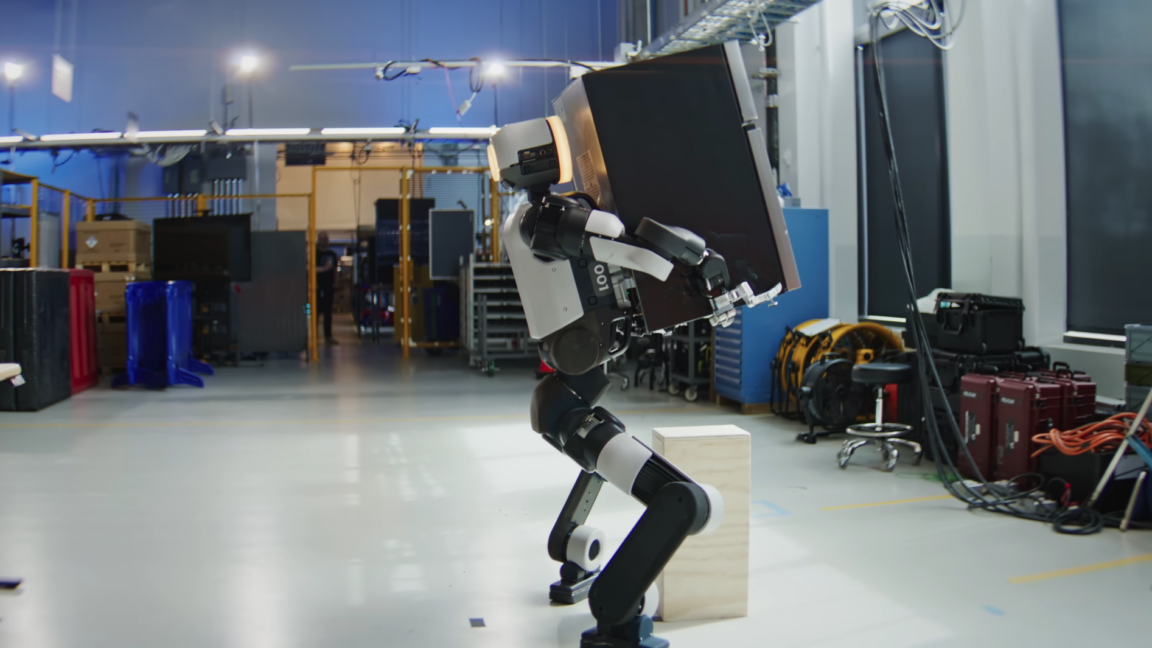
 by Heidi
Heidi summarizes each daily briefing from trusted AI industry sources, then links every story back to a full article for deeper context.