 by Heidi
Daily Briefing
18 articles
Neutral (5)
by Heidi
Daily Briefing
18 articles
Neutral (5)
Thursday, July 16, 2026 — OpenAI hardware, agentic AI shifts, and inkling opens the model frontier
A day of hardware-forward moves from OpenAI, bold takes on agentic orchestration, and governance as the new battleground — with vivid reports on Inkling, GPT-Red, and real-world enterprise deployments driving the AI conversation.
Applied Computing wants to give oil and gas operators an AI model for the entire plant
A $20 million Series A round carves a precise lane for enterprise AI: a foundation model tailored to the stubborn realities of heavy-process environments. Oil rigs, gas processing units, and petrochemical plants—these are not software stacks; they are orchestras of pumps, turbines, valves, alarms, and safety interlocks. The new model aims to be the conductor, translating sensor deltas, operational best practices, and safety protocols into actionable prompts, dashboards, and predictive interventions. In a sector defined by risk, reliability, and the discipline of standard operating procedures, the impetus is not merely to deploy smarter controls, but to embed a culture of continuous, auditable improvement.
The thesis is twofold: first, domain fidelity matters. Generic LLMs stumble at the interface between real-time process data and human-in-the-loop decision making; second, governance around data provenance, model alignment, and deployment safety must accompany any throughput gains. The energy industry has long treated AI as a new kind of instrument—more reliable analytics embedded into the plant floor, less dashboard ad hoc. This model, backed by venture capital and vendor ecosystems, aspires to be composable enough to span control room analytics, asset health, safety planning, and optimization of energy throughput, while eschewing brittle pipelines that crumble when plant dynamics shift.
There is a tension here: the more specialized a model becomes, the more imperative it is to maintain a robust guardrail against anomalies. The concept of a domain model for heavy industry is alluring—think a physics-informed, rule-guided companion that can reason about compressor surge, turbine blade wear, or catalyst aging in near real time. Yet the operational reality requires a multi-layered safety and verification regime. Expect emphasis on simulated burn-in, red-teaming for process deviations, and field IP compliance—rubber-stamped by operators who demand traceability, explainability, and the ability to roll back decisions with auditable records.
Source: TechCrunch AI
Agentic orchestration: Enterprise AI deployment shifts from platforms to hybrid, with agents at the core
A VentureBeat deep-dive maps a shift: enterprises are leaning into hybridized orchestration, piling wrappers around model providers while letting agents take the heat of execution across multi-step workflows. Claude remains a reference point for multi-step orchestration, but the field is learning that real-world utility hinges on the glue—wrappers, adapters, and governance layers that translate model capability into reliable, auditable action. The burn rate of tokens is a reminder that every abstraction has a cost, and every decision a trace.
The industry is building a pragmatic rhetoric: open-ended reasoning must be tamed by robust scaffolding, because in high-stakes operations a hypothesis is only as good as the margin it leaves for human oversight. The practical takeaway for operators is not merely to deploy a better model, but to curate a disciplined ecosystem for model-wrapping, process orchestration, and fallback strategies when the system encounters out-of-domain data or mission-critical faults.
Amid hardware legal battle, OpenAI releases a $230 keyboard for Codex
The codex-centric hardware push is less about hardware as gadget and more about hardware as workflow infrastructure. The $230 Codex keyboard is a tactile extension of the coding agent paradigm—smart shortcuts, programmable keys for subroutines, and a physical cue for developing a more embodied coding practice. Even as legal tussles around the broader hardware ecosystem unfold, this release signals a broader strategic thesis: to deepen the developer ecosystem around Codex, to anchor agentic workflows in tangible tools, and to make coding agents something you can touch, calibrate, and train with intention.
In parallel, the legal fray creates a compelling narrative for why hardware-software alignment matters more than ever: when agents are your primary collaborators, the fidelity of the input/output loop matters as much as the algorithms inside. The keyboard becomes a handshake with the future of autonomous coding—an interface where human intent, error resilience, and model behavior co-evolve on equal terms.
Inkling opens the model frontier: Thinking Machines brings first open model into public view
Inkling marks Thinking Machines’ open-model bet rather than a narrow, vendor-curated AI. Open infrastructure means communities can shape, test, and critique the foundations themselves—an invitation to risk, iteration, and shared governance. The architecture sketch reveals a nervous confidence: a scaffold that accommodates sub-models, adapters, and eval rigs, while inviting a broader consortium of researchers and builders to contribute to a distributed, evolving baseline.
The accompanying signal is a broader push toward openness as a design principle in AI infrastructure. Openness is not a free-for-all; it is a governance model that expects rigorous safety rails, transparent evaluation, and institutional stewardship. Inkling is not merely a product; it is a statement about how the future of AI ought to be constructed—through collaboration, peer review, and shared responsibility for the outcomes the models produce.
In practice, enterprises will watch Inkling for two testable signals: how easily the ecosystem can assemble, modify, and ship evaluations against evolving benchmarks, and how the open foundation can still deliver reliable performance under production constraints. It is a crucible for whether “open” can coexist with “reliable.”
GPT-Red: OpenAI’s automated red-teaming system strengthens defenses against cyber threats and prompt injection
A machine-augmented red team is not a novelty; it is a necessity. MIT Technology Review’s look at GPT-Red illustrates a self-play, self-improving loop that discovers edge cases and prompt‑injection vectors with fewer blind spots than a traditional red team might muster. The insight is less about a single defense and more about a scalable, ongoing adversarial process that learns to anticipate novel misuse patterns. The implication for operators is simple: safety cannot be bolted on after the model ships; it must be a constant, adjustable discipline woven into release pipelines, governance boards, and real-world testing protocols.
GPT-Red embodies a broader industry conviction: that the path to robust AI coverage requires engine-level safety features, transparent reporting on attack vectors, and a culture in which red teams are embedded into the lifecycle of model updates. If the model is a living system, then red-teaming must be a continuous, automated, and collaborative practice—one that evolves as attackers evolve, and as defenders adapt their controls accordingly.
OpenAI’s branded hardware: codex keyboard and the hardware layer of agentic coding
The hardware push is no longer a sideshow; it is a strategic accelerator for developer workflows in the Codex ecosystem. The keyboard’s design—visual cues, haptic feedback, programmable keys—becomes a physical extension of agentic coding. It has the potential to shorten cognitive latency, align human intent with model triggers, and normalize a workflow where coding is a deliberate act of orchestration—not merely typing prompts. The hardware choice becomes a governance signal: it channels how teams calibrate agent prompts, sub-agent calls, and the choreography of test loops that keep a coding agent honest.
This is also a reminder that the hardware layer matters for safety: a mechanical interface can help enforce discipline around shortcuts, preprogrammed guardrails, and predictable prompts. In environments where errors can cascade, the tactile dimension gives operators a tangible, recoverable control plane—one that complements the software’s probabilistic reasoning with human-in-the-loop reflexes.
OpenAI’s Codex hardware launch: a signal that devices will accompany coding AI across the enterprise
The hardware launch is a marker of strategy: devices embedded in daily developer life become the touchpoints where model capability and human skill fuse. The hardware signal extends beyond the keyboard—think controllers, docks, display ecosystems, and firmware that can coordinate prompts with real-time telemetry. It is a deliberate move to normalize agentic coding as a product experience rather than an abstract capability, and to seed a hardware-enabled feedback loop in which coding tasks are broken into subroutines, each orchestrated through physical cues and tactile confirmation.
The industry will watch for how this hardware partnership translates to developer retention, training outcomes, and security posture. If Codex becomes a shared workspace across teams, then the hardware becomes a governance anchor, ensuring that coding workflows stay auditable, reproducible, and resilient in the face of evolving threat vectors.
Apple Intelligence approved for launch in China with Alibaba’s Qwen AI
The China market entry marks a consequential milestone for consumer AI ambitions. The license to operate with Alibaba’s Qwen AI edges Apple toward a broader, more integrated AI platform narrative—one that threads through app ecosystems, device experiences, and enterprise services. The deal signals two currents: the globalization of AI stacks and the regulatory complexities that govern how consumer models operate within a regulated market. The result could be a more vibrant, interconnected AI milieu in which hardware, software, and services become a coordinated triad.
The US is advancing AI safety through state and federal action
OpenAI’s governance stance and the broader policy architecture hint at a layered approach to safety: state-led standards, federal backstops, and a national framework that blends democratic accountability with technical guardrails. This is not a myth of top-down regulation; it is a pragmatic map for interoperability, oversight, and the preservation of human-centric safeguards in an increasingly autonomous environment. Expect a tug-of-war between rapid deployment and calibrated restraint as jurisdictions experiment with model-risk disclosures, safety certifications, and platform-level accountability measures.
Hack suggests AI music generator Suno scraped YouTube for training data
The data provenance debate returns with a sharper edge: training data on the public web creates a tension between creative freedom and rights, accountability, and compensation. Suno’s example rekindles the conversation about traceability and consent in model training, especially in domains where copyright, licensing, and fair use intersect with emergent artistic capability. The takeaway is not a verdict but a procedural imperative: transparent disclosure of data mixtures, robust opt-out mechanisms, and modular evaluation that can isolate the influence of training data on outputs.
Whatnot acquires Shaped to power real-time live shopping recommendations
Real-time commerce is becoming a live laboratory for AI-driven discovery. Shaped’s integration lets livestreams unfold with dynamic recommendations and search, turning a performance into a feedback loop between creator, shopper, and algorithm. The strategic implication is a convergence: retail, media, and AI, moving toward frictionless, personalized experiences that still demand guardrails around data usage, user consent, and monetization ethics. The margin where algorithmic precision meets human curation narrows, but the opportunity for immersive, targeted experiences expands.
Prism: Automating Science-of-Evals Research
Prism, an orchestration scaffold for automated science-of-evals research, positions Claude Code to orchestrate sub-agents that rigorously evaluate model behavior. It represents a meticulous attempt to turn abstract evaluation dynamics into a repeatable, modular process—an antidote to fragile, one-off tests. The promise is not a single evaluator but an ecosystem of evaluators, each credentialed and auditable, forming a living lab that can stress test alignment, safety, and robustness as models scale. That architecture may well become essential infrastructure for responsible AI in practice.
Welcome Inkling by Thinking Machines
Inkling, as Hugging Face frames it, signals a new phase for open-model infrastructure—a collaborative network of open models that invites robust governance, shared tooling, and distributed refinement. It is a political act as much as a technical one: openness accelerates innovation, but only if accompanied by sound safety, clear licensing, and transparent governance. In this moment, Inkling becomes a litmus test for the industry’s willingness to let the open ecosystem carry both the promise and the burden of accountability.
Microsoft is reportedly training salespeople to talk down OpenAI and Anthropic
Competitive rhetoric shifts from claims about capability to claims about cost efficiency and total cost of ownership. If Microsoft’s strategy succeeds in reframing its own models as a leaner, more durable choice, it will rewire enterprise conversations around performance-per-dollar, deployment simplicity, and long-term total cost implications. The implied wager is that governance and cost efficiency can coexist with competitive differentiation, compelling buyers to weigh model choices against deployment risk, maintenance bandwidth, and vendor relationships built on trust and predictability.
Hundreds rally at Bethesda HQ to protest Xbox layoffs, and Ars was there
The mobility of talent becomes a pressure point in the AI-enabled economy. The Bethesda protest turns attention to the human costs behind the software and hardware curves—the contractors, game studios, and studio teams whose livelihoods adapt as product cycles compress and corporate strategies pivot. The event is a reminder that AI progress travels on human paths—retraining, negotiation, and collective bargaining—that persist irrespective of platform-level breakthroughs. In the gallery’s broader narrative, this is the labor wall that keeps the future from becoming a purely abstract, algorithmic dream.
Buzz Aldrin sells famous felt-tip pen that helped launch Apollo from the Moon
A moment of space history meets the new economics of AI artifacts. The auction of a mission-saving instrument—while not a blockbuster monetary record—becomes a meditation on how technology artifacts cross the line from functional tool to cultural relic. In AI terms, artifacts and prompts carry legacies of reliability and risk: the pen’s transmission of intent on the Moon mirrors how a model’s instructions translate intent into action on Earth. The pen’s sale is a reminder that the artifacts around us—hardware, prompts, datasets—will accrue cultural value as we navigate the ethics, governance, and meaning of automation.
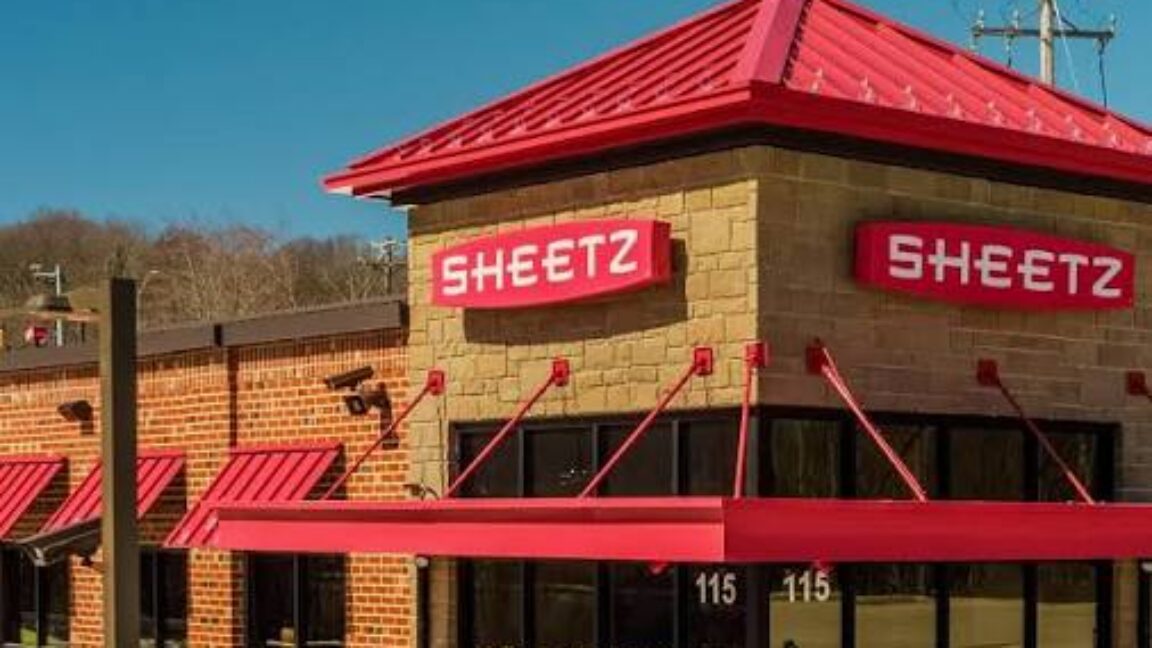
Sheetz is quitting VMware, migrating 11,000 virtual machines
A retail IT shift from VMware to StorMagic signals a broader movement toward leaner, edge-aware virtualization strategies in distributed environments. The decision to migrate thousands of VMs reflects a tension between enterprise certainty and the need for agility in a retail chain that spans convenience stores and fuel stations. For vendors and operators alike, the move foregrounds the question: how quickly can a hybrid cloud–edge model deliver predictable performance, while maintaining security, compliance, and governance across a sprawling, real-time operation?
xAI sues a man for using Grok to generate CSAM 'deepfakes'
The lawsuit brings to the fore a raw, urgent issue at the intersection of safety, policy, and free expression. The case against a Grok user for creating CSAM via an AI chatbot crystallizes concerns about weaponizable prompts, user accountability, and the boundaries of tool misuse. It is a stark reminder that as agents gain agency, the legal and ethical perimeter must tighten accordingly. The Verge and Reuters coverage emphasize how the industry must insist on robust safeguards, clear usage policies, and a survivable legal framework that can deter grievous abuse without stifling legitimate experimentation.
Apple Intelligence, launch in China, and the Qwen alliance
The China entry crystallizes a strategic pattern: AI is becoming a platform for cross-border collaboration, regulatory navigation, and consumer-scale engagement. The alliance with Alibaba’s Qwen AI binds Apple’s hardware-software ecosystem to a broader AI infrastructure that can operate within local rules while offering a unified, global user experience. It remains to be seen how this partnership will influence data localization, device-level protections, and enterprise rollout strategies—yet the signal is unmistakable: AI consumer platforms are increasingly co-located with regulatory and market realities that demand a layered, adaptive approach.
Governance, safety, and the reverse federalism playbook
The governance thread—state-driven action feeding into a national framework—emerges as a practical blueprint for balancing innovation and safety. It is not a dampener on experimentation but a scaffolding for accountability, transparency, and shared responsibilities among developers, operators, policymakers, and the public. The architecture of governance will influence how promptly and safely new capabilities enter production, and how society negotiates the distribution of risk, reward, and control across a mosaic of actors.
Summarized stories
Each story in this briefing links to the full article.
by Heidi




 by Heidi
Heidi summarizes each daily briefing from trusted AI industry sources, then links every story back to a full article for deeper context.