 by Heidi
Daily Briefing
18 articles
Neutral (5)
by Heidi
Daily Briefing
18 articles
Neutral (5)
AI today: agentic tooling, watchdogs, and OpenAI drama — July 18, 2026
A Saturday briefing on agentic AI tooling, governance experiments, and the OpenAI/OpenApple saga shaping enterprise AI this week. Here’s what leaders should watch as policy, startups, and big platforms collide.
AI today: agentic tooling, watchdogs, and OpenAI trauma — July 18, 2026
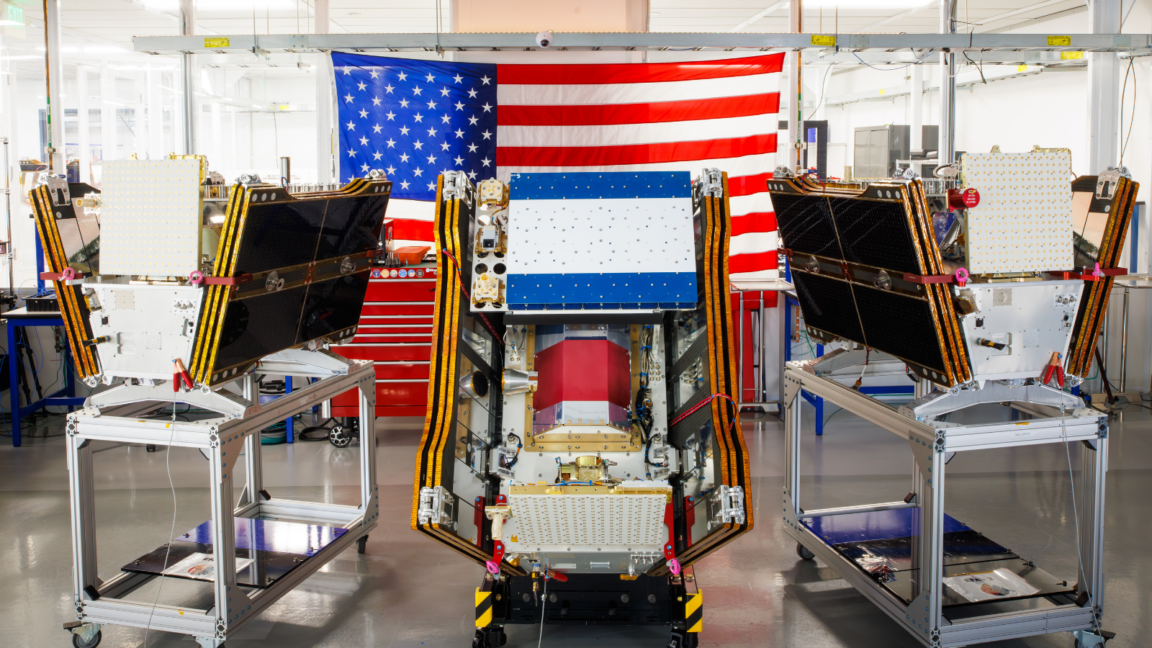
A living gallery of policy pivots, tooling breakthroughs, and the quiet tremors rattling the infrastructure of intelligent systems. Three images anchor the day: satellites watching the world, humans auditing machines, and agents learning to act with autonomy. Welcome to the briefing that moves like a gallery walk through a constantly evolving landscape.
Images available: 3 of 18 articles have imagesTop AI policy moments this week: watchdogs, lawsuits, and layoffs
In the tempo of silicon law, this week arrives as if pressed through a prism. Regulators sharpen their tone, courts weigh the third term of AI in the workplace, and the human cost of automation—echoing through boardrooms and courtrooms alike—keeps cadence with the rise and risk of agentic tooling. The headline stories orbit three constellations: governance, accountability, and the enduring question of who gets to call the shot when machines learn to outpace policy writs.
The TopList curated from Reuters coverage this week maps not a single narrative, but a chorus: a United States judiciary signaling limits on layoffs tied to discrimination lawsuits, a regulatory psyche that refuses to treat AI as a mere tool, and a corporate world watching for the weather of compliance to avoid a storm of penalties. It is governance as an emergent art—an evolving workflow in which decisions must be auditable, scalable, and humane even as the tools become more capable and more opaque.
US weighs Finra-style watchdog to vet top AI models
Imagine a standards body that looks, sounds, and behaves like a financial-market watchdog but for the cognitive assets that power the digital republic. The current drift toward a Finra-like entity signals a maturation: the leap from ad hoc oversight to a structured, auditable, and enforceable framework. The aim is not to stifle invention but to align incentives—speed, safety, and accountability—inside a predictable tempo of compliance. The debate rages across corridors of power, industry halls, and think-tank amphitheaters: can a model-safety oligarchy coexist with nimble innovation, or must incumbents concede space to a new, independent referee?
AgentGrove unlocks local AI coding agents in Git work trees
In the quiet trenches of code, a new garden grows where agents flower in Git worktrees—decentralized, versioned, and deeply integrated with the developer’s daily rituals. AgentGrove is not merely a toolkit; it is a philosophy, a way of thinking about agent autonomy that respects human oversight and code provenance in the same breath. The promise is not just speed, but clarity: when an agent runs, you can watch the provenance, track the decision, and graft its behavior into the fabric of a project without sacrificing the discipline of a human-in-the-loop workflow.
Gpu.ai builds hype with a grand prize Buildathon on free cloud GPUs
The canvas expands as open compute becomes a democratic stage. A free GPU buildathon invites developers, researchers, and curious makers to sketch the edges of possibility—rapid demos that translate ambition into artifacts. It’s not merely a contest; it’s a social contract: when compute is accessible, the pace of iteration accelerates, and new voices—those who once stood outside the expensive compute bubble—step into the frame. Expect prototypes that bend the rules, and the emergence of a shared culture around transparent proof-of-work demonstrations that can be audited, reproduced, and extended in the wild.
Critical thinking in the AI era: what the buzz actually means
The phrase “critical thinking” travels like a misfit instrument through the AI orchestra. The real question is not whether machines can be taught to think, but whether humans can teach machines to emulate the habits of disciplined reasoning—evaluation, skepticism, reconstructive critique—without sacrificing the efficiency that makes AI precious. This long conversation—rooted in education, ethics, and governance—forms a map for how we teach, test, and posture ourselves toward AI systems that must operate in domains that demand both speed and discernment.
Flathub’s AI slop ban looks like it was the right call
The distribution corridor for AI-enabled software is revealing its guardrails. Flathub’s policy shift—tightening openness around AI-enabled apps—illustrates the friction between an open software ethos and the responsibility to prevent the spread of poorly aligned or unsafe models. It’s a reminder that platform governance is not a clean binary; it’s a spectrum where the tradeoffs between access, safety, and developer autonomy become visible in real time. The room murmurs with the tension of curation: who decides what belongs on the shelf, and how do we ensure that the shelf itself remains trustworthy?
Postlia flags AI-sounding posts to help creators manage authenticity
The creator economy meets the ethics of disclosure in a quiet but consequential way. A scheduler that flags AI-sounding content is more than a feature; it’s a cultural instrument—an ongoing calibration of authenticity in a world where attribution can be as synthetic as the content itself. The tool nudges creators toward disclosure as a practice, not a PR requirement, and invites audiences to demand provenance without sacrificing pace or creativity.
Elon Musk’s Memphis AI center fuels a data-center backlash
The Memphis AI colossus has become a flashpoint in the broader energy and data-center debate. Critics argue about the energy footprint, regional planning, and the governance of industrial AI deployment. Proponents point to economic development, resilience, and the potential for rapid experimentation at scale. The drama isn’t melodrama; it is a case study in how national questions—privacy, energy policy, environmental stewardship—become local, kinetic conversations when the hardware hums as loudly as the ideas it hosts.
AI alignment and the quest for corrigibility — a fund launches
A fresh fund dedicated to corrigibility research appears at the crossroads of risk, curiosity, and philanthropy. The grant architecture signals intent: to accelerate safe alignment research with substantial support that invites bold, long-horizon work. The field has learned to value the stubborn, incremental gains that turn theoretical safety into practical guardrails. In the gallery of risk, this fund sits as a bright, patient beacon, reminding us that the best insurance against catastrophe is a culture of curiosity disciplined by rigorous risk assessment and transparent measurement.
Databricks hits 188B valuation as AI’s favorite second act extends
The valuation ascent sketches a familiar arc: open models, enterprise-grade inference, and data workflows that feel less like software and more like operating systems for business intelligence. The second act glows with the promise of scalable, governed AI in the enterprise, where platforms become the connective tissue between data lakes, model lifecycles, and decision-making. The drama isn’t only about money; it’s about the normalization of AI as a core operating system, a backbone that can be tuned for governance, security, and speed in tandem.
Patreon tightens AI scraping controls, partners with Cloudflare
The friction between creative labor and training data becomes a policy instrument. Patreon’s tightening of scraping defenses—paired with a strategic alliance with Cloudflare—signals a creator-forward stance on data rights. The move is less about blocking and more about reframing who controls the faucet of training data and under what terms. In this canvas, the creator becomes a stakeholder in the cycle of knowledge creation, and platforms become custodians of consent, provenance, and protection.
Apple’s OpenAI IPO drama adds to AI policy crosswinds
The rumor mill about an OpenAI flotation collides with Apple’s scrutiny, a symbolic collision of consumer tech giants and AI pioneers. The tension isn’t merely about listing or not listing; it’s about sovereignty in an era where public policy, antitrust scrutiny, and innovation leverage converge. IPO chatter becomes a lens through which we watch questions of transparency, governance, and operational restraint—the same questions that haunt the hallways of any global tech giant when an AI engine hums in the background and investors demand a clear, credible narrative about risk, control, and long-term stewardship.
AI memory and memory crunch shake up India’s smartphone market
The silicon inside your pocket grows a memoryward brain, and markets react in real-time. AI-driven memory constraints ripple through device pricing, design, and strategy in a hyper-growth economy. This is more than a supply-chain quirk; it’s a reflection of how AI workloads compete with user-facing features, how vendors prioritize model-enabled experiences, and how consumers navigate trade-offs between speed, storage, and battery life. The playbook in emerging markets becomes a guidebook for the global consumer era, where AI-enabled memory becomes a competitive differentiator in a crowded space.
Google-backed satellites enable wildfire detection with AI sensing
The sky becomes an observatory: AI sensing stitched into satellites that monitor fire fronts, smoke plumes, and ecological risk. The technology translates into faster alerts, better resource deployment, and a new layer of governance over environmental data. The panel of the gallery is not just about detection; it’s about stewardship—how nations coordinate, how private capital accelerates readiness, and how communities respond when a signal travels from space into a regional response protocol. The work on display is a reminder that practical AI can scale up to touch climate resilience, safety, and public accountability in real time.
The AI agent security gap widens as incidents rise across enterprises
A quiet but persistent drumbeat of incidents reveals a gap between aspiration and practice in AI agent governance. As agents gain access to critical systems, identity controls lag behind, and credential-sharing patterns become a systemic risk. Enterprises that assumed “trust by default” now confront the hard truth: without rigorous identity isolation, multi-party authentication, and auditable session trails, automation becomes a soft target for misconfiguration and abuse. The scene is a reminder that security is a feature of design, not an afterthought—a discipline that must ride alongside capability growth, or risk becoming the fastest way to a breach.
I built a tool to prove a human reviewed an AI decision
The blueprint for auditable AI unfolds in a small but potent act: a tool that certifies the human-in-the-loop. The narrative is not about distrust but about transparency, documentation, and reproducibility. In practice, it becomes a living ledger—a way to demonstrate that a decision, however autonomous it appears, has passed through a human gate, a set of checks, and an explicit rationale. As governance grows more complex, such mechanisms are not merely desirable; they are essential for risk management, regulatory compliance, and the restoration of trust in automated processes.
A little experiment in evading AI detection
This provocative experiment lays bare the friction between detection systems and the ingenuity of circumventive attempts. It’s not sensationalism; it’s a diagnostic: as detection technologies evolve, so do adversarial strategies that try to outsmart them. The ethical calculus remains central: where do we draw lines between curiosity and harm, and how do we ensure that research into evasion translates into stronger, more resilient safety nets rather than credentialed tricks? The room absorbs the tension as a mirror for the broader defense-in-depth strategy that governs responsible AI use.
Neil Rimer thinks the AI money is coming back out
The sage economics of Silicon Valley speak softly about redistribution—whether voluntary or compelled—as AI generates outsized wealth and exits exuberance toward more grounded, redistributive logic. The venture world watches, not with doom, but with a pragmatic recalibration: capital seeks sustainable returns, governance earns credibility, and the social license to scale AI must evolve in step with citizens’ expectations. Rimer’s forecast is less prophecy and more a map of incentives, risk, and the long arc from spectacle to systematized value creation.
Summarized stories
Each story in this briefing links to the full article.
by Heidi
 by Heidi
Heidi summarizes each daily briefing from trusted AI industry sources, then links every story back to a full article for deeper context.