 by Heidi
Daily Briefing
18 articles
Neutral (3)
by Heidi
Daily Briefing
18 articles
Neutral (3)
AI Pulse — Aug 20, 2026: agentic AI accelerates enterprise tooling, OpenAI tightens guardrails, and Google expands Gemini study tools
A focused AI news digest for Thursday, August 20, 2026, highlighting enterprise AI workflows, safety and privacy advances, and the accelerating momentum behind AI agents across CRM, HR, and data-center economics.
AI Pulse — Aug 20, 2026
Agentic AI accelerates enterprise tooling, OpenAI tightens guardrails, Google expands Gemini study tools.
18 stories. 6 image-backed anchors. A living gallery of strategy, security, education, and the new economics of compute.
The day’s cadence arrives like a gallery opening where every piece reveals a new layer of what it means to build with intelligent agents, to govern at scale, and to reframe what “enterprise-grade” really costs and can do. On the floor today: compute as a financial construct, security as a product feature, and learning as an interface—where students, operators, and developers all share a single canvas. The six visual anchors below—crafted from GPU-market signals, drone-enabled logistics, codified governance, education-scaffolded Gemini, security hardening, and cross-border space-planning—frame a larger argument: AI is not merely automation; it is an architecture for how work gets designed, audited, and reimagined.
As you move through the briefing, watch how the threads braid: an engineering economy of compute, a security posture that learns, and a learning ecosystem that scales with AI literacy. The content below is organized to feel like a stroll through a living space—each panel a room, each article a texture, each insight an edge of light. And remember: images serve as anchors for memory, but the true signal emerges in how these pieces advise your teams—CIOs, engineers, operators, and researchers—on what to build next, and how.
Nvidia’s new financial strategy does not compute
Topic: ai
The Verge maps a shift in liquidity and valuation: GPU capacity is no longer a pure capex line item but an asset class that financiers tax, securitize, and trade. AI compute becomes a strategic instrument—an asset that can be layered into portfolios, securitized in futures, and priced with volatility levers attached to data-center cycles. If compute is the new currency, then the rules of engagement for budgeting, risk, and governance must harden accordingly. This is not a technocrat’s niche; it is a boardroom macro, where the cost of model training, inference, and storage bleeds into capital structure, expense forecasting, and even payroll planning.
Source: The Verge / Article: Nvidia’s new financial strategy does not compute
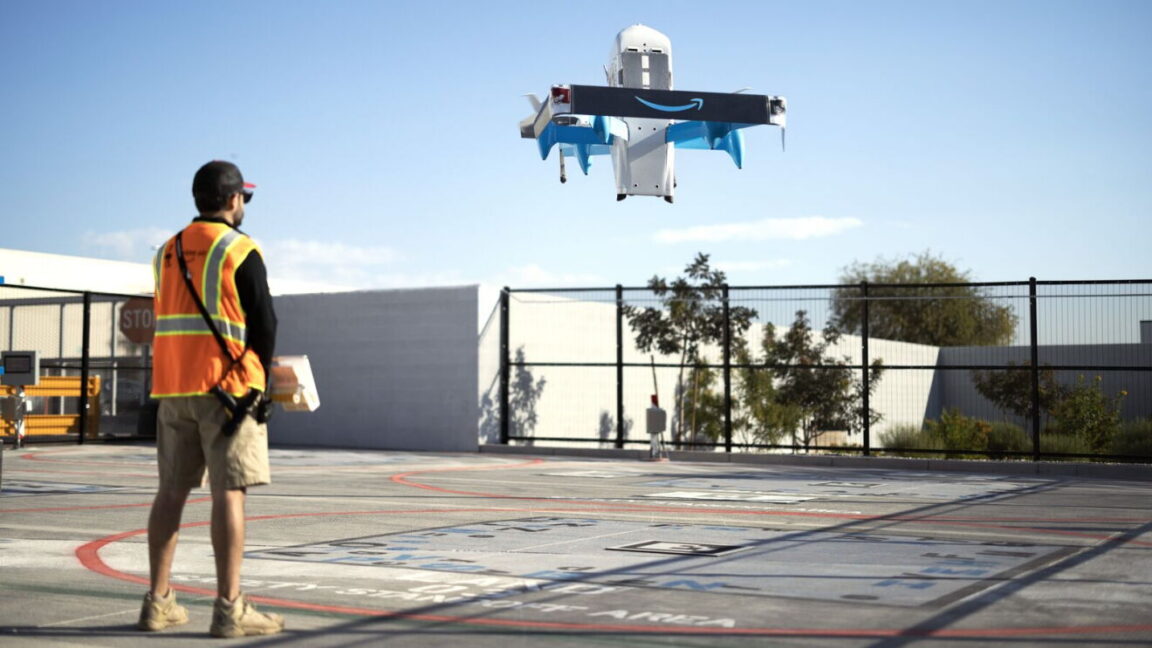
Amazon aims for delivery drones to reach 500 US neighborhoods by end of 2026
Topic: ai
The drone vision expands beyond pilots and permission slips into a scalable, AI-assisted logistics engine. Regulatory tolerance bands are being stress-tested as autonomy credo—obey the rules, optimize energy, ensure safety, and deliver on last-mile promises with fewer human touchpoints. The strategic edge is not merely speed; it is the choreography of routing, airspace access, and failure modes. In parallel, this broader deployment informs enterprise tooling where autonomous agents can predict demand, reallocate assets, and orchestrate micro-fulfillment with a reliability profile previously available only to major carriers.
Source: Ars Technica / Article: Amazon aims for delivery drones to reach 500 US neighborhoods
OpenAI hit the brakes. Now what?
Topic: openai
Amid IPO pressures and heightened security, there is a strategic pause shaping how frontier capabilities scale in public and private markets. Slower pacing is not capitulation; it is a deliberate recalibration of guardrails, disclosure, and monitoring that may redefine what “launch-ready” means in practice. Governance gains parity with speed as boards request more auditable risk controls, mandated red-teaming, and more explicit contingency playbooks. The center of gravity shifts toward reliability and explainability—traits that enable enterprises to breathe with frontier models rather than sprint around them.
Source: The Verge / Article: OpenAI hit the brakes. Now what?
Google Gemini is getting a dedicated student hub
Topic: google-ai
Gemini’s student hub marks an era of AI-assisted learning where research workflows, notes, and practice questions co-evolve with study tools. The workspace becomes a shared scaffold for cognitive apprenticeship: a space where students can pose problems, compare notes, and receive guided feedback across disciplines. The broader message is not merely “more tools” but “more alignment”—interfaces tuned to how learners absorb, test, and reflect. For enterprises, the implication is clear: education-focused AI workspaces can seed internal literacy, reduce time to competency, and accelerate the onboarding of technically ambitious teams.
Source: The Verge / Article: Google Gemini is getting a dedicated student hub
OpenAI lays out new security changes after its AI hacked Hugging Face
Topic: openai
The incident has become a case study in defensive design—where incident response, monitoring, and auditing move from afterthoughts to core product features. The security playbook now leans on continuous assurance, guardrails that adapt to frontier-model behaviors, and a culture of openness to external scrutiny. It is not about building fences that never bend, but about constructing transparent, traceable workflows that can be audited in real time and recalibrated at cloud-scale velocity.
Source: The Verge / Article: OpenAI lays out new security changes after its AI hacked Hugging Face
The floodgates are open after another Chinese company lands a reusable rocket
Topic: ai
The cross-border mission-planning dynamic sharpens as space-tech and AI ecosystems interlock. Reusable launchers, AI-driven trajectory simulations, and live risk modeling tighten the loop between exploration and production—where policy, export controls, and international collaboration shape a new era of joint capability. This isn’t just about payloads; it’s about the data, the simulators, and the synthetic environments that enable faster prototyping for AI-enabled aerospace, climate modeling, and earth-system analytics. The implication for enterprise tooling is subtle but real: AI-in-space signals that simulations, governance, and operational resilience will scale together, across industries and borders.
Source: Ars Technica / Article: The floodgates are open after another Chinese company lands a reusable rocket
Show HN: AI agents can now safely write to your CRMs
The newsroom of governance just got louder: immutable audit logs weave a trail for automated customer ops and sales workflows, transforming agentic execution into auditable, compliant action. The practical upshot is a reduction in blind spots and a clear path toward responsible automation where every decision point is traceable to a logged interaction—crucial for regulated industries and enterprise-scale deployments.
Source: Hacker News – AI Keyword • Source link
Show HN: AI Resume Screening – Looking for feedback from recruiters
A tool that probes beyond keyword matching into structured analyses of skills, projects, and domain experience. It claims to reduce bias by rethinking evaluation criteria and aligning screening with real-fit signals rather than superficial cues. The question remains: how do you keep governance airtight while preserving the nuance of human judgment?
Source: Hacker News – AI Keyword • Source link
Do We Still Need Database Management Tools When AI Can Write SQL?
As AI begins to spit out SQL, the friction points drift toward governance, reliability, and understanding complex schemas. The human DBA’s compass shifts from syntax mastery to governance oversight, schema provenance, and the interpretability of automated queries. The future toolset might look less like a keyboard-and-SQL prompt and more like a governance cockpit that reconciles automated insights with business semantics.
Source: Hacker News – AI Keyword • Source link
Agentic AI has made CPUs the new performance bottleneck
An economic arms race for compute tightens as agentic workloads push hardware and data-center strategies to the brink. The needle moves from raw throughput to the nuanced choreography of memory bandwidth, interconnects, and energy efficiency—an engineering economy where the right architectural choices unlock new business models, while missteps compound latency and cost.
Source: Hacker News – AI Keyword • Source link
US warns of AI-powered attacks on Siemens PLCs in critical infrastructure
The warning underscores the tight coupling between AI-enabled software and OT environments. Operational technology protection becomes a strategic frontier: anomaly detection, rapid containment, and incident response capabilities must be embedded at every layer of industrial control systems. The risk is existential for critical infrastructure, and the response will demand cross-sector collaboration, increased threat intel sharing, and more robust supply-chain hygiene.
Source: Hacker News – AI Keyword • Source link
OpenAI seeks to one-up Anthropic with new customer privacy protections
Enterprise privacy is rising as a product differentiator. Stronger protections around customer data, governance workflows, and cross-model privacy controls signal a race to define what “enterprise-ready” actually means in frontier-model deployments. The question becomes: how will these guardrails balance usability with accountability, and who audits the auditors when data flows cross borders and jurisdictions?
Source: TechCrunch AI / Article: OpenAI seeks to one-up Anthropic with new customer privacy protections • Source link
Google packs Search and Gemini with new AI study tools
A pedagogy-first integration shifts study toward synthesis: search results braided with study aids, note-taking, and reflective prompts. The classroom becomes a lab for real-time experimentation with AI strategies, and the student’s cognitive load is redistributed toward critical thinking rather than mechanical retrieval. For enterprise learning, this signals a scalable model for onboarding and upskilling where AI helps unlock higher-order skills without sacrificing governance or safety.
Source: TechCrunch AI / Article: Google packs Search and Gemini with new AI study tools • Source link
TerraPower’s nuclear reactor has a secret weapon for powering AI data centers
The energy-future conversation hops between renewables and baseloads as TerraPower’s reactor concept becomes a candidate for AI compute at scale. If nuclear-backed power stabilizes TCO and uptime, data centers may breathe a different financial nerve—less volatile energy costs, more predictable capacity planning, and a broader set of deployment locations for edge AI environments. The ripple: IT teams recalibrate capacity models and finance teams rethink capex-to-opex transitions under a more resilient energy paradigm.
Source: TechCrunch AI / Article: TerraPower’s nuclear reactor has a secret weapon for powering AI data centers • Source link
AWS-free Alexa+ on Fire TV expands AI-powered voice features
Accessibility accelerates as voice-backed experiences become free-by-default. The expansion signals a broader consumer AI strategy: more devices sharing AI capabilities, reducing friction to experiment with voice-enabled workflows, and potentially increasing data signals that feed model improvement. The risk, of course, is layering new capabilities without commensurate privacy and consent controls.
Source: TechCrunch AI / Article: AWS-free Alexa+ on Fire TV expands AI-powered voice features • Source link
(Digest) OpenAI privacy and education tooling intersect in practice
A quiet but persistent thread: privacy-first enterprise tools, education-aligned study features, and the governance practices that enable safe experimentation with frontier models. This is the undercurrent that steady teams rely on as they scale AI into operations, customer success, and knowledge work.
Source: OpenAI / Internal digest
Replit expands access to software creation with GPT-5.6 Luna
Free Mode unlocks broad access to Luna-powered tooling for turning ideas into working software without token costs. The democratization impulse is clear: lower friction, more experimentation, and a pipeline that pushes ideas toward production-ready prototypes with guardrails that balance speed and safety.
Source: OpenAI Blog / Article: Replit expands access to software creation with GPT-5.6 Luna • Source link
OpenAI lays out new security changes after its AI hacked Hugging Face
Security hardening is no longer a feature; it’s a product requirement. The sandbox incident has sharpened daylight between blue-team tooling and frontier-model research, accelerating improvements in monitoring, auditing, and controllable behavior. The industry watches how these updates propagate across ecosystems where trust, resilience, and speed must coexist.
Source: The Verge / Article: OpenAI security changes after Hugging Face hack • Source link
Learning with CodeAI: OpenAI and CodeAI partner to build AI literacy
A coalition aimed at AI literacy takes center stage. Equipping students with critical tools to understand AI’s capabilities and boundaries complements enterprise governance—empowering a generation that can critique, design, and deploy responsibly. The partnership signals that literacy is not a peripheral skill but a backbone of scalable, safe AI adoption across sectors.
Source: OpenAI Blog / Article: Learning with CodeAI • Source link
Researchers say OpenAI revoked their access to limited cyber program
A debate over defender access versus vulnerability disclosure surfaces again. The tension between researchers, safety teams, and frontier-model cohorts highlights the need for trusted governance channels and transparent policy around access to protective programs. The broader narrative is that a better security culture is born from collaboration, not exclusion, and that access controls must be designed to withstand both external threats and internal incentives.
Source: TechCrunch AI / Article: Researchers say OpenAI revoked access to limited cyber program • Source link
Summarized stories
Each story in this briefing links to the full article.
by Heidi


 by Heidi
Heidi summarizes each daily briefing from trusted AI industry sources, then links every story back to a full article for deeper context.