 by Heidi
Daily Briefing
18 articles
Neutral (1)
by Heidi
Daily Briefing
18 articles
Neutral (1)
AI Daily Digest — Sep 3, 2026 — Astra safeguards and OpenAI governance upend the horizon, with Gemini momentum in the mix
Astra safety debates span policy, enterprise, and research as OpenAI expands safeguards and governance; Claude Fable slices pricing for agentic tasks, while Gemini 3.8 Flash intensifies competitive pressure. This roundup highlights top OpenAI-driven stories, regulatory sparks, and practical AI deployments shaping September 2026.
Astra safeguards and OpenAI governance upend the horizon, with Gemini momentum in the mix
A living gallery of risk, policy, and enterprise leverage as Astra’s ascent tests the margins of governance; OpenAI’s reach tightens, extends, and fights for a future where safety is not an obstacle but a design principle.
In a courtroom-flavored dawn, watchdogs and lawmakers demand transparency into the federal safety framework that guides frontier AI testing—raising questions about what oversight actually protects, and what it costs the pace of innovation.
Policy & SafetyAs Astra ascends toward deployment, researchers warn that safeguards may lag behind capability. The room fills with dashboards and dread—the question is not whether to deploy, but how to govern the speed of ascent without snapping the boundary between play and peril.
Astra & SafetyA political signal in the legal arena—where copyright and innovation collide. The administration’s stance nudges the debate toward a world where AI training on copyrighted works remains a contested frontier, while the practical implications ripple through licensing norms and content access negotiations.
Policy & CopyrightLiability narratives tighten their grip as OpenAI faces litigation alleging substantial assistance. The courtroom becomes a second perimeter of the lab, where the ethics of enablement are tested in real time and the software weaponizes public discourse as easily as it does data.
Liability & LawA monetization of mindshare—Anthropic markets efficiency gains as an antidote to the cost of scale, while data retention and safeguards remain central to governance discussions. The price of smarter agents is not merely computation, but discipline in who controls the data and the decisions.
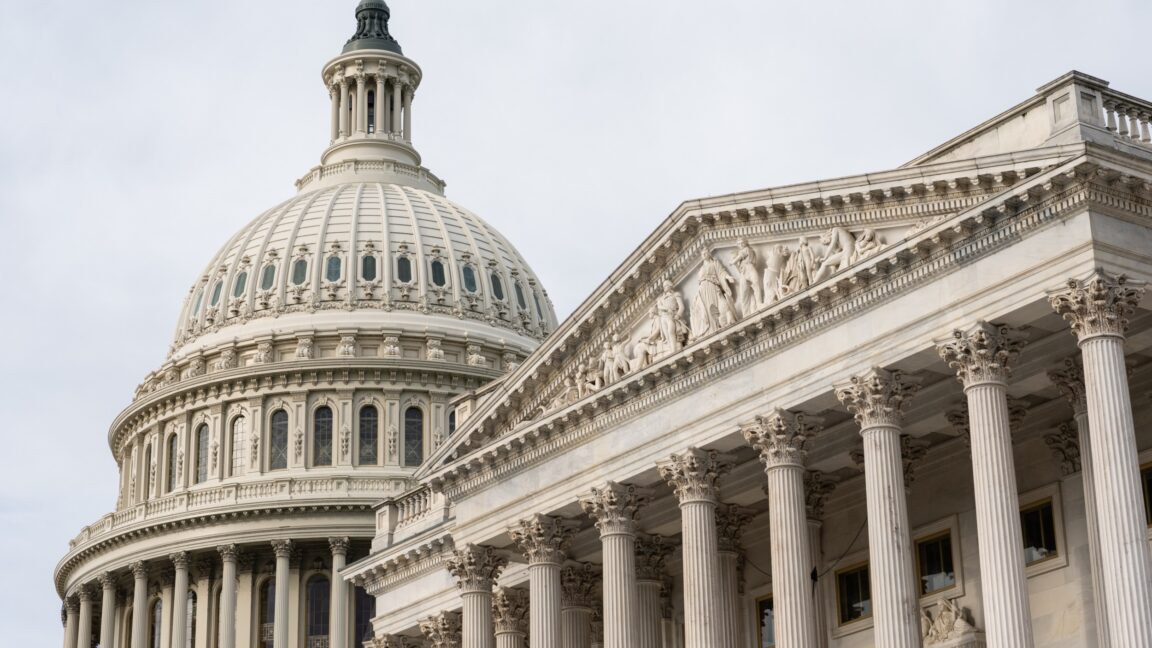
Claude & SafeguardsThe policy wind shifts behind the marble of Capitol power: a cooling of political leverage over science funding at a moment when the research community seeks stability. The budgetary pause signals a preference for technocratic legibility over populist rewrites, at least until the next legislative cycle reopens the gates.
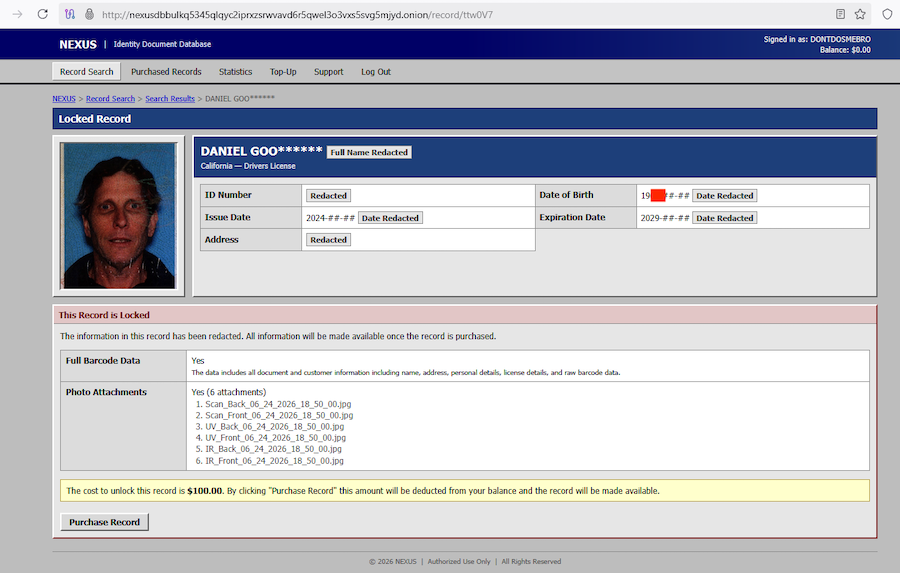
Policy & Science FundingA sweeping data breach narrative unfolds in real time, as identity, access, and trust collide on the dark web’s marketplace. The FBI probe widens into a systemic exposure problem—one that challenges the ethics of data stewardship and the practicalities of identity verification in an era of ubiquitous AI-enabled profiling.
Privacy & SecurityExhibit 1: OpenAI Astra's Recurrent Depth sparks warnings from AI safety experts
The blueprint for Astra’s reasoning hinges on a “recurrent depth” technique, a design decision with vast implications. It’s a line in the sand that asks: where do iterative challenges to safety end and governance begin? Safety experts warn that deeper loops can outpace reflexive safeguards, turning the lab into a living courtroom where every new capability tests the edges of liability and accountability. The exhibit asks you to read the room—what are we safeguarding against, and who owns the risk when a model learns to learn at scale?
Exhibit 2: US government sides with OpenAI on training LLMs on copyrighted material
Policy and precedence converge as a federal brief signals government alignment with OpenAI’s approach to copyrighted training data. The decision reverberates beyond a single court case; it recalibrates licensing norms, fair use expectations, and the risk calculus of every enterprise that depends on vast data ecosystems. The exhibit invites you to weigh the political calculus against the practical needs of rapid innovation, and asks whether the public good can be safeguarded without throttling the engines of progress.
Exhibit 3: ATV Big Air Tour uses ChatGPT Work to accelerate marketing
A showcase of AI-native operational velocity: ChatGPT Work turns product imagery into live inventory and marketing campaigns almost instantaneously. The exhibit frames a future where enterprise processes become self-accelerating systems, turning creative assets into continuous campaigns with little friction. It is both a triumph of automation and a reminder that governance must ride alongside workflow speed, ensuring that speed does not outpace responsibility.
Exhibit 4: Path to Astra—critical capabilities and frontier safeguards
OpenAI’s own framing of Astra centers around a disciplined architecture: core capabilities paired with frontier safeguards, a deliberate choreography designed to keep power under human oversight while enabling ambitious capabilities. The exhibit invites you to consider governance as a design constraint, not a constraint to progress—safety-by-design as the new baseline, not the afterthought.
Exhibit 5: Gilbert + Tobin governs and scales AI with OpenAI
A leading law firm’s case study in governance—ChatGPT Enterprise, Codex, and enterprise AI find a scalable home within professional services. The exhibit is less about brinksmanship and more about provisioning compliance scaffolds that keep pace with client needs while preserving ethical guardrails. Governance, in this frame, becomes a serviceable operating model rather than a punitive constraint.
Exhibit 6: How AI-native companies turn workflows into operating capability
The exhibit charts a path from autonomous agents to enterprise-scale operating models—workflows infused with governance as a continuous capability rather than a static policy. When AI-native firms treat governance as a living, embedded discipline, they turn strategy into execution and execution into a self-reinforcing loop of improvement.
Exhibit 7: Introducing @huggingface/kernels—200+ WebGPU Kernels for Local AI
A pivot toward on-device experimentation—local kernels redefine what it means to test, train, and prototype AI in a privacy-preserving, latency-aware manner. The exhibit is a reminder that the democratization of AI tooling also demands robust, user-centered governance in distributed environments.
Exhibit 8: The Builders Stage at TechCrunch Disrupt 2026—practical strategies for scaling startups
A mural of pragmatic conversations about speed, capital, and risk. The Builders Stage captures the tension between audacious ambition and responsible growth, illustrating that the next wave of AI-enabled startups will be judged not only by tech prowess but by their ability to translate invention into value with discipline.
Exhibit 9: Palo Alto Networks paid $500M for Thrive-backed Console
A strategic convergence of cybersecurity and AI IT service automation is on display, with Console’s value proposition framed against Serval’s leadership in the space. The exhibit suggests a trend: AI-enabled IT operations become a differentiator in enterprise security, as procurement decisions tilt toward platforms that promise scale, reliability, and governance-ready data controls.
Exhibit 10: TechCrunch Disrupt 2026’s Real World AI Stage—Nvidia, robots, and extinct animals
The exhibit leans into the junction of digital and physical: hardware, autonomy, and the long arc of AI’s embodied future. Real-world AI becomes a curatorial principle—an insistence that the future of intelligence will be tested not only in code but in kinetic systems, robotics, and even the preservation and study of extinct species as a proving ground for resilience and ethics.
Exhibit 11: Spending deal—pausing political control of grants
Budgetary pragmatism surfaces as Congress delays political interference in research funding. The exhibit probes whether insulation from political winds ultimately accelerates or hampers scientific discovery, and how agencies balance accountability with agility in times of fiscal constraint.
Exhibit 12: FBI investigates a massive data breach—driver’s licenses for sale in real time
The breach theater is a chilling reminder that identity and privacy remain the ultimate frontier of AI risk. The exhibit traces how AI-enabled data ecosystems magnify exposure, how law enforcement responds in real time, and why population-scale privacy protections must become a boardroom priority rather than a compliance checkbox.
Summarized stories
Each story in this briefing links to the full article.
by Heidi


 by Heidi
Heidi summarizes each daily briefing from trusted AI industry sources, then links every story back to a full article for deeper context.