
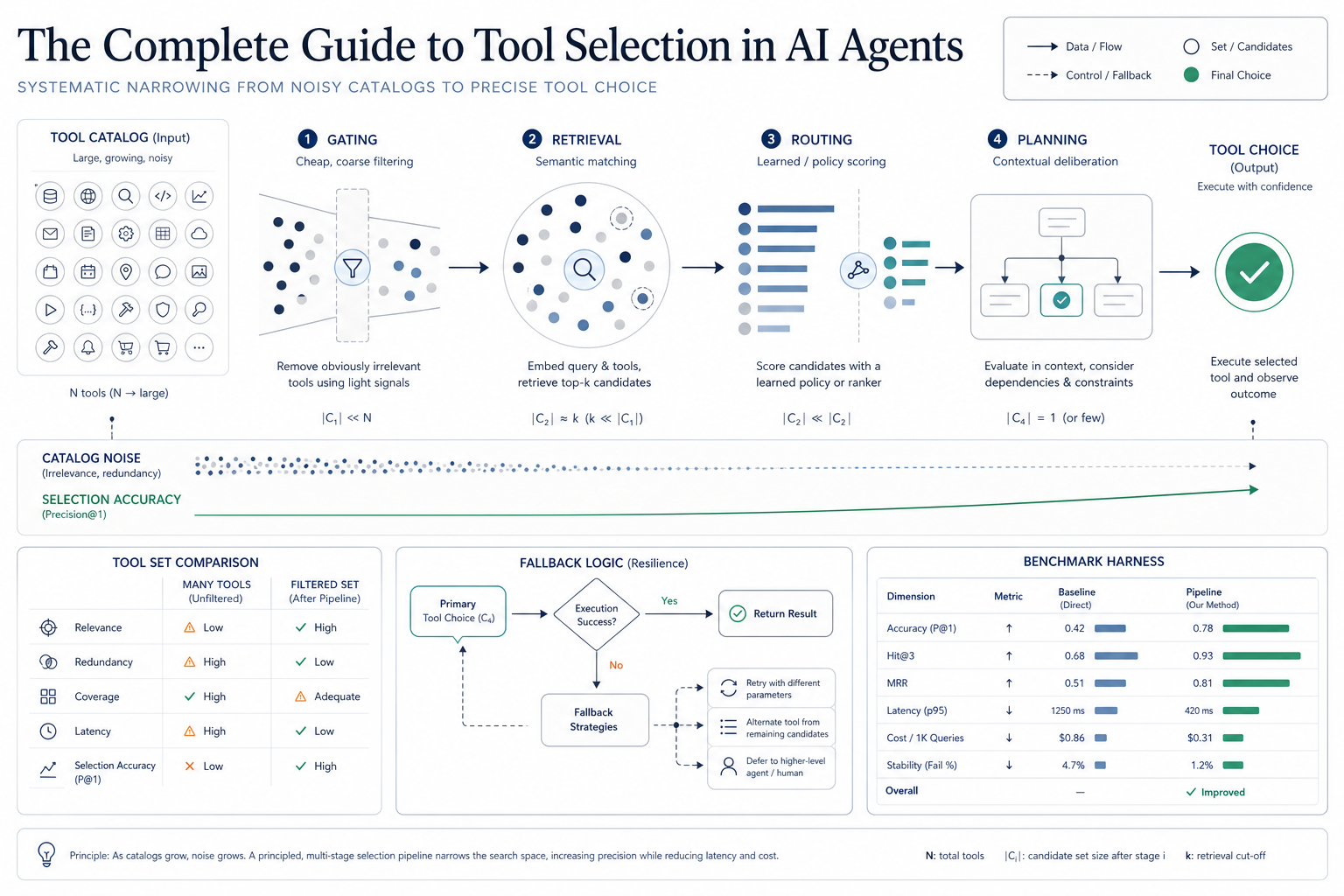
The complete toolkit for AI agents
The article surveys the landscape of tools used in AI agents, emphasizing how tool choice shapes agent capabilities and reliability. It covers tool categories, integration patterns, and decision criteria that teams should apply when building and deploying agent-based workflows. Readers gain a framework for evaluating memory modules, planners, action execution environments, and external services as part of a cohesive agent stack. The piece also hints at the importance of tooling parity between simulation and real-world deployment to ensure transferability of agent behavior from lab to production.
For practitioners, the guidance offers a practical blueprint to reduce integration risk, accelerate development cycles, and improve observability in agent-led systems. It also raises questions about standardization across vendor ecosystems and the value of open standards for tool interoperability. As AI agents move from research curiosities to mission-critical components, such tooling guidance becomes essential for teams aiming to scale responsibly and predictably.