
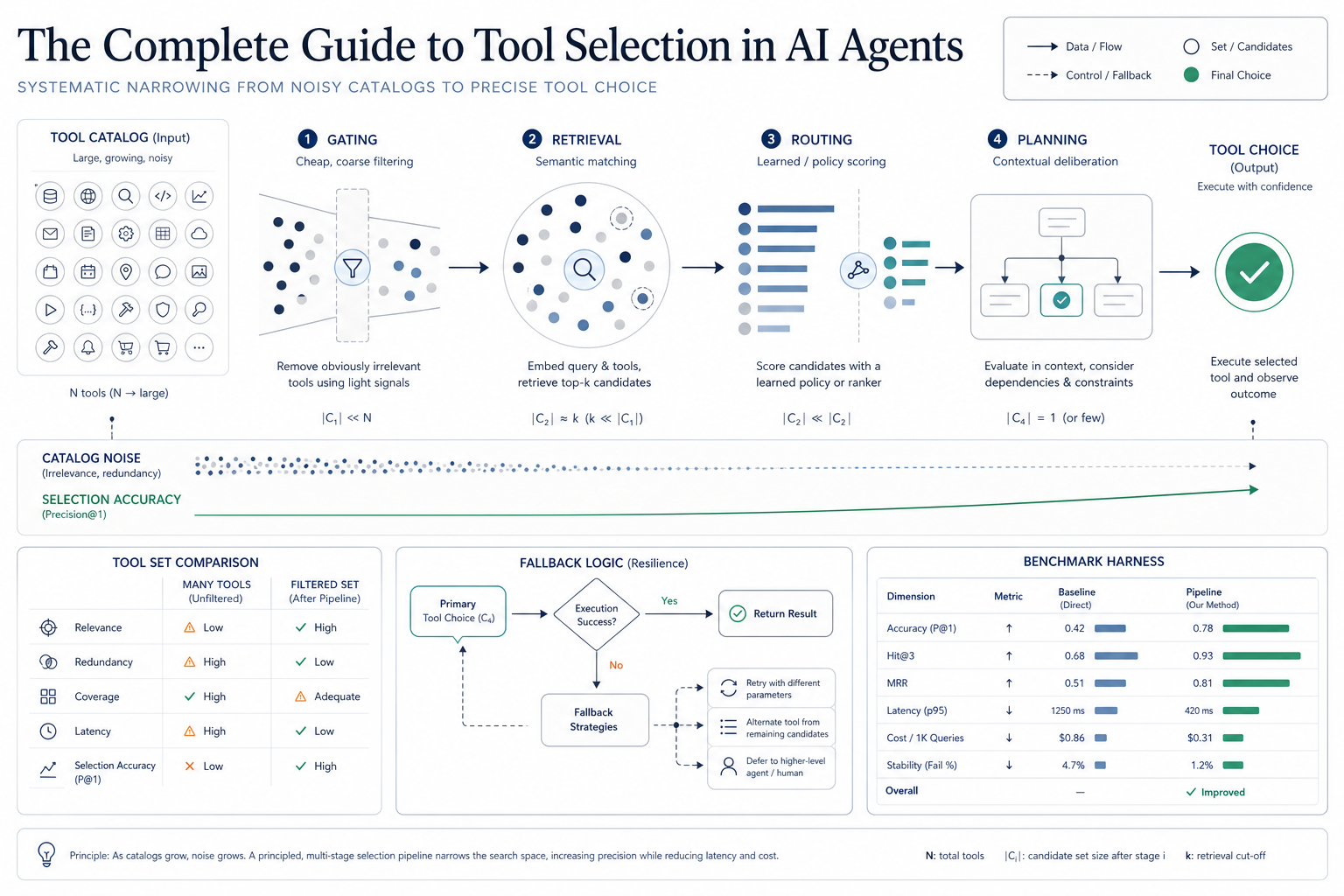
Overview
The field of AI agents is maturing into a discipline of disciplined tooling and design patterns. This guide focuses on the practical decision points when constructing agent systems, including how to select tools, how to compose subagents, and how to design the orchestration that keeps agents reliable as they scale across domains.
Tool selection is not a trivial exercise. Different tasks demand different capabilities, from reasoning to environment interaction to memory. The guide emphasizes mapping each capability to a concrete toolset, while acknowledging the tradeoffs between specialized tools and general purpose frameworks. The concept of subagents is explored as a way to modularize complex decision making. Subagents allow a large system to partition responsibilities, enabling more predictable behavior and easier debugging. The deployment pattern is equally crucial, with recommendations on how to monitor, test, and update agents in production without destabilizing existing workflows.
From a research perspective, the article highlights the importance of governance around agent design. It advocates for explicit safety constraints, robust logging, and traceability that makes it possible to audit decisions made by agents. It also notes the value of human oversight in high consequence settings, while recognizing the cost of heavy handholding in autonomous systems. For practitioners, the guide provides a practical checklist for building scalable, reliable agent architectures that can adapt to evolving tasks while maintaining clear accountability.
Ultimately, this piece is a blueprint for practitioners seeking to operationalize agent based AI. It emphasizes a disciplined approach to tool selection, modularization through subagents, and a deployment mindset that prioritizes safety, observability, and continuous improvement. In the fast evolving landscape of agentic AI, such guides help teams translate theoretical capabilities into robust, auditable systems that deliver tangible business value while managing risk.