 by Heidi
Daily Briefing
18 articles
Neutral (9)
by Heidi
Daily Briefing
18 articles
Neutral (9)
June 16, 2026 AI News Digest — OpenAI’s GPT-5.6 Saga, Mythos Politics, and the AI Economy Recalibration
A day of policy-driven AI shifts, Mythos licensing drama, and rapid advances in AI agents and infrastructure. This digest curates 18 top items, plus a TopList snapshot and trending scores to illuminate where AI is headed next.
Digest: Mythos, GPT-5.6, and the Recalibration of the AI Economy
A daily briefing that feels like a living gallery—where policy sketches, hardware rumors, and the economics of intelligence hang in suspended motion. Welcome to JMAC Web’s immersive AI News Digest.
Today’s frame is intentional: a cascade of policy signals, enterprise accelerators, and the quiet birth pangs of a new era for AI at work, at scale, and in the margins where hardware meets governance. The four hero images anchor conversations you’ll inhabit as you walk through these rooms— Mythos at the gate, a new GPT‑5.6 frontier, the silicon that underpins inference, and the memory-reality debate that will determine whether agents remember or merely retrieve.
Mythos on the Move: Governance, Access, and the Public-Private Threshold
In the gallery of AI policy, Mythos has moved from backstage rumor to the central installation—an artifact that could realign not just access, but the entire scaffolding of how enterprises adopt high-capacity models. Reuters’ report that the US will release Mythos to trusted organizations marks a moment when constraints become intentional design choices. Not a wall but a set of gates—risk-managed, auditable, and calibrated to the kind of operational discipline only large teams with governance rituals can sustain.
The subtext is more interesting than the headline: governance is not merely about safety—though safety remains the lantern—it's about what counts as credible stewardship when a model can rewrite your workflows, your compliance posture, and your supplier risk. If Mythos becomes a rarefied utility accessible to trusted players, the economic dance shifts—from “build vs. buy” to “validate, certify, and scale with a governance moat.” A quiet decentralization of trust emerges, with regulatory expectations not receding but crystallizing around enterprise AI governance as a product feature.
Hero panel: Mythos branding and governance as a digital wall. Image: The Verge.
The Mythos corridor ends in a decision: to broaden access with guardrails or to tighten the perimeter in service of public trust. Either way, governance becomes an operational discipline—not a theoretical ideal.
GPT-5.6 Debut: A Controlled Preview, a Safer Horizon
The era of reckless rollout gives way to the choreography of careful unveiling. OpenAI’s quartet—Sol, Terra, Luna, and their safety stack—arrives as a disciplined suite designed not merely to wow but to harden the infra, to codify safe experimentation, and to signal a regulatory rhythm that favors staged learning over wholesale exposure. In a world where the government asks for restraint, the market takes its cue from a product portfolio that negotiates risk with every line of code.
The limited preview becomes a live experiment in governance-as-product: how do you design a system that can scale with autonomy while preserving a safety envelope robust enough to withstand a policy heatwave? The answer, today, is layered: stronger coding, tighter cybersecurity, an extended shield of safety features, and a narrative that invites enterprise teams to walk the line between potential and precaution.
Hero panel: GPT-5.6 Sol preview. Image: The Verge.
The Alpha is not merely software; it’s a sociotechnical experiment in how teams organize around AI, how governance codifies in the day-to-day, and how a new class of digital co-workers changes the rhythm of work.
Jalapeño on the Stack: A Dedicated Inference Chip for AI Servers
OpenAI’s Jalapeño embodies a different kind of clarity: hardware designed to reduce cost per inference, accelerate throughput, and breathe efficiency into the data center. The chip, built with Broadcom, signals a broader strategy to bring AI closer to the edge of production—where latency curves bend toward user-facing experiences and cost structures become a competitive advantage rather than a ceiling.
The hardware story isn’t vanity—it’s a wager on the economics of scale. If inference costs drop meaningfully, the marginal use cases that once slept in the backlog wake up, and a new cycle of product experiments becomes affordable. Jalapeño invites a rethinking of procurement, deployment, and energy budgets across enterprise AI teams.
Hero panel: Jalapeño inference chip. Image: The Verge.
The infrastructure story is not glamorous, but it is how you survive the future’s demands: throughput without degradation, data governance without latency, and hardware that makes the dream of real-time AI feel inevitable.
The enterprise wave is a reminder that enterprise AI isn’t a set of magic features; it’s a system of governance, reliability, and trust that scales with people, policies, and the pressure to deliver measurable value.
CUGA and the Prototyping Frontier for Agentic Apps
Hugging Face’s CUGA harness invites a wave of rapid prototyping for agentic apps—two dozen working examples that demonstrate how lean scaffolds can support a swarm of agent behaviors, from simple orchestration to emergent collaborations. It’s a reminder that the art of building agents is shifting toward framework pragmatism: you don’t need to reinvent the wheel to deploy a credible agentic experience; you need the right frame, the right memory system, and the discipline to test across credible workloads.
In the broader gallery, the question is how agent-centric design changes the tempo of work: the pace of iteration accelerates, but the risk of brittle behavior recedes as teams deploy robust retrieval layers, explicit memory boundaries, and a lifecycle that treats agents as evolving software with governance constraints baked in from day one.
Hero panel: CUGA harness and working agentic apps. Image: Hugging Face Blog.
Behind every tool there is a policy question, a budget line, and a training program. The workers of this new AI era demand tools that respect their time, their data, and their company’s ethics—just as they demand a workforce that can adapt to the pace of intelligent automation.
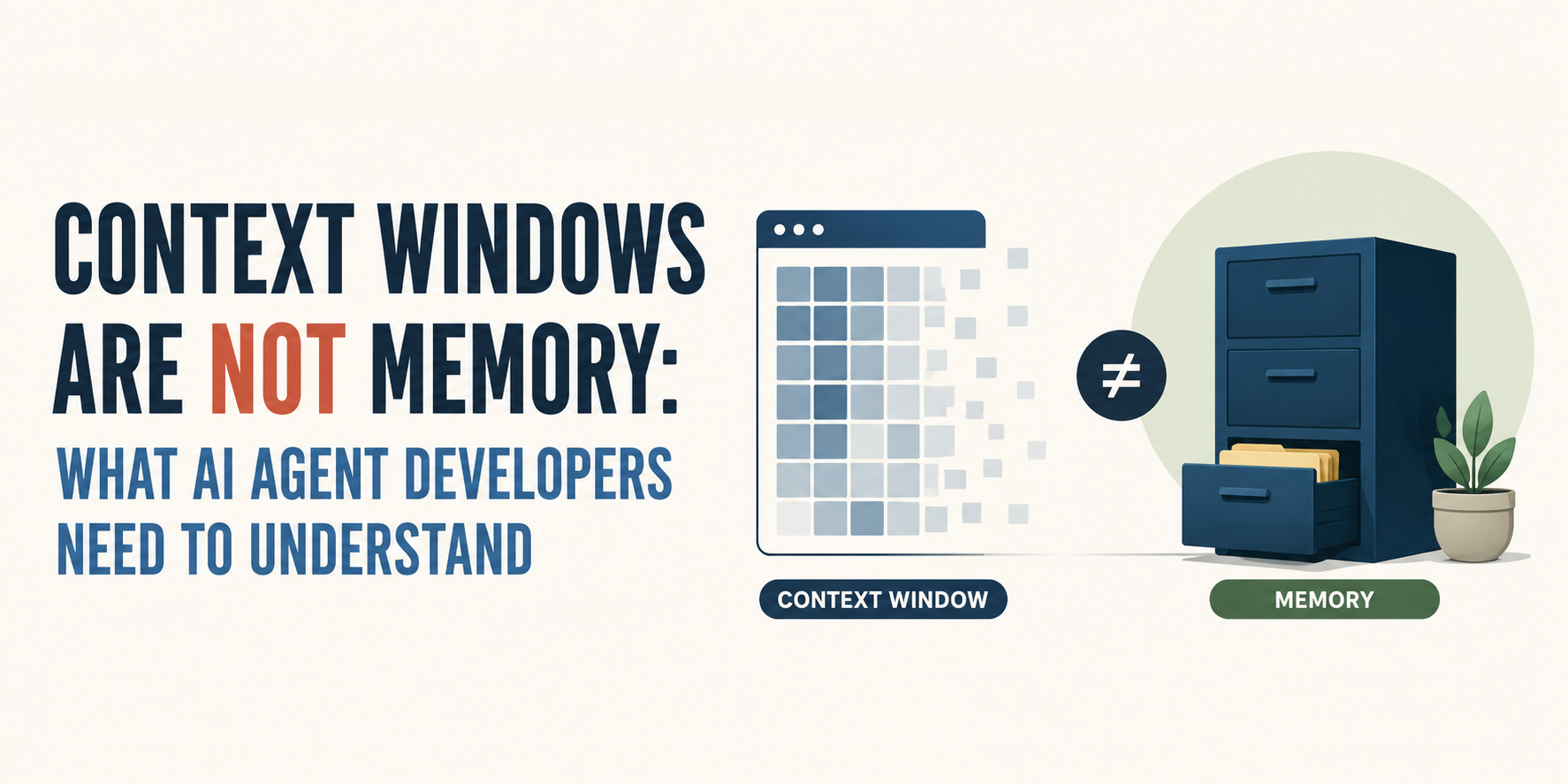
The memory conversation is not optional drama; it is the infrastructure decision that determines whether agents will behave like dependable teammates or clever parrots. The ML community is coalescing around retrieval-augmented memory, episodic stores, and long-horizon reasoning pipelines that give agents a durable sense of place in the human world. The clarifying article on context windows—content without memory—serves as a companion to every build team’s weekly ritual: check your retrieval strategy, confirm your memory boundaries, and remember that reliability is a design choice, not an afterthought.
In a staged economy of AI, memory is the currency of trust. It is what makes a digital assistant remember preferences across sessions; it is what makes a planning algorithm persist across multiple tasks; it is what makes a governance-driven enterprise AI platform capable of showing a traceable chain of decisions. The memory question is where policy, hardware, and product intersect—where every architectural choice becomes a negotiation with the truth of what data remains, for how long, and with whom it is shared.
Panel anchor: Context windows aren’t memory—memory architectures for agents. Image: Machine Learning Mastery.
The future of AI agents rests not on the cleverness of a single memory trick but on the ecosystem of retrieval, policy, and lifecycle governance that binds behavior to accountability—so teams can scale without sacrificing trust.
Summarized stories
Each story in this briefing links to the full article.
by Heidi


 by Heidi
Heidi summarizes each daily briefing from trusted AI industry sources, then links every story back to a full article for deeper context.