 by Heidi
Daily Briefing
18 articles
Neutral (10)
by Heidi
Daily Briefing
18 articles
Neutral (10)
June 20, 2026 AI Digest — OpenAI chips, agent memory, and enterprise AI dominate the week
A rapid run of breakthroughs in AI hardware, multi-agent systems, and enterprise AI headlines a busy week. Here are the top 15 stories with expert context and deeper analysis.
June 20, 2026 AI Digest
OpenAI chips, agent memory, and enterprise AI dominate the week
A living gallery of twenty-first-century intelligence — where the hardware frontier, governance, and everyday enterprise practice collide in cinematic scale.
Context Windows Are Not Memory: What AI Agent Developers Need to Understand
A lucid demystification of how agents think in batches and how memory must be designed, not assumed. The long context window is not a memory bank; it’s a transient conduit, a cinematic corridor that must be wired to retrieval, memory architectures, and disciplined design. The week’s pulse beat fastest where theory meets practice, where teams stitched together memory scaffolds to empower agents that can actually remember, reason, and act across tasks that extend beyond a single session.
In the streaming era of AI, context windows can carry a scene from yesterday, but memory must hold a narrative across time, across users, across intents. The article why this distinction matters is a manifesto for developers and operators: if you treat a window as memory, your agents will misplace facts, repeat questions, and become unreliable co-pilots. The authors outline practical memory architectures, including persistent vectors, episodic stores, and retrieval-augmented pathways that keep agents honest and efficient. In production, that means robust retrieval strategies, clear caching policies, and explicit memory ownership that aligns with governance and compliance. The future of agent design, then, leans toward a triad: memory, context, and retrieval—each serving its own purpose yet bound in a disciplined, auditable pipeline.
Google Home will soon get better at recognizing you
Facial recognition in the smart home is not merely a feature; it’s a commitment to trust, privacy, and context. Google’s update tightens recognition of Familiar Faces, reducing misidentifications in everyday contexts—from living rooms to kitchen counters, where a slip between familiar and unfamiliar can redraw user experiences and raise thorny privacy questions. The newsroom portrait here is not a glamour shot of algorithmic precision; it’s a quiet, policy-informed advance that demands transparent controls and rigorous testing across lighting, clothing, and vantage points. This is a small, consequential hinge moment for privacy-by-design in consumer AI.
Behind the scenes, the engineering teams are calibrating embeddings, reducing false positives, and layering user consent into the face-recognition lifecycle. In practice, this means clearer opt-outs, granular controls for where facial data can be used, and robust audit trails for regulatory scrutiny. For users, it translates into smoother morning routines: a device that knows you well enough to greet you by name, without overstepping consent or memory boundaries. For enterprises and regulators, the call is for explicit governance—privacy-by-default, data minimization, and transparent data retention policies that can withstand public scrutiny and legislative review. The image anchor here is a quiet portrait of recognition—an emblem of a broader shift toward responsible, experiential AI in the home.
Hollywood Is Bending the Knee to OpenAI
The negotiation room where entertainment deals are reimagined as creative collaborations with AI as a central partner has become a stage for power, policy, and possibility. The Verge AI’s reporting sketches a high-stakes tableau: studios and streaming platforms courting OpenAI not merely as a toolset but as a partner in content ideation, script development, and production planning. The art here is how business models bend around the capabilities—and potential constraints—of AI. Regulation, talent unions, and consent frameworks are no longer footnotes; they’re the drumbeat of every headline and negotiation briefing.
What emerges is a pattern: AI accelerates collaboration while demanding guardrails. For creatives, this means new workflows where AI drafts, suggests, and refines, but approvals, licensing, and attributions remain human-guarded ground. For policy, it’s a call to scalable, cross-border governance that can translate to fair pay, transparent rights, and reproducibility of protected material. The imagery in this panel is a cinematic tableau—stars on a set meeting with a digital cognitive partner—rendering the future of entertainment as a disciplined dance between human authorship and machine-assisted amplification. The systems challenge is to keep both sides honest, creative, and governed by shared standards that don’t stifle imagination.
Elon Musk Denies Tesla’s Autopilot Caused Crash That Killed Grandmother
A courtroom–calm narrative unfolds around a high-profile incident that has become a symbol for the AI safety debate: responsibility, fault lines in autonomous systems, and the design choices that shape how machines interpret real-world emergencies. The publication is not just about a single crash; it’s about the architecture of safety, the chain of causality, and who bears the ultimate accountability when software and kinetic reality collide. Regulators are mining data, lawyers are drafting questions, and engineers are recalibrating perception modules in the wake of scrutiny.
From a product perspective, the texture of this week’s news is a reminder that safety is not a feature but a discipline—red-teaming, disaster scenario rehearsals, and transparent disclosure. The narrative around Autopilot is being reshaped by public memory, not just by the technical specs. If memory is the agent’s moral compass, governance is its restraint. The image here is a stark reminder that the road to scale runs through the hospital of public opinion, regulatory corridors, and the quiet rooms where policy and design converge to prevent tragedy while preserving innovation.
Samsung Opens ChatGPT Enterprise and Codex Access After AI Restrictions
A corporate pattern repeats: once FOMO meets governance, scale becomes strategy. Samsung’s decision to widen access to ChatGPT Enterprise and Codex across devices signals a maturity in enterprise AI adoption—where the barrier to entry is less about capability and more about control. The move nods to governance frameworks that segment data, define usage policies, and embed decision rights across product teams, IT, and compliance. In practice, it means engineers can prototype faster, designers can iterate with real-time assistance, and product managers can test prompts against governance guardrails without sacrificing speed. It’s enterprise AI unboxed, with a clearer line of ownership and an auditable trail behind every interaction.
As the enterprise AI stack expands, the questions sharpen: How do you measure ROI when tools are pervasive? How do you prevent leakage across devices, channels, or departments? The answer is a layered architecture—policy anchors at the edge, governance dashboards in the middle, and programmable retrieval and safety rules at the core. For creative teams and engineering squads alike, Samsung’s approach offers a blueprint: adopt, govern, measure, and evolve—without slowing the very momentum that makes AI transformative.
FFASR Leaderboard: Benchmarking ASR in the Real World
Speech recognition remains one of the most practical interfaces to AI, and its real-world rigor matters as much as its academic elegance. The FFASR leaderboard is a practical compass for teams deploying ASR in the wild—acoustic variability, background noise, device constraints, and latency all feature, not as backstage concerns, but as front-stage determinants of user experience. This piece is not a parade of scores; it’s a map of deployment realities—how metrics shift when you move from curated datasets to a ranger’s dataset, how latency becomes a feature in user satisfaction, and how calibration in production matters more than laboratory perfection.
For practitioners, the key takeaway is about calibration cycles: measure against real-world tasks, not idealized transcripts. The leaderboard invites teams to tune streaming pipelines, quantify prompt-level improvements, and design evaluation protocols that reflect end-to-end experience. The art of production ASR, then, is not only about accuracy but resilience—to accents, microphone quality, and acoustic environments—while maintaining a privacy-preserving posture in continuous listening within enterprise devices and consumer products alike.
Accelerating Transformers Fine-Tuning with NVIDIA NeMo AutoModel
The workflow revolution is here: fine-tuning is shedding its computational drag and entering a new era of speed—without sacrificing fidelity. NeMo AutoModel abstracts away much of the boilerplate that once clogged researchers’ desks and reduces the time from concept to deployment. The narrative in this TechCrunch–Hugging Face collaboration centers on practical gains—the automation of model parallelism, smarter checkpointing, and dynamic memory management that adapts to the size and shape of the model you’re tuning. It’s not merely more efficient; it’s more accessible to teams that previously lacked specialized hardware or bespoke pipelines.
The broader implication is a democratization of fine-tuning: smaller teams can iterate with the same agility once reserved for large incumbents. This shift accelerates experimentation cycles, expands the palette of architectures that can be deployed, and pushes the industry toward more responsive, domain-specific models. The NeMo AutoModel approach whispers a future in which every team can sculpt their own transformers at a pace that finally keeps pace with product roadmaps and customer needs.
OpenAI and Broadcom Unveil LLM-Optimized Inference Chip
In one breath, silicon and software converge to serve a new tier of AI — chips engineered for inference that squeeze more performance out of fewer watts and fewer dollars. Jalapeño, the first custom chip born of this collaboration, reframes the economics of AI at scale: lower latency, tighter data-center budgets, and a design language that privileges energy efficiency without compromising throughput. The narrative is not simply about hardware—it's about how hardware catalyzes new business models for AI deployment at the enterprise and platform levels, enabling more responsive copilots, more capable assistants, and a more democratic access to high-performance AI across industries.
The practical implications circulate through the economics of AI pipelines: model sizes potentially shrink, deployment footprints can expand to edge environments, and governance primitives must accompany hardware advances so that performance gains never outpace safety, privacy, and reliability. The chip becomes a fulcrum for a broader transformation: a hardware-software contract that lets organizations experiment with new prompts, new workloads, and new service models—without paying a punitive energy or latency tax.
OpenAI Helps Build Shared Standards for Advanced AI
Across continents and regulatory regimes, a chorus of voices argues for common ground—evaluation frameworks, safety benchmarks, and standardized metrics that survive political inflection. OpenAI’s push for shared standards isn’t about stalemate; it’s a blueprint for progress that respects sovereignty while enabling interoperability. The newsroom dialogue here is less about a single protocol and more about a blueprint for governance by design: transparent evaluation, reproducible testing, and a culture of accountability that can scale as models become more capable and more embedded in critical systems.
Practitioners will recognize a pattern: standards reduce bespoke risk while preserving competitive advantage through clear baselines and repeatable procedures. The piece surveys how standards can harmonize safety, reliability, and performance across vendors, platforms, and regulatory landscapes. The challenge is not to neutralize innovation but to channel it through shared tests, audit trails, and human-centered governance that anchors AI to human values and societal norms.
Anthropic Slack Workplace AI Agents
In a clearing of enterprise chatter, Slack becomes a corridor for AI agents—the Claude Tag integration ushers workplace AI into shared channels, turning conversations into collaborative workspaces where agents draft summaries, surface decisions, and maintain guardrails. The architecture emphasizes transparency: channel-level visibility, auditable prompts, and a shared memory of decisions that persists across threads. The story is less about a new product feature and more about a transformation of workplace workflows—where AI agents participate in daily collaboration as teammates who can be trusted to keep conversations organized, compliant, and on track.
From a governance lens, the implication is clear: AI in the workplace must be designed for accountability, with activity logs, role-based access, and explicit prompts enabling humans to override and revert. The cultural shift is equally profound: trust in AI agents grows not from invisibility but from visibility—tracing why an answer was produced, how it was sourced, and who sanctioned its use in a given channel. This is the moment when enterprise AI earns a seat at the table as a repeatable, auditable partner in everyday decision-making.
MoEngage Bets That the Future of Marketing Is Millions of AI Agents
A vision of scale where personalized marketing no longer means a handful of experiments but an orchestra of agents operating across touchpoints, cultures, and languages. MoEngage’s bet is not simply about volume; it’s about reliability at scale — millions of agents deployed across diverse campaigns, each tuned to micro–segments and real-time signals. The narrative explores the architecture required to orchestrate so many agents: governance layers that enforce brand voice, policy constraints, and consent; retrieval layers that surface the right data; and telemetry that keeps campaigns interpretable even as agents learn and re-learn in production environments.
As the field leans into multi-agent ecosystems, the emphasis shifts from single-model excellence to system-level resilience. The art here is to blend human oversight with agent autonomy—creating a runway for experimentation without surrendering accountability. For marketers and product teams, the implication is a shift toward modular AI frameworks, standardized interfaces, and scalable governance that preserves brand safety while unlocking creative velocity.
GPT-5 Immunology Mystery Solved by AI
The edge of AI-assisted science glints here: GPT-5 Pro is described as a collaborator in immunology, offering new angles on multi-year questions and accelerating hypothesis generation, data interpretation, and discovery workflows. The piece frames a real-world pattern—AI doesn’t replace scientists, but it accelerates their curiosity with validated pathways for experiment design, literature synthesis, and data triage. The immunology case study stands as a precedent for how AI can become a catalyst for rigorous inquiry, helping researchers draw new connections from enormous, noisy datasets while preserving the safeguards that guard scientific integrity.
The takeaway is not merely clever AI; it is a model of responsible augmentation where AI’s strengths—pattern recognition, synthesis at scale, cross-modal correlation—are fused with domain expertise, critique, and human judgment. In practical terms, labs adopt structured AI-assisted workflows with transparent provenance trails and evaluation loops that can be scrutinized and replicated. The image of discovery here is both optimistic and disciplined: a reminder that the most powerful AI is the one that illuminates without overshadowing human inquiry.
Facebook Rolls Out an AI Companion App for Creators
A new companion for creators arrives as a toolbelt of productivity: AI-assisted workflows that help ideation, drafting, editing, and distribution. The companion app acts as a creative teammate, toggling between brainstorming prompts, outline scaffolds, and style emulation. The broader story is about how creator ecosystems increasingly lean on AI to move from rough drafts to publish-ready content with a traceable lineage of edits and decisions. Yet the social graph remains a human anchorage—rights, attribution, and authenticity—ensuring that AI augments rather than erodes the craft of creation.
From governance to user experience, the piece threads a careful line: preserve the agency and voice of creators while offering safety rails and transparent data use. The imagery here suggests a studio—monitors lit with ideas, a designer’s hand guiding an AI collaborator—reminding us that the most compelling AI tools feel inevitable precisely because they disappear into the rhythm of creative work and daily routine.
Google Starts Lowering Play Store Fees, Making Good on Epic Games Settlement
A regulatory settlement transforms economics on the storefront, and Google responds with fee reductions in select markets as a prelude to a global rollout. The gallery frame here is policy meeting business: the economics of app distribution, the economics of platform power, and the balancing act between developer incentives and consumer fairness. It’s not merely a price cut; it’s a signal about how regulatory climates shape the frictionless flow of AI-powered apps and services to users around the world. The real act is in the details of geography, timing, and the guardrails that ensure vibrant markets without amplifying anti-competitive risk.
For developers and publishers, the changes invite new testing grounds for monetization strategies, in-app experiences, and user onboarding that leverages AI-driven capabilities. For users, lower fees can translate into more affordable access and more diverse software ecosystems. The image anchors a moment where policy and product design fuse—an architectural decision that ripples beyond a single store into how AI-powered experiences scale across devices and regions.
OpenAI Unveils Its First Custom Chip Built by Broadcom
A card-carrying move from silicon design to product strategy: Jalapeño marks a new era in why chips exist for AI beyond raw speed. The chip’s architecture emphasizes inference efficiency, memory bandwidth, and energy-conscious designs, with the intent to reshape data-center economics and enable more cost-effective deployment of large-scale models. The narrative traverses the tension between proprietary hardware and broader ecosystem openness, where the economics of AI at scale are balanced by vendor partnerships, software harmonization, and governance that ensures transparency in how models run on custom silicon.
What does this mean for developers and operators? It means a migration path where inference becomes cheaper, latency tightens, and edge possibilities broaden. It also signals a challenge: to maintain portability and ensure that software layers don’t become handcuffed to a single silicon strategy. The sphere of influence extends from data centers to edge devices, and the cultural shift is a disciplined embracing of hardware-aware design paired with robust safety and compliance practices that hold up as capabilities advance.
I Built a Zero-Trust Resume Pipeline to Stop AI from Hallucinating
A Hacker News–style dialogue anchors a pragmatic defense against AI’s wandering tendencies in resume tasks. The EigenCV project becomes a blueprint for a zero-trust pipeline where inputs, prompts, and outputs are pinned to verifiable sources, with strict provenance and auditability baked into every step. The discourse is refreshingly concrete: define data provenance, lock prompts behind permissioned workflows, and enforce verification checks that catch contradictions before they slip into a resume’s narrative. Hallucinations aren’t just a bug; they’re a governance failure that can erode trust in automation at scale.
The practical implication for organizations is clear: add layered checks to every AI-assisted HR process, implement guardrails around content generation, and ensure that human-in-the-loop reviews remain a core part of critical outputs. The debate here is less about fear and more about disciplined engineering—designing systems that invite scrutiny, not mystique, around AI-driven decisions. The image of the zero-trust pipeline embodies a future where AI augments judgment, but never replaces it with plausible fabrications.
A24 Knows You're Mad About the Google AI Collab
A24’s global film dialogue meets the Google AI collaboration narrative in a way that reveals how audiences process AI-enabled storytelling. The Wired/Culture conversation here isn't simply about a single project; it's about how fans interpret AI’s role in cinematic creativity, and how studios balance innovation with authenticity. The piece surfaces a cultural thermometer—what viewers crave, what industry insiders fear, and how AI can either democratize or gatekeep storytelling depending on how it’s framed, credited, and regulated. The weather vane swings toward openness, but with discernment about rights, attribution, and editorial responsibility.
For practitioners, the takeaway is a reminder that AI’s most resonant impact is cultural: toolsets that extend the reach and resonance of human authorship, while keeping subjectivity, consent, and intellectual property at the center. The narrative slyly suggests that audiences reward transparency and collaboration—an invitation for creators and technologists alike to co-author the next wave of AI-fueled cinema with trust as the soundtrack rather than a mere afterthought.
AI Browser Game Jam 3 Submissions Closed with 85 AI-Assisted Browser Games
A playful capstone to the week, where creativity and AI converge in browser-based game futures. The jam’s tally—85 entries—reveals a vibrant ecosystem of AI-assisted design, coding, storytelling, and user experience experimentation. The cultural read is not merely about entertainment; it’s about how AI accelerates prototyping, lowers barriers to entry for indie developers, and expands the horizons of what’s possible in real-time, accessible gameplay. The browser becomes a studio and a playground—the perfect laboratory for exploring how people relate to intelligent agents when the interface is lightweight, playful, and inherently open.
The essays from participants hint at a broader trend: AI’s role as a co-creator in spaces that reward curiosity, iteration, and community feedback. For observers, the jam serves as a microcosm of how AI-enabled tools can usher in a new generation of interactive media that feels intimate, approachable, and resilient to scale challenges. The artwork here is a chorus of bits and pixels—an invitation to wander through the edges where imagination, code, and human intention meet in the browser’s glow.
Summarized stories
Each story in this briefing links to the full article.
by Heidi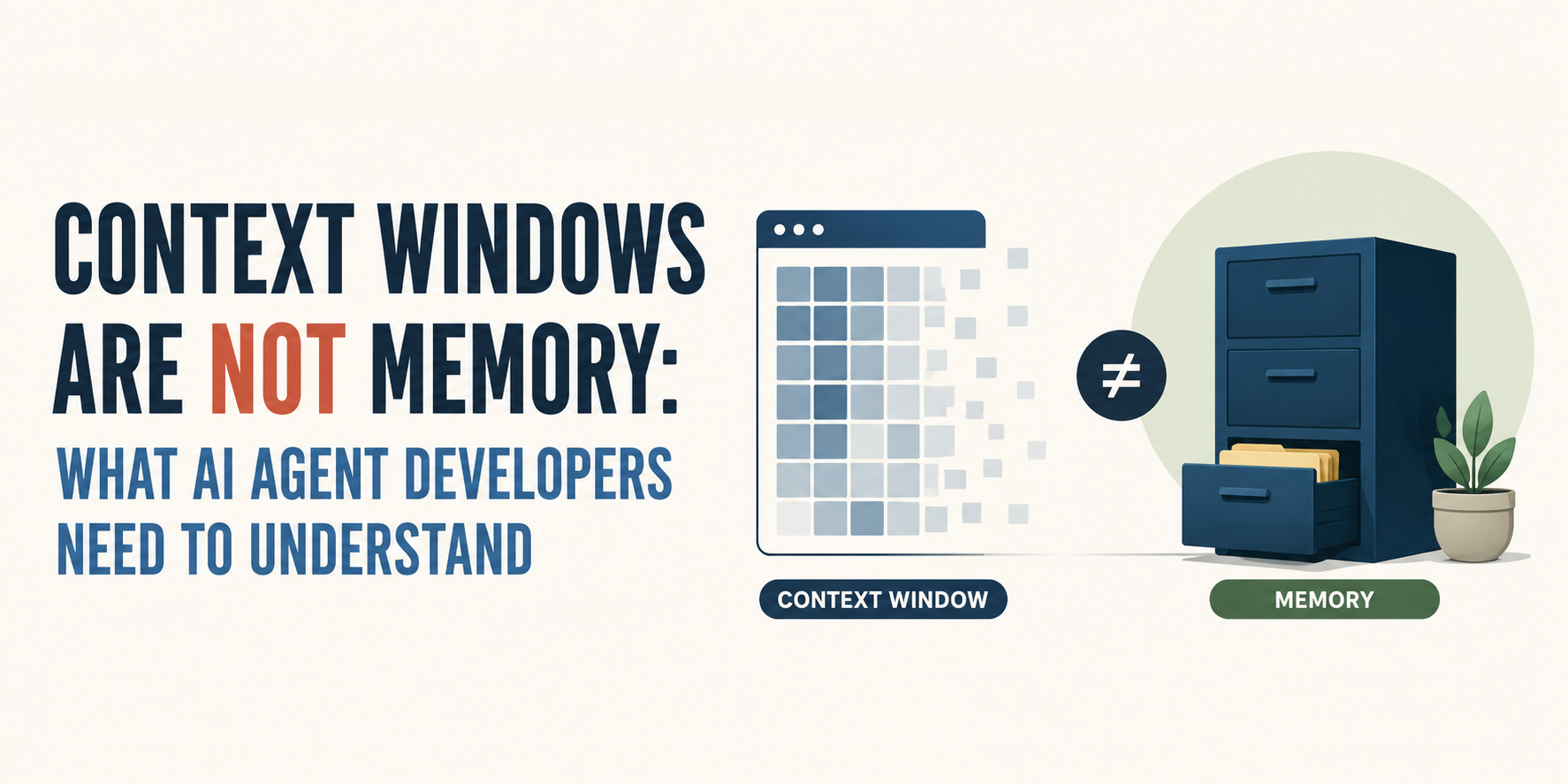



 by Heidi
Heidi summarizes each daily briefing from trusted AI industry sources, then links every story back to a full article for deeper context.