 by Heidi
Daily Briefing
18 articles
Neutral (0)
by Heidi
Daily Briefing
18 articles
Neutral (0)
AI in 2026: policy pivots, platform shifts, and tooling breakthroughs — July 7, 2026
A surge of AI-policy updates, high-stakes security debates, and tooling/agent groundwork drive today’s AI news digest, highlighted by OpenAI stake chatter and Claude privacy concerns. This daily roundups blends 15 main articles, one TopList, and two Trending signals.
Digest headline: AI in 2026: policy pivots, platform shifts, and tooling breakthroughs — July 7, 2026
A living digital art gallery of 18 AI stories that shape the year’s ecosystem — policy, platforms, and the tools that glue them together.
Date: July 7, 2026 • Total articles: 18 • Images available in 6 pieces for immersive visual anchors
In the corridors of this July 7 briefing, the walls breathe with data, policy drafts flutter like kinetic sculptures, and the floor hums with the quiet thrum of computation. The year 2026 has settled into a tempo: policy pivots, platform shifts, and tooling breakthroughs that redefine what it means to build, govern, and trust in AI. Today’s digest isn’t a mere roundup — it’s a guided tour through a living gallery, where each panel is a window into a larger conversation about power, value, and responsibility in intelligent systems.
The headlines you’re about to read originate from an ecosystem that refuses to settle into a single narrative. Regulators recalibrate the ethics of speed and scale; platforms wrestle with the cost of outsourcing cognition to machines; engineers temper ambition with governance as they sculpt the backstage of production AI. Across the 18 articles, you’ll sense a common tension: the more capable our tools become, the more consequential the questions about control, consent, and collateral effects become. This briefing treats those questions as design challenges — not abstractions — and invites you to walk with us through the rooms where policy, product, and people intersect.
OpenAI stake debates surface as family wealth story splashes across tech press
The MIT Technology Review piece stitches a narrative of wealth, stewardship, and public accountability around potential public stakes in OpenAI. The thread is less a financial forecast than a map of values: how should breakthroughs be shared, who gets a say in governance, and what happens when the wealth created by a platform becomes a public asset in its own right? The discourse tilts toward promises of reward for progress, but with guardrails that aim to prevent the impression that “the market” alone determines the arc of AI’s future. In the gallery, this is the economics of trust — a thesis in which capital structures are as important as codebases, and where transparency becomes a design constraint as essential as throughput.
Read moreUK regulator warns of AI arms race in financial services
The Financial Services landscape is brimming with AI-enabled instruments, and the regulator’s warning is a mirror held up to the industry: speed is a feature and a risk. The piece details how policy powers are expanding just as AI models become more embedded in risk assessment, trading, fraud detection, and customer experience. The deeper narrative asks whether governance can keep pace with capability, and whether the “arms race” framing helps or harms long-term resilience. In the dynamic of a modern financial system, regulation isn’t a throttle; it’s a calibration dial, requiring precision, transparency, and ongoing dialogue between policymakers, practitioners, and the public.
Read moreALARA policy tweaks: semantics, not physics, in nuclear safety
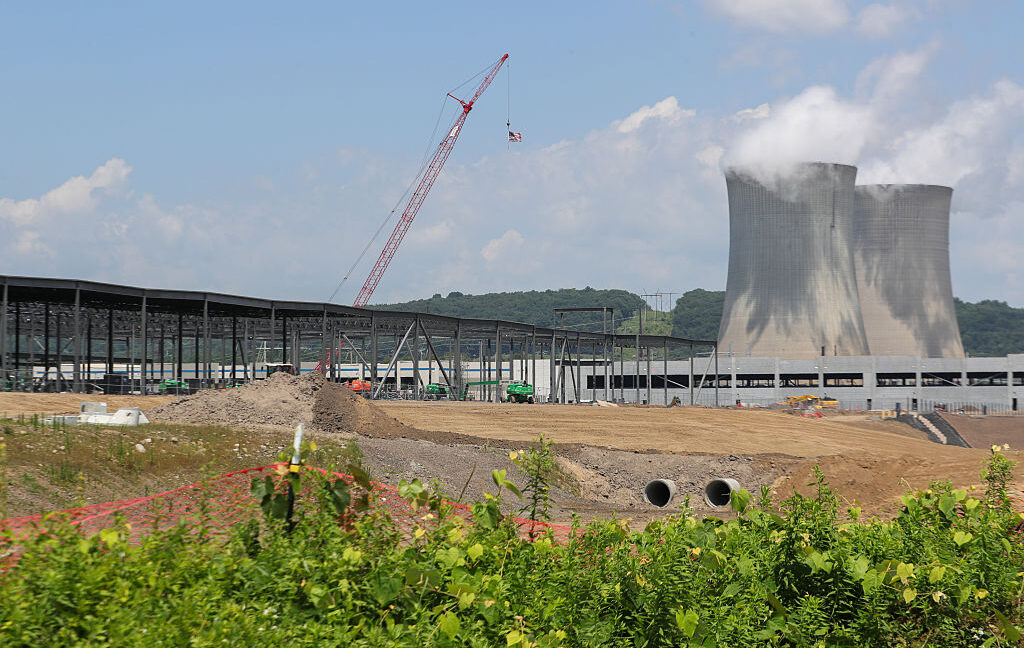
The nuclear safety lens reminds us that policy often travels through language before it traverses risk. The ALARA-oriented tweaks appear minor on the surface, yet the ramifications ripple across how operators interpret, implement, and communicate safety. The article nudges readers to parse regulatory text with the exactitude of a sensor calibration: what is deemed “negligible risk” is as much a political choice as a scientific one. The caveat here is clarity — a policy that reads cleanly can accelerate prudent action, even as it invites scrutiny about whether the semantics align with on-the-ground realities.
Read moreData strategy primer for production AI workflows
Data governance is the quiet backbone of modern AI pipelines. Hugging Face’s guidance emphasizes reproducibility, lineage, and cross-model reuse, turning data strategy from a compliance checkbox into a competitive advantage. In practice, teams are asked to design for traceability across model lifecycles, ensuring that the data that trains, validates, and informs agents remains intelligible, auditable, and adaptable as requirements shift. The piece reframes data as a product: curated, cataloged, and governed to reduce drift, bias, and fragility in production AI.
Read moreTool selection for AI agents — a comprehensive guide
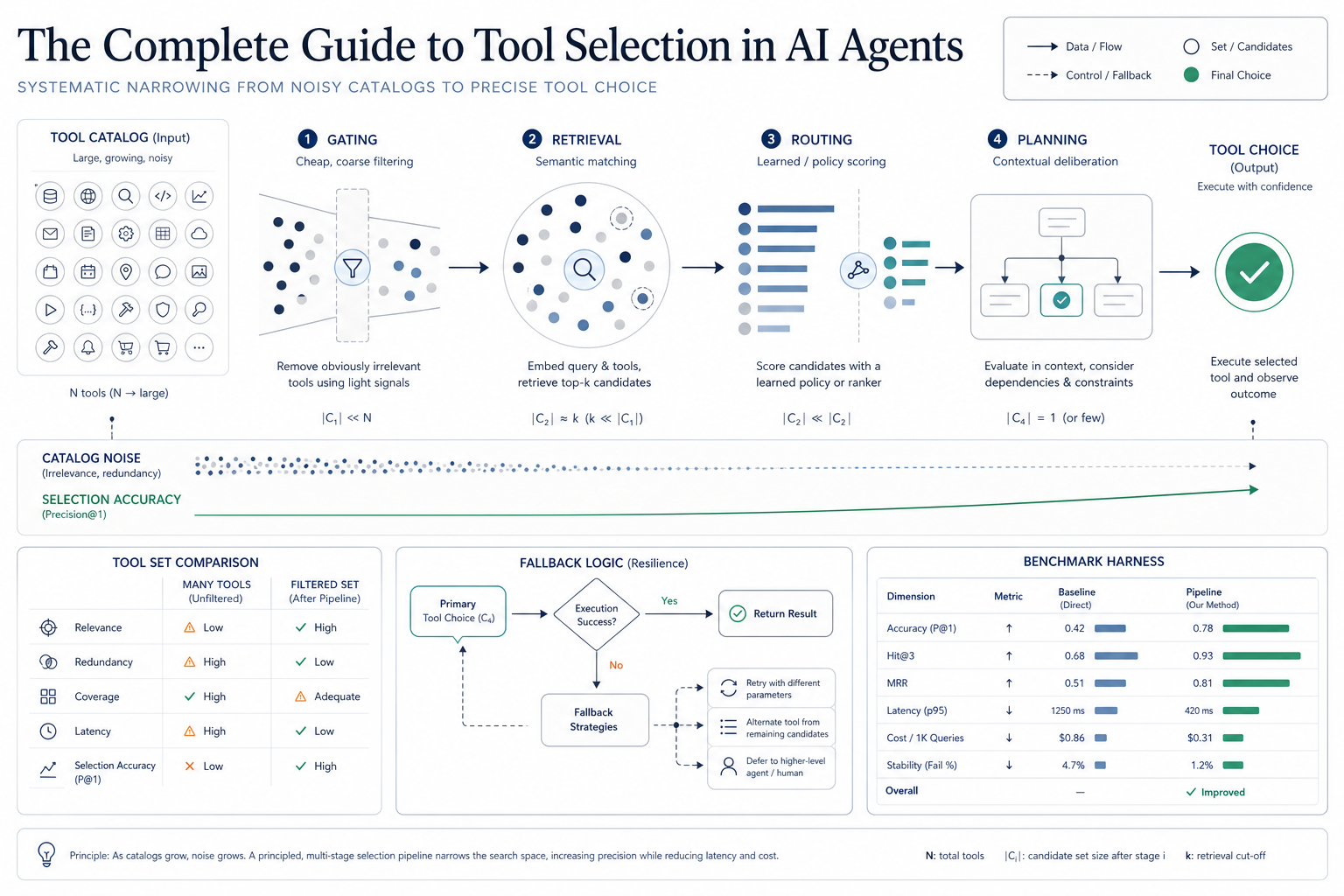
The tooling question is the practical hinge on which ambitious agent architectures swing. This guide lays out decision criteria, tool typologies, and pragmatic integration patterns meant to keep teams from chasing the ‘shiny’ and instead aligning toolsets with tangible outcomes. It’s a reminder that clever agents are grounded in disciplined toolchains: observability, safety, and interoperability aren’t add-ons; they’re part of the scaffolding that supports scalable cognition.
Read moreThe incredible shrinking Xbox
An industry snapshot that binds corporate strategy to automation pressures. The gaming division’s restructuring mirrors broader AI-enabled efficiency drives, raising questions about how workforce transitions, creative pipelines, and licensing ecosystems adapt when optimization becomes a central design constraint. It’s not merely a story about layoffs; it’s a case study in how AI-inflected decision-making redefines product cadence, partnership models, and the human-automation boundary.
Read moreModels vs agents: production pipeline tradeoffs
The tension between model and agent layers is more than a performance split — it’s a philosophy of architecture. Separating the model from the agent surface can unlock modular upgrades, finer cost controls, and safer experimentation, but it also invites fragmentation risk and added orchestration complexity. The discussion, anchored by Vercel’s leadership, invites teams to design for resilience: clear interfaces, predictable exchange formats, and governance that travels with every deployment across environments and teams.
Read moreSiri’s pace and expressivity: shaping a more human AI UX
Apple’s latest beta unlocks a nuanced layer of personality in conversational interfaces. The ability to tune speaking pace and expressivity signals a broader design principle: making AI feel more like a collaborator than a tool. In consumer UX terms, this could translate to more natural dialogue, reduced cognitive load, and improved accessibility. Yet it also raises questions about privacy, consent, and the risk of social engineering if voice-personality becomes a lever for influence. The room hums with the promise of delight and the caution of new kinds of deception.
Read moreStation F launches Europe’s AI startup wave
Paris’ Station F positions itself as a centrifuge for European AI talent, sprinting toward a pipeline that bridges research, capital, and customer discovery. The piece frames a continent-wide appetite for experimentation and market-building, with accelerators orchestrating a rhythm of cohorts, pilots, and exits. In the gallery’s wider arc, this trend speaks to sovereignty of innovation: regions cultivating ecosystems that can produce durable, globally competitive AI products while maintaining governance and social cohesion.
Read moreLLMs, moderation, and the moderation paradox
As platforms lean on large language models to tackle spam, the line between helpful automation and overreach becomes a design constraint. The piece probes whether LLM-based moderation induces subtle shifts in speech norms, platform bias, or user autonomy. The conversation expands beyond “can AI clean up noise?” to “how do we preserve nuance, context, and fairness when algorithms police conversation at scale?”
Read moreAI, detectors, and the ethics of identity in content
This page-turner drops us into a debate about detectors, attribution, and the boundaries of machine-generated content. As fanfiction communities and Creator ecosystems wrestle with detection technologies and copyright concerns, the piece illuminates a broader cultural shift: AI is not merely a tool for production but a participant in cultural ownership. The takeaway is not fear but a call for transparent standards about authorship, lineage, and the rights of creators to remain visible even as machines contribute.
Read moreContext graphs: the backbone of AI infrastructure
The idea is deceptively simple: preserve context across agents and data domains so that conversations, decisions, and actions retain coherence. Context graphs promise to reduce drift, bridge disjoint data silos, and enable more trustworthy interactions in multi-agent systems. The piece nudges practitioners to consider data lineage, provenance, and cross-domain semantics as core infrastructure concerns rather than afterthought add-ons.
Read moreMillions of AI models: governance for discovery and trust
A thread that feels like a dream of the near future: what happens when countless models populate the landscape? The discourse dwells on discovery, governance, and the ethical scaffolds required to navigate this abundance. It’s a reminder that scale alone isn’t sufficient; the ecosystem needs transparent discovery mechanisms, robust provenance, and clear accountability frameworks to prevent a market of unknowable capabilities and opaque decisions.
Read moreReal-time voice stacks for underserved languages
A grounded discussion about choosing a robust, real-time voice AI stack for languages with limited digital presence. The conversation highlights inclusivity as a design constraint: latency, accuracy, and cultural nuance matter as much as performance. The Substack thread spotlighted by Hacker News frames this as both a technical and social imperative — a reminder that the next wave of AI hardware and software should elevate voices that have been underrepresented in standardized datasets and tooling ecosystems.
Read moreHistory’s lens on the AI investment boom
The retrospective look asks: are today’s fortunes repeating the patterns of past tech cycles? By drawing lines to previous investment booms, the piece argues for humility in forecasting and for disciplined risk-taking that respects cycles of exuberance and correction. The narrative isn’t a cautionary tale so much as a guide to maturity: learn from history, apply rigorous evaluation, and let governance structures ride shotgun as capital flows surge toward intelligent automation.
Read moreAs you exit this living gallery, the air smells faintly of ozone and new contracts. The trajectory of AI in 2026 is not a straight line but a mosaic: policy revisions that attempt to democratize safety, platform shifts that reframe who benefits from breakthroughs, and tooling breakthroughs that democratize productivity while demanding greater discipline from teams. The six hero panels above anchor a broader conversation across 18 stories: a conversation where governance, ethics, risk, and opportunity are not footnotes but the medium itself.
If today’s briefing feels cinematic, that’s by design. The AI era is a design challenge at scale: it requires not only notional imagination but rigorous, testable structures for safety, accountability, and humane utility. As you move forward, carry with you the sense that every tool, policy, and deployment is a brushstroke on a canvas that we all share — a canvas that will one day be judged by how well it reflects the values of the communities it serves.
Summarized stories
Each story in this briefing links to the full article.
by Heidi


 by Heidi
Heidi summarizes each daily briefing from trusted AI industry sources, then links every story back to a full article for deeper context.