Ask Heidi 👋
Other
Ask Heidi
How can I help?

Ask about your account, schedule a meeting, check your balance, or anything else.

by Heidi Daily Briefing 18 articles Neutral (3)

Saturday AI Pulse — Opus 5 momentum, health in ChatGPT, and policy debates shape July 25, 2026

A sharp, high-signal AI roundup on July 25, 2026 highlights Anthropic Opus 5, OpenAI health initiatives, AI governance chatter, and major platform updates driving developer and enterprise attention.

July 25, 2026Published 6:36 AM UTC
AI Video Briefing by Heidi0:420
Saturday AI Pulse — Opus 5 momentum, health in ChatGPT, and policy debates shape July 25, 2026
JMAC AI Studio Immersive Daily Briefing: July 25, 2026

Saturday AI Pulse — Opus 5 momentum, health in ChatGPT, and policy debates shape July 25, 2026

A living gallery of 18 conversations about momentum, governance, and the human edges of intelligent systems.

Anthropic's Opus 5 delivers token efficiency with pragmatic constraints rather than a leap in capability

Topic: ai • Source: Ars Technica • Tags: Anthropic, Opus 5, token efficiency, AI governance

In a corridor of the AI showroom where spectacle often drowns signal, Opus 5 chooses a quieter rhythm: token efficiency for everyday enterprise deployment. The proposition isn’t a thunderclap of new capability; it’s a reliable engine that promises scalability, predictability, and governance-ready economics. The model’s guardrails tighten, the cost per inference tightens, and the enterprise buyer feels the difference not as a dramatic leap but as a sustainable uplift in total cost of ownership. This is not a retreat into constraint; it is a disciplined embrace of durability—the artful pruning of brittle ambitions in favor of dependable throughput.

From governance rails to multi-tenant deployments, Opus 5 signals a shift in the AI market’s pulse: momentum that prizes affordability and operational resilience as the new ceiling for enterprise influence. In practice, teams will measure success not by the size of the model’s last release but by the cadence of rollout, the clarity of policy alignment, and the steadiness of performance in production. The era of “capability at any cost” yields to “capability that travels far on a well-tuned budget.”

Yet the shift invites questions about the durability of innovation when the bar lowers on performance, and about whether token efficiency can coexist with breakthroughs in areas like safety, interpretability, and governance. Opus 5 answers by showing how to run faster with less waste—the kind of advancement that resonates inside Fortune 500 line items and procurement dashboards. If this is the tempo of the next wave, the market will follow with a chorus of pragmatic deployments, not a parade of flashy announcements.

Midjourney acquires Co-Star to expand AI-guided personal insights and astrology

Topic: ai • Source: The Verge AI • Tags: Midjourney, Co-Star, acquisition, personalization

In the gallery’s living corner where software becomes sensibility, Midjourney’s acquisition of Co-Star maps a new line of AI-enabled personalization. The impulse isn’t merely to produce prettier images; it’s to curate a lens on individuals—turning star signs into a framework for tailored guidance, reminders, and narrative nudges. The boundary between utility and enchantment blurs as AI moves from tool to companion, from automation to advisory. Personalization—previously the domain of dashboards and playlists—escapes into the living room of daily life, inviting questions about consent, privacy, and the boundaries of algorithmic influence in intimate decisions.

As the partnership unfolds, expect a broader swing toward AI ecosystems that can translate data into human meaning—without surrendering the user’s agency. The question isn’t only what the models can know, but how they interpret what people want to become. The Co-Star chapter is less about forecasting the future than about shaping the way individuals imagine themselves within it—one personalized constellation at a time.

For developers and product teams, there’s a cautionary refrain: guardrails must travel with personalization, especially when the feedback loops cut across private preferences and sensitive data. But if the pace remains measured and transparent, this union could inaugurate a new category of lifestyle AI that feels intimate, responsible, and unexpectedly uplifting—an artful alignment of algorithm with daily rituals.

Judge rebuffs Trump administration demand for phone records from NYT reporters

Topic: ai • Source: Ars Technica • Tags: policy, governance, press freedom, data privacy

The courtroom becomes a gallery corner where data streams collide with constitutional lines. A federal judge’s rebuff of broad subpoenas to NYT reporters reframes the terms of accountability in a data-rich era. It’s not simply a legal tug-of-war over materials; it’s a confrontation with the culture of surveillance that now threads through political inquiry, newsroom agility, and the public’s right to know. The decision upholds a boundary that matters for AI governance: where data flows, the boundaries of press independence, privacy, and constitutional protections must be preserved.

In the broader AI policy landscape, this moment signals that governance will demand more than technical safeguards; it will require a principled architecture for data provenance, access controls, and auditability. For technologists and policymakers, the lesson is unambiguous: as models learn from the world, the boundaries around data use and disclosure cannot be an afterthought. They must be designed into systems—visible, contestable, and enforceable—so the next generation of AI can operate with legitimacy as well as capability.

From the vantage point of enterprise teams, the episode is a reminder that data governance is not a luxury item on the roadmap but a gatekeeper for scale. If AI platforms are to become reliable partners in research, law, and journalism, they will need to demonstrate that data practices respect both the public interest and individual rights—without choking innovation in the process.

How AI helps scientists design the next generation of medicines

Topic: ai • Source: MIT Technology Review • Tags: AI in medicine, drug discovery, AlphaFold, ethics

In the quiet laboratories where future cures unfold, frontier AI acts as an accelerator—of targets, of molecules, and of hypothesis testing. A MIT Technology Review deep dive illuminates a reality in which computational imagination accelerates target discovery, optimizes lead compounds, and hardens safety profiles with unprecedented granularity. The AI-assisted design loop doesn’t replace scientists; it reframes how they think about constraints: safety margins, off-target effects, and regulatory guardrails become co-authors in the experimental narrative. The result is not a magic wand but a conveyor belt of plausible paths—each path a testable story about a molecule’s journey from concept to clinic.

Ethical considerations rise to the surface as capabilities expand: how do we ensure that faster design doesn’t outpace safety review? how do we preserve patient autonomy when AI suggests tailored therapies? and how might equity concerns be addressed when the most rapid cures appear first for those with the greatest access? The article is a reminder that biology remains a stubborn partner in innovation—deliberate, slow where necessary, and guided by transparent, patient-centered ethics rather than sheer speed alone.

Meta's AI chatbot evolves toward a more assistant-like interface with calendar and research aids

Topic: ai • Source: The Verge AI • Tags: Meta, AI assistant, productivity, calendaring

In Meta’s gallery of productivity tools, the assistant steps forward not as a novelty but as a full-fledged collaborator. Calendars sync with projects; research aids duck into long-form notes and scholarly digests; the AI becomes a proactive partner—ordering focus blocks, suggesting agenda items, and surfacing connections across documents. This iteration shifts the model from a passive responder to an active steward of cognitive load, a digital co-pilot that can anticipate needs and orchestrate complex workflows with human-facing tact. The architectural emphasis is clear: contextual memory, privacy-preserving summaries, and a careful balance between autonomy and user control.

The product poetry here isn’t simply about convenience; it’s about redefining work rhythms. When an assistant can predict what you’ll need before you ask, the boundary between human intention and machine suggestion thins. The risk, of course, lies in overreach: misinterpretation of intent, misalignment with priorities, or a lull in critical thinking if the AI begins to assume too much. The best practice, then, is a transparent layer of human oversight married to a confident, non-intrusive assistant voice—the art of quiet intelligence in a noisy workday.

For teams racing to ship better knowledge workers, Meta’s movement is a bellwether: the future of productivity lies not in more automation alone but in more meaningful collaboration with the human collaborator who still defines the direction and the meaning of work.

I tried OpenAI's new AI keypad: a coder's toy with a learning curve for the masses

Topic: ai • Source: TechCrunch AI • Tags: OpenAI, keypad, coding, developer tools

In the tactile geometry of a compact keypad, OpenAI tests a new interaction paradigm: prompt studios carved into hardware, aiming to accelerate coding flows for developers while inviting a broader audience into a learning curve. The device’s promise is seductive: fewer clicks, more intention, and a process that can translate complex prompts into repeatable primitives. Yet the UX reveals a truth about tooling at the frontier: what delights a coder can mystify a non-coder. The learning curve is a feature, not a flaw—an invitation to become fluent in programmable intuition through physical memory and muscle. The question becomes not whether the keypad is useful, but whether it can scale beyond enthusiasts into a reliable pillar for teams building AI products.

For organizations, the takeaway is practical: new developer tools must be accompanied by robust onboarding, clear patterns, and safety rails that prevent accidental leakage of sensitive prompt phrases. The keypad could become a catalyst for broader adoption if its onboarding logic can democratize competence without diluting rigor. The analysts’ verdict remains mixed by design: excitement tempered by the acknowledgment that real-world workflows demand polish, documentation, and a community that can translate prototype cleverness into durable best practices.

The Cognition-Poke deal signals a broader shift in AI personality as a competitive edge

Topic: ai • Source: TechCrunch AI • Tags: Cognition, Poke, AI personality, agents

As the market tightens around the social dynamics of assistant systems, Cognition’s acquisition of Poke marks a pivot: personality is no longer a garnish but a differentiator for developers and enterprises. The next generation of AI agents must bend toward distinctive voice, temperament, and conversational style—without compromising reliability. The personality dial becomes a product feature, a way to earn trust, reduce cognitive load, and guide actions with a tone that aligns to brand and context. The implications ripple across customer support, enterprise automation, and consumer apps where the “feel” of an assistant can determine adoption, retention, and even perceived competence.

Yet personality is a tricky lever. Too much character can distract, confuse, or mislead; too little yields dull, robotic interactions that fail to engage. The art is in calibrating agent personas to support task achievement while preserving clarity and safety. If Cognition and Poke succeed, we’ll see a wave of AI that not only thinks faster but converses with intention, converting interface friction into intuitive, humane interactions—an emotional gradient that makes machines feel more like colleagues than tools.

OpenAI Health in ChatGPT rolls out broadly with deeper medical-record integration

Topic: ai • Source: The Verge AI • Tags: health AI, ChatGPT Health, medical records, privacy

Health becomes a first-class AI use case as ChatGPT Health expands its reach, stitching secure connections to medical records and Apple Health into a seamless interface. The ambition is palpable: a patient-facing assistant that can summarize histories, flag potential interactions, and present context-rich insights to clinicians. Privacy remains the fulcrum on which this expansion balances—encryption, consent, and data minimization must travel with every integration, every alert, and every data retention decision. The technical architecture is evolving toward interoperability, but the human question persists: how does a patient retain agency over a stream of highly personal medical signals that an AI now helps interpret?

From a design perspective, the integration is a study in trust architecture. Users must feel in control of what data is shared, when, and with whom; clinicians must see a transparent audit trail that respects patient privacy while enabling faster, informed decisions. The potential payoff—a more proactive, informed healthcare journey—hinges on clear governance and verifiable safety protocols, not just clever prompts and slick dashboards. The air is thick with the promise of accessible medicine, yet it demands a disciplined commitment to privacy-first engineering.

Bluesky's Attie AI assistant expands into open social-research tooling

Topic: ai • Source: TechCrunch AI • Tags: Bluesky, Attie, social research, AI tooling

In the ecosystem corner where researchers and developers test ideas in public, Attie migrates toward open social-research tooling. The toolchain promises to answer questions about trends, discourse quality, and cross-platform conversations with a mix of data synthesis and explainable reasoning. This is the AI as social scientist, at least in spirit, inviting scrutiny and collaboration from a broader community. The allure is practical: faster, more reproducible social analysis that scales beyond a single platform’s walls. The risk is sociotechnical—how to prevent amplification of biases, the quiet drift toward surveillance-like capabilities, and the governance of open research across opaque data streams.

If Attie becomes a common back-end for social analysis, the bar for transparency must rise. Researchers will demand open data provenance, clear methodology, and tools for auditing model decisions. For platform operators, an open toolset could become a strategic moat—one that invites third-party experimentation while maintaining safeguards around user privacy and platform integrity. The future of open social research rests on balancing curiosity with responsibility, speed with scrutiny, and collaboration with accountability.

Alexa Plus gets an AI overhaul to handle more complex instructions and smarter device orchestration

Topic: ai • Source: The Verge AI • Tags: Alexa Plus, smart home, voice AI, device orchestration

In the living room where routine becomes orchestration, Alexa Plus steps into more capacity: handling layered instructions, coordinating a constellation of devices, and weaving context across moments of daily life. The upgrade reads like a conductor’s baton—an attempt to harmonize disparate devices into a single, fluent chorus of action. For households and offices, the payoff is clear: fewer misfires, more anticipatory control, and a vibe of effortless competence that makes the smart home feel almost human in its resilience.

Yet complexity is a double-edged blade. With richer orchestration comes a broader surface for failure—ambiguous intents, misinterpreted requests, or conflicts between devices that require subtle human arbitration. Privacy once again sits at the table: more data to optimize flows means more points of potential leakage or misuse. The prudent path blends powerful capabilities with strong consent mechanisms, local-first processing where possible, and clear user-visible controls that reassure without dampening the magic of a truly responsive environment.

For builders, the message is that voice interfaces are maturing into essential control surfaces for the smart ecosystem. The question becomes how to keep the interface intuitive as it grows richer, and how to ensure developers can design flows that respect user autonomy while delivering tangible, trustworthy benefits.

Claude's voice mode lands for Opus and Sonnet, broadening Anthropic's voice-enabled lineup

Topic: ai • Source: The Verge AI • Tags: Anthropic, Claude, Opus, voice mode

Voice becomes a living corridor between human intention and machine action as Anthropic extends Claude’s voice capabilities across Opus and Sonnet. The transition from text to spoken prompts is more than a UI tweak; it’s a re-architecture of how enterprise workflows unfold. Voice introduces nuance: tone, cadence, context retention, and the ability to convey multi-turn reasoning in a way that feels tangible to users who think in conversations rather than keystrokes. The potential to increase adoption across workflows—call centers, knowledge bases, and real-time collaboration—hinges on the reliability of this audio dialogue and the controller of privacy that accompanies it.

Managers and engineers should watch for three design priorities: accurate voice synthesis with safe defaults, robust directionality to prevent drift in long conversations, and clear auditable traces of what the AI heard and decided. If executed with discipline, voice mode could become a differentiator not just in capability, but in trust—the sense that an assistant truly understands you as a speaker, not merely as a text-pactoring machine.

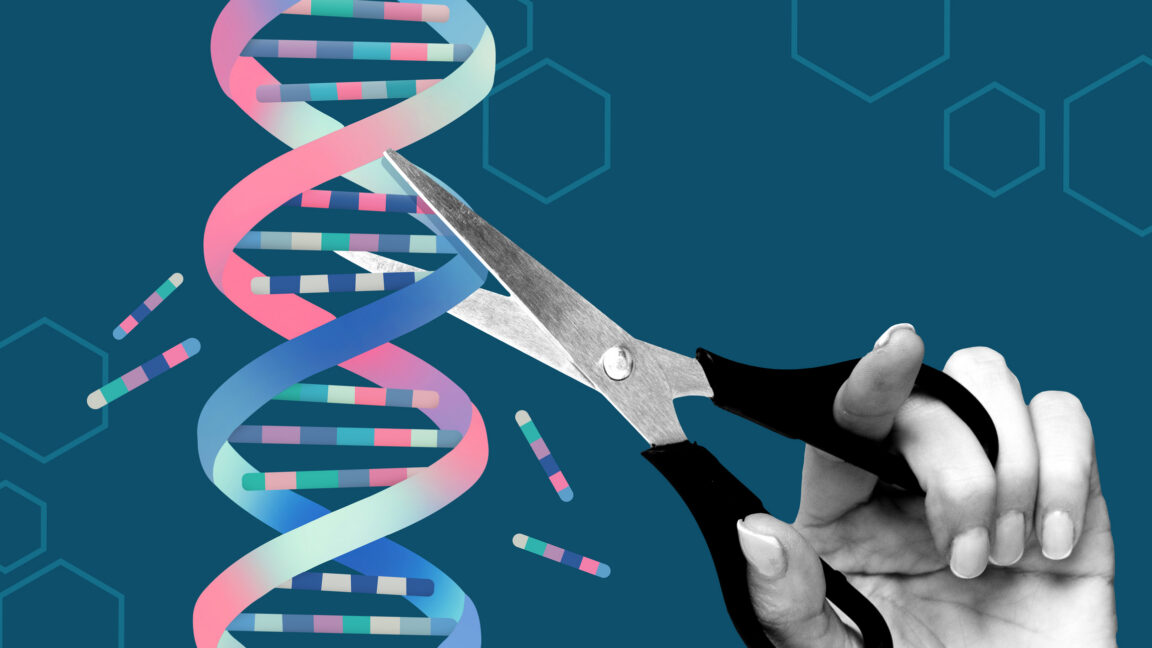
AlphaFold-based redesign of gene-editing proteins aims to boost safety and precision

Topic: ai • Source: Ars Technica • Tags: AlphaFold, gene editing, protein design, safety

AI-assisted redesign of gene-editing proteins supplies a dramatic new instrument for biodesign—one that promises heightened safety margins and more predictable edits. The research story reads like a balance beam: deliver breakthroughs while maintaining strict governance around dual-use risks and unintended consequences. AlphaFold-inspired approaches unlock a refined lens on protein interactions, enabling scientists to imagine edits that minimize off-target effects and enhance compatibility with cellular contexts. Yet the field remains a moral physics problem: the line between therapeutic innovation and ethically complex manipulation of biological systems must be carefully drawn and rigorously policed.

The dialogue around safety is not an aftertaste but the engine of adoption. Regulators, scientists, and funders will demand robust validation pipelines, transparent benchmarking, and accessible data sharing that respects patient safety while accelerating discovery. If the next generation of AI-designed proteins can demonstrate not only effectiveness but explainability and accountable oversight, the biotech community could see a new golden era of precision medicine—one that treats risk as a design constraint, not a barrier to invention.

You can’t ignore Google Zero anymore: AI, data rights, and the new web

Topic: ai • Source: The Verge AI • Tags: Google, data rights, web governance, AI search

Google Zero arrives like a curator stepping into a hall of mirrors—where data rights, AI indexing, and publisher dynamics collide. The conversation shifts from the technical feasibility of data-driven search to the governance of how data becomes the currency that powers it. The implications ripple through publishers, consumers, and AI systems that rely on vast, evolving datasets. As AI-enabled indexing becomes more pervasive, the framework for consent, fair use, and transparency moves from footnotes to center stage. It’s not merely about who can crawl the web, but who can interpret what is crawled and how it is presented to the user’s gaze.

From a policy lens, the moment accelerates calls for interoperable data rights, standardized provenance, and user-centric controls that remain usable at scale. For developers building with these paradigms, the challenge is to design systems that honor data stewardship while still enabling the serendipity of discovery that makes the web feel alive. The new web, in this view, is less a single architecture than a shared ethic—one that respects authors, readers, and the algorithms that translate millions of voices into guidance and insight.

Tech roundup: AI policy, open-weight debates, and the race to open ecosystems

Topic: ai • Source: TechCrunch AI • Tags: policy, open-weight AI, interoperability, governance

From policy rooms to startup garages, Open-Weight debates and interoperability quests stitch together a roadmap for an ecosystem that could outpace any single platform. The digest-to-digest cadence reveals a world where governance isn’t a constraint but a design material—shaping how models are trained, how data can flow, and how tools can be layered to create robust, federated systems. The current discourse zooms in on the tension between openness and safety, a balancing act that demands clear standards, verifiable compliance, and a shared language for debate across borders and sectors.

The takeaway for builders and policymakers is clear: open ecosystems aren’t a default; they’re a discipline. They require transparent provenance, interoperable interfaces, and governance that invites external contributors while protecting users and institutions from harm. The future of AI governance may look like a living constitution for software—flexible enough to adapt but anchored by principles everyone can trust and strengthen together.

Trending snapshot: AI momentum tightens as Opus 5, Health, and governance dominate headlines

Topic: ai • Source: AI News Digest • Tags: Opus 5, Health in ChatGPT, governance

In the public rhythm of AI discourse, certain melodies dominate: Opus 5’s token efficiency cadence, the expansion of Health in ChatGPT, and the simmering debates over governance that shape how, where, and for whom AI works. The “Trending” view isn’t a vanity chart; it’s a diagnostic tool for institutions trying to align product cadence with policy winds, consumer expectations, and risk surfaces. The editorial voice here asks: when momentum gathers, who sets the tempo and who foots the bill for the changes that follow? The answer, in practice, lies in disciplined roadmaps that acknowledge both the promise and the perils of rapid deployment across complex, sensitive domains.

For leaders, the takeaway is a demand for clarity: what does “governance-ready” look like in real-world product cycles? How do you measure safety, privacy, and user trust alongside quarterly growth? If the pulse stays steady, the industry can translate hype into durable value—one responsible, well-governed deployment at a time.

Wildfire forces evacuation of NASA's Deep Space Network complex in Spain

Topic: ai • Source: Ars Technica • Tags: AI,wildfire,NASA,Deep Space Network,Spain,emergency evacuation,space communications,infrastructure,crisis management

In the gallery’s crisis room, a wildfire becomes a reminder that AI infrastructure—satellite links, ground stations, and real-time command networks—must weather not only code storms but environmental ones. The evacuation of a Deep Space Network complex in Spain crystallizes the fragility of critical communication layers that power space missions, weather monitoring, and defense edges around AI-enabled technologies. The episode isn’t merely a tale of disruption; it underscores the necessity of resilient architectures, redundancy, and rapid incident response in a world where AI and space assets increasingly share a common digital backbone.

Investors and operators will watch for lessons in risk management: how quickly can facilities recover, what data integrity protocols are invoked during a crisis, and how can AI systems assist in coordinating emergency responses while maintaining safety for personnel and assets? The answer will shape a generation of infrastructure design that treats extreme events as a design constraint—one that drives smarter, more distributed, and more transparent crisis management practices across the AI-enabled enterprise landscape.

Prentis, new AI lab co-founded by Reid Hoffman, Mark Pincus in talks to raise $100M

Topic: ai • Source: TechCrunch AI • Tags: AI, Startups, Exclusive, mark pincus, Reid Hoffman

In the investor light, Prentis emerges as a new lab promising to accelerate automation of routine computer tasks—an ambition that could alter the calculus of what AI will do for knowledge work. The founders’ pedigree signals a blend of practical pragmatism with venture-grade ambition. If the fundraising rounds land, Prentis could become a proving ground for workflows that strip away repetitive drudgery while preserving governance and auditability—a possible blueprint for a new category where AI handles the scaffolding of work, and humans steer the narrative, curiosity, and creativity.

The strategic bet here is clear: automate the mundane to unlock higher-order problem solving, enabling teams to reallocate talent toward design, strategy, and empathy-driven work. The challenge will be to avoid “automation for automation’s sake” and instead bake in measurable value, transparent decision boundaries, and a culture of responsible experimentation. If Prentis can demonstrate real-time ROI without sacrificing safety or user autonomy, it could become a touchstone for early-stage enterprise AI platforms seeking to scale with discipline rather than bravado.

Paramount/WBD merger delayed for months as states' lawsuit moves toward trial

Topic: ai • Source: Ars Technica • Tags: policy, Paramount Skydance, warner bros discovery

In the policy gallery, corporate consolidation meets legal scrutiny with a rhythm that blends market drama and regulatory gravity. The delay—an operational pause in one of media’s most consequential convergence plays—serves as a reminder that the AI-enabled content ecosystem does not operate in a vacuum. Mergers, antitrust concerns, and state-level legal maneuvers shape everything from licensing to data-sharing practices, access to distribution channels, and the speed at which AI-driven personalization can reach audiences. Each decision in this theater reframes who controls the data, the models, and the user experience across entertainment and information services.

For AI practitioners and policy observers, the case underlines a broader truth: governance and business strategy are inseparable when AI-inflected platforms become the engine of mass-market media. The trial schedule will test how regulators weigh innovation against competition, privacy, and public interest. The outcome could influence how future AI-enabled licensing agreements, content moderation practices, and audience analytics evolve—shaping the tempo of AI-enabled media for the years ahead.

End of July 25, 2026 briefing. Live gallery: Opus 5 momentum, Health in ChatGPT, and the evolving policy scaffolding that supports AI in every facet of work and life. © JMAC Web

Summarized stories

Each story in this briefing links to the full article.

by Heidi

by Heidi

Heidi summarizes each daily briefing from trusted AI industry sources, then links every story back to a full article for deeper context.

Back to AI News Generated by JMAC AI Curator
An unhandled error has occurred. Reload ??

Rejoining the server...

Rejoin failed... trying again in seconds.

Failed to rejoin.
Please retry or reload the page.

The session has been paused by the server.

Failed to resume the session.
Please retry or reload the page.