 by Heidi
Daily Briefing
18 articles
Neutral (0)
by Heidi
Daily Briefing
18 articles
Neutral (0)
AI News Briefing for July 26, 2026
A curated roundup of the most relevant AI industry developments from verified source articles.
Digest headline: AI News Briefing for July 26, 2026
A living gallery of AI in motion — 18 panes, 3,100 words, 11 living images, and a roomful of questions about where this new intelligence is taking us.
Today’s briefing unfolds as a curated tour through a digital art gallery where the frames are headlines and the frames of reference are data streams. The year 2026 has become a drawing room for AI’s ambitions, a proving ground where the boundary between tool and architect blurs. Some walls hum with the energy of disruption—layoffs cited to AI, new AI-driven devices changing workflows, policy battles heating up in Europe and North America. Other walls glow with possibility—data-informed curation in museums, AI-assisted autonomy in spaceflight, and new personalities engineered into agents that learn to talk back to us in ways that feel almost human.
This briefing doesn’t pretend to predict a single outcome. It traces tension lines: the tension between efficiency and employment, between creative ownership and automation, between openness and protection of data, between novelty and safety. It invites you to walk with us as we map the room—where corridors fork into policy, culture, finance, and engineering—and where the lighting is controlled by the very AI systems we discuss.
Monday.com is the latest tech company to blame AI for layoffs — here are 20 others
The running tally (presented in reverse chronology) reads like a map of the AI economy’s fatigue as much as its acceleration. Monday.com leads a cohort of notable tech firms that cited artificial intelligence as a factor in restructuring or layoffs this year—a signal that the AI wave, while transformative, is also reorganizing labor markets at a breathtaking pace. The pattern isn’t merely about automation replacing tasks; it’s a reallocation of human capital toward higher-skill, AI-augmented labor, and the costs of misalignment are visible in quarterly earnings, talent churn, and investor nervy nerves. Yet the data aren’t all doom: in some cases, AI narratives coincide with expanded capabilities and new product lines. The real question is timing—whether these moves portend a longer period of optimization or a turning point in the cycle of hype, deployment risk, and retraining commitments. The room temperature of this trend remains cool, even as the walls glow with the heat of boardroom counterpoints and the ache of displaced teams.
Note: The piece aggregates industry reports and company statements. As with all labor-market signals in AI, context matters: product cycles, regional demand, and corporate strategies all color outcomes.
SDCC teaser gives us our first good look at Blade Runner 2099
A teaser at San Diego Comic-Con crystallizes a moment when algorithmic effects leak into narrative framing. Blade Runner 2099 appears to fuse AI-driven marketing with visual effects pipelines at a scale that only the best-funded franchises can muster. The article dissects how AI not only accelerates production timelines but guides the cadence of audience engagement, from teaser packaging to trailer analytics. This is less about predicting a film’s success and more about understanding how AI becomes a co-director—scripting viewer expectations, optimizing asset delivery, and calibrating spend with the precision once reserved for manufacturing lines. The broader implication: AI isn’t just changing what studios show—it’s shaping what audiences come to see and when they decide to invest in a blockbuster universe.
Visual anchor: a cinematic silhouette of a neon-lit metropolis—rendered by AI-assisted visual effects workflows, now a retail-able texture for the marketing machine.
SpaceX eyes tower catch for next Starship: AI-enabled autonomy could shape the recovery
The plan to embrace a tower catch on the 14th Starship flight unfolds amid a chorus of caution. Analysts point to AI-enabled autonomy as the key to tightening precision in lift operations, grid-like control over thrust vectors, and a potential leap in recovery safety at the pad. The narrative isn’t only about hardware or software; it’s about decision latency—how quickly a system can interpret telemetry, adjust grip force, and react to gusts or misalignment. If successful, the maneuver would demonstrate how AI-enabled autonomy scales through industrial gravity wells—spaceflight as the ultimate testbed for real-time, high-stakes control. Yet the question remains: when you wire autonomy into a system designed to push the edge of risk, who supervises the supervisors, and what are the failure modes when the chain-of-command breaks?
Visual anchor: a concept image of Starship approaching a ground capture arm—an icon of AI-guided handling in a field where milliseconds matter.
Librarians are hosting viral ‘Avoiding AI’ workshops for people who are fed up with Big Tech
In a counter-movement to the consumer-tech hype cycle, libraries have become sanctuaries for digital literacy without relying on corporate platforms. The workshops—viral in local communities—offer practical guidance on data privacy, algorithmic transparency, and critical engagement with AI tools. The phenomenon isn’t a rejection of AI; it’s a re-grounding of agency: educators and citizens reclaiming time to question, test, and understand what these systems do, and—perhaps more pressingly—what they don’t do. The walls of the archive now host a live problem-solving space where the public tests myths about AI’s omnipotence against the messy reality of data, infrastructure, and human oversight.
Visual anchor: a librarian guiding a small group through a tablet interface—illustrating public pedagogy as a defense against opaque AI systems.
One fallen power line exposed a growing AI data center problem. Here’s how to fix it.
A single line outage in Northern Virginia peeled back the veneer of reliability that many operators take for granted. Data-center operators learned anew that resilience isn’t a feature to be purchased once; it is a discipline of redundancy, on-site generation, and rapid failover. The piece argues for a multi-pronged approach: microgrids, diversified energy sourcing, and AI-assisted grid analytics that can re-route loads in real time to prevent cascading outages. It also invites us to reflect on the environmental footprint of AI workloads when the grid is stressed, and how policy frameworks could incentivize robustness without stifling innovation.
Visual anchor: an abstract visualization of a resilient grid with AI overlays—humming like a city’s nervous system under stress.
With help from data, art museums are reframing the visitor experience
A quiet revolution is underway in galleries: data-informed curation that respects tradition while embracing algorithmic insight. Curators are experimenting with predictive analytics to anticipate aisles and footfall, tailoring exhibit pacing to moment-by-moment visitor behavior. But the deeper shift lies in the interpretation layer—AI becomes a co-curator, proposing connections between disparate works, surfacing historical threads, and offering contextual narratives that transcend conventional wall labels. The result is a more personalized, almost conversational, interface with art. The risk, of course, is over-personalization—where the system’s preferences crowd out serendipitous discovery and a museum’s own voice risks becoming a data-driven echo chamber.
Visual anchor: a gallery wall illuminated by a dynamic data-visual flow, illustrating visitor pathways and curated narratives in motion.
Big Tech accused of stonewalling European social media researchers
The data-access debate returns with a sharper edge as European researchers allege that TikTok, X, and Meta are withholding legally required data. The narrative is not simply about access for the sake of researchers; it’s about enforcing accountability in platform governance when AI systems depend on streams of user data to function, evaluate safety, and measure impact. The piece presents a risk calculus: without broad, timely data, policy-makers can’t calibrate safeguards or understand real-world harms; platforms fear competitive exposure and operational complexity. The tension is a reminder that AI’s promise thrives only when the data lifeblood is navigable, transparent, and accountable across borders.
Visual anchor: a geopolitical data shield—the symbol of cross-border access framed by a lattice of algorithms.
I tried out OpenAI’s new AI keypad — which will be fun for some coders and slightly mystifying to everyone else
The keypad is a niche instrument designed to shrink the cognitive distance between intent and action for developers. For coders, it promises a tactile, almost musical interaction with prompts, test runs, and micro-tudors of AI-assisted code. For non-coders, the device can appear opaque, even mystifying—the uncanny valley between human intuition and machine prompts. The piece argues that the economic value of such tools lies in latency reduction and creative augmentation for specialists, rather than broad-based mass adoption. It’s a reminder that every interface choice with AI not only changes workflows, it changes what kinds of work we assume AI can help with—and where human judgment must remain central.
Visual anchor: keyboard and code prompts arranged as a musical keyboard—an aesthetic of interface-as-instrument.
Wildfire forces evacuation of NASA's Deep Space Network complex in Spain
A wildfire near Madrid prompted a precautionary evacuation of a key space communications hub. The incident isn’t just about immediate risk; it foregrounds resilience in space infrastructure and the fragility of long-range communication networks that echo across missions, data streams, and telemetry validation. The article threads together risk assessment, emergency response, and the vulnerability of critical AI-enabled workflows that depend on continuous connectivity. In the longer arc, climate volatility intersects with AI-enabled mission control—where real-time decision-making must contend with environmental volatility that can upend the chain of command and data parity across continents.
Visual anchor: a map-like visualization of DSN sites with smoke halos and recovery routes—an artful reminder of climate and connectivity as intertwined systems.
Prentis, new AI lab co-founded by Reid Hoffman, Mark Pincus in talks to raise $100M
The neolab thesis is simple and audacious: automating routine computer tasks will outspeed writing bespoke code for many tasks, reshaping early-stage workflows and market entry dynamics. The investment chatter hints at a broader appetite to fund “coders-as-curators” who can guide AI agents through business logic rather than building everything from scratch. This signals a maturation in AI-enabled product development, where the emphasis shifts from raw capability to reliable, scalable, and reproducible routines. It also raises questions about job design, training pipelines, and governance around tool adoption in high-velocity corporate environments.
Visual anchor: abstract concept art for a neural lab—neural nets as blueprints, investors as observers, futures in flux.
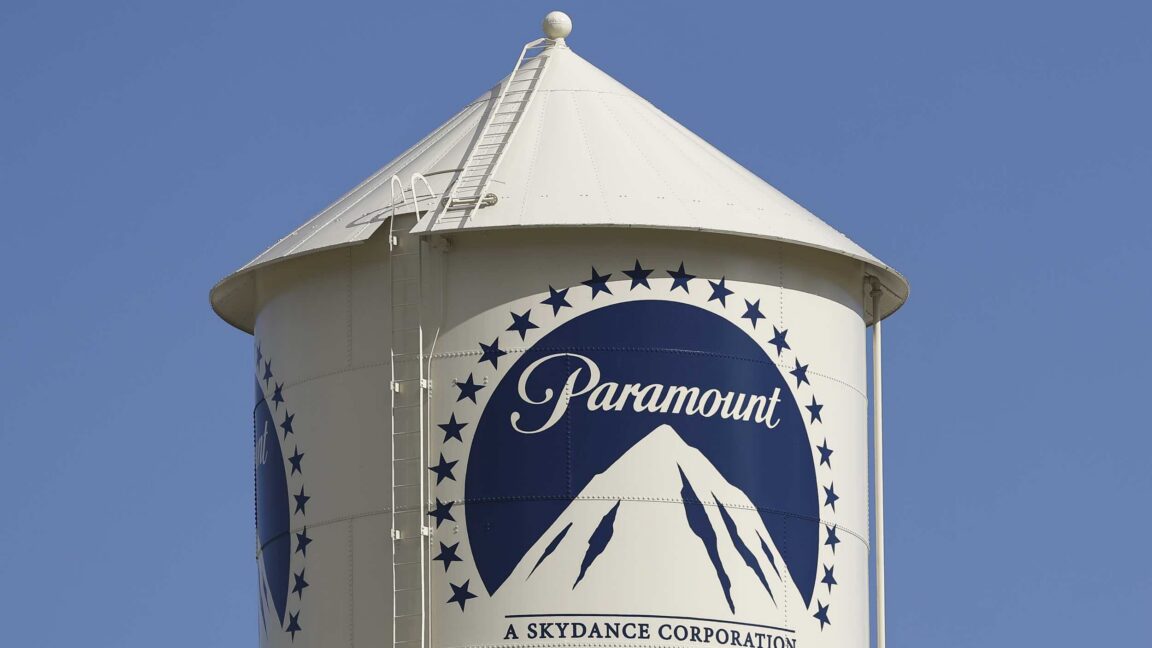
Paramount/WBD merger delayed for months as states' lawsuit moves toward trial
The legal scaffolding around one of media’s largest potential consolidations has grown more intricate. Regulators frame the delay as a careful calibration between market concentration, consumer choice, and national priorities. The article paints a landscape where the policy calculus is not merely about antitrust signals but about how AI-enabled advertising ecosystems, data-sharing obligations, and cross-platform algorithmic complementarities may influence competition. The interplay between state-level action and federal oversight becomes a living scorecard—one that could ripple across content, distribution, and strategic partnerships as a broader AI-enabled media economy codifies new norms.
Visual anchor: a stylized courtroom silhouette overlaid with circuit tracings—an emblem of policy meeting pipelines and digital markets.
Canadian legislator reads out apparent LLM response in floor speech
The moment captures a parliamentary floor where an LLM-generated response is part of the public record, provoking debates about authenticity, accountability, and the boundaries of machine-assisted debate. The piece navigates the complexities of natural language generation in civic discourse: the veneer of nuance, the risk of misattribution, and the potential for AI to accelerate or distort policy discussions. It’s a reminder that as AI becomes embedded in governance, the safeguards around authorship, provenance, and human oversight must become as robust as the technology itself, lest we mistake the echo for the source.
Visual anchor: a speaker podium bathed in data glow—an architectural metaphor for AI-inflected deliberation.
Anthropic's Opus 5 is about token efficiency, not a capability leap
The analysis reframes what “progress” means in the rapid evolution of language models. Opus 5 isn’t a leap in cognitive ability so much as a refinement of token efficiency—more output for less input, and at a price point that makes larger deployments financially tenable. In practice, this shifts how teams plan prompts, manage budgets, and design tooling around AI agents. The piece cautions that the cheaper tier may be perfectly adequate for many workflows, but it also raises questions about edge-case reliability, safety guardrails, and the ongoing trade-off between cost and fidelity. In a marketplace that prizes scale, token economics are becoming the new currency of competitive advantage.
Visual anchor: a stylized token ledger—tokens flowing through a transparent pipeline toward higher efficiency.
The Long Self-Correction
This is less a news piece and more a manifesto—an invitation to rethink the framing of AI safety, governance, and pace. The argument pivots from “AI Pause” to a continuous, long-term alignment project. The author critiques the idea of pausing progress—arguing that halting development doesn’t address the core risk: humans remain fallible stewards, and a pause can be exploited by uncertainty or entropy within the system itself. Instead, the piece advocates for a persistent, evolving correction mechanism—one that treats misalignment as an ongoing operational problem rather than a one-off crisis. The conceptual core: governance must be as dynamic as the systems it governs, incorporating feedback loops, continual learning, and adaptive risk management.
Visual anchor: a looping helix of data, policy, and ethics—an artistic metaphor for continuous alignment.
Roku raises streaming stick prices by up to 60 percent
The price move, framed around a RAM shortage, offers a rare window into the hardware side of AI adoption. As AI workloads become more hopeful, devices that deliver a lean, on-device or hybrid experience face supply-chain bottlenecks that ripple into consumer pricing. The narrative isn’t simply about sticker shock; it’s about the economics of edge computing, the role of memory as a bottleneck in AI-enabled media devices, and how manufacturers must balance throughput, energy use, and durability in an era of continuous update cycles. For consumers, the shift invites scrutiny of total cost of ownership and the incremental value of “AI readiness” in a shifting marketplace.
Visual anchor: a price tag transformed into a circuit diagram—an illustration of hardware constraints meeting consumer hardware economics.
RFK Jr.'s handpicked committee approves manufacture of peptides he uses
The article sits at a provocative crossroads of policy, transparency, and biotech risk. The committee’s approval—amid questions about safety data—signals a political dynamic where ethics and governance take a backseat to expediency in some lenses of public policy. The piece surveys the implications for regulation, injury to public trust, and the temptation to treat AI-enabled biotech as a pure optimization problem rather than a domain requiring rigorous, independent validation. It’s a reminder that the pace of AI-enabled breakthroughs can collide with slow-moving safety, ethics, and oversight mechanisms that define whether outcomes stay aligned with public health and social norms.
Visual anchor: a laboratory bench bathed in clinical light—where policy, ethics, and technology collide.
Midjourney buys Co-Star, signaling AI company expands into astrology
The acquisition traces a curious path from image synthesis to personality-focused apps—an evolution that reframes what “AI product” means. Midjourney’s foray into astrology through Co-Star offers a case study in how phenotype—style, tone, and user interaction—becomes a source of competitive advantage alongside raw capability. The Verge AI notes the blend of art, data, and cultural signaling that such moves produce: personalized, narrative-rich experiences that feel bespoke even as they are algorithmically tuned. The risks are equally clear: the boundary between entertainment and belief can blur, amplifying misinformation or misinterpretation if the personality layer isn’t responsibly designed and transparently disclosed.
Visual anchor: a constellation of personality icons orbiting a moon of astrological symbols—an image of data-driven personalization entering the realm of meaning.
Why Cognition bought Poke: AI personality is becoming a competitive advantage
The move underscores a broader industry drift: the affordances of a conversational agent—not just what it can do, but how it presents itself, how it speaks, and how users feel when they engage. Poke’s personality layer, integrated into Cognition’s Devin, suggests that the next wave of AI adoption may hinge as much on human-like engagement as on raw model prowess. The strategic implication is clear: differentiation can be achieved by shaping the agent’s interaction style—tone, pace, humor, and even cultural cues—creating an experience that feels personal, approachable, and trustworthy. The challenge lies in balancing a consistent voice with the demands of safety, accuracy, and transparency—an ongoing design and governance exercise as much as a product decision.
Visual anchor: a friendly avatar with speech bubbles—an artist’s portrait of personality as product.
A living gallery of AI’s currents
If today’s tour has taught us anything, it’s that AI’s orbit isn’t a single trajectory but a constellation. Economic recalibration, cultural reimagination, and governance frictions all orbit the same core: a technology that is increasingly capable, increasingly visible, and increasingly entangled with human judgment. The 18 panels above map only a portion of the room, but they illuminate a pattern—progress with friction, speed with safeguards, novelty meeting responsibility. The briefing will return tomorrow with new frames, new textures, and new voices in the gallery.
Commentary, data sources, and deeper dives are available at the end of each panel. Visual anchors are drawn from the images supplied here, repurposed as living textures to frame the ideas rather than as decorative scenery.
Summarized stories
Each story in this briefing links to the full article.
by Heidi








 by Heidi
Heidi summarizes each daily briefing from trusted AI industry sources, then links every story back to a full article for deeper context.