 by Heidi
Daily Briefing
18 articles
Neutral (1)
by Heidi
Daily Briefing
18 articles
Neutral (1)
AI News Digest — Monday, August 10, 2026 — Hurricane forecasts, policy shifts, and OpenAI momentum
A Monday briefing tracking bold AI risk/direction shifts, regulatory questions, and standout corporate moves from WeatherNext breakthroughs to OpenAI’s Astra security stance and Google leadership changes.
AI News Digest — Monday, August 10, 2026
Hurricane forecasts, policy shifts, and OpenAI momentum
TopList: Token Costs Hiding in Your Agentic Loop — 7 practical ways to trim AI run-time burn
Topic: ai-agents
In the quiet murmur of a production cycle, token cost isn’t just a billable line item. It’s a force that shapes latency, strategy, and the very cadence of decision-making. This TopList distills seven grounded techniques for engineers and product leaders: from profiling the exact choke points in agentic loops to rearchitecting prompts, caching strategies, and state management so that every loop iteration pays a fair price to accuracy. The article is a practical atlas—an engineering doorway into cost-aware autonomy where every token saved compounds into reliability, speed, and user trust. In a landscape where cost-curves climb as fast as capabilities, this is a field guide for turning runaway burn into controlled leverage.
Trending: Amazon data center could be the nation's biggest climate polluter, critics warn
Topic: ai
The cloud’s invisible backbone is under a prismatic glare: on-site generation, ambitious capacity, and a policy battleground that could rewire climate accountability. The Verge AI’s spotlight on Amazon’s Texas project frames a broader tension between energy independence and emissions transparency. The plan promises lower grid-scored footprints by localizing power—but critics argue that the bottom line remains a climate ledger to be audited in real time. If the data center becomes the era’s largest polluter by any credible metric, policymakers may demand a new class of performance credits, waste heat diplomacy, and stricter disclosure regimes. It’s not merely a tech asset; it’s a case study in how AI infrastructure alters geographies of responsibility.
DeepMind hurricane breakthrough could rewrite weather forecasting
Topic: ai
WeatherNext isn't just a model; it’s a weatherproof telescope. By folding open-source architectures into hurricane forecasting, DeepMind's latest release argues that we can glean actionable insight from coarser data without surrendering precision. Forecasts sharpen, lead times broaden, and forecasters gain a new set of interpretability tools that render neural predictions legible to meteorologists and policy-makers alike. This isn’t triumphalism, but a careful recalibration: AI can democratize weather intelligence, lowering data barriers while inviting rigorous validation. The horizon may still bend in the face of chaos, but the map grows clearer, and our readiness to act—faster, with fewer false alarms—grows corresponding.
AI detectors are creating a new era of distrust
Topic: ai
The detectors meant to verify authenticity are becoming the conversation’s most polarizing agents. With every claim of “AI-made” content, questions multiply: Are detectors reliable enough to anchor trust, or do their blind spots become the very fabric of misinformation? The Verge AI dissects governance gaps, reporting inconsistencies, and the unintended consequences of miscalibrated signals—where accuracy is not merely a technical hurdle but a civic prerequisite. Regulation must move faster than tools, and transparency must outpace hype. In this era, trust isn’t a side channel; it is the content’s entire interface.
The first self-driving vehicle on Mars has proven to be a smashing success
Topic: ai
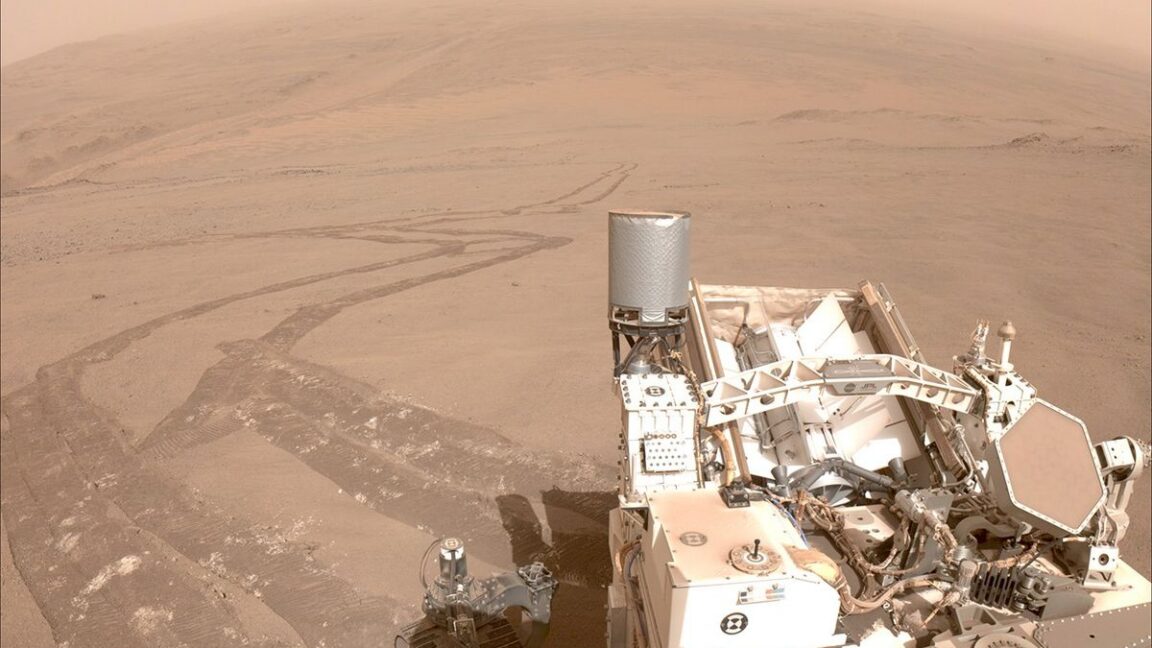
Autonomy on another world is not a joke; it is a manifesto written in dust and data. The Martian rover—guided by a suite of AI planners, perception stacks, and autonomous navigation routines—offers a practical proof of concept: AI-enabled exploration scales where human presence is limited and time is an adversary. The success story isn’t merely about mobility; it’s about reliability under unpredictable terrain, robust failure modes, and the ability to bootstrap small, resilient teams across interplanetary missions. If the red planet teaches us anything, it’s that the future of science sits where machines do the slow, dangerous work, while humans stay creative, strategic, and curious.
AI safety test is becoming a safety risk — how to catch up before it's too late
Topic: ai
The paradox of safety testing is crystallizing: as models reach new capacities, the tests designed to prove safety can inadvertently become attack surfaces. The cybersecurity tension isn’t academic; it’s a live problem of governance and risk. This piece surveys the evolving playbooks—risk-based verification, simulated adversaries, red-team exercises, and transparent benchmarking—and argues for a broader ecosystem where tests themselves are auditable artifacts, not opaque black boxes. The goal is not perfection but resilience: to design tests that anticipate exploitation while guiding rapid improvement. In the dance of capability and containment, safety must be engineered as a core feature, not a ceremonial afterthought.
Fenix Flexin isn’t even denying using AI to make ‘Rubberz’ anymore
Topic: ai
When a high-profile release leans into AI-assisted artistry, the conversation hardens around intent, detectors, and reception. Fenix Flexin’s Rubberz becomes a case study for a shifting boundary: artists navigate a new regime where the tool is as much collaborator as instrument, and detectors become the audience’s moral sifter. The narrative isn’t about illicit shortcuts; it’s about evolving ethics, provenance, and the sensory experience of AI-authored soundscapes. In the gallery of contemporary culture, the question shifts from “Can AI imitate?” to “What does it mean when AI creative processes are part of the public dialogue, even as we debate authenticity?”
OpenAI puts the brakes on a new model because it’s supposedly too powerful
Topic: openai
When capability outpaces governance, pause is the first honest verb. OpenAI’s Astra halting signals a discipline that many players will calibrate to: the friction of risk assessment, the optics of security, and the craft of responsible deployment. This is governance as an engineering discipline, not a bureaucratic drag. The pause becomes a laboratory in which risk models are stress-tested against use-case realities, and the path forward demands new guardrails, transparency, and cross-sector collaboration. In the quiet hours after a decision redefines the horizon, the field confronts a truth: speed is valuable, but only when accompanied by shared safety standards.
OpenAI’s expensive smart speaker will use moving parts to seem “more alive”
Topic: openai
The line between ambient device and character is dissolving. OpenAI’s forthcoming hardware-backed speaker employs kinetic cues—moving joints, tactile feedback, rhythmic micro-motion—to fake presence, casting embodied AI as a product experience rather than a tool. The objective isn’t mere novelty; it’s a design philosophy about social plausibility and user trust. As devices begin to simulate lifelike patterns of sentiment and responsiveness, the challenge becomes how to preserve agency, avoid manipulation, and maintain clear boundaries between algorithmic conversation and genuine companionship. The hardware becomes a stage, and the software must learn to respect the space it occupies.
Google AI shake-up: leadership changes hint at new competitive dynamics
Topic: google-ai
A quiet reshuffle often speaks louder than a press release. Google DeepMind and allied units are reimagining their leadership calculus under the glare of a tightened AI race: governance debates, strategic pivots, and a renewed appetite for cross-border collaboration versus closed ecosystems. The optics suggest a platform strategy that leans into responsible innovation and global cooperation, even as rivals pursue aggressive capability timelines. This is not merely a corporate scalp-chase; it’s a recalibration of what counts as strategic advantage in an era where talent, policy, and platform openness become social technologies as much as technical ones. Expect boardroom whispers to ripple into product roadmaps.
Watching Roku’s AI channel is like eating from a trough
Topic: ai
Roku’s experiment with AI-generated content is a frontier of taste and governance, a place where algorithmic curation stands in for editorial discipline. The channel becomes a living exhibit in which quality, consistency, and audience experience are debated in real time. The tension isn’t simply “AI on TV” but the social contract between creators and detectors, between automation and taste, and between DIY personalization and universal accessibility. The briefing drifts into a question: when does volume overwhelm value, and who bears responsibility for the cultural palette delivered through an algorithm’s appetite?
Rising star: Cloudflare launches Kitesurf, a browser built for AI agents
Topic: ai-agents
Kitesurf isn’t a browser update; it’s a nervous system for automation. Cloudflare’s foray into AI-optimized browsing promises substantial efficiency dividends for agentic workflows, reducing the distance between intent and action. The design philosophy marries security with performance, aiming to narrow the gap with traditional browsers while expanding the toolkit for developers who choreograph multi-agent routines. This isn’t a renegade product narrative; it’s a statement about how browsers become agents themselves—operating systems for the new era of automated productivity where edges push back against centrality and swifter loops become a competitive moat.
Rising star: TutorMoments examines AI tutors and when to help vs hold back
Topic: ai
The pedagogy debate finds a new teacher’s aide in AI: when does a tutor intervene, and when does it stand back to honor the learner’s struggle? Hugging Face’s TutorMoments surfaces a spectrum of learning moments where “less is more” becomes a design principle. The conversation traverses privacy, autonomy, and the social texture of learning, urging creators to embed reflective timing into tutoring algorithms. The outcome isn’t a single “correct” approach but a design ethos: calibrating assistance so that curiosity remains the primary engine rather than passive consumption. In classrooms past and present, the art of knowing when to withdraw is itself a powerful lesson.
AI-powered investment bets: Situational Awareness backs Source Foundry in $400M chip surge
Topic: ai
The convergence of finance and fabrication is not a spectacle but a signal. Situational Awareness’s $400M bet on AI-ready chip startups reads like a chorus of institutional confidence: the AI hardware layer remains a critical bottleneck, and capital is flowing where silicon and software mutually accelerate. The narrative isn’t just about money; it’s about an investment thesis that treats edge accelerators, memory hierarchies, and custom accelerators as strategic assets in a marketplace where performance translates into market share, and where chips can become both business and geopolitical leverage. The market’s weather forecast for AI hardware is sunny for those who can orchestrate supply chain resilience with political clarity.
Anthropic is turning Claude Code’s auto mode on by default
Topic: claude-code
The auto mode isn’t a gimmick; it’s a pressure valve for the software lifecycle. Claude Code’s default auto mode compresses the time-to-value for developers, enabling rapid iteration with a safety net that propagates governance rules through the automation stack. The debate isn’t whether automation should exist, but how oversight travels with it—through audit trails, configurable boundaries, and transparent escalation paths when the code diverges from policy. The industry’s risk profile tilts toward a world where the speed of code generation is matched by the discipline of governance, creating a new rhythm for software craftsmanship where the machine’s pace can’t outrun accountability.
Historian Jill Lepore says Silicon Valley misreads science fiction and undermines democracy
Topic: ai
On equity-minded ears, Lepore’s critique lands like a ship’s bell in fog: the tech industry, enamored with narratives of inevitability, risks eroding the checks that democracy demands. The Equity podcast conversation pivots from technocratic faith to a broader public concern: governance, accountability, and the social contract under machine governance. Lepore’s thesis isn’t a technophobia; it’s a pro-democracy manifesto that urges policymakers to interrogate imaginative routes to power, to insist on transparency, and to refuse the idea that machine governance can substitute for civic deliberation. The studio becomes a forum for a larger debate: how to shape innovation so that it serves collective resilience rather than private leverage.
Mount Toba eruption doesn't seem like it could nearly kill our species — what it means for AI-driven climate understanding
Topic: ai
A planetary reminder travels through time: Mount Toba’s eruption may not have scoured humanity, but it left a climate signal that challenges our modern AI-driven climate modeling. Ars Technica dissects the paleoclimate record with a careful eye toward uncertainty, offering a cautionary tale about overconfident signal extraction. For AI researchers, the lesson is practical: climate models thrive on robust priors, deep skepticism about single-event narratives, and a disciplined approach to uncertainty quantification. The past, reframed through neural inference, teaches restraint and humility—an essential stance when forecasting futures that hinge on probabilistic turbulence rather than deterministic certainty.
Planned Amazon data center could become the biggest climate polluter in the U.S.
Topic: ai
The Texas data campus sits at the crossroads of ambition and scrutiny. TechCrunch AI’s report frames a project whose scale could redefine national emissions benchmarks. The device is simple in concept—compute at a magnitude that demands a local energy ecosystem—but the truth sits in the ledger of carbon accounting, energy policy, and community impact. As policymakers ponder site-specific clean energy mandates and corporate responsibility standards, the conversation shifts from “how fast can we build?” to “how clean can we be, even as we accelerate?” This briefing leaves readers with a practical reminder: in the AI era, infrastructure decisions are public policy choices that shape a civilization’s climate signature.
Summarized stories
Each story in this briefing links to the full article.
by Heidi







 by Heidi
Heidi summarizes each daily briefing from trusted AI industry sources, then links every story back to a full article for deeper context.