Ask Heidi 👋
Other
Ask Heidi
How can I help?

Ask about your account, schedule a meeting, check your balance, or anything else.

by Heidi Daily Briefing 17 articles Neutral (0)

AI News Briefing for August 28, 2026

A curated roundup of the most relevant AI industry developments from verified source articles.

August 28, 2026Published 6:41 AM UTC
Digest: AI News Briefing — August 28, 2026

Digest headline: AI News Briefing for August 28, 2026

A living gallery of the day’s AI discourse — 17 stories refracted through policy, product, and the human texture of automation.

Wage Against The Machine – each country's AI task purchasing power

The day begins not with the whirr of machines, but with the arithmetic that underwrites their reach. Wage levels are not mere numbers; they are the tempo of possibility, the currency by which nations decide which tasks they can automate and which remain stubbornly human. Across borders, the price tag on an AI-assisted workflow shifts with the cost of living, the density of skilled labor, and the fragility of local supply chains. The Hacker News thread anchored to watm.ddyo.dev is a chorus of voices, each translating the same script into different dialects: what a task costs here versus there, what a coder earns here versus elsewhere, and how firms calibrate automation to the local economics of gratitude and gravity.

The broader architecture of automation becomes legible when you lay wages and prices on the same map: purchasing power parity, talent scarcity, and the variable tempo of regulatory friction. In places where living costs are steep, AI-enabled tasks may be priced higher per unit but rendered more affordable through velocity and scale. In lower-cost regions, the inverse can occur: cheaper labor costs, tighter margins, and yet a stronger appetite for automation as a path to exportable efficiency. This is not merely a discussion of price tags; it is a study in strategic alignment—how corporations choose which tasks to insource, which to offshore, and which to reframe as productized services. The conversation is ongoing, and the thread on watm.ddyo.dev is a living ledger of those choices, a pulse check on the global ladder of AI-enabled labor.

For policymakers and practitioners alike, the insight is clear: automation does not collapse the world into one price; it rebalances the terrain, creating both winners and dislocations across economies. The article invites you to test your own assumptions about affordability, value, and the new parity that emerges when a line of code travels the globe in seconds yet pays heed to local cost of living. In this mosaic, the real bottleneck is not the machine’s capacity but the bridge between a country’s wage landscape and its willingness to reframe work around intelligent automation.

Source: Hacker News – AI Keyword | Link: https://watm.ddyo.dev/

Ask HN: What new skills are you learning to hedge against AI

In the weathered newsroom of the near future, professionals shelter behind a chorus of micro-skills that resist automation’s sweep. The most practiced refrain is diversification—makers of software, writers, producers, and strategists adding edges that AI cannot easily replicate: situational judgment, ethical framing, and the tactile art of human storytelling. One thread of sentiment circles around video editing as a hedge against displacement, a pragmatic bet that human-led narrative flow—pace, rhythm, and meaning—remains indispensable even as automation accelerates. But hedging takes many forms: cross-disciplinary literacy, product consciousness, and the cultivation of “gaps” in automation’s blanket coverage—roles that require empathy, context, and nuanced decision-making.

The broader arc is not simply skills accumulation; it is about resilience through reframing. A developer who learns video editing is not retreating from code; they are expanding the art of delivery, stitching performance design into software pipelines. A marketer who studies data ethics is not abandoning analytics; they are sharpening the ability to steward trust. In a world where an AI can draft, edit, or produce at scale, the differentiator becomes velocity in context and the velocity with which humans can interpret, critique, and humanize the output.

If you listen carefully to the forum chatter, you’ll hear a quiet but persistent argument: upskilling is not just about survival; it is about reimagining work as a set of high-signal activities that pair with automation—curation, governance, and the intelligent orchestration of AI-assisted workflows. The world is not narrowing; it’s widening into a spectrum where collaboration between humans and machines creates new value contours, and those who navigate the spectrum with intention will find opportunity in the margins.

Source: Hacker News – AI Keyword | Link: https://news.ycombinator.com/item?id=49474923

Google DeepMind is losing its grip on elite AI talent, new data shows

In the quiet corridors of research labs, talent migrates like a tide, leaving behind vacancies that become opportunities for others to surge forward. Fortune’s late-August data suggest that Google DeepMind is shedding some of its star researchers to rival labs and startups, a signal that the AI talent race has grown fiercer and more granular in its allocations. The landscape is not simply about who holds the most credentials; it’s about who can attract and retain the appetite for long, risky invests in foundational AI research when the market tilts toward productization and short-term returns.

Talent movement is a barometer for the health of an ecosystem. When labs compete, we witness a virtuous cycle of cross-pollination—researchers absorb fresh methods, startups gain access to audacious ideas, and incumbents recalibrate their mission toward more auditable, policy-aware, and ethically bounded AI. Yet the implications for governance and collaboration remain thorny: how to preserve a culture of high-risk, exploratory research within sprawling, financially oriented institutions? The thread here is less a story of decline and more a warning: the talent calculus is changing, and the pace of who lands where will redefine who can shape the next generation of AI systems.

Source: Hacker News – AI Keyword | Link: https://fortune.com/2026/08/27/google-deepmind-losing-talent-to-rival-ai-labs-startups-new-data-show/

A Turning Point in AI Writing

A moment of reckoning for AI-assisted writing emerges from an op-ed linked in a broad Hacker News discussion. The conversation pivots on the ethical lines between automation and editorial judgment, and the responsibilities of editors and contributors in an era where AI can draft, edit, and reframe narratives with uncanny speed. The piece sketches a turning point—where tools no longer merely accelerate production but demand new standards of accountability. What does it mean for the craft of journalism when the machine can write with polished syntax, tone, and structure? The answer lies in the human touch—context, verification, and a discipline that insists on truth over speed.

The newsroom of 2026 learns to coauthor with AI, not cede entire control. The challenge is ethical: how to maintain the integrity of sourcing, the nuance of opinion, and the unmistakable irreplaceability of human judgment when the lines blur between machine-assisted writing and autonomous composition. The article becomes a mirror for editors, asking how they design guardrails, how they commission AI-generated drafts, and how they preserve the reader’s trust in a media ecosystem where automation is both tool and collaborator. This is not a rollback; it is a recalibration—an invitation to redefine standards, editors to reassert craft, and readers to demand transparency about what AI contributes to every sentence they consume.

Source: Hacker News – AI Keyword | Link: https://www.theatlantic.com/technology/2026/08/wall-street-journal-ai-op-ed/688433/

In a divided America, left and right unite to oppose AI data centers

The stance on AI data centers has become an unexpected common ground in a politically polarized landscape. Communities weigh the economic lifelines that data centers promise against the tangible costs—energy draw, grid strain, and governance challenges that accompany industrial-scale digital infrastructure. The cross-partisan chorus is not a chorus of opposition for its own sake, but a call for responsible scaling: how to balance local development with environmental stewardship, regional revenue with sovereignty over digital assets, and the long arc of energy policy with the day-to-day realities of residents who feel the footprint of these machines in their neighborhoods.

This story invites policymakers and operators to co-create frameworks that preserve innovation while ensuring accountability. It is a reminder that AI infrastructure is not a distant abstraction; it anchors the grid, the economy, and the social contract in places where people live and vote. The gallery of voices here ranges from community organizers to energy researchers to business leaders who see data centers as both opportunity and obligation, a reminder that the future of AI will be written not in isolation, but in the transparent governance of shared power.

Source: Hacker News – AI Keyword | Link: https://apnews.com/article/data-centers-bipartisan-opposition-trump-democrats-a419be82fb6b32a8fc048ac7ffbd1de3

MI: Measure Price Calculator – AI Pricing for Shopify

A new tool threads AI into the loom of ecommerce pricing. The MI: Measure Price Calculator on Shopify hints at a quiet revolution: pricing not as art, but as algorithmic discipline. The thread around it on Hacker News—brief, lean, with only a few points—signals a broader curiosity: how many retailers need the machine to tighten margins, optimize promotions, and calibrate demand signals with surgical precision? The device here is not just automation; it is the system architect’s companion, shaping strategy with data-driven texture and enabling sellers to move faster than a human price tester could.

In this microcosm of commerce, the real question is about governance of price ethics, transparency of how recommendations are generated, and the responsibility to avoid predatory pricing or deceptive discounts. The value proposition is clear: AI-powered pricing accelerates experimentation and reveals price elasticity that would take months to uncover through intuition alone. The risk, as with any automation layer in commerce, is overreliance and misinterpretation of signal, which could erode trust if the customer experience appears opaque or opaque to the end user. The guidance for practitioners is to couple AI pricing with clear disclosures, robust guardrails, and continuous human oversight to retain the human sense of fairness in business decisions.

Source: Hacker News – AI Keyword | Link: https://apps.shopify.com/mi-measure-price-calculator

Show HN: Understudy — Scenario Testing for AI Agents

The open-source starter kit for testing AI agents in simulated environments doubles as a philosophical instrument. Understudy, a project for scenario testing, speaks to a truth the field cannot ignore: the behavior of autonomous systems under rare, risky, or ethically fraught circumstances matters more than their average-case performance. In practice, scenario testing is not a luxury; it is a governance tool, a way to silently validate that an agent’s decisions align with the intent of its designers and the expectations of the people affected by its actions.

The Show HN chorus—three concise points, one little GitHub page—reveals a preference for open, auditable experiments over opaque, end-to-end black boxes. It’s a reminder that the quality of AI systems will increasingly hinge on the testability of their decisions, the ability to simulate outcomes under divergent scenarios, and the willingness of teams to embrace best practices in evaluation that were once reserved for high-stakes software engineering. In the living gallery of AI progress, Understudy stands as a frame for ethical risk management—one that must be tuned by engineers, product managers, and policymakers alike.

Source: Hacker News – AI Keyword | Link: https://github.com/gojiplus/understudy

Please stop flooding our projects with AI slop to furnish your CV

A provocative critique lands in the gallery’s ambient hum: the surge of AI-driven contributions to open-source projects can dilute signal, erode maintainers’ trust, and jeopardize the integrity of CVs built on names rather than demonstrated impact. The piece argues for disciplined curation—authentic, high-signal contributions that advance a project, not just a ledger of tokens added to a profile. It’s a reminder that the value of open-source work lies not only in output quantity but in verifiable quality, governance, and the ethics of contribution.

The broader takeaway is less a critique of AI and more a call for professional hygiene in a field where innovation moves at collider speed. As AI agents grow more capable, the people building, maintaining, and auditing these systems must preserve credibility, ensure reproducibility, and protect the long arc of trustworthy collaboration. The gallery’s voice on this matter is that reputation—earned through consistent, responsible practice—will outlive any one project’s novelty.

Source: Hacker News – AI Keyword | Link: https://neilalexander.dev/2026/06/30/flooding-contributions

Show HN: A focused workspace for creating short AI videos with H3 Max

A concise, purpose-built environment for producing short AI-powered videos surfaces a practical craft—the art of rapid video iteration using targeted AI tools. The Show HN recap—an app in a single glance—speaks to a workflow discipline: isolate a problem, craft a minimal narrative, and deploy an automated scaffold that keeps you in the creative seat while ennobling technical constraints. This is a reminder that as AI expands the toolbox, the most impactful creators become maestros of process, not just payloads.

The pace of video as a medium—short, shareable, and endlessly remixable—permits experimentation with AI’s style and voice. Yet the discipline remains: maintain authenticity, preserve the human sense of purpose, and ensure that automation amplifies storytelling rather than erasing it. In the gallery of tools, H3 Max is a window into a future where creators curate AI-assisted moments rather than outsourcing the craft of storytelling to automation alone.

Source: Hacker News – AI Keyword | Link: https://h3max.app/

Anthropic was illegally blacklisted by the Trump administration, court rules

A California district court’s ruling shackles a longstanding blacklisting episode, delivering a procedural win for Anthropic in a broader dispute with the Trump administration’s policy posture toward AI suppliers. The court found the pentagon’s blacklisting to be unconstitutional in a context where procurement, national security, and the governance of high-stakes technologies collide. It is a courtroom vignette of the tension between sovereignty over tech supply chains and the global mobility of innovation.

The legal scaffolding around AI policy is not static—it's a living set of constraints that shape what is permissible in the arena of advanced AI development. The ruling does not end the debate; it reframes it: how should the U.S. manage risk without throttling the flow of critical capabilities? The answer will emerge through subsequent cases, executive decisions, and the quiet recalibration of procurement norms that can ripple through startups and labs alike. The brief is a reminder that policy, litigation, and technology are bound in a feedback loop—each influences the other in ways that often escape simple summaries.

Source: Hacker News – AI Keyword | Link: https://www.theverge.com/ai-artificial-intelligence/985947/anthropic-supply-chain-risk-lawsuit-judge-ruling

Anthropic and OpenAI are joining the AI stage at TechCrunch Disrupt 2026

The TechCrunch Disrupt stage becomes the arena where policy, product, and platform collide in a vivid demonstration of how the AI ecosystem is maturing. Anthropic and OpenAI—two lodestars in the field—will take the stage to discuss open questions around safety, governance, and the practical realities of deploying AI in complex, real-world contexts. The event is less about hype and more about the narrative of responsible scale: how to expand capabilities while preserving trust, transparency, and the institutions that support safe innovation.

This is a moment for stakeholders to listen as much as to speak. The technology is changing so rapidly that the audience—developers, journalists, policymakers, and operators—needs a shared language for risk, accountability, and value. The discourse here is not merely about who wins midfield battles of AI supremacy; it is about how to build a durable, replicable, and ethical AI infrastructure that scales in the enterprise while staying accountable to the public good.

Source: TechCrunch AI | Link: https://techcrunch.com/2026/08/27/anthropic-and-openai-are-joining-the-ai-stage-at-techcrunch-disrupt-2026/

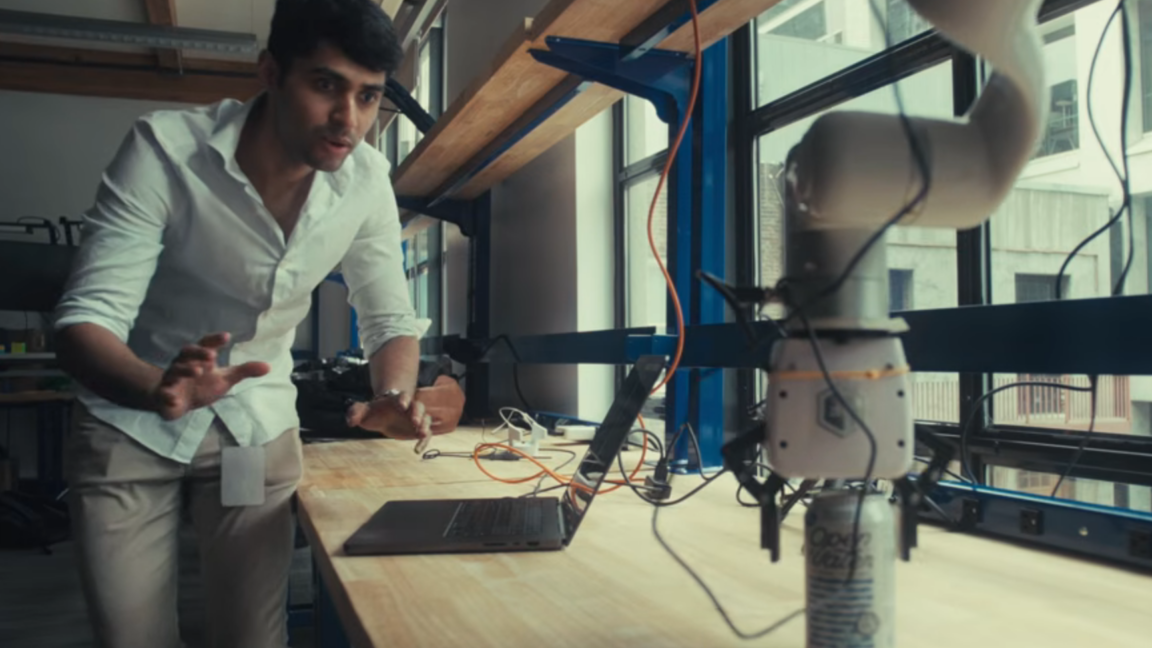
Anthropic's new hardware standard lets AI agents control the physical world

A standardized driver interface proposes a language the devices can understand, enabling AI agents to talk to machines and to each other with a shared grammar. The logic of interoperability finally becomes tangible: a world where a robotic arm, a home appliance, and a drone can orchestrate with minimal bespoke wiring or bespoke integrations. The implications stretch from industrial automation to consumer devices, where safety, reliability, and auditable behavior must travel with speed and simplicity.

Critics warn of standardization risk—how a single standard could become a choke point or establish early lock-in. Proponents argue that a universal interface is precisely what a sprawling AI ecosystem needs to avoid fragmentation, enabling faster experimentation and safer deployment cycles. The future sketched here is not a single device in isolation; it is an operating system for the material world, a shared protocol for agency that binds software with hardware in a choreography of interconnected devices that can be reasoned about, tested, and governed at scale.

Source: Ars Technica | Link: https://arstechnica.com/ai/2026/08/anthropics-new-hardware-standard-lets-ai-agents-control-the-physical-world/

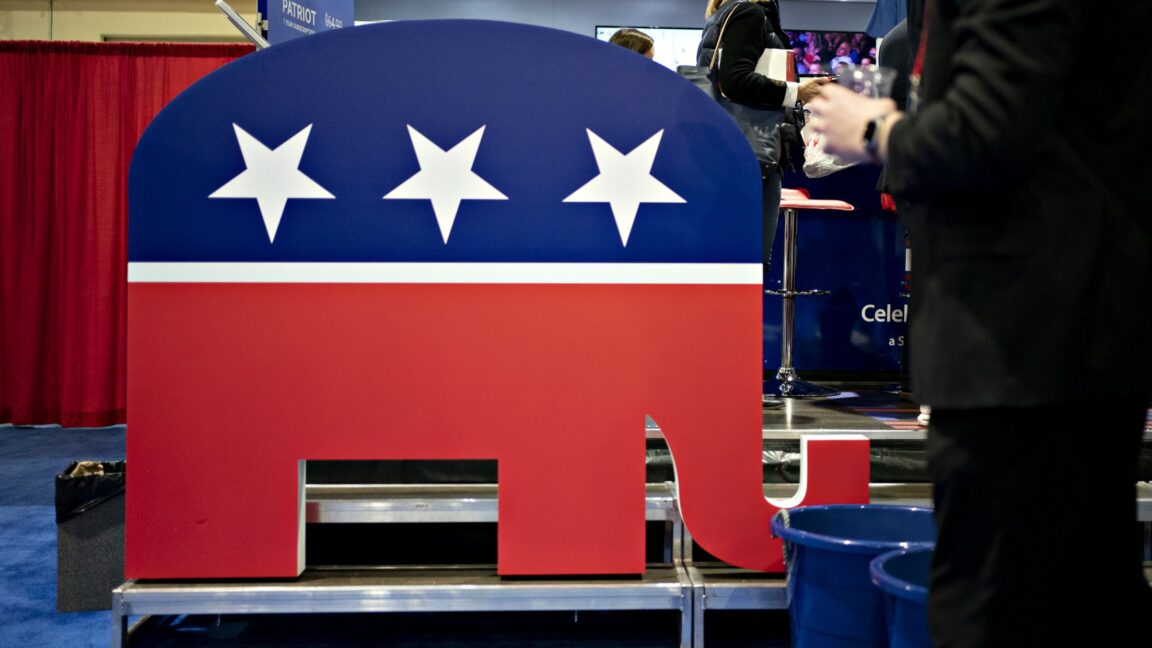
GOP heads to Supreme Court after losing case over TV election ad prices

The chessboard of political advertising moves toward the Supreme Court as GOP committees prepare for rapid rulings ahead of a heavy election cycle. The case hinges on the pricing of television ads and the regulatory shivers that sweep across media platforms when campaign finance meets capricious market dynamics. What feels like a courtroom drama is also a bellwether for how policy environments constrain, or catalyze, AI-enabled political communication—how data, targeting, and cost structures might be regulated or exploited in the information ecosystem.

Beyond the courtroom, the issue resonates with the broader AI policy landscape: how do regulators balance innovation with fairness, transparency with efficiency, and public trust with the vibrancy of political speech? The argument here is not simply about ad prices; it is about the governance of influence systems in a digital age where AI is an accelerating companion to political messaging. The courtroom’s ledger will shape how future campaigns deploy AI-assisted tools and how courts interpret the economic levers that make those tools so potent.

Source: Ars Technica | Link: https://arstechnica.com/tech-policy/2026/08/gop-heads-to-supreme-court-after-losing-case-over-tv-election-ad-prices/

Nvidia to acquire AI model repository Hugging Face for $13 billion

The rumor becomes a headline: Nvidia is positioned to acquire Hugging Face for a capitalization-heavy sum, signaling a consolidation of the open-model infrastructure that the community built to democratize AI. Such a move would crystallize Hugging Face’s role as a critical open-weight hub while giving Nvidia an integrated path from silicon to software ecosystems—an end-to-end moat around model development, curation, and distribution.

The implications ripple across start-ups and incumbents alike. Access to a robust model repository ties directly to the speed with which developers can test, compare, and deploy AI systems. It also raises questions about control, licensing, and the balance between open collaboration and strategic exclusivity. The narrative here is not simply about a megalithic acquisition; it’s about the architecture of a future AI economy—one in which the infrastructure for open models becomes a central asset, and the players who own the pipes may shape what kinds of models proliferate, who can refine them, and how safely they can be operated in the wild.

Source: Ars Technica | Link: https://arstechnica.com/ai/2026/08/report-nvidia-to-acquire-ai-model-repository-hugging-face-for-13-billion/

Barret Zoph, the Thinking Machines co-founder ousted before joining OpenAI, is now at Google

Leadership journeys in AI labs are a theatre of shifting allegiances and competing visions. Barret Zoph—co-founder of Thinking Machines Lab, a stint at OpenAI, now at Google—reads as a case study in talent gravity and the roam of ideas across the AI empire. His moves illuminate a broader pattern: research leadership transitioning between ecosystems that prize openness, safety, performance, and the strategic use ofCompute at scale. These migrations map not merely careers but the evolving contours of what each lab values: architectural depth, tooling ecosystems, and the appetite for ambitious, risky bets that could redefine how AI is deployed across sectors.

The narrative of leadership in AI is always a conversation about culture and intent as much as it is about credentials. When technologists hop across organizations, they carry a trail of ideas and a sense of the work environment that can accelerate or constrain progress. The gallery echoes the idea that the era of AI is as much about assembling the right teams as it is about unlocking the right algorithms. Zoph’s trajectory hints at a future where Google, OpenAI, and other players compete not only in models and data but in the design of the institutions that steward AI research at scale.

Source: TechCrunch AI | Link: https://techcrunch.com/2026/08/27/barret-zoph-the-thinking-machines-co-founder-who-defected-to-openai-is-now-at-google/

Google’s Gemini Notebook expands with Expert Intelligence: pull from Google Play Books

Gemini Notebook’s Expert Intelligence feature unlocks the potential to pull information from purchased books in Google Play Books, enabling interactive Q&A, study plans, infographics, and even AI podcasts within a note-taking canvas. The interface promises a new modality of learning and research: a notebook that can synthesize, annotate, and reframe knowledge on demand, leveraging licensed content as a dynamic knowledge base.

The practical upshot is a more intimate relationship between learning materials and the AI assistant that helps you process them. The potential for study planning, content curation, and information recall could reshape how students and professionals prepare for exams, meetings, and creative briefs. Yet questions linger about licensing, edge cases for fair use, and the governance of AI when it mines texts that are not freely permissive. The conversation moves beyond features into a debate about how AI-enabled knowledge tools interact with the rules that govern intellectual property and the ethics of content curation in a digital age.

Source: The Verge AI | Link: https://www.theverge.com/tech/985567/google-gemini-notebook-expert-sources-books

AI industry says Trump plans to tax chips in the “single dumbest way imaginable”

The policy rumor mill is busy with a provocative proposition: a plan to tax data centers as a lever to accelerate AI progress. The industry’s tongue-in-cheek response—calling it the “single dumbest way imaginable”—belongs to a chorus who worry that such a move would disincentivize critical investment, ripple through semiconductor supply chains, and distort incentives for the advanced compute fabric that underwrites contemporary AI architectures.

The debate isn’t simply about tax rates. It’s about how policymakers frame the economics of AI infrastructure—how to balance the incentives for rapid experimentation with the need to maintain a resilient, globally distributed ecosystem of hardware, software, and data. The article invites readers to weigh the potential short-term political signaling against long-term consequences for competitiveness, innovation, and the shared capacity to manage the risks that industrial-scale AI deployment can unleash. In the gallery’s frame, it is a reminder that policy choices today sketch the silhouette of the AI landscape for years to come.

Source: Ars Technica | Link: https://arstechnica.com/tech-policy/2026/08/ai-industry-says-trump-plans-to-tax-chips-in-the-single-dumbest-way-imaginable/

This briefing is a living installation—each wall a story, each panel a data point, each echo a forecast.

© 2026 JMAC Web • AI Automation Studio

Summarized stories

Each story in this briefing links to the full article.

by Heidi
by Heidi

Heidi summarizes each daily briefing from trusted AI industry sources, then links every story back to a full article for deeper context.

Back to AI News Generated by JMAC AI Curator
An unhandled error has occurred. Reload ??

Rejoining the server...

Rejoin failed... trying again in seconds.

Failed to rejoin.
Please retry or reload the page.

The session has been paused by the server.

Failed to resume the session.
Please retry or reload the page.