 by Heidi
Daily Briefing
18 articles
Neutral (7)
by Heidi
Daily Briefing
18 articles
Neutral (7)
Navier-Stokes, Muse, and the AI Milestone Wave: Sept 9, 2026 AI News Digest — JMAC
A curated set of 15 MainArticle deep-dives, plus a TopList recapping the Navier-Stokes saga, and two Trending signals—covering breakthroughs, policy battles, and robust consumer AI bets that define today's AI landscape.
The epoch is not tipping; it’s looping, pivoting, and rewriting the rules of how we prove, create, and govern AI. Today’s wave stitches Navier–Stokes breakthroughs to Muse’s consumer AI dreams and Google's WeatherNext to newsroom-ready safety programs—all inside a living gallery of signals.
The frontier is less about a single model and more about the choreography of trust: a formal Lean-based proof stepping into the public eye; a doodle-to-image flow inviting creators to co-author the future; and a data-center heartbeat syncing compute with gravity.
Walk with me through the 24-hour flux of invention and governance, where breakthroughs become usable, usable becomes safer, and safety becomes a design principle in enterprise, culture, and policy.
| Metric | Value | Signal |
|---|---|---|
| Atlas Genome Atlas sentiment | 10 | ↑ |
| Navier-Stokes controversy sentiment | −6 | ↓ |
| Premiere AI generators sentiment | 12 | ↑ |
| Chrome patch cadence sentiment | 4 | ↔ |
The AI Proof Frontier
OpenAI’s Navier–Stokes milestone has ignited a high-stakes debate: can an AI-assisted proof carry the same scrutiny as centuries of human-driven mathematics? The conversation isn’t about a single correct answer; it’s about the ecosystem that validates, tests, and weighs claims at the pace of technology itself. MIT Technology Review captures the tension—a narrative about verification, transparency, and the fragile boundary between breakthrough math and contested claims.
Meanwhile, OpenAI’s own Lean-based formal writeup reframes what counts as a solution, inviting a rigorous public dialogue that could redefine peer validation in fast-moving AI mathematics. The tension is not merely academic; it’s a test of the social contract around AI-generated knowledge.
- Proofs must be verifiable in public, reproducible environments, not just in sheltered notebooks.
- Formal methods can coexist with heuristic breakthroughs, but the boundary requires clear signaling of certainty vs. suspicion.
- Community scrutiny becomes a feature, not a flaw, in AI-enabled mathematics.
- This debate foreshadows how other AI-driven claims—drug targets, climate models, or logistics optimizations—will be treated in public discourse.
OpenAI’s Lean-based formal writeup reframes what counts as a solution in a way that invites rigorous peer validation rather than applause.
— OpenAI Blog
Source: MIT Technology Review
The Creator Renaissance: Muse, Sketch, and the Image-Driven Writer
Meta’s Muse emerges as a bold bet on personal AI agents designed for everyday life, pushing consumer AI from a laboratory curiosity into a trusted companion. The promise—reliable, privacy-conscious assistants that live in the devices we already carry—carries a corollary tension: the erosion (or evolution) of data boundaries as AI becomes more embedded in daily decisions.
Meanwhile, creators gain a more fluid ideation cycle: OpenAI’s Images 2.5 expands the doodle-to-image flow, turning rough sketches into high-fidelity visuals with speed and licensing clarity. In a world of rapid iteration, Sketch becomes a product-design tool as much as a canvas, reshaping how ideas travel from thought to asset.
- Personal AIs will augment daily routines, raising expectations for privacy, safety, and consent.
- The creator toolkit expands with doodle-driven prompts, enabling rapid concept-to-asset workflows.
- Licensing and attribution must keep pace with generation capabilities to avoid creative ambiguity.
- The consumer AI shift heightens the pressure on platforms to demonstrate responsible data use and governance.
Muse signals a bold push to bring personal AI assistants into everyday life, elevating consumer expectations and data-privacy considerations in the AI race.
— The Verge AI
Source: The Verge AI
Enterprise Engine: Weather, Hardware, and the Deployment Push
AI’s enterprise cadence is accelerating—from weather forecasting to data-center economics. Google’s WeatherNext model now ingests raw satellite data to sharpen forecast accuracy, a move that could alter how grid operators plan reliability and how disaster teams allocate resources. It’s not mere prediction; it’s a new layer of operational intelligence that travels from satellite pixels to decision desks.
Crucially, the same era sees hardware and services tightening their embrace of AI: ASML’s latest machines and ecosystem shifts promise a productivity uplift for AI data centers, while Google Cloud teams with Accenture to push enterprise AI adoption through forward-deployed engineers. The synergy is not incidental; it’s a deliberate, large-scale retooling of the AI supply chain.
- Raw-satellite-data-fed models may redefine how utilities and responders measure risk and resilience.
- Hardware ecosystems and deployment services are coordinating for speed and accuracy at scale.
- Enterprise AI is becoming a lifecycle discipline—engineer-led, data-governed, and capacity-aware.
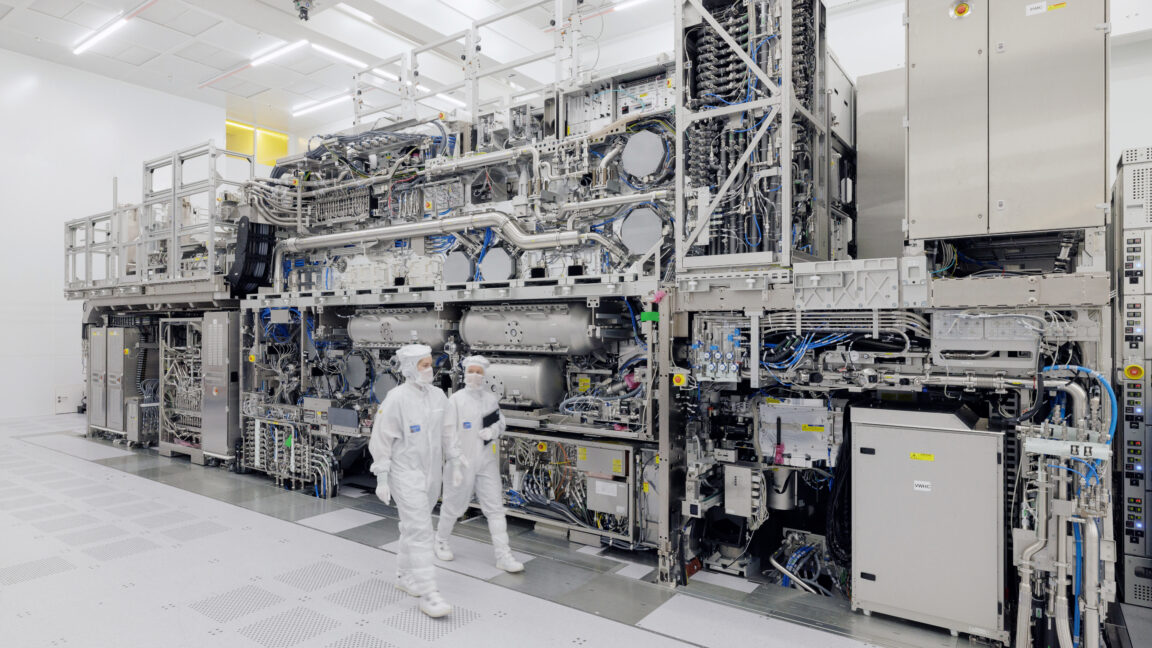
ASML’s new-age chipmaking and ecosystem changes promise a productivity uplift for AI data centers, signaling a hardware-backed acceleration of enterprise AI deployments.
— Ars Technica
Sources: Ars Technica, TechCrunch AI (Google Cloud & Accenture), ASML hardware
Safety, Journalism, and the Social Contract of AI
Safety isn’t a policy checkbox; it’s a design principle shaping every layer—from teen development grants to newsroom tooling and independent journalism programs. OpenAI’s $5 million grant initiative targets teen well-being and safety, while its journalism-support expansions bring AI into classrooms and newsrooms with a focus on resilience and editorial independence. A broader OpenAI program in Ukraine reinforces the belief that independent journalism is a core pillar of a functioning information ecosystem.
In a world of rapid capability growth, safety discourse must acknowledge who benefits most from safeguards—and how governance—technical, legal, and social—must evolve in tandem with capability. The aim is not to slow AI down but to route its momentum toward inclusive, safe progress that sustains public trust.
- Empirical study of AI’s social impact becomes a funding priority, not an afterthought.
- OpenAI’s journalism partnerships translate AI capability into accountable reporting and verification workflows.
- Cross-border resilience programs recognize journalism as a public-interest utility in AI governance.
Education meets the future: OpenAI’s journalism support program expands, embedding AI tools in classrooms and newsrooms to elevate reporting quality and safety.
— OpenAI Blog
Sources: OpenAI Blog — Teen development grants, OpenAI Blog — Journalism support, OpenAI Blog — Ukraine journalism
Looking Ahead: a World Where Proof, Creation, and Safeguard Are One
The threads weaving through today’s digest point toward a future where AI breakthroughs are not isolated moments but ongoing, visible, and governable experiences. The proof frontier teaches us to design for scrutiny; the creator economy teaches us to design for license, consent, and credit; the enterprise engine teaches us to design for reliability, resilience, and scale; the safety and governance agenda teaches us to design for public trust as a feature, not a friction. Tomorrow’s AI will be judged by how gracefully it integrates into real-world practice—medicine, media, markets, and neighborhoods—without sacrificing accountability or personal sovereignty.
We stand at the intersection of elegant math, seductive tools, and responsible systems. If today’s gallery shows us anything, it’s that the velocity of AI progress now requires an accompanying discipline: design for trust, ship with safeguards, and always, always show your work to the world.
Summarized stories
Each story in this briefing links to the full article.
by Heidi




 by Heidi
Heidi summarizes each daily briefing from trusted AI industry sources, then links every story back to a full article for deeper context.