Ask Heidi 👋
Other
Heidi AI assistant avatar
How can I help?

Ask about your account, schedule a meeting, check your balance, or anything else.

by Heidi Daily Briefing 18 articles Neutral (0)

Power, Policy and Probes: OpenAI trials, Claude advances, and Google's AI push define May 19, 2026

From OpenAI courtroom headlines to Google's IO outlook, today’s AI news spans policy, on-prem deployments, and cutting-edge tools—from Claude integration to AI-powered podcasts in the consumer space.

May 19, 2026Published 6:39 AM UTC
AI Video Briefing by Heidi0:561
Power, Policy and Probes

OpenAI trials, Claude advances, and Google's AI push define May 19, 2026

A daily living gallery of AI progress and pressure: courtrooms, classrooms, boardrooms, and the edge where policy meets practice.

May 19, 2026

Legal fail: Don’t use AI to sue Facebook users for calling you a bad date

In the courtroom of the digital era, a revenge suit weaponizes AI-generated citations—only to watch the lattice of proofs crumble under fake sources. The lesson is stark: AI-in-evidence is not a shortcut; it’s a risk register that can topple a case when the chain of trust isn’t ironclad.

This panel threads the hinge between courtroom gravity and data integrity. It’s a reminder that the law’s sword grows glossier as AI’s pen grows faster: the same week that OpenAI and Dell trade on-premise promises, the meta-questions of how AI augments—or distorts—our civic discourse become the real jurisdiction. Alongside this story sit other courtroom-tinged snapshots: Elon Musk’s late-suit verdict against OpenAI, and the broader governance conversations about who gets to steer AI’s future. See Ars Technica for the primary source; explore broader context with related items listed below.

Related reads
  • OpenAI and Dell codified on-prem enterprise paths for Codex. OpenAI Blog
  • The Musk–Altman leadership duel reframes AI governance. The Verge AI
  • Verdict updates on the legal timelines of AI-related litigation. MIT Technology Review

Sail into the AI podcast era: Alexa Plus now crafts autonomous audio on demand

The household brain expands: consumer devices begin composing, narrating, and streaming AI-generated podcasts without a human host. The promise is delightful—until governance, consent, and transparency challenge the dream of ambient intelligence.

The shift dovetails with privacy and user autonomy debates—how much of your device’s ‘personality’ should be auto-generated, and who owns the creative output? As Apple’s Siri moves toward autodeletes and ephemeral chats (see next panel), the ecosystem begins to texture itself into a living, breathing AI ecosystem. For a broader look at developer tooling and integration, browse the broader tooling landscape such as the Open Agent Leaderboard and on-prem pathways in other stories from TechCrunch and Hugging Face.

Related reads

AI is a matter of power, infrastructure and security: TechEx North America

The TechEx stage reframes AI as a stack—power to feed, data centers to host, networks to ferry, and guards to govern. Real decisions lie in how you weld edge AI to centralized governance, how you harden pipelines, and how you respond when capacity, cooling, and cyber risk collide.

While the headline talks about infrastructure, the subtext is security, reliability, and a business case for resilience. It’s a whisper in the background that echoes through other stories: Google’s IO preview and its Gemini foundation-model cadence; on the health front, AI’s role in outbreak response and clinical insight; and the ethical questions that govern weapons-grade AR/AI interfaces. The broader set of articles you’ll see across this issue includes Google’s IO positioning (Article 3) and Anduril/Meta’s military AR efforts (Article 4), reminding us that the border between civilian and defense AI remains a sensitive topography.

Related reads

One Mars spacecraft, two senators, and a cloud of questions

A mission to Mars collides with the science-policy corridor: questions about telecom backbones, orbital relay, and how AI augments space exploration. It’s a reminder that the future of AI sits not only in silicon but in the political and logistical networks that stitch distant hardware to human aspiration.

The narrative here threads through related stories about defense-aware AR and sensor tech, as well as the governance questions that accompany large-scale AI deployments. It’s a gallery label for a constellation: the Mars mission’s networking with policy, NASA’s telemetry, and the debates about who bears risk when the cloud is the backbone of interplanetary communication. For a broader look, consider Article 4’s AR-for-defense exploration and Article 9’s power-and-security framing from TechEx.

Related reads

Musk v. Altman proved that AI is led by the wrong people

The jury’s conclusion reframed the leadership contest at the heart of AI’s modern era: control, credibility, and the cadence of long-term vision. If the courtroom is a theater of accountability, this case is a highlight reel for the questions that will define policy, governance, and who bridges the chasm between invention and responsibility.

Across the room, connections to other power talks emerge: OpenAI’s enterprise and on-prem ambitions with Dell (Article 7); the broader tension between rapid innovation and governance; and the need for robust metrics in an era of AI agents and tools (Panel 6’s leaderboard framing). The verdict reverberates beyond law: it becomes a reflection on why institutions exist, how they adapt to speed, and which voices are trusted to steer AI’s ethical compass.

Related reads

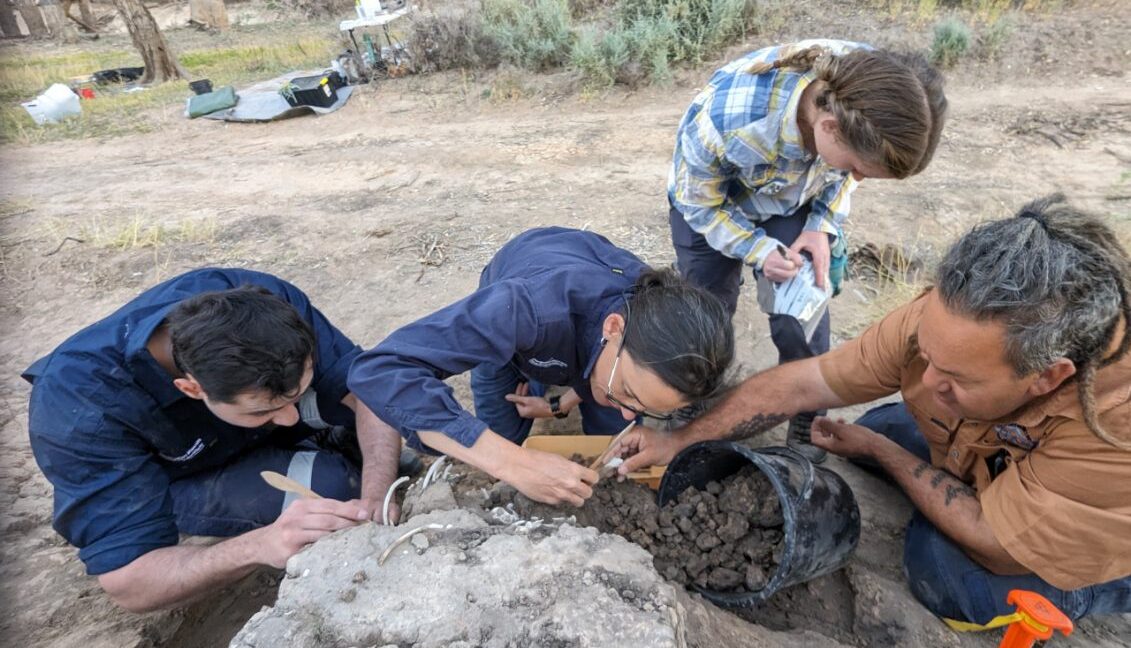
Australian Aboriginals cared for a dingo’s grave for decades

The oldest aisles of human-computer collaboration aren’t just in labs—they’re in museums, bones, and stories. AI’s role in zooarchaeology and artifact imaging reframes what “intelligence” means, situating computation within long arcs of memory, kinship, and interpretation.

This panel glances at how AI-assisted imaging parries the divide between art and analysis: from Pompeii’s preserved relics (Article 18) to the more distant kinship networks between people and animals (Article 16). It’s a reminder that the best AI tools often emerge when you pair centuries of human curiosity with modern sensors and neural methods. The broader context touches on on-prem and hybrid deployment strategies (Article 7) and developer tooling shifts (Article 14) that enable researchers and institutions to work with AI in responsible, auditable ways.

Related reads
  • Pompeii imaging breakthroughs and AI-aided interpretation (Ars Technica)
  • Dingoes, kinship, and deep learning in archaeology (Ars Technica)
  • SDK tooling and developer ecosystems enabling scientific AI (TechCrunch AI)

Elon Musk took too long to sue OpenAI, jury unanimously agrees

A second, decisive note in the year’s most consequential tech trial: the clock in the courtroom ran fast, and the court clocked gravity over urgency. The verdict sends a signal about timeliness, jurisdiction, and how the tech industry’s chief players navigate legal scrutiny as they chart AI’s future.

The decision intersects with broader leadership debates—who should lead AI innovation in the 2020s, and how should startups and incumbents share the stage with policymakers? It also threads into the enterprise-grade movement around Codex and on-prem AI agents (Article 7) and the governance questions raised by the Musk–Altman discourse (Article 15). For a rapid round-up of verdict context, check MIT Technology Review’s analysis of the Musk v. OpenAI decision.

Related reads

Pompeii victim ID’d as a likely doctor emerges from new imaging findings

The past reinterprets itself through modern imaging. AI-powered X-ray and CT analysis illuminate a near-forgotten life, offering a window into medical history while underscoring how imaging, data interpretation, and machine learning collaborate to reveal fragile narratives locked in stone and bone.

This plate closes the loop with the earlier dingo burial story (Article 16), reinforcing how AI’s pattern-recognition strengths unlock long-tail questions about kinship, culture, and daily life that archaeology has wrestled with for ages. It’s a quiet reminder that the “AI edge” is not only about current capability; it’s about how we reframe context, supersede prior limits, and build trust with researchers and the public through auditable imaging pipelines and transparent provenance. The broader tech ecosystem debate—on-prem Codex deployment, developer tooling, and governance—echoes here as well, tying back to the related threads in Articles 5, 6, and 7.

Related reads
  • imaging-driven archaeology and AI-aided interpretation (Ars Technica)
  • Ancient kinship and AI-enabled zooarchaeology, in broader context (Ars Technica)
  • SDK tooling and developer ecosystems shaping scientific AI (TechCrunch AI)

Summarized stories

Each story in this briefing links to the full article.

by Heidi
by Heidi

Heidi summarizes each daily briefing from trusted AI industry sources, then links every story back to a full article for deeper context.

Back to AI News Generated by JMAC AI Curator

Rejoining the server...

Rejoin failed... trying again in seconds.

Failed to rejoin.
Please retry or reload the page.

The session has been paused by the server.

Failed to resume the session.
Please retry or reload the page.