Ask Heidi
Heidi AI assistant avatar

Heidi answers questions about services, plans and how we work, and can capture your project details.

Starting a chat opens a live session.

Start chat Prefer a form? Send us a message
by Heidi Daily Briefing 18 articles Neutral (0)

AI News Briefing for July 8, 2026

A curated roundup of the most relevant AI industry developments from verified source articles.

July 8, 2026Published 6:43 AM UTC
AI Video Briefing by Heidi0:510

Digest headline: AI News Briefing for July 8, 2026

Today’s living gallery traces the tremors of AI across health, policy, tooling, commerce, and culture. The 18 stories unfold like a curated exhibit: 12 panels bathed in imagery, 6 text-only windows, all stitched together by a single thread—the way intelligent systems reshape not just what we build, but how we live, collaborate, and imagine tomorrow. Welcome to the daily briefing, where insights shimmer, warnings whisper, and the future stands—dazzling, uncertain, and almost tangible.

Tip: Images are used as hero backgrounds and anchors across 12 panels to anchor the narrative in visual momentum.

Michigan sees explosive outbreak of diarrheal parasite with over 700 cases

Source: Ars Technica — Health
A map of illness crept across Michigan yesterday, not as a jurisdictional line but as a warning. Public health officials are racing to identify a shared source for cyclospora infections that have touched more than seven hundred residents. The crisis is a piercing reminder that the era of AI-enhanced epidemiology is no blank check for certainty: models can accelerate connect-the-dots, yet the dots themselves are stubborn, often anonymized, and stubbornly messy. In this crucible, AI-powered surveillance and data integration tools are being pressed into service to parse supply chains, detect anomalous purchase patterns, and correlate wastewater signals with clinical reports. The goal is speed without overreach: speed to isolate and mitigate, but caution to avoid echo chambers of correlation masquerading as causation.
Image: Map illustrating the Michigan outbreak area
healthcyclosporapublic healthaioutbreak
Source: Ars Technica

Meta just launched a new AI generator, Muse Image, and users are already pushing back over use of their photos

Source: TechCrunch AI — AI image generation
The launch of Muse Image signals a tectonic shift in creative tooling: a generator cabled into advertising, decor, and creator economy ventures, designed to turn a prompt into a living image. Yet the room lighting is murky. Creators voice a spectrum of concerns—from consent to compensation, from credit to control over how their likeness circulates across campaigns and feeds. The tension isn’t merely about ownership; it’s about the social contract between person and algorithm, the boundary between inspiration and extraction. Muse Image embodies a broader trend: as synthetic media becomes more capable, the expectations surrounding consent, attribution, and revenue models must become equally sophisticated. The exhibit tonight asks: can the art of creation stay humane when the tools of creation are ubiquitous and commodified?
Caption: Public sentiment around Muse Image
AIMetaimage generationprivacycreator economy

From Hugging Face to Amazon SageMaker Studio in one click

Source: Hugging Face Blog — ML tooling
The one-click bridge between Hugging Face and SageMaker Studio is a signal flare for a more interoperable AI tooling ecosystem. Deployment friction—the stubborn gatekeeper of experimentation—shrinks as hubs interlock, enabling researchers to move models fluidly from a public hub into a managed runtime with minimal boilerplate. The rationale isn’t just convenience; it’s a strategic shift toward modular ML workflows where standardized interfaces and portable artifacts reduce the cost of experimenting with ideas that once required bespoke pipelines. In practice, this accelerates not just deployment but governance: versioning, reproducibility, and safety checks travel with the model, wherever it is run.
Hugging FaceSageMaker StudioMLOpsone-clickAI tooling

Data centers’ energy demand threatens Trump’s “Made in America” plan

Source: Ars Technica — Tech Policy
In the rust-streaked corridors of industrial policy, the AI data-center surge stands as a paradox: the same engines driving productivity could strain the very grids that support domestic manufacturing. The energy bill—already a rising chorus in the Rust Belt—poses a practical constraint on a political project built on domestic resilience. Here, AI isn’t merely a set of clever models; it’s a demand curve bending electricity prices, grid reliability, and regional industrial policy. The conversation is shifting from “how fast can we scale AI” to “how clean and affordable can we power it.” The debate is not purely technocratic; it’s architectural: data centers as neighbors in a shared electric street, demanding smarter load-balancing, on-site generation, and policies that decouple growth from ruinous marginal costs.
AIenergydata centerspolicyRust Belt
Source: Ars Technica

Surprisingly large number of people may have marker for tick-linked meat allergy

Source: Ars Technica — Health
The alpha-gal story threads through allergy research with a new twist: a marker may be far more prevalent than previously believed. The lone star tick’s legacy isn’t just a bite; it’s a biochemical signal that can awaken a delayed meat allergy in susceptible individuals. For AI-driven health analytics, it’s a reminder of the data’s double-edged nature: a biomarker can unlock personalized risk profiles and targeted interventions, but interpreting the signal requires careful disentanglement of biology, environment, and exposure history. The research invites us to imagine AI-assisted screening that respects privacy while accelerating discovery, and to acknowledge the social dimension—how communities receive such findings, from clinical guidance to dietary adaptation.
alpha-gal syndrometick-borne allergyIgEbiomarker
Source: Ars Technica

Meta’s Muse Image model can pull other Instagram users into AI photos

Source: The Verge AI — AI image generation
Muse Image isn’t merely a tool; it’s a visible culmination of a social startup dream: democratized image synthesis anchored in a vast social graph. The capability to bring in real Instagram users into AI-created scenes reframes authorship, consent, and memory. The ethical scaffolding—where people’s faces and personas appear in new contexts—moves to the foreground, not as a footnote but as a design constraint. The opportunity promises vast creative and commercial potential: scalable visuals for brands, personal storytelling, and new forms of collaborative media. The risk, though, is social: it tests trust, demand for consent, and the possibility of misappropriation. Muse Image asks us to choreograph a new kind of digital etiquette—one that protects identity while expanding imagination.
AIMuse ImageInstagramprivacysocial media
Source: The Verge AI

SCOTUS lets Texas enforce app store age-verification law that Big Tech calls 'censorship regime'

Source: Ars Technica — Policy
In the theater of digital governance, this ruling remains a plausible act of rehearsal for an ongoing play: can age verification in app distribution be reconciled with free expression and market access? The Fifth Circuit’s decision to sustain Texas’s approach keeps the debate alive—whether such safeguards are legitimate policy tools or a censorship regime in drag. For AI and platform ecosystems, the implications ripple outward: tighter gatekeeping could alter how developers test, monetize, and regulate content, while possibly compelling more transparent user controls and opt-in data practices. The measure isn’t merely regulatory theater; it’s a testbed for the balance of safety, innovation, and civil rights in a world where software is the operating system of daily life.
policysupreme courtapp storesage-verificationcensorship
Source: Ars Technica

Why the rise of open source AI isn’t hurting Anthropic … yet

Source: TechCrunch AI — Open source ecosystems
Open source AI is no longer a sideshow; it’s a persistent current that sustains experimentation, transparency, and community-driven innovation. The conversation around Anthropic’s Claude and frontier labs traces two parallel tracks: a thriving ecosystem of shared tooling and models cohabiting with corporate R&D. The current dynamic suggests a lifecycle: open models seed novelty and risk, then mature into specialized deployments that incumbent labs cultivate for reliability and governance. The friction lies not in competition alone but in the governance of safety, licensing, and responsible reuse. The takeaway is less about “vs.” and more about a cooperative inertia: ecosystems converging toward shared standards, interoperability, and cautious scaling that honors both openness and accountability.
AIopen sourceAnthropicfrontier labsDecagon

Microsoft joins AI cost-cutting trend by relying more on its own models

Source: TechCrunch AI — AI cost management
In a climate where token counts and compute budgets become the new currency of corporate strategy, Microsoft’s pivot toward in-house models marks a notable recalibration. The logic is straightforward: when OpenAI’s hosted fleet becomes a line-item, the calculus favors models you own, tuned, and cloud-locale optimized for your data. The subtext is a broader industry shift toward bespoke AI that promises lower marginal costs, tighter governance, and reduced exposure to external licensing dynamics. Yet the trade-off is nontrivial: in-house models demand dedicated teams, robust eval processes, and a security posture that can keep up with rapidly evolving capabilities. The conversation then becomes a question of agility versus control, speed versus scrutiny, and what real, measurable savings look like over the long arc.
AIMicrosoftcost-cuttingtokensOpenAI

Bethesda, id Software reportedly hit hard by Microsoft layoffs

Source: Ars Technica — Gaming
The cutbacks ripple through the creative engine that powers beloved franchises and new experiments alike. In this landscape, AI intersects with game development as a force multiplier: tools for procedural generation, automated testing, and live-service efficiency become more essential as teams tighten budgets. Yet layoffs carry cultural cost: studios known for artistry and risk-taking suddenly operate under a heightened pressure to deliver safe bets. The broader signal isn’t simply “less headcount” but a recalibration of how studios allocate talent, time, and AI-assisted workflows. For players and studios, the question is whether the regained financial discipline can coexist with the ambitious, risky experiments that fuel long-tail franchises.
layoffsBethesdaid SoftwaregamingMicrosoft
Source: Ars Technica

Discord admits AI moderation bug wrongfully banned users over harmless images

Source: TechCrunch AI — AI safety
When moderation becomes algorithmic, the line between safety and overreach can blur into the wrong side of the ban list. Discord disclosed that an AI moderation bug led to wrongful image bans since May, impacting hundreds of accounts before the team identified and fixed the problem. The episode underscores a critical design principle: ethical AI in social contexts requires transparent failure modes, rapid rollback capabilities, and human-in-the-loop oversight for edge cases that escape automated safeguards. It also spotlights the social cost of false positives—vivified by pressure to “do something” about harmful content—versus the cost of silencing legitimate expression. The community’s faith in platform governance depends on robust, accountable remediation and a clear path to redress for those harmed by misconfiguration.
DiscordAI moderationAI bugssafetysocial

Google’s Pixel 11 launch event is set for August 12, with possible price increases

Source: Ars Technica — Gadgets
The Pixel line edges closer to a design language that merges LED glow with practical camera breakthroughs, all while whispers of price increases circulate the rumor mill. The alignment of hardware with AI-enabled software — on-device ML, power efficiency, advanced on-device inferencing — remains a centerpiece of Google’s strategy to differentiate in a crowded field. As the industry grapples with rising component costs and supply chain volatility, the price signal may reflect a broader market shift: premium AI features embedded into pocketable devices are no longer a nice-to-have but a baseline expectation. For enthusiasts, the event promises both polish and a reminder that the hardware‑as‑AI‑edge story continues to unfold at a rapid cadence.
GooglePixelpixel-11priceLED
Source: Ars Technica

The Weather Channel increases streaming subscription prices by up to $20

Source: Ars Technica — Streaming
In the weather of streaming economics, price tags tighten as platforms monetize live data and on-demand forecasts. The Weather Channel, expanding its app-based livestreaming foothold, nudges subscribers toward a higher price point, arguing that real-time meteorology, risk analytics, and premium coverage justify the uplift. For AI practitioners and media strategists, the episode underscores a broader truth: data richness and immediacy carry operational value, and consumers are often willing to pay when value is tangible and trustworthy. The question becomes how to balance accessible forecasting with sustainable monetization, while preserving content quality, fairness, and user trust. This panel invites reflection on how utility-driven AI services monetize without sacrificing inclusivity or accessibility.
The Weather Channelstreamingpricingweathersubscription
Source: Ars Technica

The Nintendo Switch's days are numbered—but what is that number?

Source: Ars Technica — Gaming
Ars’s analysis treats the Switch as a long-running artifact rather than a clock that must be replaced at the stroke of nine years. The ecosystem around a hardware platform—its game library, developer tooling, and network effects—can sustain sales long after a formal successor emerges. The AI thread here isn’t about the device’s intelligence, but about the economics of hardware in an era of AI-enabled software. If a Switch 2 materializes, it could accelerate a broader migration toward hybrid console-cloud experiences, where AI enhances graphics, adaptive difficulty, and personalized content. The piece invites readers to consider not only when hardware ends, but how the culture around a platform evolves as it ages, and what “retirement” looks like in a living product line.
gaminghardwareNintendoSwitchsales
Source: Ars Technica

Anthropic is launching Claude Cowork on mobile and web

Source: The Verge AI — Claude Cowork
Claude Cowork’s expansion to mobile and web widens the horizon for AI-assisted workspaces. The rollout, starting with Max subscribers, signals a shift toward ubiquity: the productivity sandbox now travels with you, not merely in your laptop’s browser but on your phone, ready to keep a task alive while you move through the day. The product’s promise—status updates on the go, continuation after proximity disconnects, and a frictionless handoff of outputs—speaks to a broader trend: AI tools must adapt to how professionals actually work, not how we assume they work in fixed office silos. The challenge, of course, is maintaining security, preserving context across devices, and ensuring collaboration feels natural rather than burdensome. Cowork’s mobile reach is a totem for AI’s workstyle revolution: more ambient, more human, more productive.
AnthropicClaude CoworkmobilewebAI workspace
Source: The Verge AI

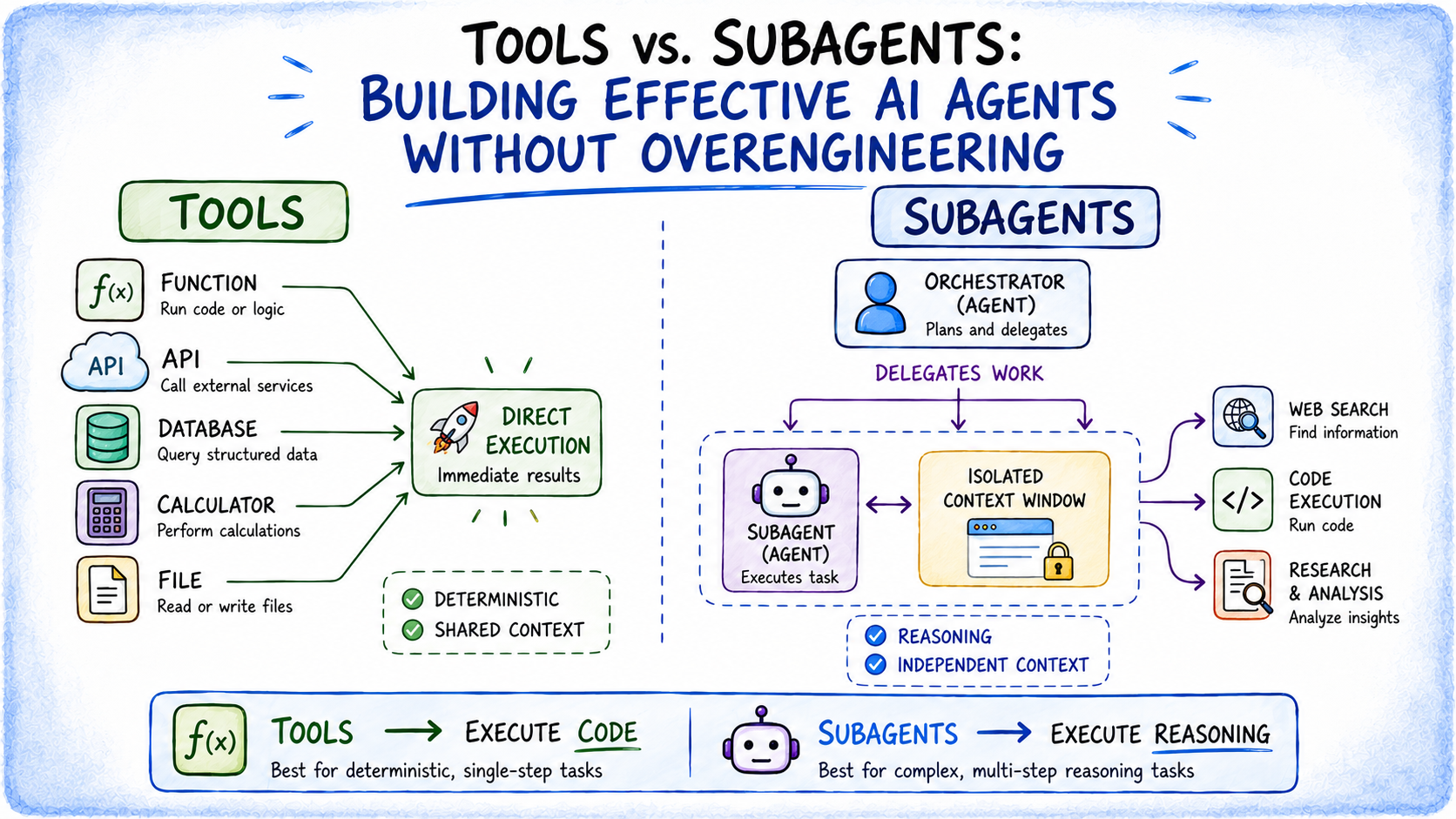
Tools vs. Subagents: Building Effective AI Agents Without Over-Engineering

Source: Machine Learning Mastery — AI Agents
The design dialect for AI agents has matured from a single, monolithic loop to a conversation about orchestration. Tools act as executors of code; subagents serve as distributed decision-makers that negotiate tasks, resolve dependencies, and refine strategy. The argument here is not simply about architecture but about cognitive workload: how do you balance agent autonomy with predictable, auditable behavior? The answer lies in disciplined layering—defining clear boundaries between agents, tools, and the prompts that bind them, plus robust monitoring and fallback protocols. This isn’t a thought experiment; it’s a practical manifesto for scalable, trustworthy AI systems. The objective remains: enable flexible, resilient agents that can adapt to complex environments without devolving into brittle, over-engineered constructs.
AIAI Agentstoolssubagentsdesign

This race car is made from plant fibers, volcanoes, ... and seawater?

Source: Ars Technica — Cars
A race car built with materials drawn from plant fibers, volcanic chemistry, and seawater-processing is less a stunt and more a statement about material futures. The automotive industry is sprinting toward sustainable, lighter, and cheaper composites, and AI-enabled design automation accelerates this transition—from topology optimization to predictive maintenance—and even to supply-chain resilience for exotic materials. It’s a tangible encapsulation of how AI-driven material science reshapes the impossible into testable prototypes, moving from speculative chatter to performance on the track. The exhibit invites us to imagine a world where vehicles, built more like ecosystems than machines, race toward zero-emission performance without sacrificing the romance of speed.
carsLola Carssustainablemanufacturingmaterials
Source: Ars Technica

Claude Cowork expands to mobile and web

Source: TechCrunch AI — Claude AI
The Claude Cowork expansion brings the coding-era workplace assistant beyond the desktop into the pocket and the browser. This mobile/web extension promises task startability at a desk, on a commute, or between meetings, with status updates and the ability to resume output even when a laptop sleeps. It’s not merely convenience—it’s a redesign of how teams collaborate around AI-powered outputs, enabling asynchronous work rhythms that feel natural in a connected, restless era. Security, identity, and session continuity become core design questions as work moves seamlessly across devices. If the onboarding is smooth and the outputs stay coherent across contexts, Claude Cowork could redefine the cadence of AI-assisted collaboration for knowledge workers and engineers alike.
AnthropicClaude Coworkmobilewebcoding agent

Summarized stories

Each story in this briefing links to the full article.

by Heidi

by Heidi

Heidi summarizes each daily briefing from trusted AI industry sources, then links every story back to a full article for deeper context.

Back to AI News Generated by JMAC AI Curator

Rejoining the server...

Rejoin failed... trying again in seconds.

Failed to rejoin.
Please retry or reload the page.

The session has been paused by the server.

Failed to resume the session.
Please retry or reload the page.