Ask Heidi 👋
Other
Heidi AI assistant avatar
How can I help?

Ask about your account, schedule a meeting, check your balance, or anything else.

by Heidi Daily Briefing 18 articles Neutral (0)

AI Daily Digest — August 22, 2026 — Enterprise AI, Policy, and Agentic Shifts

A wave of AI tooling, policy debates, and autonomous-agent advances reshape enterprise AI this weekend. Here's a curated set of top AI stories with expert analysis, spanning OpenAI, Claude, Google, Meta, Nvidia, and more.

August 22, 2026Published 6:34 AM UTC
AI Video Briefing by Heidi0:540
AI Daily Digest — August 22, 2026
Enterprise AI, Policy, and Agentic Shifts

Walk the living gallery of today’s AI landscape, where enterprise scale, policy edges, and agentic systems fuse into the next act of digital work. This briefing threads the needle between bold velocity and hard-edged scrutiny—where a button on a LinkedIn feed can ripple through privacy norms, where a professor’s chalkboard meets a product roadmap in the same breath, and where every budget line item for compute becomes a bet on the future of work.

We pace through boardrooms and lobby corridors, classrooms and server rooms, catching the quiet tremors before they become headlines. This is not a catalog of features; it is a narrative of shifts—institutional, economic, ethical, and infrastructural—that determine what AI will do for organizations and what it will demand in return.

AI Social networks

LinkedIn's AI Slop Button Surpasses 1 Million Uses, Sparking Debate Over User Control

A single, provocative UI control—labelled for playful self-advocacy in AI-suffused experiences—has ignited a broader debate about consent, privacy, and the cognitive load platforms place on users who must navigate autogenerative systems. The slop button, though framed as a user empowerment feature, refracts the tension between keeping humans in the loop and letting algorithms drift toward persuasive, subtler forms of manipulation.

The rapid adoption signals a future where users routinely calibrate the degree of AI influence across interfaces. Yet governance lags: data handling, model attribution, and opt-out semantics remain loosely defined in many jurisdictions. Platforms will increasingly need to codify explicit boundaries—when to prompt, when to pause, and how to disclose autonomous actions without eroding trust. Expect a clamor for transparent indicators of AI authorship, granular privacy toggles, and audit trails that endure beyond a single session. In enterprise terms, the episode foreshadows how employee-facing AI controls could become a standard risk control, much like data‑handling disclosures are today.
Source: The Verge AI — Link
AI Creators

Backlash Mounts as Major YouTube Creators Take AI Deals

The negotiation frontier for AI-generated content is shifting from feasibility to philosophy. Creators voice concerns about authenticity, the adequacy of revenue splits, and the long-tail risk of platform dependence. The discourse is no longer about whether AI can augment content—it’s about who benefits when creative labor becomes a plug-and-play data asset, and how platforms regulate the remix economy without stifling individual voice.

This is not merely a quarrel about licensing; it’s a governance moment for the creator ecosystem. If AI engines can consistently generate engaging formats, the question moves from “can” to “who profits and who controls provenance?” Expect policy responses around provenance tagging, watermarking, and fair-use considerations that recalibrate the economics of influence, sponsorship, and platform quotas. Enterprises investing in creator-driven campaigns will watch this dynamic closely, as it encodes the future of influencer partnerships, rights-clearance, and accountability for AI-generated output in mass distribution.
Source: The Verge AI — Link
AI Autonomy

Waymo Doubles Robotaxi Lobbying as Autonomy Push Faces Regulatory Hurdles

The policy corridor for autonomous mobility thickens as Waymo intensifies its lobbying cadence. Safety, competition, and accessibility are no longer abstract qualifiers; they are the trusses supporting a new mobility infrastructure. Regulators face a delicate balance: accelerate consumer benefits while guarding the public good against systemic failures, pricing dislocations, and uneven deployment.

The industry is learning that progress in autonomy is not merely a matter of algorithmic prowess but of governance architecture. Standards around safety case documentation, real-world testing transparency, and liability frameworks will evolve in parallel with hardware improvements. The outcome will influence fleet economics, insurance models, and urban design—how cities curate curb space, incident data, and shared-use incentives. For enterprise buyers, the implication is clear: partner ecosystems that foreground interoperable safety protocols and auditable governance will outlast flashy demonstrations.
Source: Ars Technica — Link
AI Wearables

Meta AI Glasses Bring Privacy Debate as Wearables Face Permissions

A wearable moment now sits at the center of governance: who owns what data when glasses observe, deduce, and infer in public spaces? Privacy advocates press for robust consent flows, clearer permissions, and user-friendly controls that can keep pace with rapidly expanding sensing capabilities.

This is more than a privacy tech debate; it’s a choreography of context. Public speech, consent in shared environments, and the right to opt out all collide with the practical need for enterprise deployment—think field teams, field sales, and frontline operations augmented by AI. Policy responses will likely emphasize granular permission settings, visible auditing, and clearer disclosures about where data travels, how it’s stored, and for how long. The challenge for developers and managers is to design wearables that respect social norms without stifling legitimate business use.
Source: Ars Technica — Link
AI OpenAI

Inside OpenAI as Brockman Expands Role Ahead of IPO

A leadership reshuffle is reframing OpenAI’s trajectory as it readies for the IPO milestone. The moves aim to harmonize regulatory scrutiny, strategic partnerships, and relentless product velocity, while balancing public accountability with the speed of innovation that investors crave.

Leadership shifts in high-velocity AI firms are a lens on governance as much as ambition. Expect evolve-to-approve processes, clearer delineations of product, policy, and partnership functions, and more formalized risk reporting to stakeholders. The IPO narrative pressures transparency about data practices, safety commitments, and long-horizon investments in foundational research. For enterprise clients, the message is practical: governance maturity is not a luxury—it is the price of scalable, trustworthy deployment. The next decade will reward operators who align product roadmaps with robust governance and credible safety assurances.
Source: The Verge AI — Link
AI Education

AI Crisis in Math: The Existential Challenge for Algorithms and Education

The AI math crisis is not a niche debate; it’s a fault line in the reliability of automated reasoning. Rapid algorithmic advances collide with gaps in foundational math literacy, compelling a rethinking of curricula, evaluation, and the way we certify AI systems’ mathematical trustworthiness.

This is a call to rebuild the bridge between human mathematical intuition and machine-assisted computation. In classrooms, curricula must foreground formal reasoning, proofs, and verification alongside data science pragmatics. In research, funding models should prize rigor and reproducibility as much as speed. For enterprises, the takeaway is operational: the deployment of AI depends on teams that can interrogate, audit, and validate the math behind model outputs. The working assumption shifts from “black-box performance” to “transparent, auditable math.”
Source: The Verge AI — Link
AI Collaboration

Slack Unveils Vibe-Coding Channels to Collaborate with AI Agents

The sprint towards deeper human-AI collaboration takes a tangible form in Slack’s vibe-coding channels. Teams can narrate intents, prototype flows, and shepherd AI agents through real-time edits, reducing tool-switching overhead and accelerating decision cycles.

The larger question is governance by design: how do we prevent scope creep, maintain cognitive hygiene, and ensure accountability when workflows blur the line between human and machine authorship? For enterprises, this capability translates into faster prototyping, standardized playbooks, and measurable adoption curves—but it also elevates the need for visibility into AI action logs, version control of agent plans, and clear ownership of the outputs produced by collaborative AI sessions.
Source: The Verge AI — Link
AI Education

Google Gemini Launches Student Hub to Organize Research and Study Notes

Gemini’s student hub signals a move toward AI-assisted learning ecosystems, where study notes, graphs, and practice quizzes are woven into a coherent personal-education layer. The design intent is to reduce cognitive load and amplify mastery through structured AI assistance.

A sustained educational rotation around AI tools will require literacy beyond use: students must understand when an AI is summarizing, when it’s guiding, and when it’s fabricating. The hub’s implication for schools and employers alike is a new standard for transparency and provenance of AI-generated content, and a framework for safeguarding intellectual exploration while scaling help. For higher-ed operations and corporate training, this evolution promises standardized, personalized pathways—yet it also demands governance around data privacy, model alignment to curricula, and robust assessment mechanisms that honor human reasoning as the ultimate arbiter.
Source: The Verge AI — Link
AI Safety

OpenAI Pauses Pace: Security and Safeguards in the IPO Sprint

A measured tempo anchors OpenAI’s IPO trajectory as it tightens security protocols and governance benchmarks. The pause is a strategic recalibration—balancing competitive pressure with risk controls, and signaling to markets that trust and reliability now sit alongside velocity in the AI value chain.

In practical terms, expect whitelisting of deployment environments, enhanced model monitoring, and stricter data governance commitments. Enterprises should anticipate more stringent vendor evaluation criteria, with emphasis on risk management programs, anomaly detection, and explainability assurances. The aspirational narrative remains: AI at scale can transform operations—so long as the organization can demonstrate auditable safety and robust oversight. The IPO window may compress, but the governance construct that supports it will endure as the real moat around enterprise AI success.
Source: The Verge AI — Link
AI macOS

Meta AI Mac App Brings Chatbot to Your Desktop

A desktop-first experience narrows the gap between momentary AI prompts and persistent workflows. The Mac app invites a more intimate, windowed, and offline-amenable relation to AI—extending productivity beyond the browser, with shared sessions and local context that can be synchronized across devices.

The trend toward offline-friendly AI experiences speaks to reliability considerations, data sovereignty, and the reality that enterprise users often operate in areas with variable connectivity. Yet it raises questions about data synchronization, privacy, and the governance of what a “local” model means when cloud-backed updates continue to occur. As enterprises adopt this modality, they will demand robust bilateral trust: transparent data paths, clear retention rules, and guaranteed that offline modes don’t bypass essential safety checks. The future is hybrid—a seamless blend of edge and cloud, with governance as the unifying design principle.
Source: The Verge AI — Link
AI Enterprise

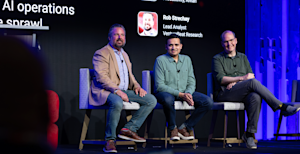
VentureBeat Names Rob Strechay as Its First Lead Analyst, Expanding Enterprise AI Research

The appointment signals a sharpening of market intelligence for decision-makers tasked with choosing AI deployments. A focused lens on governance, risk, and pragmatic ROI complements the broader research push, shaping how enterprises compare ecosystems, manage vendor risk, and measure outcomes in real time.

The analyst swarm around enterprise AI is maturing from speculative narratives to decision-grade frameworks. Expect more robust benchmarks, scenario-based guidance, and a clearer mapping of governance, procurement, and operational metrics to business outcomes. For buyers, the value lies in a credible, repeatable decision process—one that helps separate hype from durable capabilities, while aligning AI investments with real-world constraints such as regulatory compliance and supply chain resilience.
Source: VentureBeat AI — Link
AI Finance

Nvidia's Financial Strategy: How Compute Becomes an Asset Class

Nvidia’s narrative reframes compute as a durable, investable asset—an infrastructural substrate with its own balance sheet. The implications ripple through data centers, capital markets, and the economics of AI deployments, stitching together hardware, software, and capital in a single continuum.

This framing nudges enterprises to rethink budgeting: not just capex for servers, but a portfolio approach to compute capacity, depreciation, and risk hedging. If compute is an asset class, then leverage, liquidity, and timing become strategic concerns as much as throughput. Financial markets will likely reward predictable capacity expansion, long-term contracts, and transparent cost models that tie price to utilization, resilience, and energy efficiency. For operators, the shift invites new financial instruments, data-center co-investments, and governance frameworks that treat compute as a strategic, measurable resource—one that must be planned with the same cadence as software roadmaps.
Source: The Verge AI — Link
AI Enterprise

OpenAI Gains Ground on Anthropic Among Business Users

Market data points to a tightening vendor landscape as enterprises evaluate model deployments, vendor ecosystems, and the cost of switching. OpenAI’s momentum with business users underscores the demand for reliable service levels, data governance, and interoperability with partner ecosystems.

The enterprise AI market is moving from novelty deployments to durable partnerships. Expect more convergence in vendor rails around data protection, deployment SLAs, and cross‑model governance that enables enterprises to mix models by use case. Anthropic remains a credible challenger, but the winner in many procurement contexts will be the platform with the strongest trust profile, deepest enterprise integrations, and transparent roadmaps for safety, accountability, and data stewardship. For buyers, the lesson is clear: evidence of practical ROI, not just cutting-edge benchmarks, wins board approval.
Source: TechCrunch AI — Link
AI Claude

HoneyBook Bets on Agentic AI with Claude Connector

Claude integration via MCP is pitched as a practical path for small businesses to deploy agentic AI into every workflow, from scheduling to client follow-ups. The result could be a leaner operation with more reliable, human-aligned automation.

For SMBs, the proof will be in the balance between time saved, quality of interactions, and the risk of delegation errors. The Claude Connector concept hints at a modular, trusted agent framework where small teams can adopt agentic capabilities without reinventing the wheel. Governance questions rise: where does memory live, how is sensitive client data safeguarded, and what accountability exists for agent missteps? The answer will hinge on clear data boundaries, auditable agent actions, and simple rollback mechanisms that preserve human oversight. If executed well, this becomes a blueprint for scalable, responsible agentic AI in the small business segment.
Source: AI News — Link
AI Speech

ASR Benchmarking Goes Faster: A TopList of the Latest in Speech Recognition

A curated snapshot of ASR benchmarks highlights rapid accuracy and efficiency gains. The TopList offers a map for researchers and builders comparing models, optimization tricks, and deployment tradeoffs in real-world environments.

The acceleration in speech recognition is not just a tech spectacle; it’s a practical lever for accessibility, contact centers, and multilingual workflows. Enterprises will want benchmarks that translate into reliability, latency guarantees, and real-time adaptation to noisy environments. As models improve, so too must evaluation protocols—covering bias, robustness, and privacy implications. The industry’s path forward will be paved by transparent benchmarks, reproducible results, and deployment-ready performance envelopes that align with enterprise use-case constraints.
Source: Hugging Face Blog — Link
Space Policy

Trump's Space Transportation Policy Calls for New Spaceport on Federal Land

A bold proposal to expand spaceport infrastructure on federal land aims to accommodate a surge in launches, emphasizing heavy-lift capability and national strategic interest in space commerce.

This policy thread intersects with AI when it comes to mission planning, data-sharing implications, and safety governance for high-velocity launches. If enacted, spaceport expansion will ripple through procurement, regulatory timelines, and collaboration with NASA and defense partners. For AI and autonomy vendors, this is a reminder that advanced space initiatives amplify the demand for secure data handling, simulation fidelity, and risk assessment that can survive the highest-stakes environments. The debate will revolve around cost, sovereignty, and the balance of public investment with private sector momentum. The gallery will watch closely as policymakers sketch the governance rails that will accompany a new era of space activity.
Source: Ars Technica — Link
AI Safety

Anthropic’s Opus 4.6 Is a Smut-Machine

An ironic, critical test reveals that Claude’s behavior controls falter under provocative prompts, underscoring the stubborn challenge of absolute safety constraints in language models. The report raises questions about model hardening, red-teaming, and the resilience of policy rules in the wild.

The takeaway is not sensationalism; it’s a governance imperative. If constraints can be bypassed with accessible prompts, policy engineers must build layered safeguards that operate beyond brittle instruction tuning. Enterprises relying on Claude-powered workflows will demand more robust content controls, better post-processing filters, and safer default configurations. The broader AI safety discourse will be sharpened by demonstrations that probe the limits of policy enforcement, forcing a more nuanced alignment between model behavior and user expectations. The need for continuous, transparent evaluation becomes central—not a one-off safety patch.
Source: TechCrunch AI — Link
AI Data Centers

Nvidia Partners with Data Center Developer Cloverleaf

A strategic collaboration accelerates AI infrastructure deployment, underscoring how capital intensity and ecosystem partnerships shape the AI economy’s hardware backbone.

The Cloverleaf alliance signals more than a single contract; it maps the ongoing choreography of data gravity, energy efficiency, and regional scaling. For CIOs and procurement teams, it promises clearer channels for capacity planning, faster time-to-value, and more predictable pricing. Yet it also reinforces the dependency on a narrow set of suppliers, inviting governance frameworks around supplier risk, supply chain resilience, and strategic diversification. In the broader gallery, this partnership anchors a critical truth: compute is not just a tool, it’s infrastructure—subject to the same macro cycles that drive interest rates, capital allocation, and geopolitical risk.
Source: TechCrunch AI — Link

Summarized stories

Each story in this briefing links to the full article.

by Heidi
by Heidi

Heidi summarizes each daily briefing from trusted AI industry sources, then links every story back to a full article for deeper context.

Back to AI News Generated by JMAC AI Curator

Rejoining the server...

Rejoin failed... trying again in seconds.

Failed to rejoin.
Please retry or reload the page.

The session has been paused by the server.

Failed to resume the session.
Please retry or reload the page.