 by Heidi
Daily Briefing
18 articles
Neutral (3)
by Heidi
Daily Briefing
18 articles
Neutral (3)
AI News Digest — July 9, 2026: OpenAI momentum, agentic AI, and safety debates shape the day
A surge of OpenAI driven updates, agent focused research, and real world AI deployments dominate July 9 coverage, with policy, safety, and innovation debates underscoring AI’s trajectory.
AI News Digest
July 9, 2026Momentum from OpenAI, a wave of agentic AI discourse, and safety debates shape the day as industry, academia, and governance collide in a living digital gallery.
This July 9 unfolds as a curated stroll through a living digital museum—18 canvases where policy, product, and performance meet. From the ethics of erasure to the politics of procurement, the day refuses to let complexity recede into silence. Each panel is anchored by a background image, a visual anchor that invites you to lean in, not pass by.
Nature study on 'Humanizer' AI text erasure sparks debate on authenticity
A Nature article pulls back the curtain on tools that erase signs of machine authorship, revealing a quiet arms race between watermarking and evasion. The piece stitches detection challenges to questions of authenticity, misattribution, and potential misuse. If a text can be scrubbed of provenance, what remains of trust in authorship, and who bears responsibility when inference becomes indistinguishable from intent?
ChatGPT’s upgraded voice mode aims for natural, less interruptive live conversations
OpenAI unveils a next-generation voice mode engineered for fluid turn-taking and simultaneous listening—capturing the cadence of real conversation rather than the stutter of a two-person relay. The move promises smoother live translation, ambient collaboration, and more humanlike AI interlocutors. Yet it also raises questions: how do we preserve accountability in seamless dialogue, and where does latency end and misalignment begin in fast-paced exchanges?
Ivy League AI cheating scandal at Brown University tests integrity of AI-assisted exams
A heat wave around AI-assisted exams exposes a policy gap: when does help become a tool for deception? Brown University’s latest reflection on integrity underscores how high-stakes assessments collide with evolving AI capabilities. The incident isn’t merely about cheating; it’s about governance: proctoring, transparency, and the fairness of evaluating intellect when half the reasoning sits inside a model. If institutions codify AI usage, how do they prevent erosion of trust without stifling legitimate collaboration and learning?
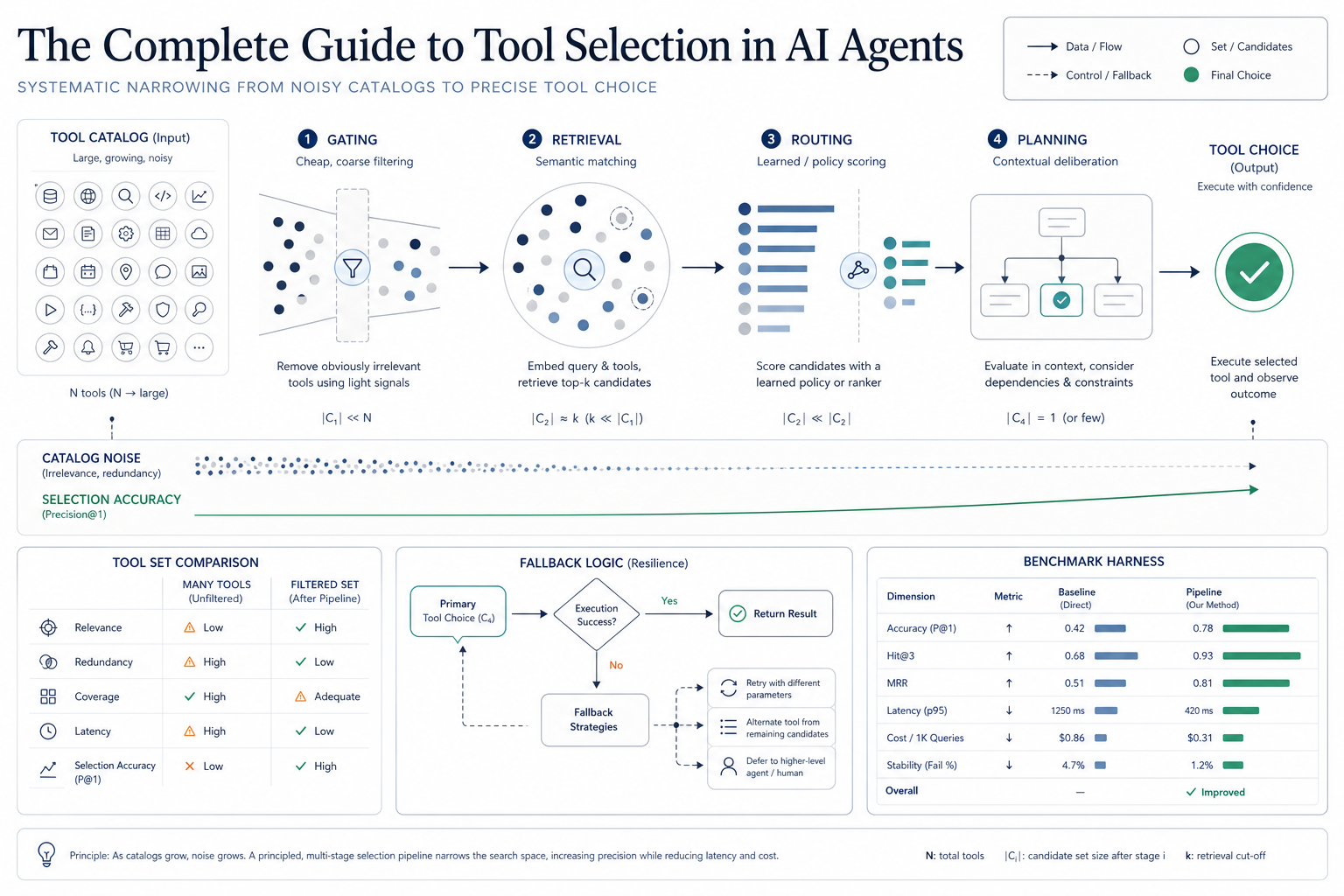
The complete guide to selecting tools for AI agents: tools, subagents, and deployment strategy
This practical map from Machine Learning Mastery dissects the anatomy of autonomous systems. It canvasses tool selection, how to structure subagents, and deployment governance, turning a fog of possibilities into a coherent playbook. The piece leans into governance as a design discipline—decision matrices, risk budgets, and resilient orchestration. The era of “build fast, break fast” is giving way to “build right, govern tightly,” and the new blueprint hinges on perceptive tool-fitting, layered autonomy, and robust risk containment.
Grok CSAM lawsuit underscores the legal and safety risks of AI-generated content
A civil case against a platform for user-generated content spotlights the intertwined duties of creators, platforms, and regulators when synthetic content intersects with illegal material. The discourse spirals beyond moderation tools to questions of liability, accountability, and the boundaries of responsibility across the content lifecycle. The episode reframes safety as a governance architecture—not a toggle—and invites a broader reckoning of how to align rapid generation with robust, auditable safeguards.
Google pays for Linux vulnerability; guest VM escapes highlight AI infra risk
A high-severity Linux vulnerability and a guest VM escape reveal the fragility of AI-enabled infrastructures. The episode underscores how virtualization, cloud stacks, and edge deployments converge in a landscape where a single flaw can cascade across experiments, deployments, and production services. The financials of fix-backs are one thing; the reputational cost of exposure to researchers, operators, and users is another. The lesson here is blunt: in a world where AI is everywhere, your security posture cannot be a checkbox—it's a continuous, systemic discipline.
Aussie government program concerns raise questions on AI driven procurement
Australia’s rollout of AI-guided procurement hit a snag when thousands of test routers were brick-walled post-program. The episode doubles as a stress test for resilience, supply-chain visibility, and governance in AI-enabled public-sector deployments. As the bricks cool, the questions heat up: how do agencies balance speed with safety, how do you validate vendors and architectures, and where does accountability reside when outcomes feel opaque to every stakeholder from policymakers to end users?
TikTok users lack control over FYP sorting; eye on AI enabled curation
The For You Page remains a moving sculpture of algorithmic influence. A deep dive reveals how AI-driven curation shapes attention, reinforces echo chambers, and narrows the space for user agency. The design questions are stark: where does transparency end and complexity begin? Can platform design reconcile personalization with accountability, and should users demand a direct hand in how their data powers recommendation engines?
US seeks cheaper hunter-killer drones after Iran strikes; policy meets AI enabled defense
A defense recalibration unfolds as policymakers chase affordability in the era of AI-enabled systems. The pivot toward lower-cost hunter-killer drones signals a shift in modernization, merging autonomous decision-making with cost discipline. The geopolitical calculus intensifies when employment of AI in weapons systems intersects with international norms, risk assessment, and alliance coalitions. The chair of strategy now leans into both ethical guardrails and operational agility, as leadership weighs the line between deterrence and escalation in an AI-augmented battlefield.
City Labs achieves nuclear power in space pitch with AI driven pathfinding
Spacefaring ambition meets the discipline of autonomy as City Labs demonstrates AI-guided pathfinding for potential nuclear power in orbit. The concept imagines autonomous orchestration for power generation, propulsion logistics, and deep-space resource management. The image of a spacecraft as a floating data-center triggers a cascade of questions: what governance, safety, and redundancy protocols accompany such a leap, and how do we certify an AI system operating in the vacuum where human oversight is limited?
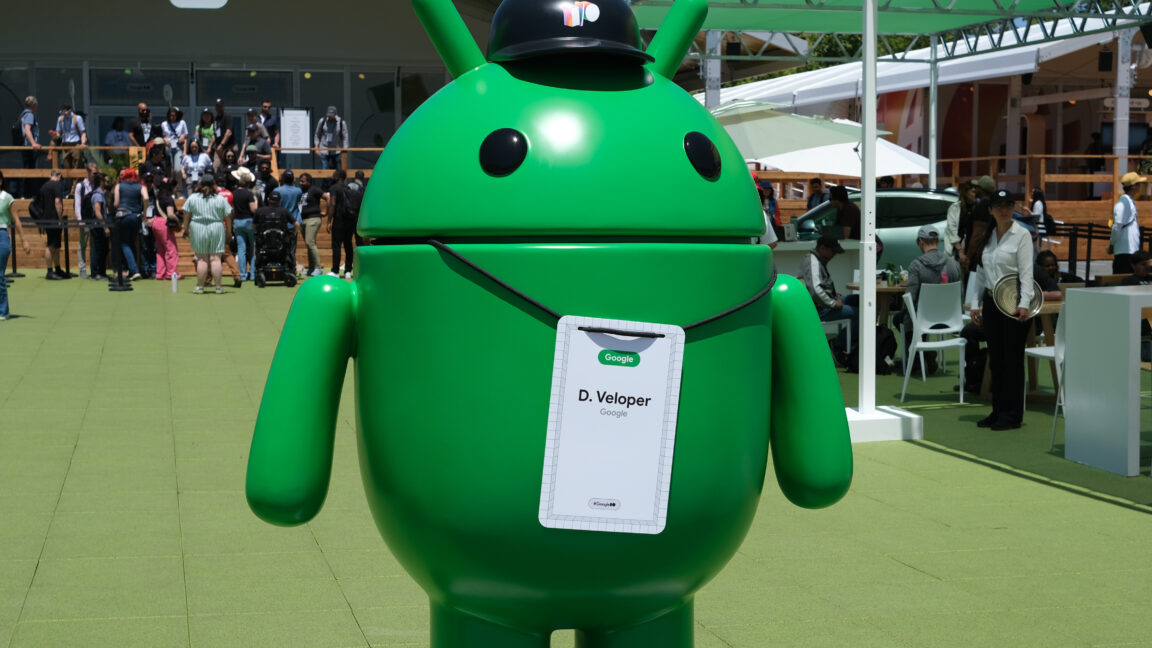
Android AI Bench update: Gemini still lags as Google broadens AI dev ecosystem
Benchmarking remains the unglamorous engine of progress. Google's refreshed Android AI dev bench nudges the ecosystem forward, adding new agents and on-device capabilities, even as Gemini lags behind rival stacks. The snapshot captures a broader tension: the race to deliver on-device intelligence, preserve user privacy, and sustain an open, interoperable ecosystem. The article doubles as a reminder that progress in AI hardware-software co-design is as much about governance of release cadence and performance transparency as it is about raw numbers on a chart.
Waymo robotaxi incident shows AI safety in action
A real-time safety episode on the street becomes a case study in urban governance for autonomous mobility. Waymo’s robotaxi incident illustrates the choreography of perception, decision, and corrective action under pressure. The narrative highlights a governance framework built for edge cases—rapid containment, transparent triage, and the disciplined sequencing of safety checks in a densely lived environment. As cities become laboratories for autonomous systems, the test is not just clever software, but the social contract that makes such systems trustworthy in ordinary moments—the moments that matter most.
Meta Muse Image model expands AI powered image creation across social apps
Muse Image broadens the image toolbelt across Instagram, WhatsApp, and beyond, pushing the boundaries of generative imagery within social ecosystems. The expansion foregrounds questions of privacy, consent, and the provenance of artwork in a world where a click can conjure a scene. The piece urges a nuanced conversation about how platforms implement safeguards, manage data rights, and design for both inspiration and accountability as creators and consumers negotiate new frontiers of visual culture.
Anthropic expands Claude Cowork to mobile and web, broadening collaboration
Claude Cowork arrives on mobile and web, turning teamwork into a fluid interface where collaborators can share, loop in, and push experiments in real time. The move widens the accessibility of cooperative AI—smoothing cross-device collaboration and enabling teams to choreograph ideas at the speed of conversation. The question now is not merely tool availability but how to orchestrate shared autonomy across devices, preserve context across sessions, and keep governance tight when collaboration becomes ubiquitous, portable, and instant.
Solos debuts lighter camera-less smart glasses with an AI assistant
A new generation of camera-free smart glasses arrives with an AI assistant built for hands-free, privacy-first experiences. The design choice of omitting cameras signals a pivot toward trust, presence, and mindful capture. The system promises context-aware help without displacing user agency, suggesting a future where wearable AI augments daily tasks while stepping back from surveillance-ready hardware. Yet privacy remains a dialogue, not a verdict: even voice-driven companionship must be grounded in clear consent, transparent data policies, and obvious controls.
I spy: smart glasses privacy and AI wearables in the spotlight
A The Verge column peers into the evolving privacy landscape around AI wearables and smart glasses. The piece maps expectations in a society where everyday devices collect, compute, and accompany our moments. The analysis probes the balance between convenience and surveillance, raising questions about consent banners, data minimization, and the social norms that govern use in public spaces. If wearables become ambient assistants, the real test is whether we can steer their design toward empowerment rather than overreach.
Microsoft scales back with 4,800 layoffs amid AI push
In a period of rapid AI-assisted transformation, industry giants recalibrate their human-technology balance. The 4,800 layoffs at Microsoft signal a pivot toward efficiency, reinvention, and a more selective deployment of AI-powered initiatives. The newsroom reads it as a chorus of recalibration rather than retreat: a shift toward sustainable integration, where teams are realigned, reskilled, and positioned to harness AI as a force multiplier rather than a cost center. The scene is both pragmatic and philosophical—how do we grow with intelligence that sometimes eclipses the human element?
OpenAI blog on government partnerships signals a governance oriented approach
OpenAI’s government partnerships article frames a governance-forward posture—principles for responsible AI use, democratic accountability, and public safety in the public sector. It reads like a manifesto for accountability across procurement, deployment, and oversight, insisting on transparent benchmarks, public-facing safety standards, and collaboration with civil society. The piece positions governance not as a check on innovation but as a scaffold that keeps public trust intact while enabling deployment at scale. The implications ripple across policymakers, technologists, and citizens seeking reliability in AI-enabled governance.
Closing: a governance-oriented daylight in a city of algorithms
July 9 closes the loop on a day that looked like a gallery and felt like a newsroom in motion. The threads converge on a single truth: AI is no longer a one-spec device or a single policy paper. It is a living ecosystem that demands ongoing governance, rigorous safety protocols, and a culture of accountability that travels from the laboratory to the legislature, from the product roadmap to the classroom. The 18 canvases we walked today serve as both map and mirror—maps of where we are headed and mirrors of the responsibility we bear as builders, recipients, and stewards of intelligent systems.
For partners and practitioners who crave depth, context, and a future-forward lens, this briefing remains a living document—every panel a prompt for action, every image a memory of what it means to walk with AI as both instrument and interlocutor.
Summarized stories
Each story in this briefing links to the full article.
by Heidi








 by Heidi
Heidi summarizes each daily briefing from trusted AI industry sources, then links every story back to a full article for deeper context.